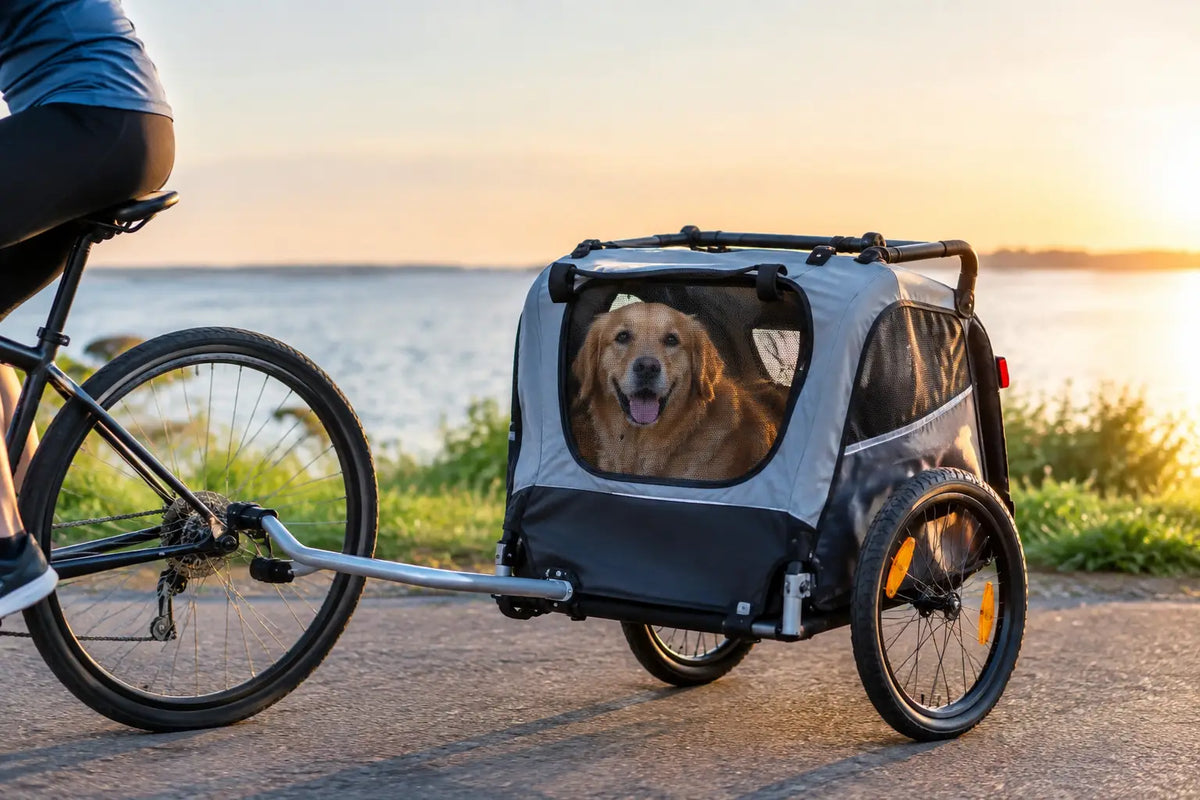
Can Dogs Use Bike Trailers? Safe Riding Advice
A quiet towpath, a steady pace and your dog settled comfortably behind you can be a brilliant way to share more of the day. But can dogs use bike trailers safely? Yes, many can - provided the trailer fits properly, your dog is introduced to it gradually, and every ride is planned around their comfort rather than the distance you hoped to cover.
A dog bike trailer is not simply a basket on wheels. It is a contained travel space that needs to protect your dog from bumps, sudden weather changes, traffic noise and the temptation to jump out after a squirrel. For small dogs, senior companions and dogs with reduced mobility, it can make adventures possible again. For confident, healthy dogs, it can offer a rest break when little legs cannot match a longer cycling route.
Can dogs use bike trailers at every age?
Dogs of many ages can enjoy a bike trailer, but suitability is individual. A small adult dog who settles easily away from home may take to one quickly. A senior dog with arthritis may value the chance to come along without the strain of a long walk. A dog recovering from surgery or managing a condition such as IVDD may also benefit, but only with veterinary approval and a travel set-up that prevents slipping, jolting and unnecessary movement.
Puppies are the exception worth treating with particular care. They are still developing physically and may find a moving trailer overwhelming. Short, positive familiarisation sessions are far more appropriate than setting off on a long ride. Likewise, a dog who is highly anxious, reactive around bikes, or distressed by enclosed spaces may not enjoy trailer travel at all. Inclusion matters, but so does listening when your dog says no.
Your dog's temperament matters as much as their size. The right passenger is able to settle, breathe normally and remain comfortable as the world moves past. Persistent barking, frantic scratching, drooling, trembling or attempts to escape are signs to stop and reassess, not behaviours to ride through.
Choosing a bike trailer your dog can travel in safely
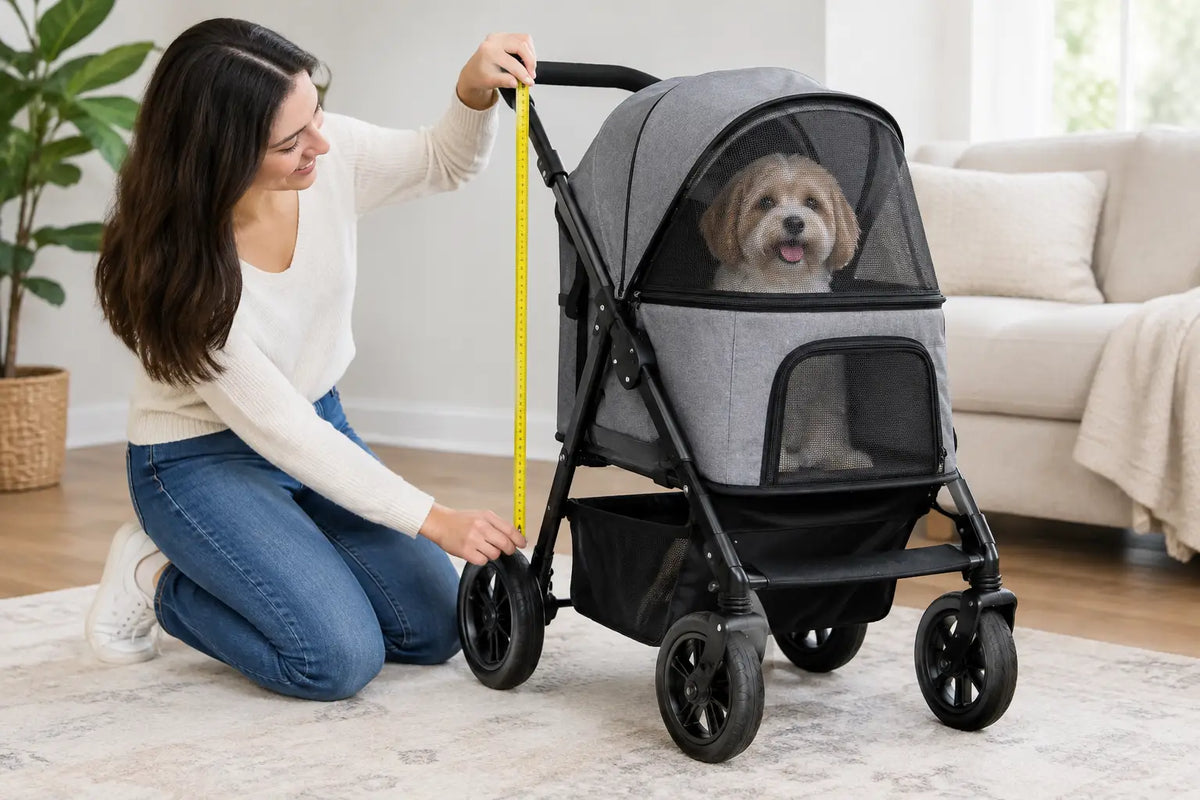
A premium trailer should be selected by measurements and engineering, not by a hopeful breed label. Measure your dog while they are sitting and lying down, then compare those figures with the usable internal space. They need room to turn around and lie in a natural position, without being able to slide from one side to the other.
Start with weight capacity and interior dimensions
The stated weight limit is a firm ceiling, not a target to exceed. It includes the dog and any bedding or accessories carried inside. A trailer may technically hold your dog's weight but still be too short for them to lie down comfortably, especially if they have a long back or need to change position carefully.
For a dog with joint stiffness or limited mobility, look for a low, wide entrance. Stepping over a high lip can be difficult, while lifting a heavier dog repeatedly is not ideal for either of you. A supportive, non-slip base is equally valuable. Deeply cushioned bedding can be cosy, but it should not make footing unstable or reduce the available headroom.
Look beyond the cabin
The way a trailer connects to the bike is central to safe handling. Use the hitch supplied or approved by the manufacturer and check that it is compatible with your bicycle's axle arrangement. The safety strap should be attached as instructed every time, creating a back-up connection if the primary hitch fails.
A stable, low centre of gravity helps the trailer track predictably behind the bike. Quality wheels, secure quick-release mechanisms and an effective parking brake all make a practical difference. Before adding your dog, practise pulling the empty trailer and get used to its width, turning circle and braking distance.
Good ventilation is essential, particularly in warm weather. Mesh panels should allow airflow while remaining secure, and a weather cover should protect against rain without turning the cabin stuffy. Never leave a dog in a closed trailer while you pop into a shop or stop for a lengthy chat. Temperatures can rise quickly, even on a mild British day.
Training your dog to enjoy the trailer
The best first ride is not really a ride. Put the trailer indoors or in a quiet garden with the wheels locked, open the entrance and let your dog investigate at their own pace. Scatter a few treats nearby, then inside, but do not lure or push them in if they are worried. The goal is for the trailer to become a place where good things happen.
Once your dog willingly steps inside, encourage a brief settle on the non-slip floor or their familiar blanket. Reward calm behaviour, then let them leave. Repeat this over several sessions until entering and resting inside feels ordinary.
Next, close the mesh for a few seconds while you remain beside them. Gradually build the time, always releasing them before they become unsettled. If your trailer has a short internal tether, use it only as designed, attached to a well-fitted harness rather than a collar. It is there to reduce the risk of a sudden exit when the door opens, not to hold a dog in an uncomfortable position.
When your dog is relaxed in the stationary trailer, move it by hand for a few metres on smooth ground. Then try a very short bike ride in a quiet, traffic-free area. Keep the first outing to a few minutes and finish while your dog is still content. A calm, successful introduction is worth much more than covering miles on day one.
Set up every ride for comfort and control
Before setting off, check tyre pressure, wheel security, the hitch, safety strap, zips and the condition of the mesh. Make sure the trailer is clean and dry, and remove any loose items that could roll under your dog's feet. Water is useful on longer outings, but a heavy bowl of water sloshing around is not.
Your riding style needs to change with a trailer attached. Take corners wide, brake earlier and avoid sharp manoeuvres. Potholes, dropped kerbs and rough gravel that feel manageable on a bike can be unpleasant for a dog in a trailer. Choose smoother routes and reduce speed on uneven surfaces.
Be mindful of the trailer's extra width, especially around bollards, parked cars and narrow gates. High-visibility flags, reflectors and lights help other road users see it, particularly in low light. Plan a route with sensible stops where your dog can have water, a toilet break and a short stretch on lead if they are able to do so comfortably.
For dogs who cannot walk far, a trailer can still provide a lovely change of scenery. Just avoid assuming they want to remain inside for hours. Watch their body language at each stop. A relaxed posture, soft eyes and interest in their surroundings are reassuring; a hunched position or reluctance to re-enter suggests the outing should be shorter next time.
When a bike trailer is not the right answer
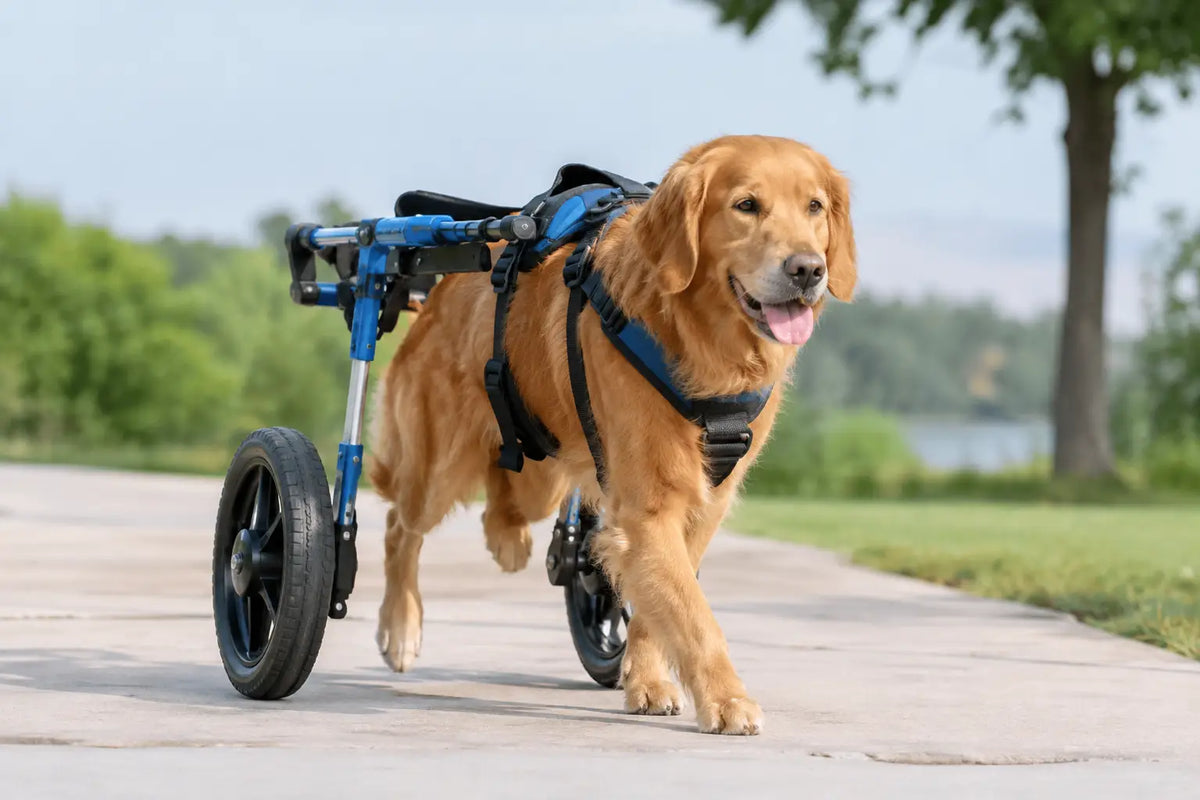
Bike trailers are not suitable for every dog or every journey. A very large dog may exceed the capacity of most models, making a purpose-built dog stroller, vehicle crate or another transport solution more appropriate. Dogs with severe balance problems, acute pain, respiratory difficulties or a recent injury may need a different form of support and advice from their vet before travelling.
They are also a poor match for fast road cycling, busy junctions and routes where you cannot give the trailer enough space. Your dog deserves a seat on the adventure too, but that seat should never come at the cost of feeling exposed or unsafe.
Common questions about dogs in bike trailers
Should my dog wear a harness in a bike trailer?
Yes. If your trailer includes an internal safety tether, attach it to a secure, comfortable harness rather than a collar. The tether should allow your dog to sit and lie down but should not let them leap out when the entrance is opened.
Can two small dogs share one trailer?
Only if the manufacturer permits it, their combined weight is within the limit and both dogs have enough room to lie down without crowding. They must also be genuinely comfortable travelling together. A confined space can create tension even between dogs who normally get on well.
How long can a dog stay in a bike trailer?
There is no universal time limit. Build duration gradually and base it on your dog's age, health, weather conditions and ability to settle. Frequent stops are kinder than one ambitious route, particularly for senior dogs and first-time passengers.
The loveliest trailer journeys are not measured by speed or distance. They are the ones where your dog steps out at the end bright-eyed, comfortable and pleased to have been part of the plan.