Best Dog Prams for Seniors: What to Look For
A slower walk should not mean a smaller life. The best dog prams for seniors give older dogs a comfortable way to stay part of the school run, café stop, park circuit and family holiday, without asking sore joints or tired lungs to do more than they can manage. A well-chosen pram is not a sign that your dog is ‘giving up’. It is a practical mobility tool that lets them enjoy the world at their own pace.
For many senior dogs, the ideal outing is a mixture of gentle walking, plenty of sniffing and a secure place to rest when they have had enough. The right stroller makes that possible. It can also make life kinder for owners who can no longer safely carry a small dog home when arthritis, fatigue or a sudden wobble cuts a walk short.
What makes a dog pram right for an older dog?
The best pram is rarely the one with the most accessories. It is the one that fits your dog properly, rides smoothly over the routes you genuinely use, and is easy enough for you to operate without turning every outing into a wrestling match.
Start with your dog's current needs, rather than their breed label or their weight alone. A compact terrier with spinal discomfort may need a low-entry cabin and a flat, supportive base. A larger spaniel with stiff hips may need more internal floor space, stronger suspension and a generous weight capacity. A dog recovering from surgery may need to lie down fully, while a dog with mild age-related fatigue may simply enjoy a place to hop in after the first twenty minutes.
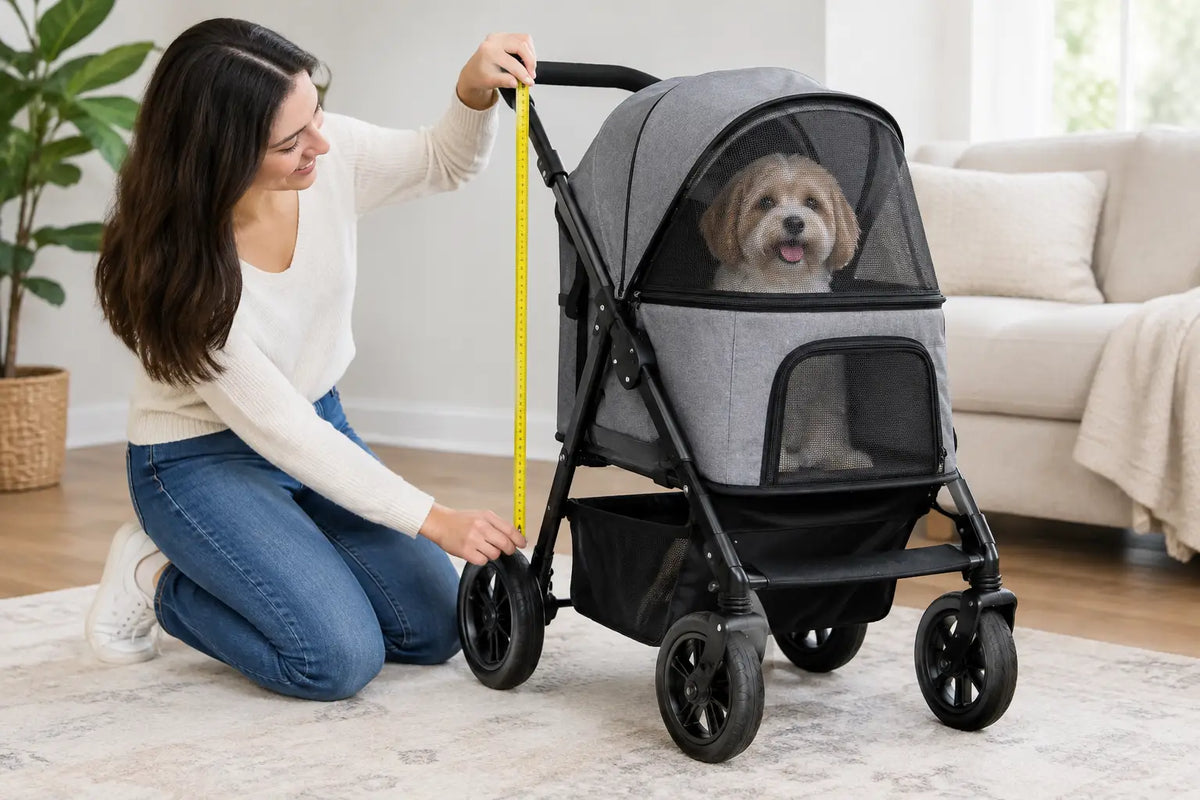
A pram should allow your dog to sit, turn around and lie in a natural position. Measure them while they are relaxed, from nose to base of tail and across their widest point, then compare those measurements with the usable internal cabin dimensions. Do not rely on the exterior dimensions. Thick bolsters, wheel housings and canopy frames can reduce the space your dog actually has.
A flat, supportive cabin matters more than a plush look
Older dogs often struggle to brace themselves when a pram turns or travels over uneven paving. Look for a firm, level base that will not sag under their weight, along with a removable padded liner or mattress for comfort. Raised sides can help a dog feel contained, but they should not force a stiff-necked or arthritic dog into an awkward posture.
If your dog has IVDD, a neurological condition, hip dysplasia or is post-operative, speak to your vet or rehabilitation professional about the position they should travel in. For some dogs, a completely flat space is preferable to a seated configuration. For others, a supportive bed with enough room to change position is the priority.
Easy entry protects sore joints
A low front opening is one of the most useful features for senior dogs who can still walk but cannot comfortably be lifted. It lets them step in and out with dignity, rather than twisting through a high side opening. This can be especially valuable for dogs with reduced rear-leg strength.
For dogs who do need lifting, check the height of the cabin and consider your own comfort too. Repeatedly lifting a heavy dog over a high frame is not a sustainable plan. A rear or front opening, paired with a lightweight ramp where appropriate, can make outings far more manageable.
Wheels, suspension and brakes: the details that change the ride
A dog pram is only as comfortable as its handling. Smooth town pavements may suit smaller wheels, but cracked paving slabs, gravel paths, park grass and kerbs quickly expose a flimsy chassis. Larger, air-filled or puncture-resistant tyres generally cope better with varied terrain, while all-wheel suspension softens vibration for dogs with painful joints or sensitive backs.
Three-wheel prams can be wonderfully manoeuvrable and often feel lighter to push, particularly on longer walks. Four-wheel designs may feel more stable when loading a dog, negotiating public transport or pausing on uneven ground. Neither is automatically best. Think about where the pram will spend most of its time.
Reliable rear brakes are essential, not optional. Test whether they are simple to apply with an ordinary shoe and whether they hold securely on a gentle slope. A wrist strap is also useful on hills or busy pavements, particularly if your dog shifts their weight unexpectedly. For a senior dog, a calm, stable ride is part of their comfort plan.
Choosing the best dog prams for seniors and their people
Weight capacity deserves closer attention than it usually gets. Choose a pram with a stated maximum capacity comfortably above your dog's current weight, especially if you will add a supportive bed, blanket, water or a cooling mat. Loading a pram right up to its limit can affect handling and place unnecessary strain on the frame.
Also consider the pram's own weight. A heavier chassis may offer excellent stability, but it is not the right choice if you must lift it into a car boot alone. Check how it folds, whether the wheels come off easily, and whether the folded dimensions work with your vehicle and storage space at home. A premium pram should support everyday adventures, not sit unused because it is too awkward to take out.
Handle height is another small detail with a big effect. Adjustable handlebars can reduce strain on shoulders and wrists, especially for taller owners or anyone managing arthritis. Make sure there is enough foot clearance behind the pram so you are not constantly kicking the rear axle.
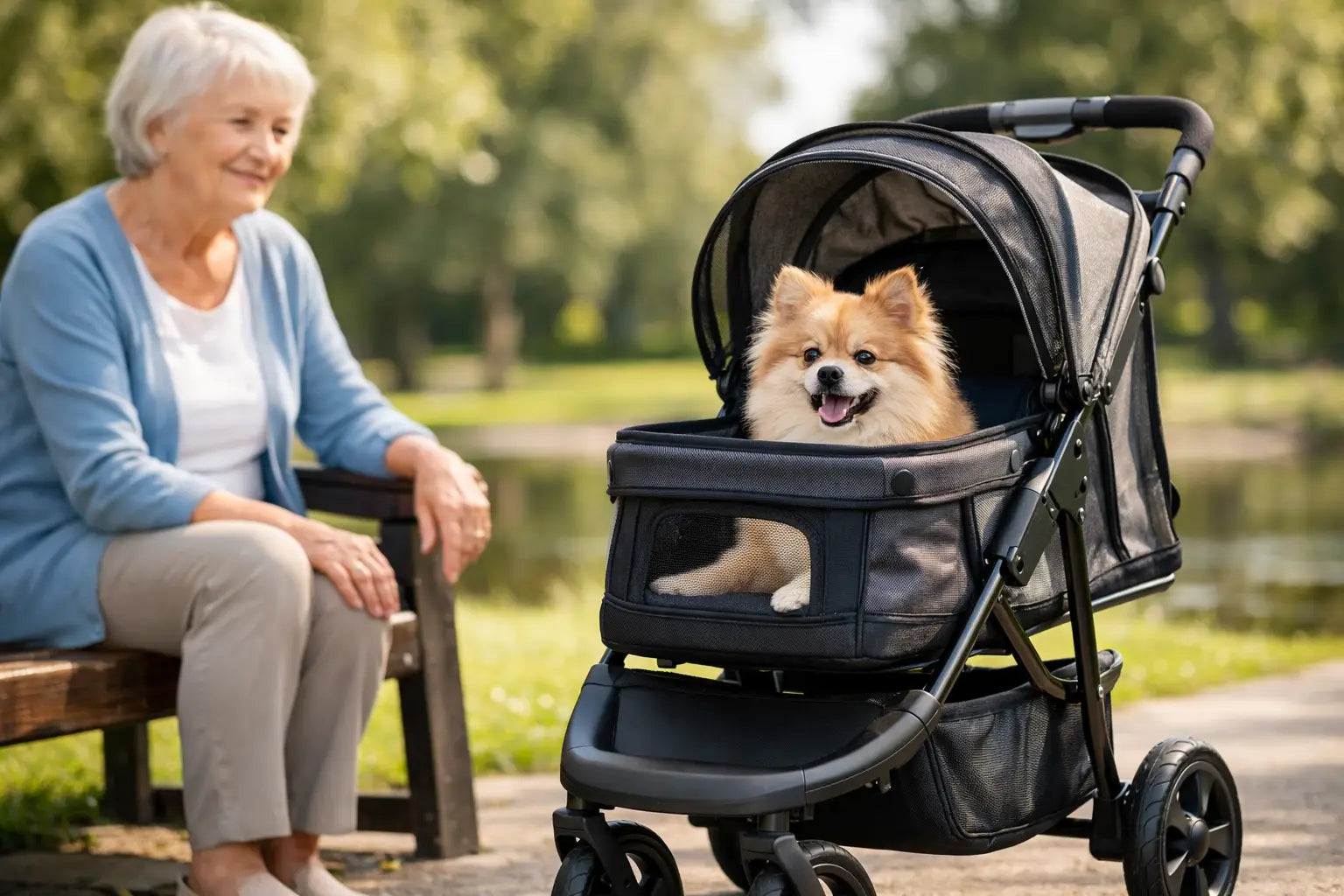
The cabin should have secure mesh ventilation on more than one side. Older dogs can be less tolerant of heat, and enclosed spaces warm up quickly even on a mild day. A canopy offers welcome shelter from wind and drizzle, but never use it to seal a dog into a stuffy compartment. Good visibility matters too. Many senior dogs feel more reassured when they can see their person and their surroundings.
Safety features worth paying for
A secure zip fastening and an internal safety tether can help prevent a dog from jumping out when they spot a squirrel, another dog or the café treat counter. The tether should attach to a well-fitted harness, never a collar. A sudden jump against a collar can injure the neck and throat, particularly in an older dog.
Check that zips are sturdy, mesh panels are difficult to claw through, and the frame does not wobble when your dog moves. Reflective detailing is worthwhile for darker winter afternoons. Storage underneath is handy for leads, medication, water and a spare layer, but avoid hanging heavy bags from the handlebar. That can make the pram tip backwards.
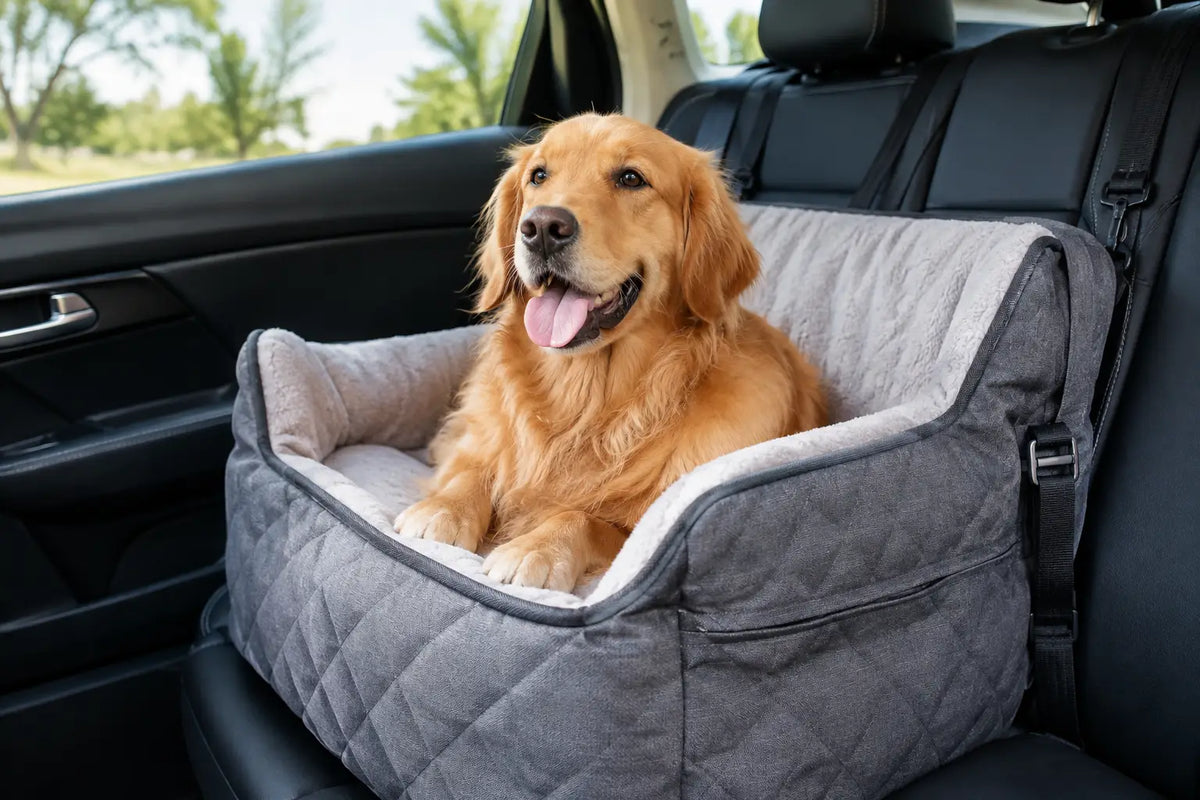
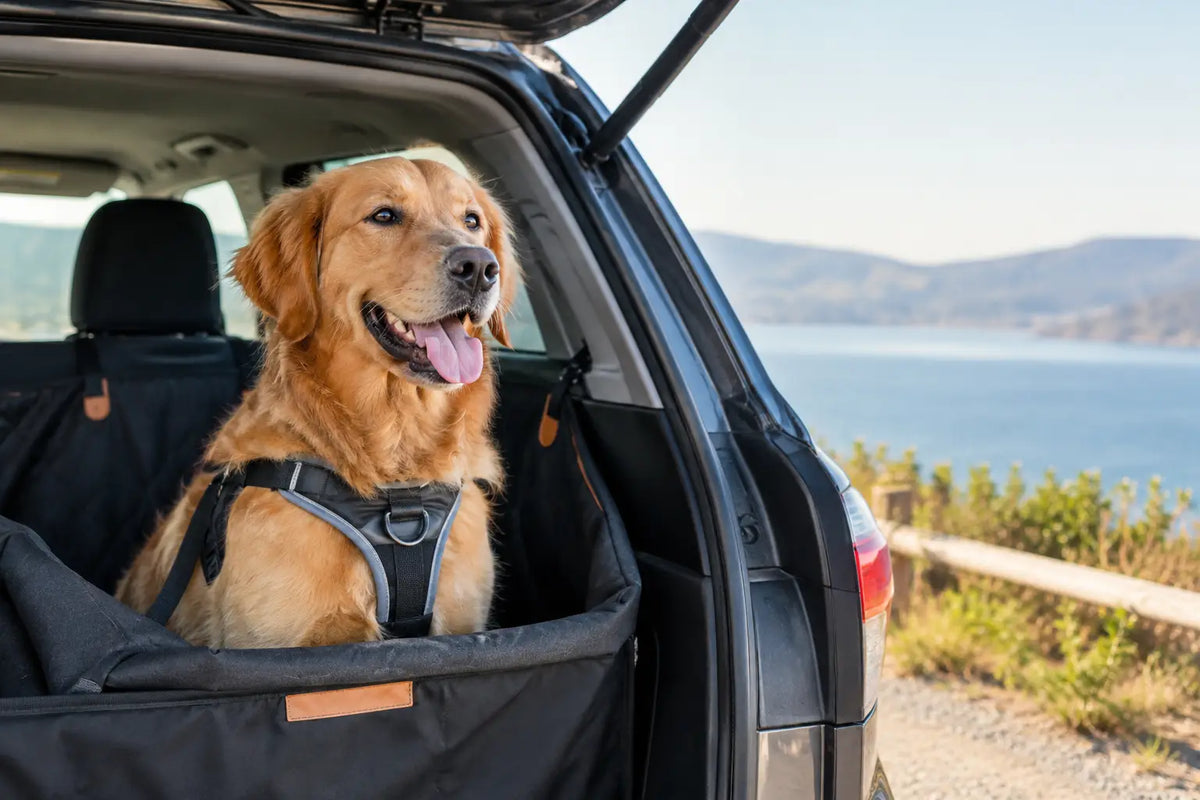
A pram is designed for walking use unless the manufacturer explicitly states otherwise. It should not be treated as a substitute for a crash-tested car crate or a vehicle-compatible pet seat. Secure transport in the car and comfortable mobility at your destination are two different jobs, and both matter.
Help your dog learn to enjoy the pram
Even a tired dog may be unsure about climbing into a moving cabin at first. Introduce the pram at home with the brakes on. Place a familiar blanket inside, let your dog investigate without pressure, and reward calm choices. Once they are settled, try a short push around the house or driveway before attempting a busy route.
Keep the first outings brief and pleasant. Let your dog walk for a little while if they can, then invite them into the pram before they become exhausted. This avoids teaching them that the pram appears only when they are in pain or distress. Bring water, monitor their temperature, and stop if they seem unsettled, pant heavily or cannot find a comfortable position.
Some dogs take to a pram immediately; others need several gentle sessions. There is no prize for rushing. The goal is for the cabin to become their reliable resting place, not a restriction.
When a pram is the kindest choice
A dog pram can be particularly helpful when a senior dog has fluctuating mobility. Perhaps they can manage a slow lap of the green but not the walk there and back. Perhaps medication helps on some days but not others. Perhaps they still want to join family outings, yet their confidence drops around crowds, bikes or larger dogs.
It can also protect a dog from overdoing it. Older dogs are often enthusiastic before they are sensible, and the soreness may only appear later that evening. Offering a ride home preserves energy for the parts of life they enjoy most: sniffing the hedge, greeting familiar faces and sitting beside you while the family is out together.
The right pram gives your dog choice. Let them walk when it feels good, rest when their body asks for it, and keep their place on the adventure. That is a small change to the routine, but for an older dog, it can make the world feel open again.