Wheelchair Walking Practice for Dogs: Start Well
The first few metres in a mobility wheelchair can feel enormous. Your dog may pause, look back at you, or take an unexpectedly brisk lap around the garden. Wheelchair walking practice is not about making them cover distance straight away. It is about helping them understand that movement can still be comfortable, safe and full of the familiar things they love - fresh air, interesting smells and being beside their family.
For a dog recovering from injury, living with IVDD, managing hind-leg weakness or adapting to old age, a wheelchair can protect independence and dignity. The right pace matters just as much as the right equipment. Gentle, well-observed practice gives your dog time to build confidence without turning a promising first outing into an exhausting one.
Start wheelchair walking practice with the right fit
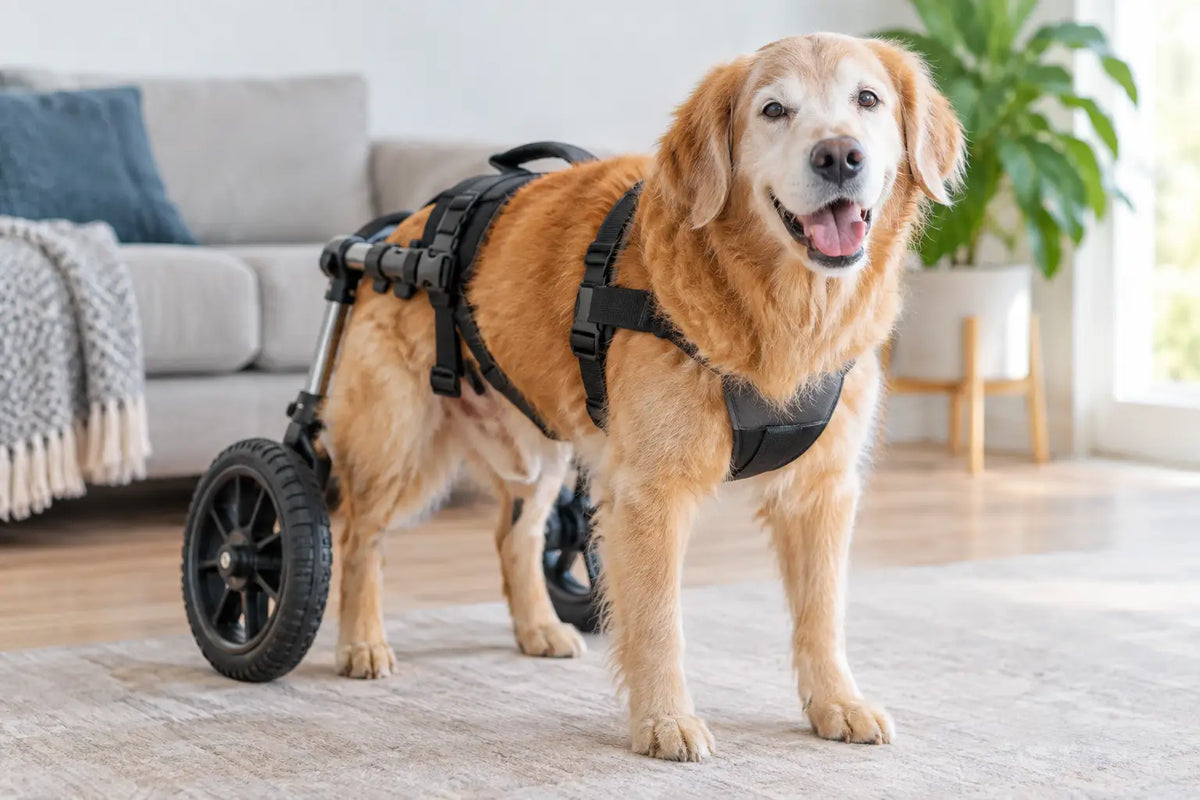
Before planning a route, make sure your dog's wheelchair has been fitted for their body and condition. A well-fitted model supports the affected area without rubbing the chest, shoulders, belly or inner legs. The wheels should roll freely, the frame should sit level, and your dog should be able to hold a natural posture rather than leaning heavily forwards or collapsing through the shoulders.
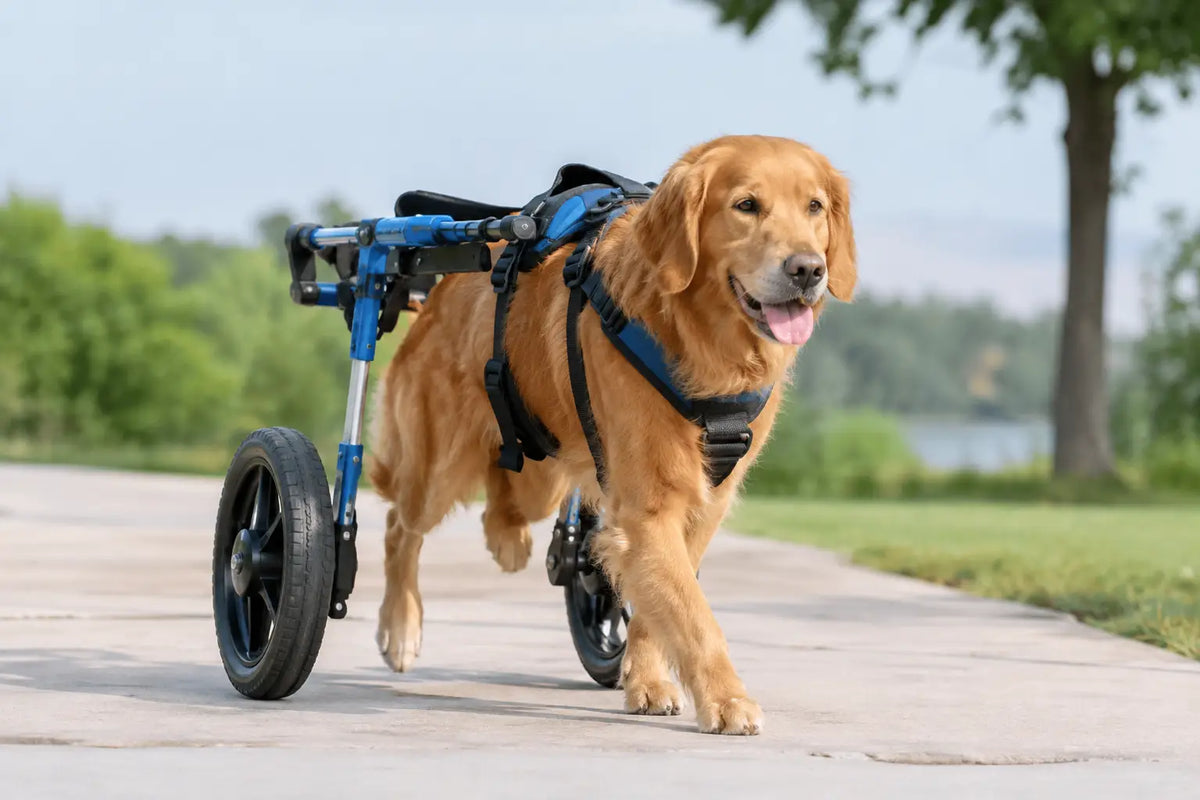
Many dog wheelchairs are designed so the rear legs can touch the ground, allowing a dog to use whatever strength and range of movement they have. Others keep the hindquarters fully supported. Which set-up is appropriate depends on the diagnosis, pain level, muscle control and guidance from your vet or canine physiotherapist. A wheelchair is a mobility aid, not a substitute for professional rehabilitation advice.
Check the fit again after the first few sessions. Harness straps can settle, coats can change the fit, and a dog who loses or gains weight may need adjustments. Look for red marks, hair loss, rubbing, unusual reluctance to be strapped in, or a change in gait. These are reasons to stop and reassess, not something to push through.
Make the first sessions wonderfully boring
A quiet, flat, familiar surface is usually the best starting point. A secure garden, driveway or level section of pavement gives your dog space to work out the wheels without traffic, loose dogs or too much sensory excitement. Keep the first session short enough that it ends while they are still comfortable and curious.
Begin by letting your dog stand in the wheelchair for a minute or two. Offer calm praise and a small treat if food motivates them, then encourage a few steps towards you. Avoid pulling the wheelchair forwards or holding your dog in a position they are trying to leave. They need to discover their own balance and rhythm.
Some dogs take to wheels with joyous speed. Others need several short sessions across a few days before they relax. Neither response means the wheelchair is right or wrong by itself. Temperament, previous pain, unfamiliar sounds and the feeling of the frame all influence the adjustment period.
Keep your lead loose where possible. A taut lead can pull your dog off balance, especially while they are learning to turn. Walk alongside or just ahead, using your voice as reassurance. Let them stop to sniff. Those pauses are part of a good walk, not a failure to exercise.
Build time before distance
It is tempting to celebrate a good first outing with a longer route. Resist that urge. Muscles that have been compensating for weakness, surgery or reduced movement can tire quickly, and even a well-designed wheelchair changes how your dog distributes their weight.
A sensible progression might mean a few minutes of walking once or twice a day, followed by a rest day or lighter session if your dog seems tired. Increase only one element at a time: a little more time, a slightly more varied surface, or a modestly longer route. If you change everything at once, it is harder to tell what caused discomfort.
Your vet or physiotherapist may give you a specific plan, particularly after spinal surgery or an orthopaedic injury. Follow that plan over any general advice. Some dogs need carefully restricted activity during recovery, while others benefit from regular supported movement. It depends on the underlying condition.
Read your dog's comfort, not the clock
A cheerful dog may keep going because they are delighted to be outside, even when their body is becoming fatigued. Your job is to notice the quieter signs that say it is time to head home.
Watch for a slowing pace, repeated stopping, heavy panting in cool weather, scuffing paws, dragging toes, excessive leaning into the front harness or difficulty making turns. A dog who becomes suddenly withdrawn, tense, wobbly or reluctant to move should be taken out of the wheelchair and checked over. Pain, heat, thirst and poor fit can all look like a lack of enthusiasm.
After every session, inspect the skin beneath the harness and around the groin, chest and legs. Also check paws, especially if your dog's rear feet make contact with the ground. Dragging can wear nails and skin quickly, so protective boots or paw coverings may be useful when recommended for your dog's gait. Keep an eye on their nails too, as reduced or uneven contact can change how they wear down.
A simple note on your phone can be surprisingly useful: how long your dog walked, the ground conditions, whether they toileted normally, and how they seemed later that day and the following morning. Patterns help you, your vet and your physio judge whether the routine is supporting recovery and quality of life.
Choose surfaces with care
Smooth, level ground makes learning easier, but real life includes cracked pavements, gravel, kerbs and damp grass. Introduce these gradually. Wheelchairs can cope with a range of terrain when they are designed for it, yet every bump asks more of your dog's balance and shoulders.
Avoid steep slopes at first. Going downhill can push weight forwards, while climbing demands extra effort from the front limbs and core. Deep mud, loose stones and very long grass can catch wheels or make turning frustrating. On hot days, remember that pavements can be uncomfortable for paws and that a dog using a wheelchair may work harder than they appear to.
For many families, the best outing is not the longest one. A slow circuit of the local green, a coffee stop where your dog can rest beside you, or a short walk to watch the world go by can be every bit as enriching as a big countryside ramble. If your dog tires before the return journey, a stroller can be a thoughtful companion to their wheelchair - they can walk when they feel able, then ride in comfort rather than being left out.
Keep the routine positive and practical
Put the wheelchair on and take it off calmly, in the same order each time. A non-slip mat can make transfers more secure for dogs with weak back legs. If your dog needs help toileting, ask your veterinary team about safe support techniques and how to keep the harness clean and dry.
Clean mud and grit from wheels, check tyres or wheel fittings, and make sure straps remain secure before each outing. Do not leave a dog unattended in a wheelchair, even in a familiar garden. They can become caught on furniture, roots or changes in level, and may not be able to reposition themselves safely.
Most of all, protect the feeling of choice. Encourage your dog, celebrate their efforts and give them time to investigate the world at their own pace. Pets Own Us believes mobility support should make family life bigger, not smaller. With patient wheelchair walking practice, the walk may look different, but the shared adventure is still very much theirs.