Choosing a Dog Bike Trailer for Safer Rides
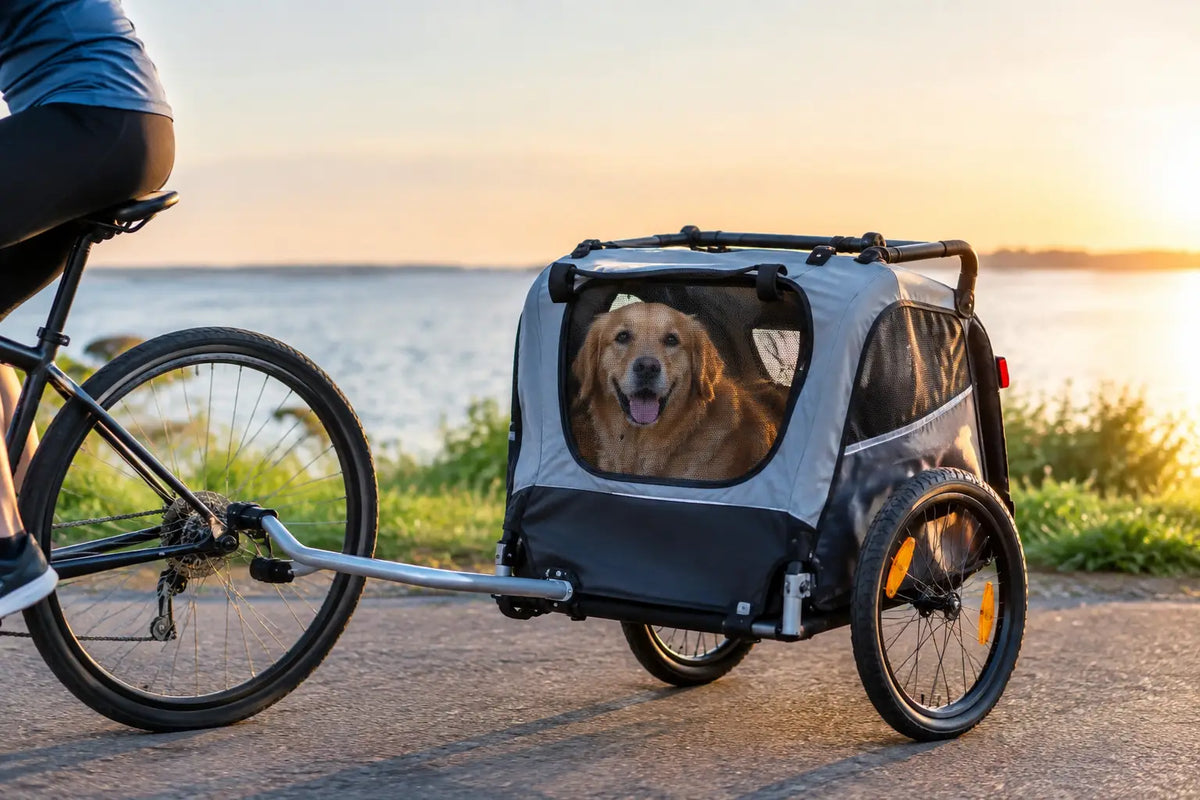
A dog bike trailer is not simply a way to cover more miles with your dog. For a small dog who cannot safely run beside a bike, a senior companion with stiff joints, or a recovering dog whose world has temporarily become much smaller, it can be a seat back into family life. The right trailer lets them come along for the café stop, the riverside route and the fresh-air outing, without asking their body to do more than it comfortably can.
That freedom depends on choosing carefully. A trailer needs to suit your dog, your bicycle and the roads or paths you genuinely plan to ride - not just look smart in a product photo.
Start with your dog's comfort, not the trailer's capacity
Weight capacity is a useful safety limit, but it is not the whole sizing story. A dog may technically fall within a trailer's stated maximum weight and still be too tall, too long or too broad to settle comfortably. They need enough floor space to lie down, turn around and change position, particularly if they are older or travelling for more than a few minutes.
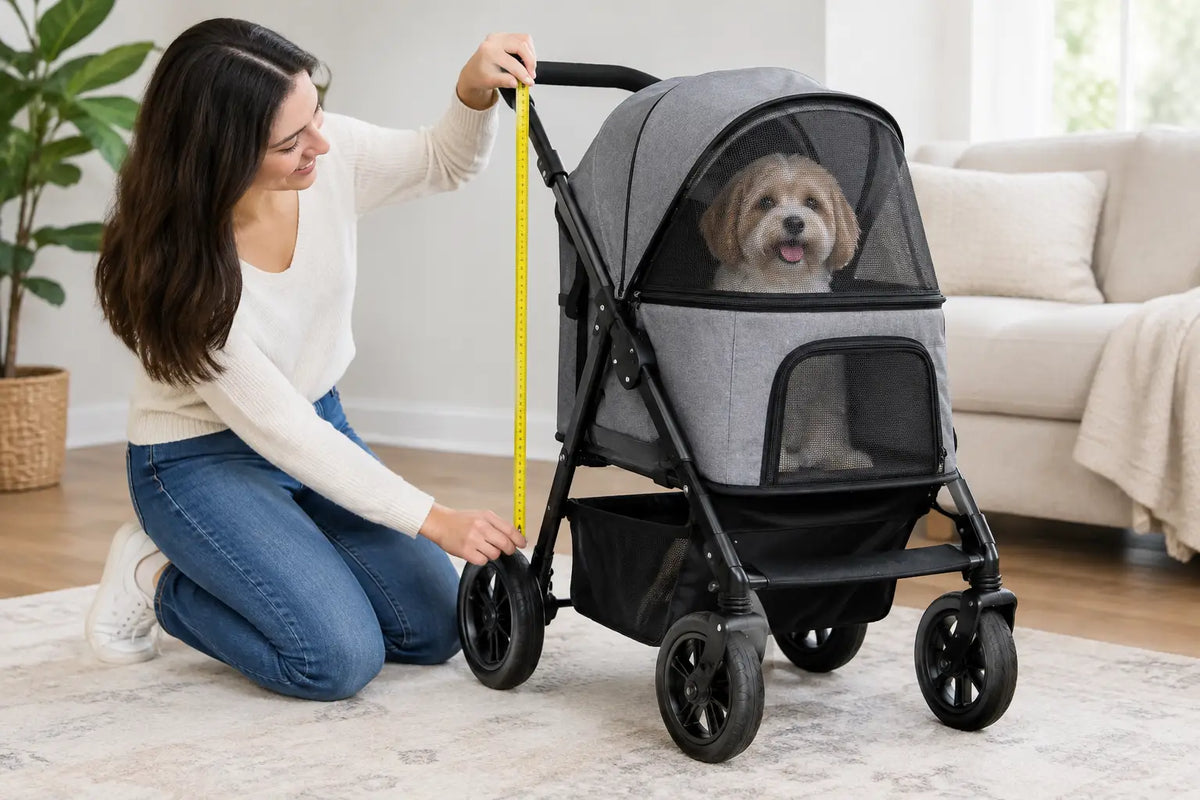
Measure your dog while they are standing naturally: from the floor to the top of their shoulders, from nose to base of tail, and across the widest part of their body. Then compare those figures with the trailer's internal dimensions, allowing room for a padded liner or blanket. A compact terrier may enjoy a snug, sheltered cabin; a long-bodied dachshund needs usable length; a French bulldog may benefit from excellent ventilation and a cooler travel plan.
For a dog managing arthritis, IVDD, post-operative recovery or reduced balance, low and stable access matters as much as space. Look at the height of the entry point and whether the floor can be padded without making the step awkward. Your dog deserves a seat on the adventure too, but never at the cost of discomfort or dignity.
What makes a dog bike trailer safer on the road?
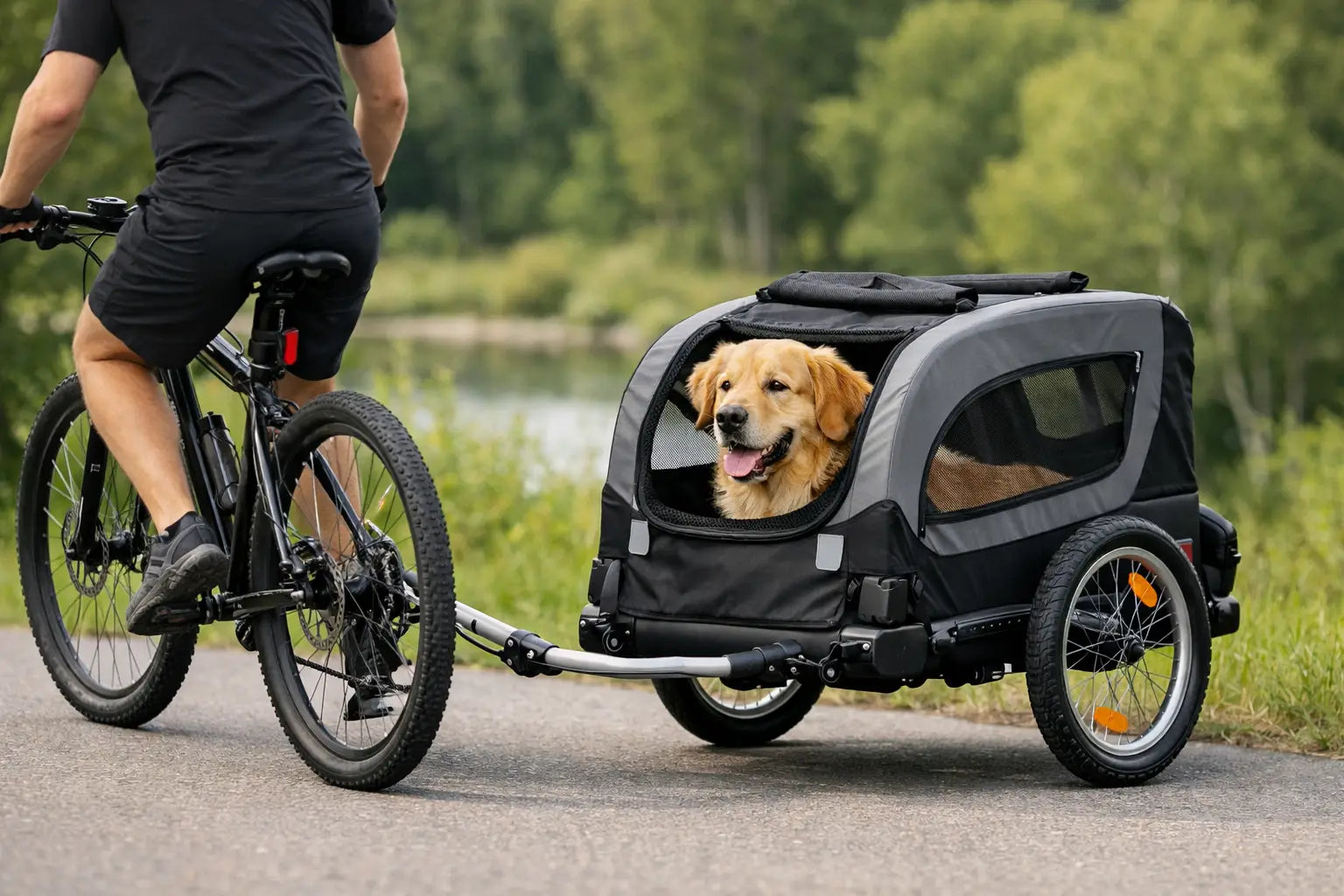
A well-designed dog bike trailer should feel stable, predictable and securely connected to the bike. The hitch is central to this. Check that it is compatible with your bicycle's rear axle arrangement, including any quick-release, solid axle or through-axle set-up. Some modern bikes, particularly e-bikes and certain disc-brake models, may need a specific adaptor. Never assume a universal-looking hitch will fit safely.
A secondary safety strap is also worth having. It provides a back-up connection if the primary hitch becomes detached, but it is not a substitute for fitting the hitch correctly in the first place. Follow the manufacturer instructions closely and inspect the connection before every ride.
Inside the cabin, a short internal tether can help prevent an excited dog from leaping out when the front opens. It should attach to a well-fitted harness, never a collar. The tether must be short enough to prevent escape but long enough for your dog to sit and lie down without strain. Some dogs travel more calmly with a secure harness and tether; others benefit from the reassurance of a more enclosed design. It depends on temperament, training and the trailer's layout.
Think about visibility from both directions. Bright fabric, reflectors and a high safety flag make a low trailer easier for motorists and other path users to spot. Lights are especially sensible if your rides might extend into dull weather or early evening. Your dog may be tucked safely behind you, but other people need to see that precious cargo.
Wheels, suspension and the routes you ride
Two wheels are standard on most dog trailers, providing a broad, stable base when stationary and a gentler ride than asking a dog to balance in a basket. Larger pneumatic tyres usually cope better with uneven paving, gravel and rougher park paths than small solid wheels. They require occasional pressure checks, but that maintenance pays back in comfort.
Suspension can be valuable for dogs with sensitive joints or mobility limitations, especially if your regular route includes imperfect surfaces. It will not turn potholes into smooth tarmac, so ride accordingly. Slow down for kerbs, avoid broken ground where possible and remember that the trailer wheels may track differently from your bike wheels.
If most outings are short, smooth rides through town, a lighter, simpler trailer may be ideal. If you picture weekend routes on towpaths or country trails, prioritise a stronger frame, quality tyres, weather protection and a ride that does not jostle your dog. A larger trailer also creates more drag, so consider what you can comfortably tow and manoeuvre before choosing the biggest option available.
Weather protection needs sensible ventilation
British weather is rarely predictable enough for one fixed travel set-up. A trailer with mesh panels and a weather cover gives you options, allowing airflow on mild days and shelter from wind or drizzle. Yet a fully closed cover in warm conditions can quickly become stuffy, particularly for flat-faced breeds, older dogs and dogs with respiratory concerns.
Avoid riding in high heat and do not leave your dog in a parked trailer, even for a brief stop. Carry water, take regular breaks and use the shade when you can. In colder conditions, a familiar blanket or fitted pad can add comfort, provided it does not obstruct ventilation or become tangled with the tether.
Water-resistant materials make life easier after a muddy route, but washable liners are just as practical. Dogs bring wet paws, loose hair and occasionally travel sickness. A trailer that is easy to clean is more likely to stay pleasant for every passenger.
Teach your dog that the trailer is a good place
The first outing should not begin with a long ride. Set the trailer up at home with the wheels secured and the entrance open. Let your dog investigate at their own pace, rewarding calm interest with a small treat or praise. Place their usual blanket inside so the space carries a familiar scent.
Once they are happy stepping in, practise sitting inside with the trailer still. Close the mesh for a few seconds, then reopen it before they become worried. Build slowly towards moving the trailer by hand, then taking a very short, quiet cycle on smooth ground. A confident dog may progress quickly; a cautious rescue dog or a dog returning from injury may need several gentle sessions.
Watch their body language. Repeated barking, trembling, frantic scratching, heavy panting in cool weather or refusing to enter are signs to pause and make the exercise easier. Forcing the process can make a useful mobility aid feel frightening. Calm, gradual practice gives your dog the best chance of enjoying it.
Before each ride, check the practical details
A quick pre-ride routine protects both your dog and everyone sharing the road. Confirm the hitch and safety strap are secure, tyres are properly inflated, wheels are locked in place and the cabin zip is fully closed. Check that the internal tether is attached to a harness and that no lead, blanket or coat can catch in the wheels.
Pack water, waste bags and a towel if the forecast is changeable. Bring a lead for stops, because your dog should not be lifted straight from a trailer into an unfamiliar space without being safely secured. If you are cycling with a dog who has medical needs, carry any medication or support items you would normally take on an outing.
Finally, ride with the trailer in mind. Give yourself more stopping distance, take corners steadily, signal early and leave extra space from parked cars and kerbs. Start on quiet routes until towing feels natural. The aim is not speed. It is a relaxed journey where your dog can watch the world go by, rest when needed and remain part of the day.
A thoughtfully chosen trailer can make cycling possible for dogs who would otherwise be left behind. Whether your companion is small, senior, recovering or simply happier travelling than running, the best ride is the one that keeps them secure, comfortable and included in the life you share.