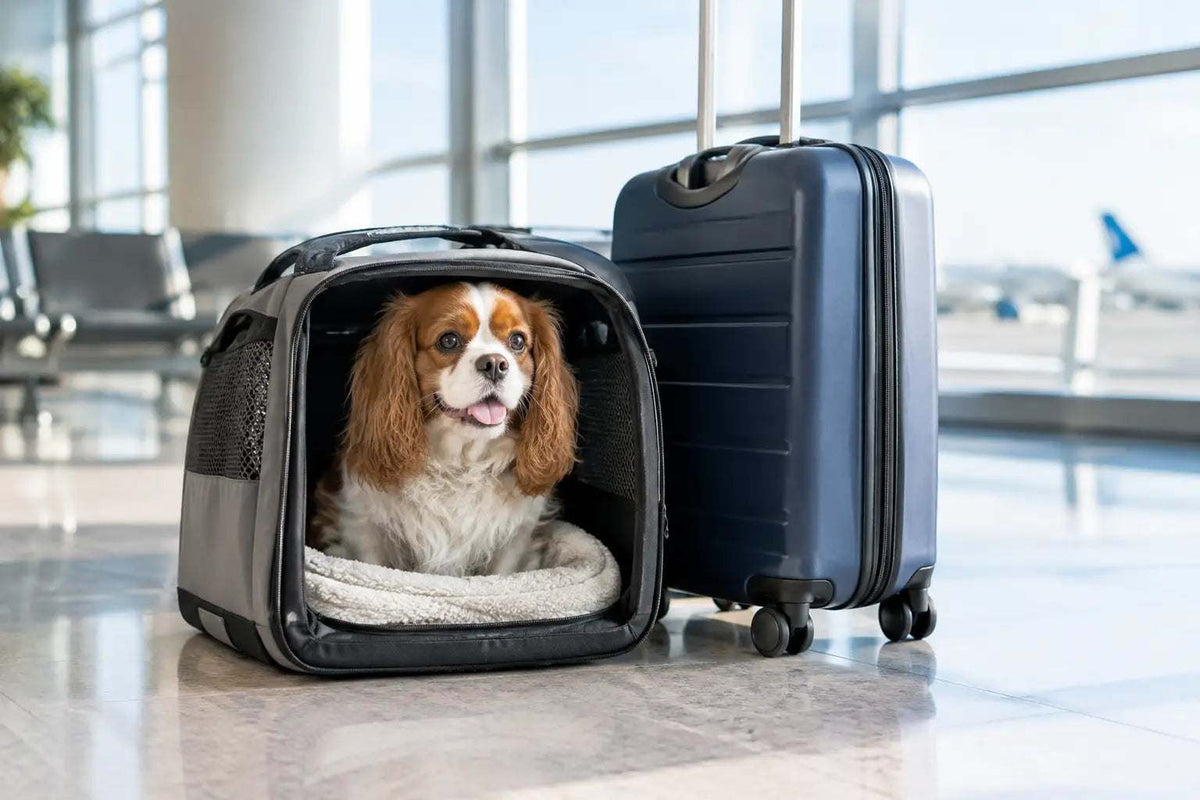
Airline Carrier Review for Calm Pet Flights
A carrier can be beautifully made, padded and labelled “flight approved”, yet still be refused at check-in if it does not match your airline’s current cabin rules. That is why a useful airline carrier review starts with the journey, not the product photograph. Your pet deserves a seat on the adventure too, but flying comfortably and safely depends on getting the details right before you leave home.
For small dogs and cats travelling from the UK, the best carrier is usually one that fits the airline’s under-seat space, gives your pet enough room to settle naturally and remains secure through every stage of the airport. Those requirements can pull in different directions: a roomier bag may feel kinder, but a carrier that is too tall or rigid may not fit beneath the seat in front. Thoughtful preparation makes the choice much clearer.
Airline carrier review: begin with the airline, not the label
“Airline compliant” is a helpful starting point, not a universal promise. Each airline sets its own rules for whether pets may travel in the cabin, hold or at all. Some accept assistance dogs only; others permit small pets on specific routes; many have separate rules for UK departures, connecting flights and destination-country entry requirements.
Before choosing a carrier, confirm that your chosen airline accepts your pet on your exact route and date. Ask for the maximum external dimensions, maximum combined weight of pet and carrier, whether soft-sided carriers are expected, and how much ventilation is required. Also check whether the carrier must be leakproof, whether your pet must remain inside throughout the flight, and whether your seat type affects under-seat storage.
Cabin dimensions can vary between aircraft, even within the same airline. A carrier may meet the published measurement but still struggle beneath a particularly low seat. It is sensible to ask whether the limits are strict external dimensions or whether a soft-sided carrier may compress slightly. Never rely on this flexibility without confirmation, though. Check-in staff must apply the airline’s policy on the day.
Measure your pet for comfort, then measure the carrier
Weight alone does not tell you whether a carrier is a good fit. A compact, broad-chested dog can need a different shape from a long, lean cat of the same weight. Measure your pet while they are standing comfortably: take their length from chest to base of tail, their height from floor to the top of the head or ears, and their widest point across the body. Compare these figures with the carrier’s usable internal space, not just its external measurements.
Your pet should be able to stand without crouching, turn around and lie down in a natural resting position. For a short flight, they do not need a cavernous space that slides around at every turn, but they do need enough room to shift position and breathe freely. If your dog or cat has arthritis, IVDD, a recent injury or reduced mobility, their ability to turn and lower themselves gently matters even more.
A good practical test is to place the carrier on the floor at home with the door open. Encourage your pet in with a familiar blanket, then observe how they enter, turn and settle. If they brace against the sides, have to duck sharply or cannot reposition without effort, try a different shape rather than simply a larger size. A carrier that fits the airline limits and your pet’s body is the goal.
Soft-sided or rigid: the trade-off that matters
For cabin travel, soft-sided carriers are often the more practical option. They are lighter to carry, easier to position beneath a seat and may flex gently to suit the available space. Quality versions have a structured base, supportive sides and mesh panels that maintain airflow without leaving your pet exposed to every movement around them.
The compromise is that not every soft carrier offers the same protection. Look for a firm, stable floor that will not sag under your pet’s weight, reinforced seams and zips that cannot be nudged open from the inside. The fabric should feel substantial enough to retain its shape when carried, particularly for a dog who shifts their weight or a cat who becomes unsettled.
Rigid carriers can offer greater impact protection and are often easier to wipe clean. They may suit car journeys or pets that feel more secure in an enclosed den-like space. However, their fixed dimensions make them less forgiving under an airline seat, and they are less commonly accepted for in-cabin travel. If a rigid carrier is required for an airline-approved hold journey, the specification becomes more exacting, including ventilation, door security and construction standards. Do not assume a standard plastic pet carrier is suitable without written confirmation from the airline.
What a premium travel carrier should do well
Comfort comes from more than a soft lining. A well-designed carrier balances ventilation, containment and a sense of shelter. Mesh panels on more than one side help air circulate, while a roll-down privacy flap can reduce visual overload in a bright, busy terminal. The flap should never block ventilation completely.
Pay close attention to closures. Zips should be smooth, strong and ideally covered or paired with a clip so a determined pet cannot work them open. A secure top opening can be useful for reassuring a nervous cat or offering a small drink without fully unzipping the main entrance, but it must close just as reliably.
The base deserves particular scrutiny. It should be waterproof or protected by a removable, washable liner, with enough grip to prevent slipping. Add an absorbent pad for the travel day, but avoid thick bedding that takes up precious internal height or causes your pet to overheat. A familiar-smelling blanket can be wonderfully reassuring, especially for animals who are cautious in unfamiliar environments.
Carrying comfort matters too. Padded shoulder straps, balanced handles and a luggage sleeve can make airport walking easier for you, which in turn keeps the ride steadier for your pet. For heavier small dogs, remember that the airline may weigh the carrier with your pet inside. A lighter carrier may preserve more of the allowed combined weight, provided it does not sacrifice structure or security.
Prepare the pet, not just the bag
The calmest flight begins weeks before the airport. Leave the carrier open in a quiet room with treats or meals placed nearby, then gradually encourage your pet to rest inside. Build up from a few relaxed minutes to closing the door briefly, carrying the bag around the house and taking short car journeys. The aim is not to make the carrier exciting. It is to make it familiar and uneventful.
Avoid introducing a carrier for the first time on the morning of travel. Cats in particular may associate a suddenly produced bag with a stressful vet visit, while dogs can pick up quickly on rushed human energy. Keep practice sessions brief and reward calm behaviour without forcing them inside.
On the day, offer water as normal unless your vet advises otherwise, and give your pet time for a toilet break before entering the terminal. Feeding is more individual: many pets travel more comfortably after a light meal well before departure rather than a full bowl immediately beforehand. Speak to your vet if your pet is elderly, has a medical condition, takes regular medicine or has previously experienced motion sickness or extreme anxiety. Sedation is not a casual travel solution and should only be considered under veterinary guidance.
Common mistakes that turn a good carrier into the wrong one
The most frequent error is buying solely by breed or weight recommendation. These are useful guides, but a tall toy poodle, a long-bodied dachshund and a compact British Shorthair can all need very different internal proportions. The next is measuring the carrier but forgetting its contents. A thick cushion, water bottle or bulky harness can significantly reduce usable room.
It is also easy to overlook the carrier’s exterior. Loose straps, oversized side pockets and protruding wheels can count towards the airline’s size limit. Remove unnecessary accessories before check-in and keep documents, leads and treats in your own cabin bag where possible.
Finally, do not choose a carrier only because it is the largest option allowed. A pet who feels secure against stable sides often travels better than one who slides about in excess space. Comfort is about supported movement, breathable materials and a familiar place to rest.
A flight can be a big day for a small companion. Choose the carrier early, practise kindly and confirm every airline detail before you travel. When the bag feels like a safe little den rather than a last-minute restriction, your pet can arrive ready for the next family adventure.