Car Seat Versus Crate for Dogs: Which Works?
The car seat versus crate question usually arrives just before a long-awaited weekend away, a vet referral, or the first family road trip with a new puppy. Both can give your pet a defined, more reassuring place in the car, but they serve different animals, vehicles and journeys. The right choice is not the one that looks cosiest in the boot or smartest on the back seat. It is the one that can be fitted correctly, keeps your pet appropriately restrained and lets them travel without unnecessary stress.
For pets who are family, safe transport is part of bringing them along. Your dog deserves a seat on the adventure too, but that does not always mean a literal raised car seat.
Car seat versus crate: the practical difference
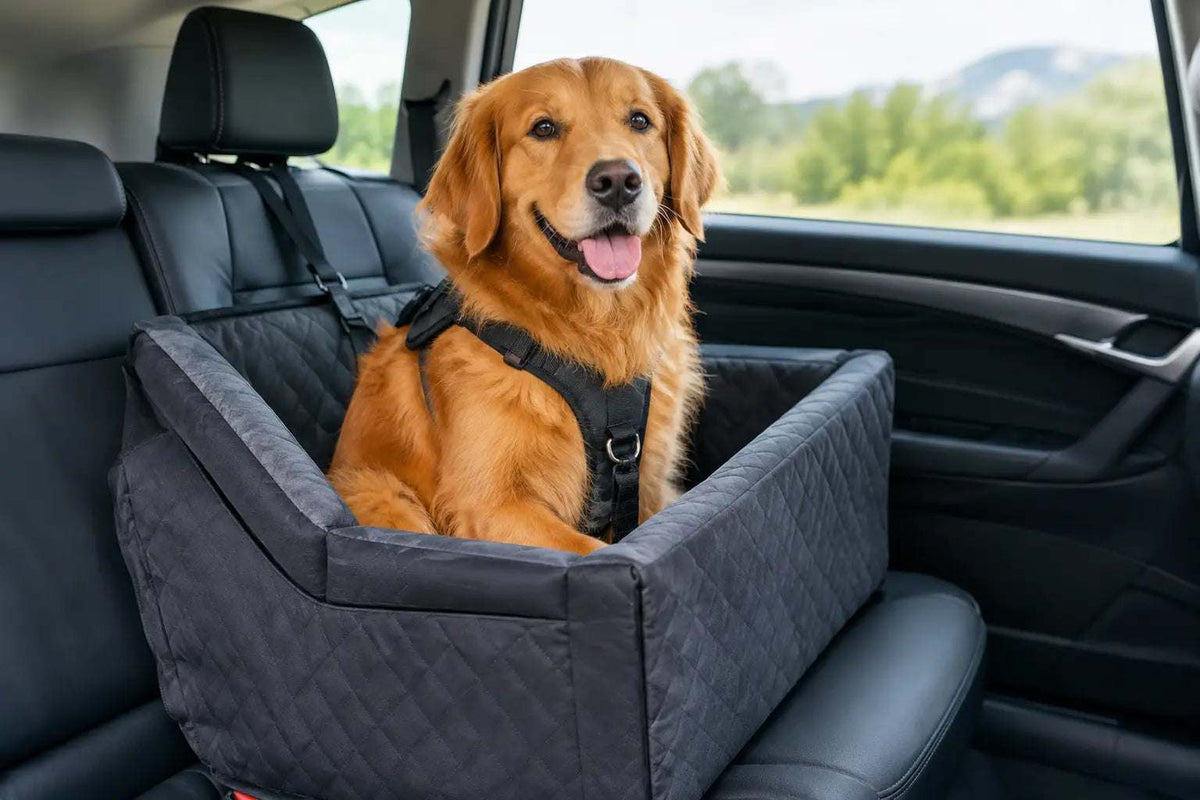
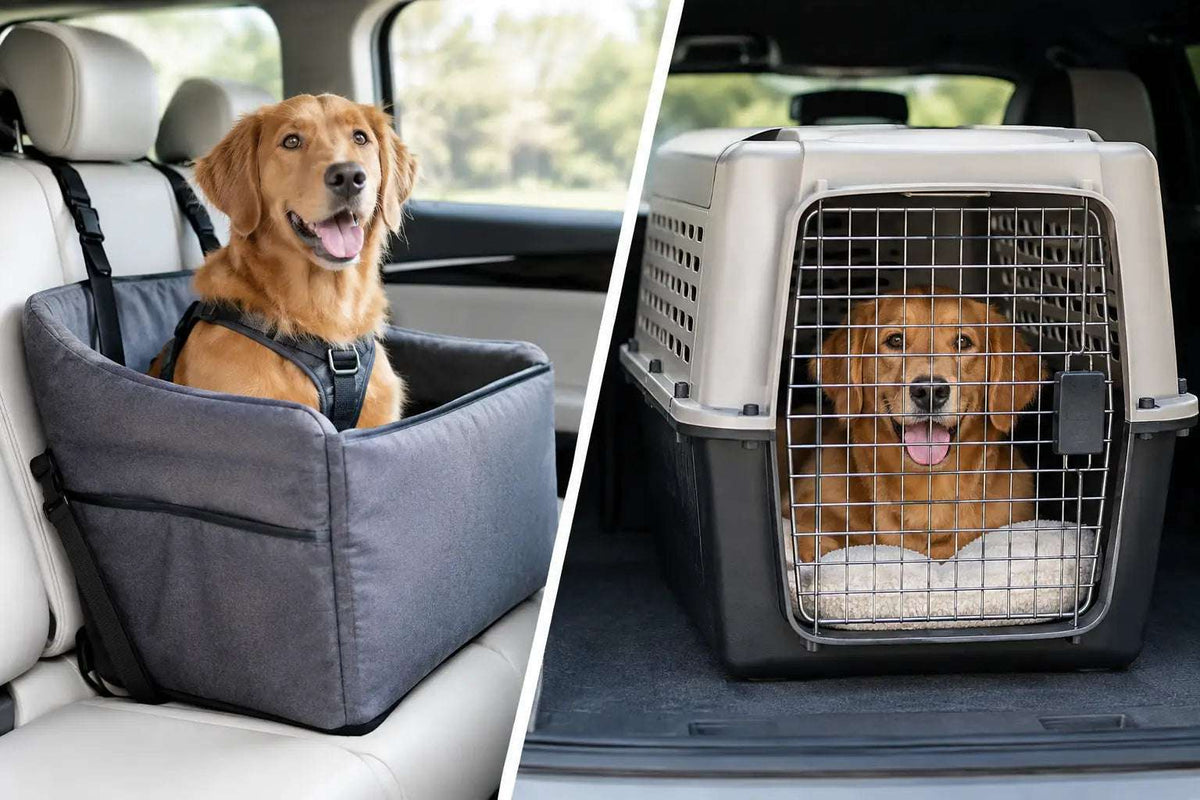
A pet car seat is typically a padded, contained seat secured to a vehicle seat, often with a short internal tether or a harness attachment. Premium ISOFIX pet car seats use the vehicle's ISOFIX anchor points for a more direct connection to the car. They are usually best suited to small dogs and cats within the manufacturer's stated weight limit, especially pets who settle better when they can see their person and their surroundings.
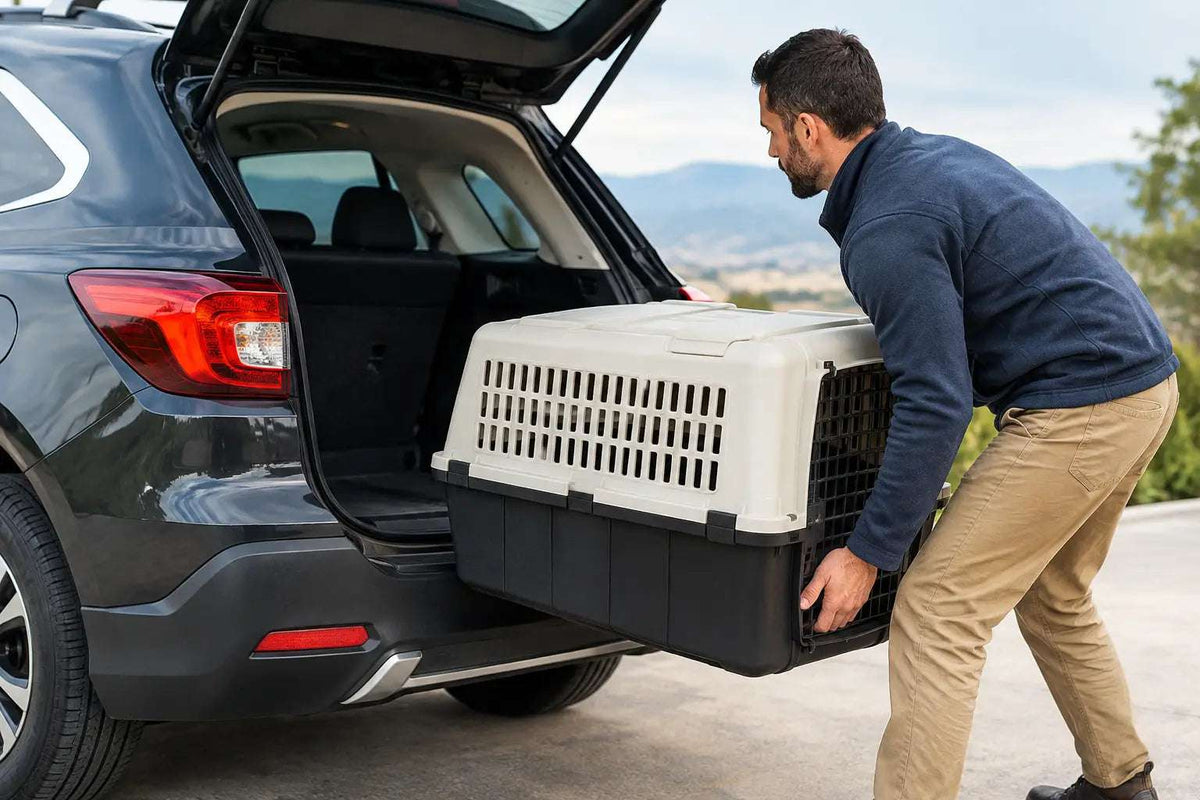
A car crate is a rigid or semi-rigid enclosed space, normally positioned in the boot of an estate car, SUV or hatchback, or occasionally on a rear seat where the manufacturer permits it. A properly specified crash-tested crate is designed to offer containment and protection in a collision, provided it is installed exactly as instructed and is compatible with the vehicle. It also gives many dogs the den-like privacy they prefer.
Neither product type is automatically safe simply because it is labelled for travel. A plush booster with a loose tether is not equivalent to an impact-tested car seat. Likewise, a strong-looking crate is not necessarily crash-tested or suitable for every boot shape. Engineering, fit and installation matter as much as the category name.
When a car seat makes more sense
A car seat can be a lovely choice for a small, calm dog or a cat travelling in an appropriate enclosed model. It keeps them close to the family rather than isolated in the boot, which may help pets that become unsettled when they cannot see or hear you. For short trips, gentle sightseeing drives and regular outings, that connection can make travel feel like a normal part of life.
ISOFIX is particularly useful where available because it reduces reliance on the seat belt alone and can help prevent unwanted movement. However, the pet still needs suitable restraint within the seat. Never attach a tether to a collar, which can put dangerous pressure on the neck if the car brakes sharply. A correctly fitted, vehicle-safe harness is the more appropriate connection for a dog.
Car seats are generally most practical for toy and small breeds, lightweight puppies and pets recovering from a condition that means they need a padded, easily accessible place to rest. They can also be a sensible option for senior dogs who find jumping into a boot difficult. That said, a soft supportive seat does not remove the need to consider their spine, joints and balance. A dog with IVDD, recent surgery or significant pain may need veterinary advice before travelling, along with a low-lift route in and out of the vehicle.
The limitations are clear. A car seat should not let a dog climb, lean out or move around freely. It must not sit where an airbag could deploy against them. And if your dog is too heavy, too tall to lie down comfortably, highly anxious or inclined to chew restraints, a car seat may be the wrong solution regardless of how much they enjoy being beside you.
When a crate is the better travel space
For medium and large dogs, a crate is often the more realistic choice. It gives the dog enough room to stand, turn and lie in a natural position while limiting loose movement around the car. It can also protect the rest of the vehicle from muddy paws, shedding and the occasional post-walk shake.
A crash-tested crate is especially worth considering for frequent motorway miles, holidays, multi-dog households and dogs with the size or strength to overwhelm a tethered car seat. Look carefully at what the testing applies to. It may relate to a particular crate size, mounting method, vehicle position or test standard. A claim of being "crash-tested" is meaningful only when the product's instructions explain how it was tested and how it must be secured.
Size is not simply about buying the largest crate that fits. Too much empty space can allow a dog to be thrown around inside during sudden braking, while a crate that is too small creates discomfort, overheating and panic. Measure your dog when standing and lying down, then compare those measurements with the usable internal dimensions rather than the external product size.
Boot fit deserves equal attention. The crate should sit level, with doors that can open safely and enough ventilation around it. Some vehicles have sloping rear screens, raised boot lips, shallow loading areas or fixed parcel shelves that rule out certain crates. Never force a crate into place, stack luggage against its ventilation panels or assume a boot divider is a replacement for a properly secured crate.
Safety checks before you choose
UK drivers have a responsibility to ensure an animal is suitably restrained so that it cannot distract the driver or injure itself, or you, if the vehicle stops suddenly. The most dependable way to meet that responsibility is to choose a travel system designed for your pet's size and your vehicle, then use it precisely as intended.
Before deciding, check these practical details:
- Your pet's current weight, body length, shoulder height and ability to get in and out comfortably.
- The product's stated weight limit, internal dimensions, approved restraint points and vehicle compatibility.
- Whether your car has ISOFIX points, suitable seat belt routing or enough flat boot space for the installation method.
- The product's testing information, including whether it is impact-tested or crash-tested and any limits attached to that claim.
- How the pet will travel on longer journeys, including ventilation, temperature, water stops and toilet breaks.
Comfort is a safety feature, not an extra
The safest setup on paper will be difficult to use if your pet dreads it. Introduce a car seat or crate at home first. Let your dog investigate it with the door open, add familiar bedding if the product guidance allows, and reward calm voluntary entry. For cats, keep the carrier or enclosed seat as a normal, positive part of the home rather than retrieving it only before a stressful journey.
Start with a few quiet minutes in a parked car, then take short drives. Watch for panting unrelated to temperature, drooling, trembling, repeated escape attempts or sickness. These can point to travel anxiety or motion sickness, not stubbornness. Slow acclimatisation, a stable position in the vehicle and advice from your vet can make a considerable difference.
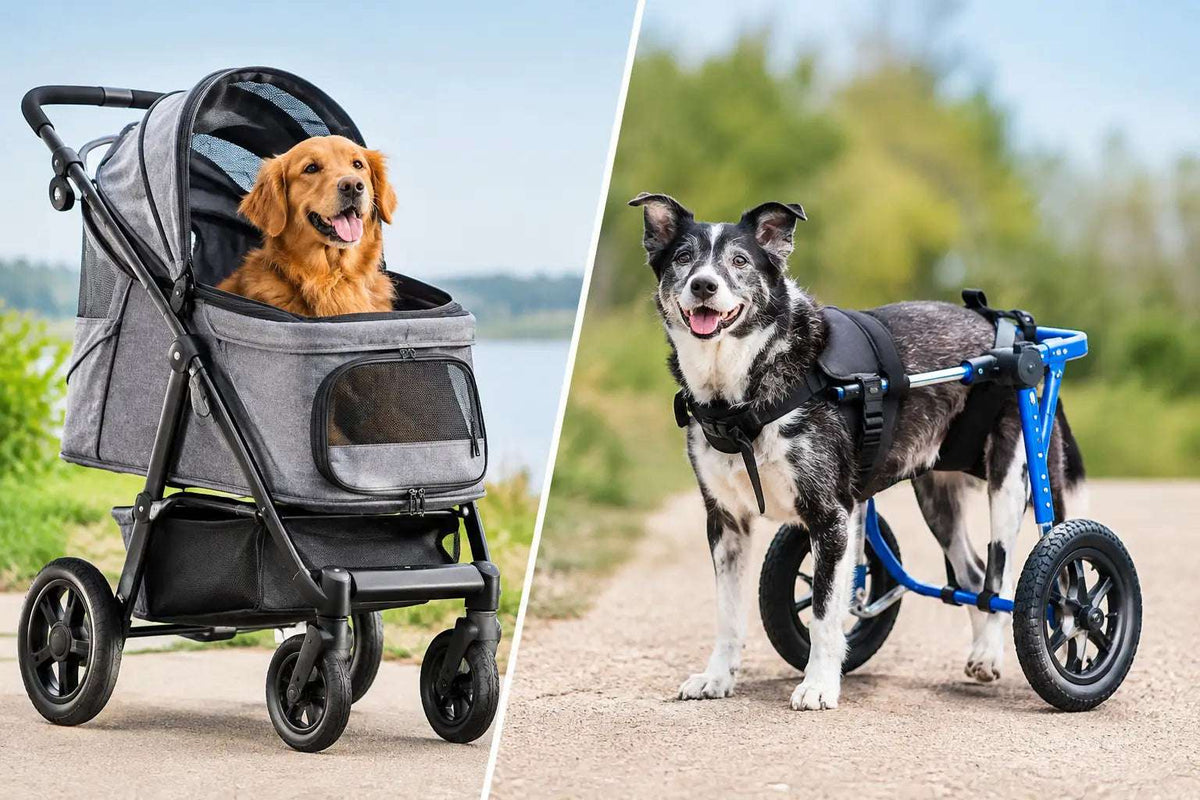
For dogs with limited mobility, comfort has further layers. Non-slip bases, supportive bedding, a low entrance and enough room to reposition can reduce strain. If a wheelchair, rear-support harness or medication is part of your routine, plan the journey around it rather than treating transport as a separate problem. A calm, dignified trip helps keep everyday adventures possible.
Choose for the journey you actually make
A tiny companion who accompanies you to cafés and family visits may thrive in a well-fitted ISOFIX car seat. A Labrador who joins you on coastal holidays may be safer and more settled in a vehicle-compatible crash-tested crate. Some households benefit from both: a crate for longer drives and a carrier or seat for shorter, supervised trips.
Do not buy for the dog you hope will sit still, or the car you may own next year. Buy for the pet in front of you, the vehicle on your drive and the journeys that make up your life together. When they are secure, comfortable and properly accommodated, there is one less reason to leave them behind.