Choosing an Airline Approved Dog Carrier UK
A carrier can be beautifully made, reassuringly padded and labelled as flight-ready, yet still be refused at check-in if it does not meet your airline’s own rules. Choosing an airline approved dog carrier UK pet owners can rely on starts with one principle: the airline’s policy is the final authority, not a generic product label.
For a small dog travelling in the cabin, the right carrier gives them a secure, familiar place to settle under the seat in front. For you, it removes a great deal of avoidable stress from a day that already involves timings, queues and new surroundings. Your dog deserves a seat on the adventure too - even when that seat is technically beneath yours.
What “airline approved” really means
There is no single UK or worldwide airline approval stamp that applies to every pet carrier. Airlines set their own limits for cabin carriers, including maximum external dimensions, whether the bag must be soft-sided, the total pet-and-carrier weight allowance, and which routes allow animals in the cabin at all.
A carrier described as airline compliant is usually designed around common cabin requirements. That is useful, but it is not a guarantee. One airline may allow a slightly taller soft bag because it can compress under the seat, while another measures strictly and permits only a lower profile. Aircraft type can also change the usable space below the seat.
Before buying, check the policy for your exact airline, route and aircraft where possible. Confirm that your pet has a booked place too. Most airlines have a limited number of pets permitted in the cabin, so turning up with a suitable carrier does not substitute for advance approval.
Start with the airline, then measure the carrier
It is tempting to choose a carrier based on breed labels such as Chihuahua, Miniature Dachshund or cat. Breed guidance can be a useful starting point, but it cannot account for your pet’s individual build, coat, confidence or ability to curl up comfortably.
Find your airline’s maximum carrier dimensions first, then compare them with the carrier’s external measurements. Do not rely on internal measurements when checking cabin limits. Handles, feet, rigid frames and expanded pockets can all affect what staff see at the desk.
Next, check the combined weight limit. Some airlines state a limit for the pet and carrier together, rather than the animal alone. A premium carrier should feel supportive and durable, but a heavily structured model may use too much of a tight weight allowance. If your dog is close to the limit, weigh them in the carrier with their usual travel liner before you book.
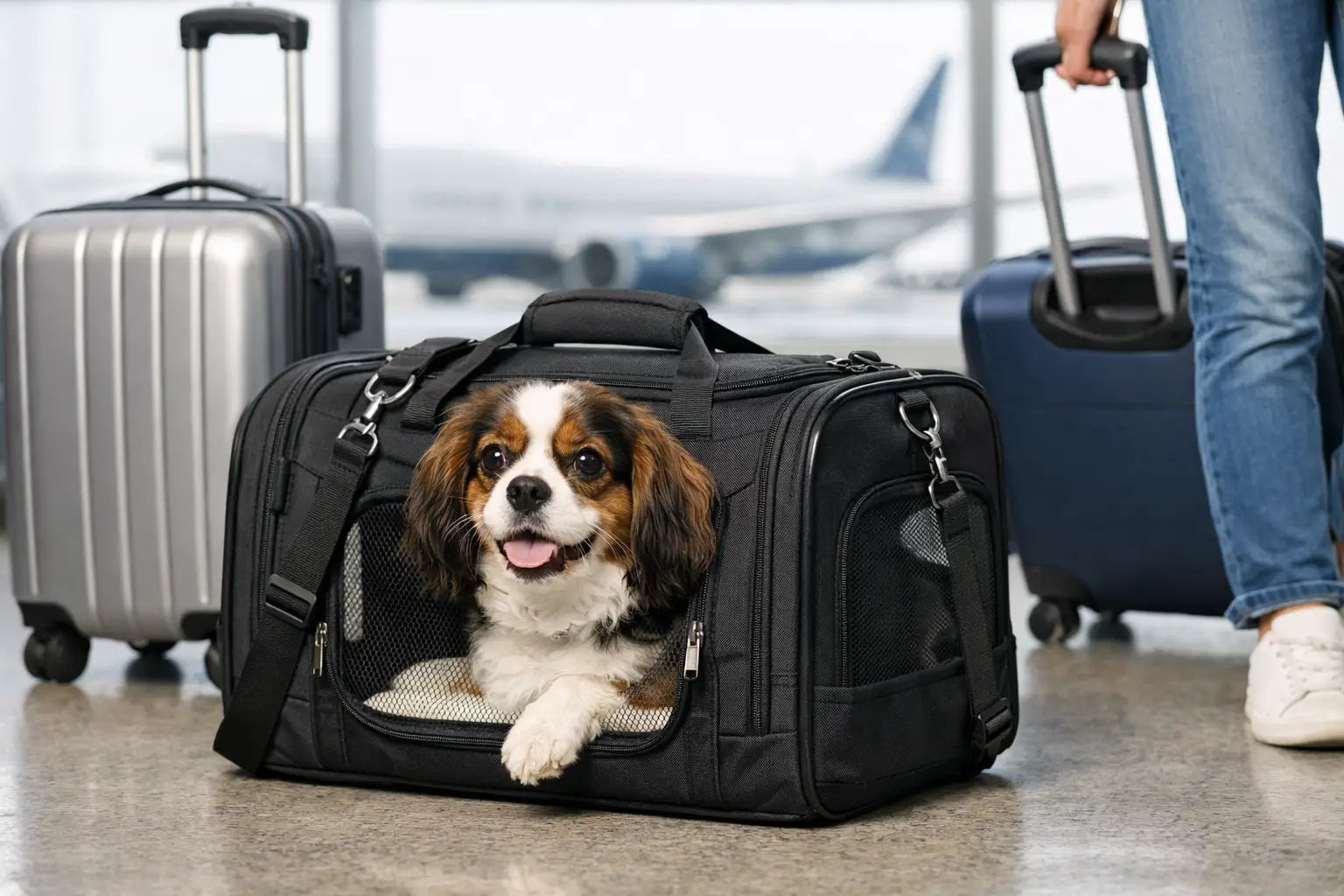
Soft-sided carriers are often the sensible choice for cabin travel because they can adapt gently to the shape of the under-seat area. This does not mean floppy or poorly supported. Look for a stable base that prevents sagging, breathable mesh panels and a structure that helps your dog maintain a natural resting position.
How your dog should fit inside
Airline rules commonly require pets to remain inside the carrier for the whole journey. That makes fit a welfare issue, not simply a box-ticking exercise.
Your dog should be able to stand without hunching, turn around, and lie down in a comfortable, natural position. A carrier that is too large can be just as unhelpful as one that is too small: your dog may slide about when it is carried, and it may exceed the airline’s cabin measurements. The goal is contained, cushioned security rather than extra empty space.
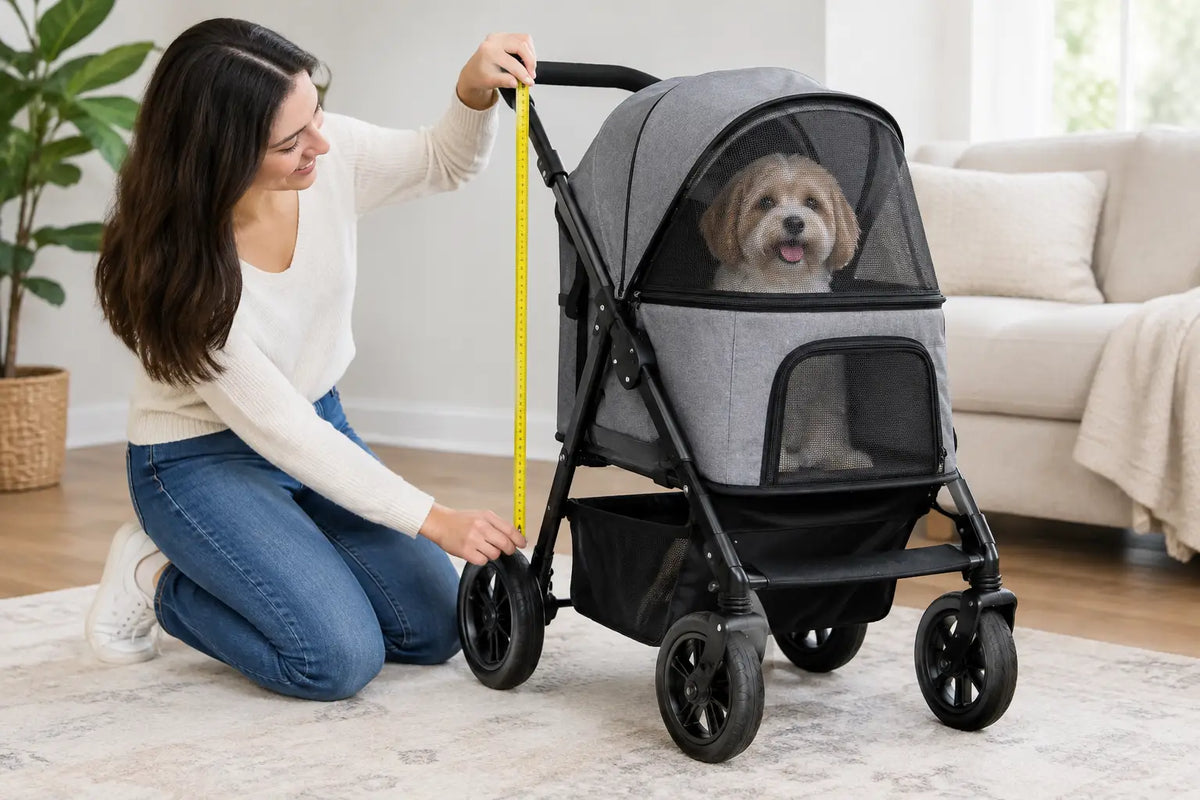
Measure your dog while they are standing calmly. Take their length from the chest to the base of the tail, their height from the floor to the top of the head or ears, and their widest point. Then compare those figures with the carrier’s usable internal space, allowing room for a thin absorbent liner. If the stated dimensions include thick padding or tapered walls, ask for clarification before committing.
Dogs with mobility limitations need a little more thought. A senior dog, a dog recovering from surgery, or one living with IVDD may struggle with a narrow top opening or a high step into the bag. A carrier with a wide side entrance, a firm low base and supportive bedding can make the transfer calmer and more dignified. If your dog cannot turn or settle without discomfort, cabin travel may not be the kindest option, even if their measurements technically fit.
Features that make flying calmer and safer
The most useful features are rarely the flashiest. Secure, lockable zip closures matter because an anxious dog can find a weak fastening surprisingly quickly. Several mesh panels provide airflow and let your dog see you without leaving them exposed. A stable base is particularly valuable when the carrier is placed on the floor, moved through the terminal or tucked below a seat.
Choose a carrier with a secure internal tether only if it can attach safely to a well-fitted harness. Never clip a tether to a collar, as a sudden movement could put pressure on the neck. The tether is a back-up for opening and closing the bag, not a reason to leave your dog restrained for longer than necessary.
A removable, washable liner is another practical advantage. Travel can bring nausea, spills or muddy paws, and a familiar-smelling liner can offer comfort in an unfamiliar place. Avoid bulky mattresses, loose blankets or large toys that reduce your dog’s room to move or create problems during a security check.
For cabin travel, prioritise these essentials:
- Ventilation on more than one side, with mesh that is strong and securely stitched.
- A waterproof or water-resistant base and an absorbent, removable liner.
- Reliable zips, reinforced seams and carrying straps that feel balanced in your hand.
- A discreet luggage sleeve or shoulder strap if it helps you move through the airport without swinging the bag.
Hard-sided or soft-sided carrier?
A hard carrier offers excellent shape retention and can be easier to wipe clean. It may suit travel by car, train or ferry, and some pets feel safer in its enclosed structure. For flying in the cabin, however, a rigid carrier is often less forgiving under a seat and more likely to exceed a strict height limit.
Soft-sided carriers tend to work better for most in-cabin journeys, provided the base is supportive and the fabric is substantial enough not to collapse around your dog. They are also easier to store at home and may feel less imposing for a nervous pet. The trade-off is that they need careful inspection: check the stitching, mesh, zips and base board rather than assuming all fabric carriers offer the same level of security.
Do not confuse a cabin carrier with an IATA-style travel crate for pets travelling in the hold. The requirements, construction and welfare considerations are different. Many UK pet owners will also find that their airline does not carry pets in the cabin on their preferred route, so this needs confirming before a carrier becomes the focus of your travel plans.
Prepare the carrier before travel day
The best carrier is one your dog already regards as a safe place. Bring it out well before your trip and leave it open at home with a familiar blanket or liner inside. Reward your dog for choosing to step in, then build up gradually to closing the door for short, relaxed periods. A carrier should never appear only when something stressful is about to happen.
Practise carrying your dog around the house and taking short car journeys if appropriate. This reveals practical issues early: perhaps the base shifts, the shoulder strap sits awkwardly, or your dog needs a more supportive liner. It also helps you judge whether they can settle for the likely length of the journey, including the airport time before boarding.
On the day, offer exercise that suits your dog’s health and energy levels, plus a toilet break before entering the terminal. Keep meals sensible rather than making a sudden change to their routine. Carry the documents required for your destination and follow the airline’s instructions on check-in, security and when your dog must remain inside the carrier.
A final fit check before you book
Place your dog in the fully prepared carrier, with the liner and any permitted essentials inside. Weigh the complete set-up, measure its outside dimensions and check that it still meets your airline’s current rules. Then consider the less measurable question: does your dog look able to rest peacefully there?
A well-chosen carrier is not merely a ticket through the terminal. It is your dog’s small, secure base while the family goes somewhere new - and that comfort is worth getting right before the adventure begins.