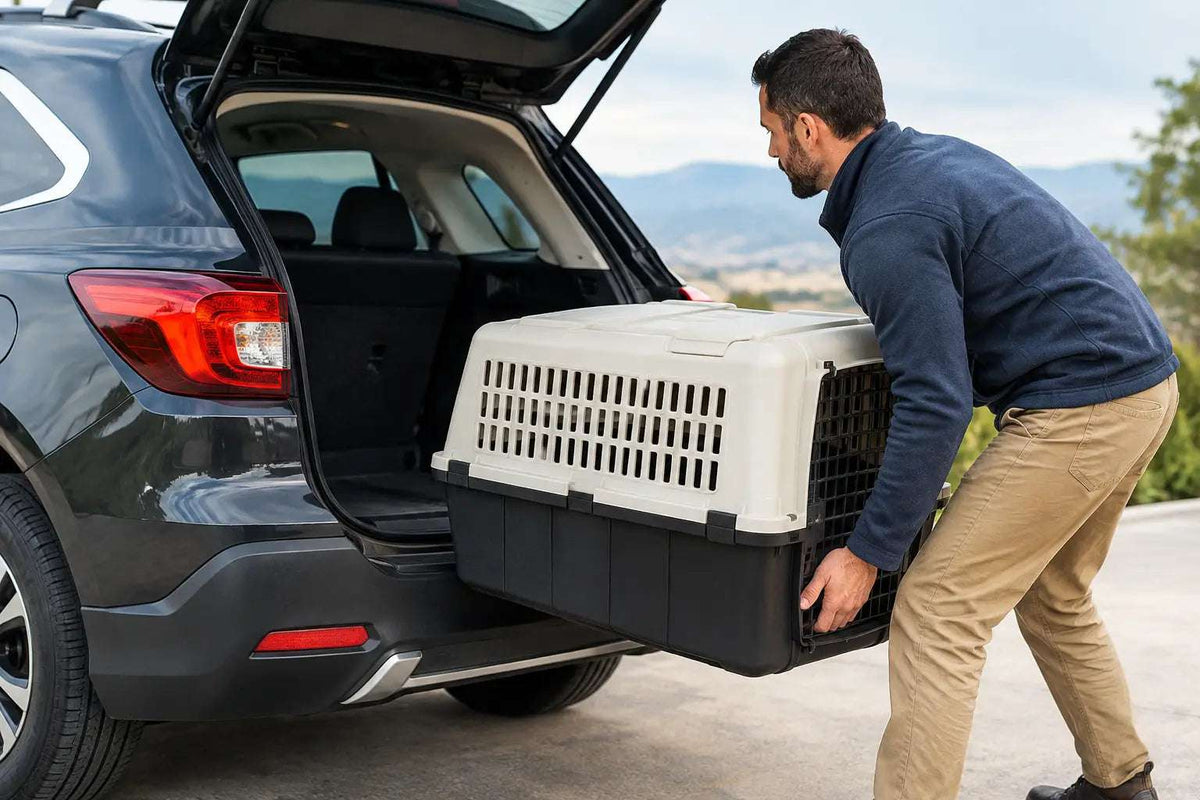
Vehicle Crate Compatibility: Get the Fit Right
The boot looked generous in the showroom. Then the crate arrived, the tailgate would not close, and the only way to make it fit was to remove the tray and angle it awkwardly across the load space. Vehicle crate compatibility is the detail that turns a premium travel crate into a genuinely safe, comfortable place for your dog - or an expensive box that never leaves the garage.
A crate must suit your dog, your vehicle and the way you travel together. That means more than matching a product’s dimensions to the broad idea of an estate car or SUV. Boot openings taper, rear seats recline, wheel arches steal floor space and sloping glass can limit height precisely where the crate needs it. Get the fit right before you buy and your dog has a secure seat on every adventure.
What vehicle crate compatibility really means
Vehicle crate compatibility is the relationship between the crate, the car’s available space and the approved method of securing it. A crate that physically fits may still be unsuitable if it blocks the tailgate latch, prevents access to a required fixing point or sits on an uneven surface. Equally, a crate with an excellent crash-test pedigree cannot deliver its intended protection if it is installed outside the manufacturer’s instructions.
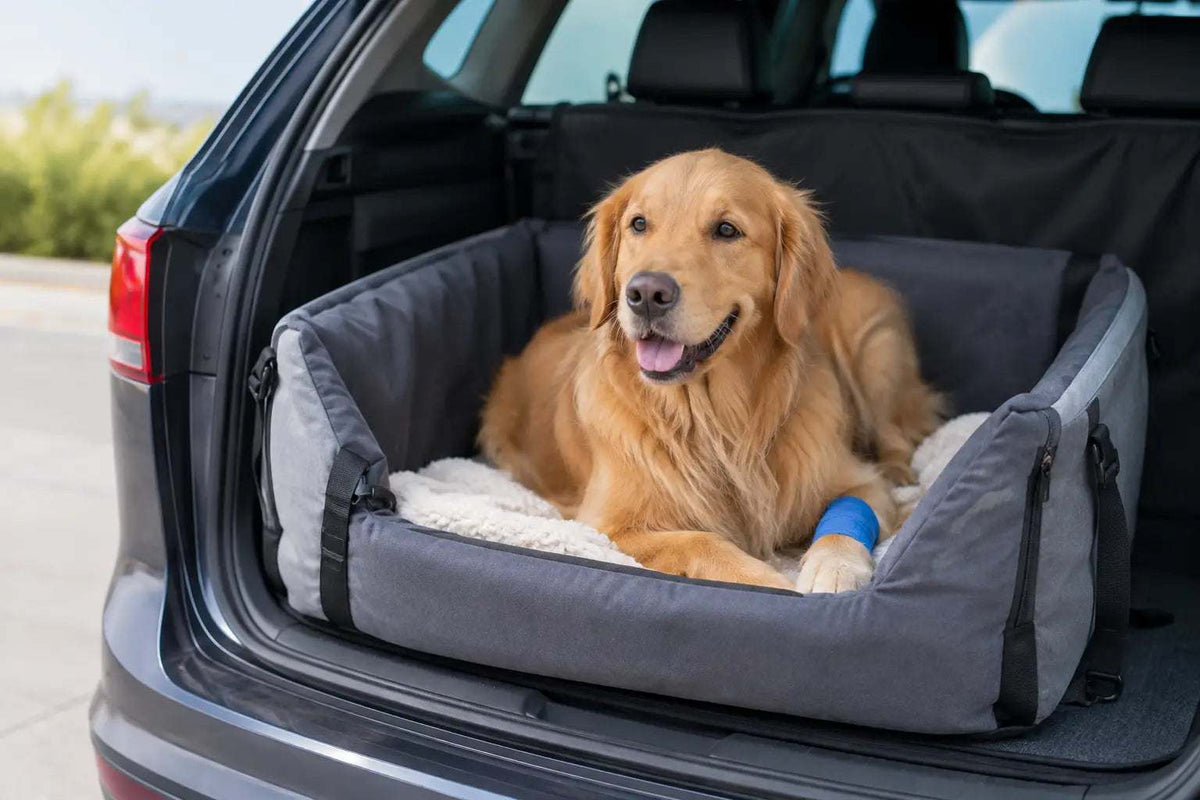
Start with the vehicle rather than the crate. Consider whether your dog travels in the boot, on a folded rear-seat area or, where appropriate and permitted by the product manufacturer, in another enclosed section of the car. For most dogs, the boot of an estate, hatchback or SUV is the practical choice, provided there is suitable ventilation and a secure separation from passengers where needed.
The goal is not to pack the biggest possible crate into every millimetre. Your dog needs enough room to stand naturally, turn around and settle in a normal sleeping position. The crate also needs breathing space around it where the manufacturer requires it, particularly near doors, vents and attachment points.
Measure the car properly before choosing a crate
Manufacturer vehicle lists are a helpful starting point, but they are not a substitute for checking your own car. Trim levels, model years, spare-wheel arrangements, adjustable boot floors and optional rails can all change the usable dimensions.
Measure the width at the narrowest point, which is often between the wheel arches. Then measure the depth from the rear seats to the inside of the closed tailgate, plus the internal height from floor to roof at the lowest point. Do not forget the boot opening itself. A crate can fit inside the car on paper yet be too tall or too wide to pass through the opening.
If you are considering a double crate, take extra care with width and shape. Two smaller compartments may be ideal for dogs who need their own space, but a central divider, door clearance and tapered sides all affect the final footprint. In some cars, two single crates provide more flexibility. In others, a purpose-designed double crate uses the space more efficiently.
Check the details measurements can miss
A few practical checks prevent frustrating surprises. Confirm whether the rear seats must stay upright, whether the parcel shelf needs to be removed and whether the tailgate can close without touching the crate. Look for boot lips, tie-down loops, raised thresholds and plastic trims that could interfere with a level installation.
Also think about daily life. Can you open the crate door without leaning over a muddy bumper? Can your dog step in comfortably? For a senior dog, a dog recovering from surgery or one with reduced mobility, the loading height may matter as much as the crate dimensions. A ramp, lifting aid or a lower-loading vehicle can make travel kinder and safer.
Match the crate to the dog, not just the boot
A close-fitting crate is not automatically a cruel one. Dogs often settle well in a correctly sized den-like space, especially when it is familiar and introduced positively. But “correctly sized” never means cramped. Your dog should be able to stand without crouching, turn without squeezing past the sides and lie down in their preferred position.
Measure your dog while standing naturally from the floor to the top of the head or ears, then from nose to base of tail. Add sensible allowance for movement and bedding, following the individual crate brand’s sizing guidance. A deep mattress or orthopaedic bed improves comfort, but it also reduces usable internal height, so factor it in before choosing a model.
Breed labels can be useful shorthand, but individual build matters more. A lean Whippet and a broad-chested French Bulldog of similar weight can need very different internal shapes. The same applies to a young, agile dog and an older companion who needs room to reposition gently.
Secure installation matters as much as the crate
A loose crate can move under braking or cornering, unsettling your dog and creating a serious hazard. The correct fixing method depends on the crate, the vehicle and the instructions supplied by both manufacturers. Some vehicle crates are designed to work with dedicated straps or anchoring systems, while others have specified installation positions.
Never assume that a cargo strap, bungee cord or improvised tie-down provides equivalent protection. Elasticated cords are particularly unsuitable for restraining a crate. Use only the approved attachment method, inspect straps and fittings regularly, and keep them free from twists or damage.
If you are choosing a crash-tested crate, read the evidence carefully. Testing standards, test conditions, dog-size limits and approved installation methods vary. “Crash-tested” is meaningful only in the context of the exact product, weight range and installation configuration tested. It is a strong reason to choose a well-engineered crate, not a reason to skip the fit check.
Consider the car’s safety systems
Some vehicles have boot-mounted tether points; others have rails, hooks or no suitable visible anchors for a particular crate system. The location of these points matters. A strap pulled at the wrong angle can leave the crate unstable or put unwanted pressure on a door or frame.
If your vehicle has a load cover, electric tailgate, adjustable rear seats or a spare-wheel well, check that nothing changes once the crate is in place. Keep rear visibility in mind too. A crate should not obscure essential sightlines more than necessary, and your dog should not be exposed to direct sun for long periods through a rear window.
Comfort makes safe travel easier
A compatible crate is not only about dimensions and fixings. It should make car journeys calmer. Add non-slip, washable bedding that suits the season, ensure fresh airflow around the crate and offer water during stops on longer journeys. Never leave a dog in a parked car in warm weather, even for a short errand.
Help your dog see the crate as their own familiar travel space before a long drive. Begin at home with the door open, favourite bedding and quiet rewards. Then practise short, uneventful journeys. This is especially valuable for rescue dogs, anxious travellers and dogs whose recent injury or illness has made car travel feel unfamiliar.
For multi-dog households, compatibility includes temperament. Dogs that share a sofa happily may still travel better in separate compartments. Each dog needs enough room, independent ventilation and no opportunity to crowd the other during braking. A divider can support calmer travel, but only if both compartments remain correctly sized.
When a standard boot crate is not the best answer
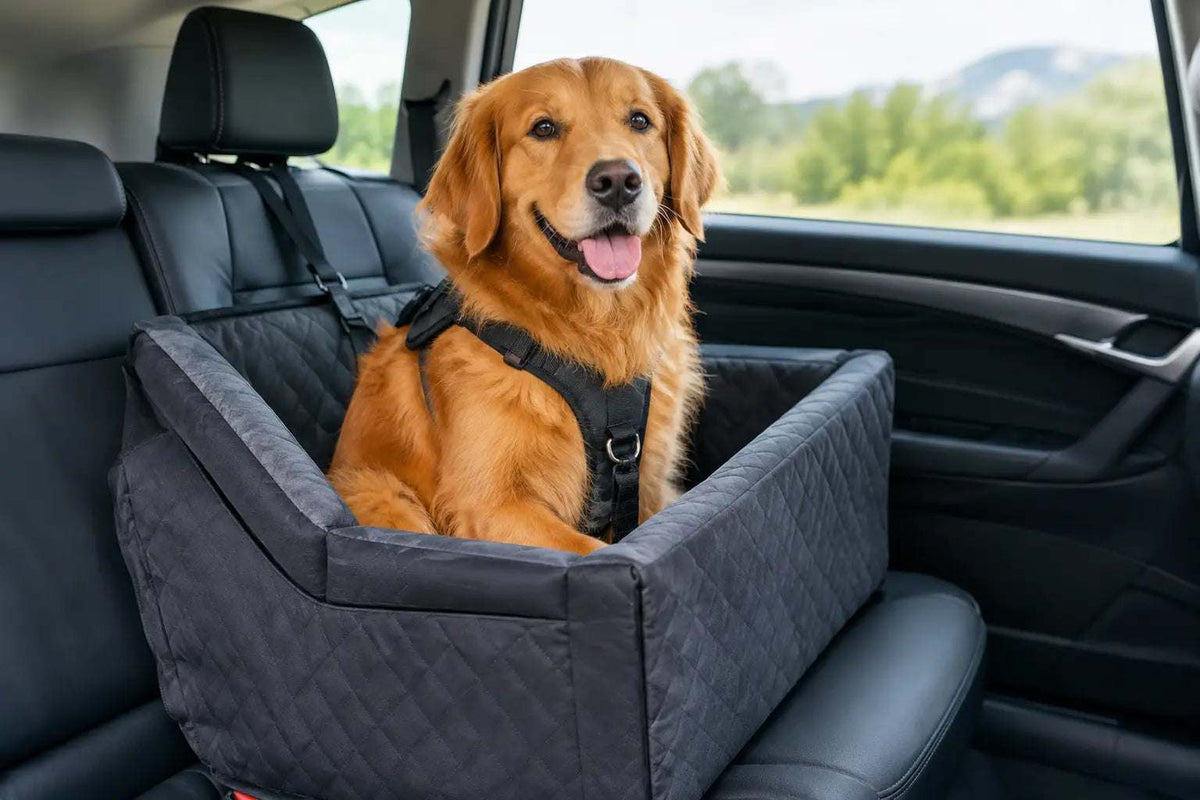
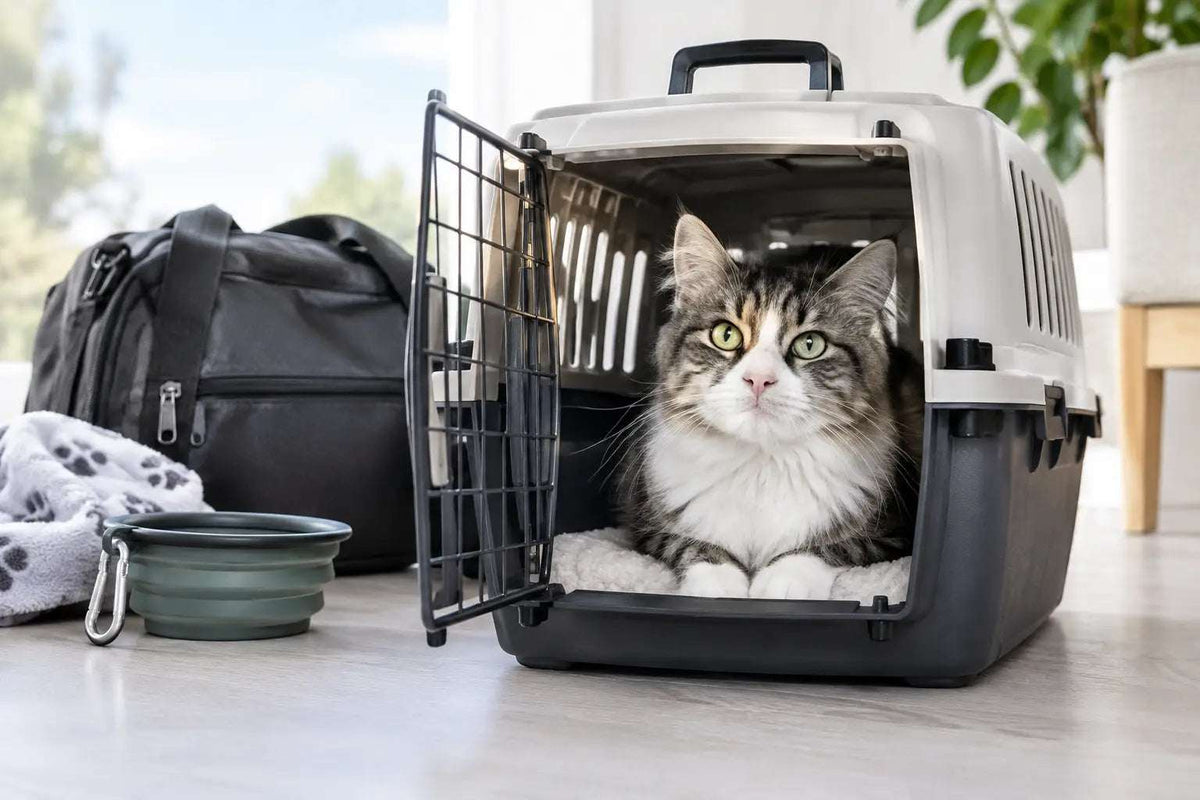
There are situations where a conventional crate is not the right solution. A dog with severe arthritis may struggle with a high boot entrance. A very large dog may not have enough safe, usable space in a small car. Cats and small dogs may be better served by an appropriately secured carrier or car seat, depending on the product’s intended use and the journey.
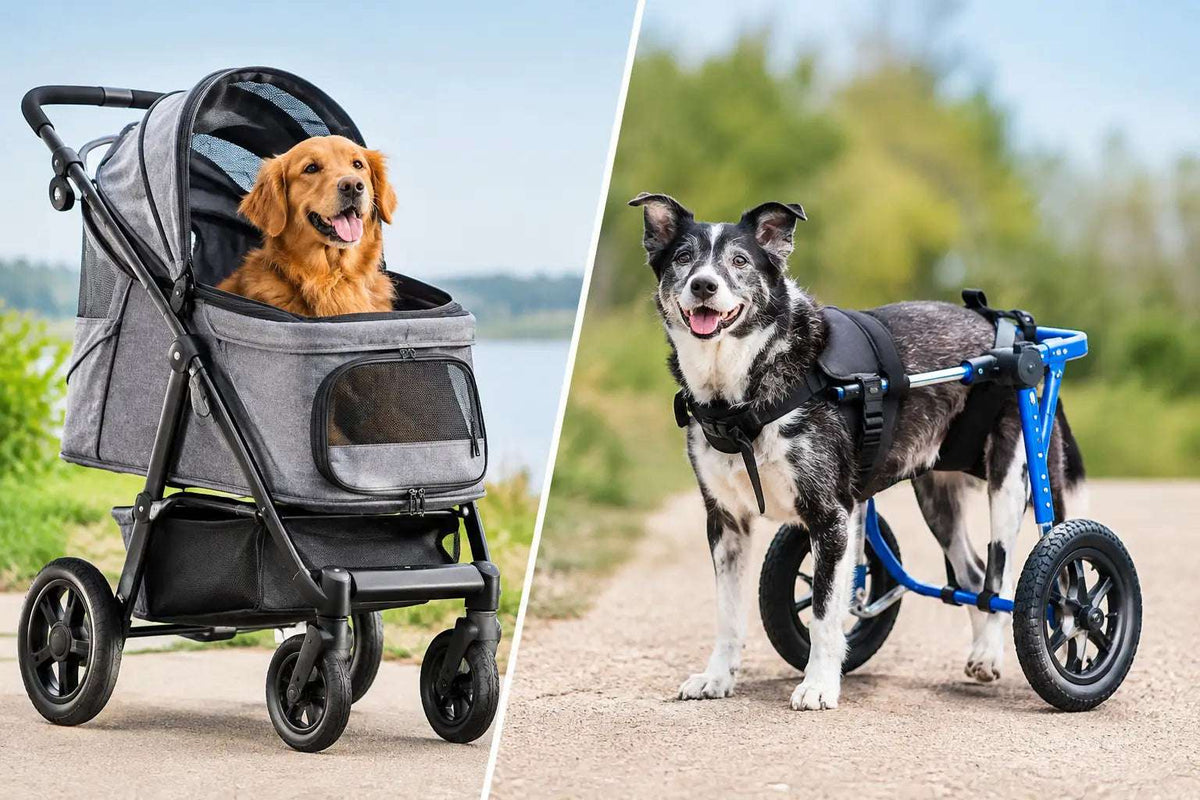
If your dog uses a wheelchair, rear support harness or other mobility equipment, plan for that too. You may need room to transport the mobility aid alongside the crate, or a crate layout that allows gentle loading without twisting or lifting your dog awkwardly. Comfort and dignity are part of the specification.
The best choice sometimes involves a trade-off: a slightly smaller crate that installs correctly and leaves space for safe access can be wiser than a larger model forced into an unsuitable boot. Expert advice is worth seeking when vehicle dimensions, dog size or mobility needs sit near a product’s limits.
Before your next journey, stand at the open boot with a tape measure, your dog’s needs and your usual travel routine in mind. A carefully chosen crate does more than contain your companion. It gives them a secure, familiar place to be, so life’s journeys can keep including them.