
Dog Stroller Versus Carrier: Which Is Best?
A dog who has slowed down should not have to miss the coffee stop, the park loop or a family day out. Equally, a small dog who feels safer tucked close to you may find a roomy pram far less reassuring than a snug carrier. The dog stroller versus carrier decision is not about which looks best on the pavement. It is about how your dog moves, rests, copes with new places and travels alongside the family.
Both options can make life more inclusive. The right one gives your dog a secure place to recover from walking, manage busy environments and stay part of the plan without being pushed beyond their comfort. The wrong one can be awkward, poorly fitted or simply unsuitable for the journey ahead.
Dog stroller versus carrier: start with your dog's needs
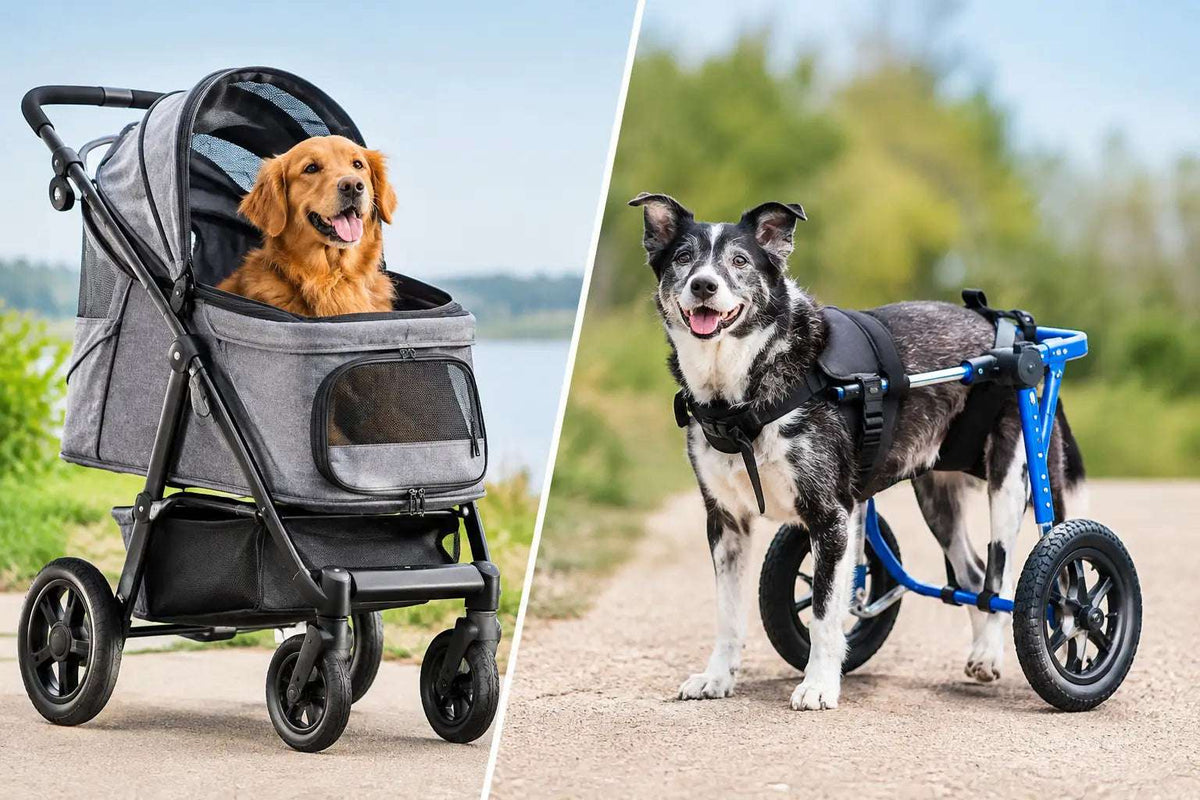
A stroller is a wheeled, enclosed or semi-enclosed space that lets you push your dog rather than carry their weight. It is usually the better choice for dogs who cannot comfortably walk far, including seniors, dogs recovering from surgery, and those living with arthritis, IVDD or other mobility limitations. It can also be a practical option for small dogs on long city walks, particularly when pavements, crowds and warm weather would make a full day on foot tiring.
A carrier keeps your dog close to your body, in your hands or on your shoulder. Depending on the design, it may be soft-sided, structured, backpack-style or built for airline travel. Carriers suit very small dogs, puppies and cats particularly well, as well as pets that settle when they can feel their owner's movement and hear a familiar voice nearby.
Size alone does not settle the question. A confident 6kg terrier who still loves a long walk may benefit most from a stroller for rest breaks. A calm 4kg dog who finds crowds overwhelming may be happier in a close-fitting carrier for short errands. Think about the distance, the setting and your dog's health, not just their weight.
When a dog stroller is the better choice
A quality dog stroller gives a dog their own comfortable seat on the adventure. That matters when mobility, fatigue or pain makes repeated lifting and walking unrealistic. Your dog can get fresh air, see the world and remain at family level without having to keep pace every minute.
Strollers are especially useful for longer outings. A carrier can feel manageable for ten minutes, then become heavy on one shoulder while your dog becomes warm and cramped. A stroller spreads the load through its frame and wheels, leaving you freer to navigate a high street, park or seafront promenade.
Mobility support without leaving them behind
For a dog with reduced mobility, a stroller is often about dignity as much as convenience. They may still want to sniff at the park gate, watch children play or join their usual walk, even if their body cannot manage the full route. A supportive, well-ventilated cabin allows them to rest before discomfort builds.
Look for a stated maximum pet weight, a stable low centre of gravity and a cabin large enough for your dog to turn around and lie naturally. The base should be firm and padded rather than sagging beneath them. Suspension, reliable brakes and wheels suited to your regular terrain are worthwhile if you walk over uneven paths, cobbles or park trails.
For nervous dogs, a zipped enclosure can also create a calm buffer from unfamiliar dogs and busy feet. Mesh panels are helpful because they maintain airflow while allowing your dog to see out. However, an anxious dog should be introduced gradually at home first. A stroller is not a substitute for careful behaviour support.
The limits of a stroller
A stroller takes up more space than a carrier. It may be inconvenient on a packed bus, in a narrow café or when your route includes flights of stairs. Folding size matters if it will live in the boot, and you should check that you can lift it safely when it is folded.
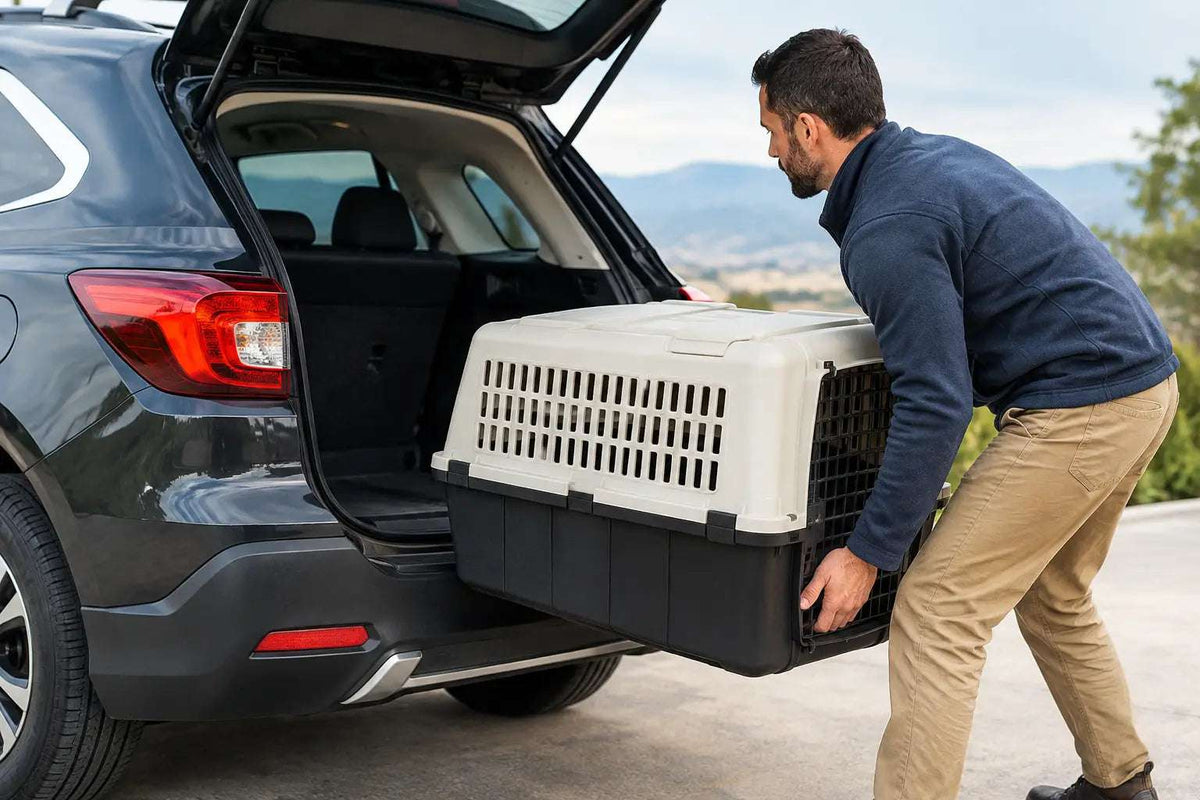
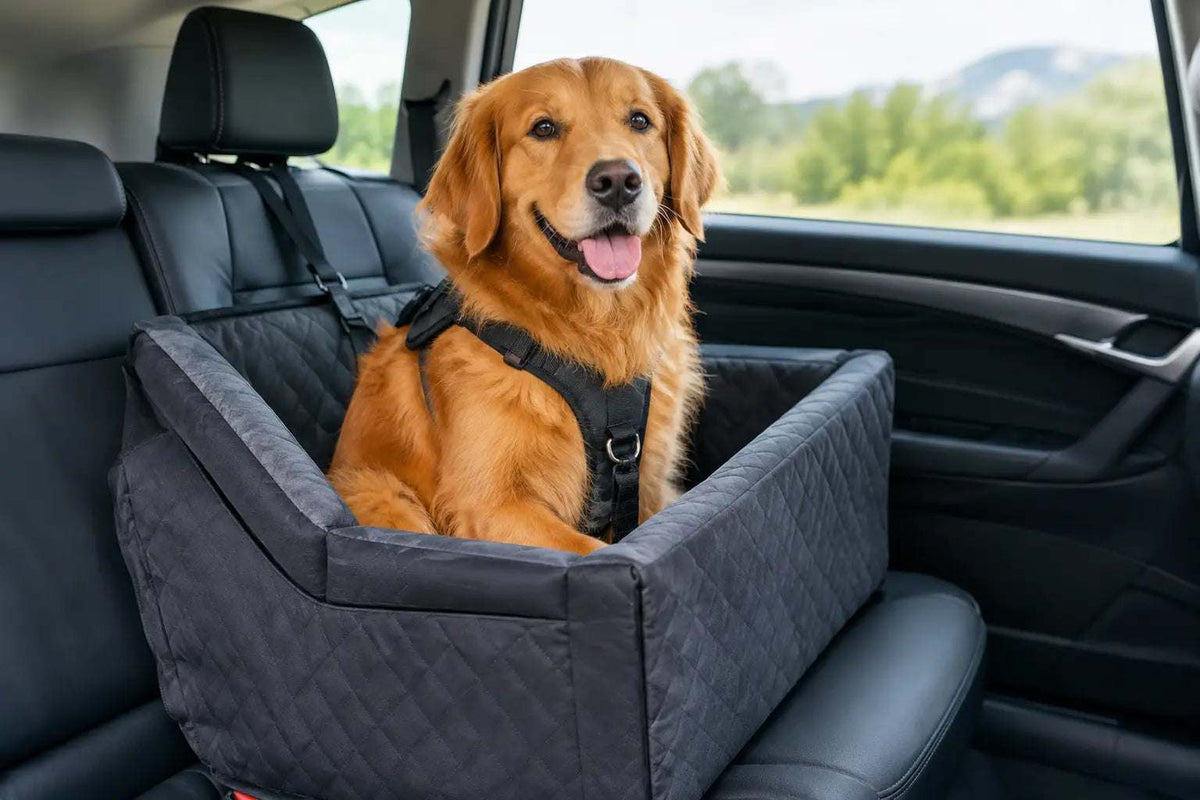
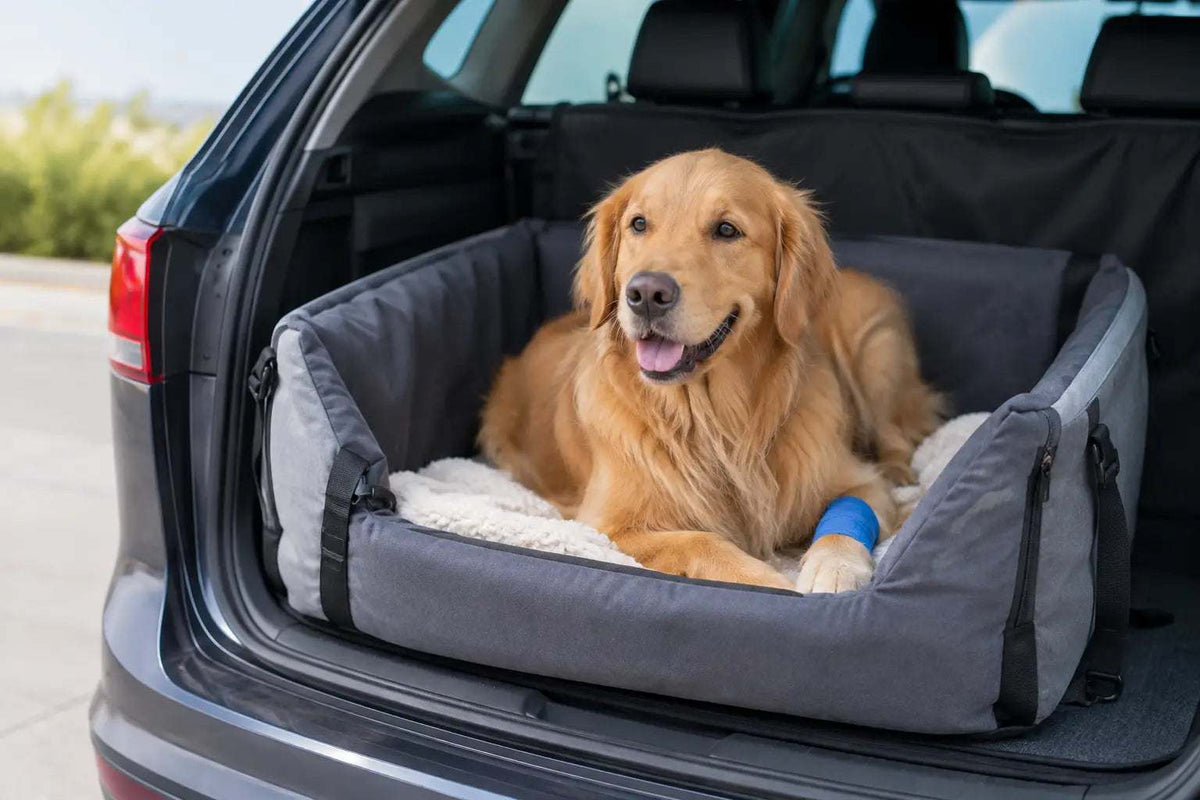
It is also not a car restraint. Do not assume that a dog secured in a stroller is protected for vehicle travel. For journeys by car, use a properly specified car crate, pet car seat or harness that is designed for use in a vehicle and compatible with your dog, your car and the intended seating position.
When a carrier is the better choice
A carrier is often the most direct solution for short journeys, public transport and situations where you need both hands reasonably free. It keeps a small pet contained close to you and can make a busy environment feel more manageable. For puppies still learning about the world, a carrier can provide a safe retreat between brief, positive introductions to new sounds and surfaces.
The best carrier feels secure rather than restrictive. Your dog should be able to stand, turn around and lie down in a natural position. Good ventilation on more than one side is essential, especially for flat-faced breeds and in warmer conditions. A stable base, secure fastenings and a short internal tether attachment can help prevent sudden escapes when the carrier is opened, though a tether should only be attached to a well-fitted harness, never a collar.
For travel, check the specification not the label
Not every carrier marked as a travel bag is suitable for every form of travel. Airlines have their own rules for dimensions, materials, ventilation and whether a pet can travel in the cabin. Those rules can vary by airline, route and aircraft, so measure your chosen carrier when packed and confirm the current requirements directly before booking.
For a car journey, a soft carrier may contain your pet but does not automatically offer crash protection. If vehicle safety is the priority, choose equipment with clearly stated crash-test credentials or vehicle compatibility, and follow the manufacturer's fitting instructions precisely. A premium product only works as intended when it is correctly installed and sized.
Carriers are less ideal for dogs that are heavy, long-bodied or unable to tolerate pressure around their joints. Even with padded straps, the owner carries the full weight. If you find yourself swapping arms, hunching your shoulder or avoiding longer walks, a stroller will probably offer a more comfortable solution for both of you.
Safety and comfort checks before you buy
Whether you choose wheels or straps, fit is the feature that changes everything. Measure your dog while they are standing and lying down, then compare those measurements with the usable internal dimensions, not only the product's external size. Allow enough room for a natural resting position, but avoid a space so oversized that your dog slides about during movement.
Before your first proper outing, practise at home. Leave the carrier open with a familiar blanket inside, or let your dog explore the stationary stroller with treats and calm praise. Progress to a few minutes indoors, then a short, quiet trip. This is particularly valuable for rescue dogs, pets on restricted exercise and animals returning to activity after an operation.
Check these practical details before setting off:
- Ventilation remains clear when the weather cover is fitted or the carrier is zipped.
- All zips, clips and tether points are closed and working as intended.
- Your dog's harness fits securely and does not rub under pressure.
- The stroller's brakes are applied whenever you stop on a slope or wait near a kerb.
- You have water, a cooling plan in warm weather and a familiar comfort item for longer trips.
Choose for the outing you actually take
If your life involves long pavement walks, park visits and a dog whose legs tire before their spirit does, choose a stroller with suitable wheels, suspension and weight capacity. If you need a compact solution for a small pet on trains, taxis, short appointments or airline travel, a well-ventilated carrier is usually more practical.
Some families genuinely need both. A carrier can handle quick errands and cabin travel, while a stroller gives an older or recovering dog the freedom to join longer days out. There is no prize for making one product cover every situation.
Your dog deserves a seat on the adventure too. Choose the option that lets them travel safely, rest comfortably and keep saying yes to the moments they still enjoy.