Dog Ramp for Senior Dogs That Fits Properly
The pause before the jump is often the first sign. Your dog may stand beside the car boot, look at the sofa they have claimed for years, then quietly decide it is not worth trying. A well-chosen dog ramp for senior dogs can turn that moment from a daily struggle into a calm, supported routine - without asking ageing joints to absorb another awkward landing.
For many older dogs, staying involved matters as much as getting from A to B. They still want to join the school run, visit the coast, curl up beside you in the evening and come along on holiday. The right ramp preserves that inclusion while reducing strain on hips, elbows, shoulders and the spine.
Why ramps help older dogs move with more confidence
Ageing does not look the same for every dog. One may be slowing down because of arthritis; another may be recovering from surgery, managing hip dysplasia or living with a condition such as IVDD. Some remain eager to jump but should not be doing so. Others have become understandably cautious after one painful slip.
Jumping into a car or down from furniture creates a sharp impact through the front limbs and shoulders. For a small dog, the height can be considerable relative to their body. For a large dog, the force of landing is the bigger concern. A ramp provides a gradual route instead, allowing your dog to walk with a more natural, controlled gait.
That does not mean every older dog needs a ramp all the time. A dog who comfortably walks up a very low doorstep may not benefit from one there. But for car boots, rear seats, raised beds, sofas and a few steps, it can protect comfort now and help avoid a setback after a busy day.
Choosing a dog ramp for senior dogs
The best ramp is not simply the one with the highest weight rating. It needs to suit your dog’s body, confidence and regular destination. A steep, narrow ramp can be technically strong enough but still feel alarming to a nervous Labrador or unstable for a long-backed Dachshund.
Start with the height and the angle
Measure the vertical height from the ground to where your dog needs to step - for example, the edge of the boot floor or sofa cushion. Then consider ramp length. As a rule, a longer ramp creates a gentler incline and is usually easier on senior joints.
Short folding ramps are convenient to store, particularly for everyday car use, but they can become quite steep on a high SUV or 4x4. A telescopic or longer folding model often gives a more comfortable angle. This is especially valuable for dogs with arthritis, weak back legs or limited shoulder movement.
If your dog is unsteady, choose gentler over smaller. A ramp that takes up a little more room is worth it when it means they can use it without hesitation.
Width matters more than many owners expect
Your dog should be able to walk up the ramp without feeling as though they are balancing on a narrow path. Broad ramps give larger dogs room to place their paws naturally and allow smaller dogs to move without constantly checking the edge.
Consider their gait, not just their size. A dog with reduced coordination, vision loss or a tendency to swing their back legs outward may need extra width. Raised side edges can also offer reassurance, but they should not be so high that a dog catches a paw while stepping on or off.
Look closely at the walking surface
Grip is a safety feature, not a finishing detail. The surface should provide traction in wet weather, after a muddy woodland walk and under a dog’s paws when they are moving slowly. Textured rubber, high-grip tread and quality carpeted surfaces can all work well, provided the material is securely fixed and easy to keep clean.
Avoid ramps with a slippery plastic surface or loose covering that may shift beneath your dog. Also think about claws. Deeply textured surfaces may be reassuring for some dogs but uncomfortable for very sensitive paws, so a stable, non-abrasive finish is usually the sweet spot.
Check capacity, stability and contact points
Always use the manufacturer’s stated maximum weight capacity, with a sensible margin rather than choosing a ramp at its limit. The ramp must stay firm when your dog walks across it, without noticeable flexing, rocking or movement at either end.
For car use, secure contact with the boot lip is essential. Many ramps have a shaped upper edge, rubber grips or a lip designed to rest against the vehicle. Test the position on level ground before inviting your dog to climb. If the ramp can slide sideways, it is not ready to use.
A lightweight ramp is easier to lift in and out of the car, but ultra-light construction can be a compromise if it feels flimsy beneath a larger dog. Premium materials and well-designed hinges matter here: this is equipment your dog will trust with every step.
Car ramps, furniture ramps and steps are not interchangeable
A car ramp needs to cope with outdoor conditions, repeated folding and the changing height of a vehicle. It should be practical to carry, secure against the boot and long enough for the angle it creates. If your dog travels regularly, a ramp that lives in the car can make spontaneous outings possible again.
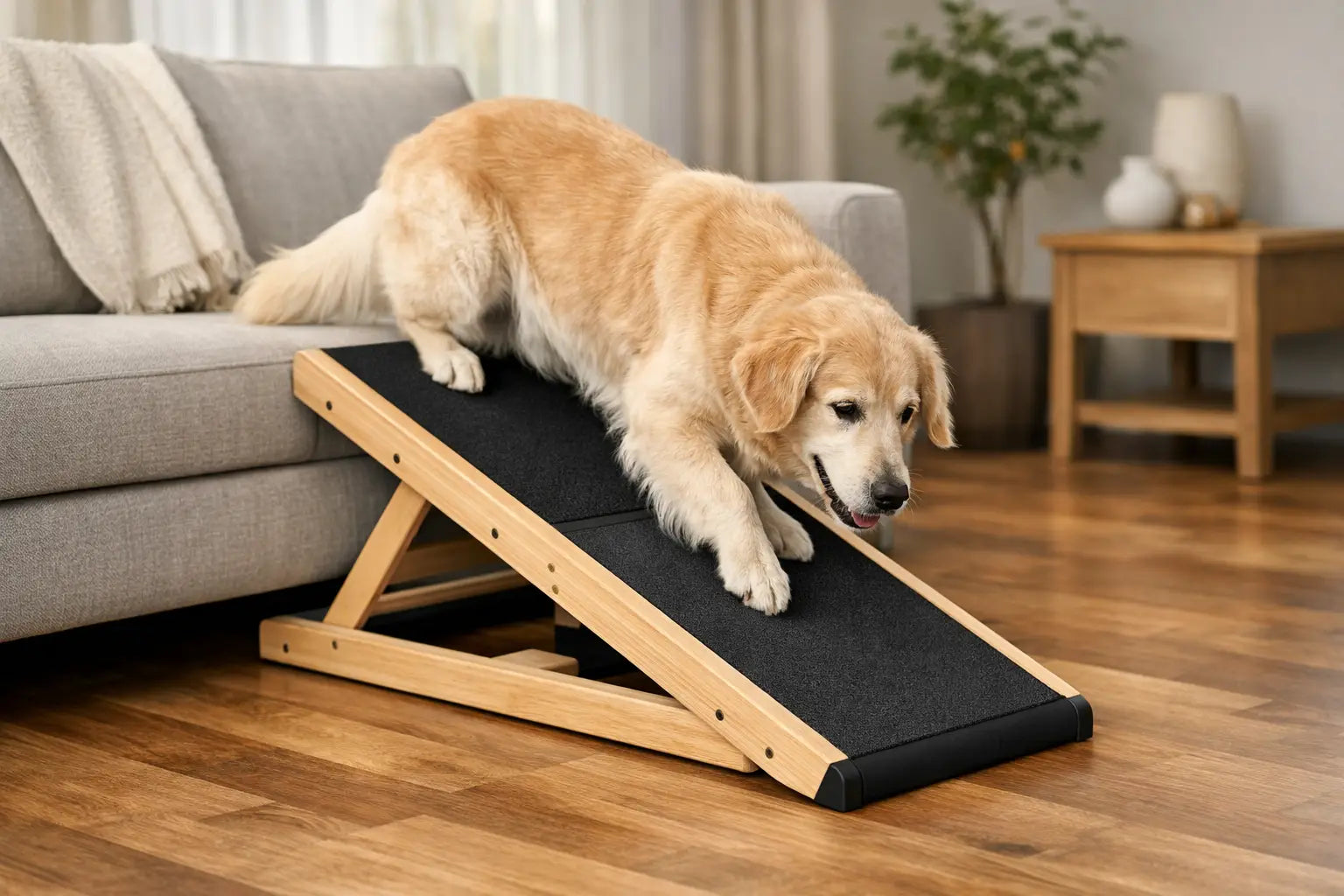
For indoor use, a furniture ramp may have a softer finish and a profile designed for beds or sofas. It can be less portable, but it should sit securely against the furniture and not skate across a wooden floor. Non-slip feet are particularly useful in homes with laminate, tile or polished surfaces.
Pet steps can suit a small, confident dog and low furniture, but they ask for a different movement. Each step requires lifting and balancing, which can be harder for a dog with painful hips, weak hind legs or neurological issues. For many senior dogs, a shallow ramp is the kinder option. It depends on the dog and the height involved.
Help your dog learn to use the ramp without pressure
Even a dog who has climbed mountains with you may look suspiciously at a new ramp. Do not place it at full height and expect immediate success. Start with the ramp flat on the floor, allowing your dog to sniff it and walk across it at their own pace. Reward calm curiosity with praise, a favourite treat or a toy.
Next, raise one end just slightly. Keep training sessions short, cheerful and free from pulling on the lead. If your dog freezes, turns away or starts scrambling, lower the angle and make the task easier. Confidence comes from repeated success, not persuasion.
When moving to the car, park on level ground and keep the ramp steady. Walk beside your dog rather than behind them, particularly on the descent. Going down is often the part that feels most uncertain, because it requires controlled braking through the front legs.
Never rush a nervous dog or use a ramp when it is wet, icy or poorly positioned. A single slip can undo their confidence and make the ramp feel like a threat rather than a source of freedom.
When a ramp is not enough
A ramp supports access, but it cannot solve pain or serious mobility decline. If your dog suddenly refuses to jump, struggles to rise, knuckles over, cries when handled, drags a paw or has a change in toileting habits, speak to your vet promptly. These signs can point to more than ordinary ageing.
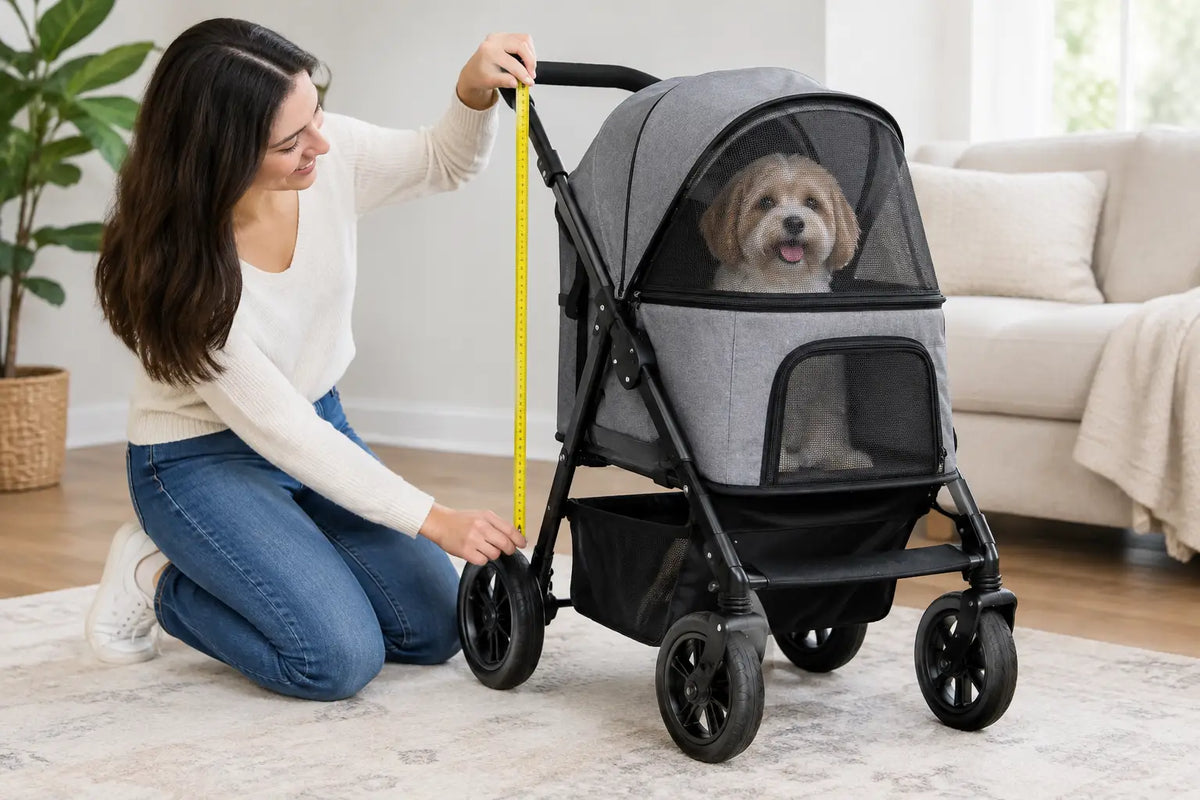
Some dogs need a broader mobility plan. That may include weight management, veterinary pain relief, physiotherapy, a supportive harness, non-slip flooring, an orthopaedic bed or a stroller for longer days out. For dogs with advanced weakness, a ramp may still help with one transition while a rear-support harness gives their body the assistance it needs.
There is no loss of dignity in adapting the route. Quite the opposite: thoughtful equipment lets your dog keep making choices, from joining you at the café to settling in their favourite spot at home.
A good ramp should soon become unremarkable - simply the safe little bridge that means your dog never has to sit out the adventure.