UK Pet Seat Regulations for Safer Car Journeys
A last-minute brake on the school run can turn an unrestrained little dog into a frightening distraction - or worse, a projectile. That is why pet seat regulations matter, even though UK rules do not prescribe one single approved car seat for every dog or cat. Your pet deserves a seat on the adventure too, but it needs to be a genuinely secure one.
What UK pet seat regulations actually say
The starting point for drivers is Rule 57 of The Highway Code. It says animals should be suitably restrained so they cannot distract you while driving or injure you, or themselves, if you stop quickly. It suggests a seat belt harness, pet carrier, dog cage or dog guard as possible ways to achieve this.
There is no UK law saying every pet must travel in a specific type of pet car seat, nor is there a universal legal certification badge for pet seats equivalent to the standards used for children's car seats. A padded booster that calls itself a "car seat" is not automatically safer simply because it has raised sides and a soft cushion.
What matters is whether the arrangement restrains the pet appropriately for the journey, the animal's size and your vehicle. If a loose pet interferes with your driving, blocks your view or contributes to an incident, it could create serious safety and insurance complications. The practical message is straightforward: do not treat restraint as optional because the trip is short.
A seat, crate and guard do different jobs
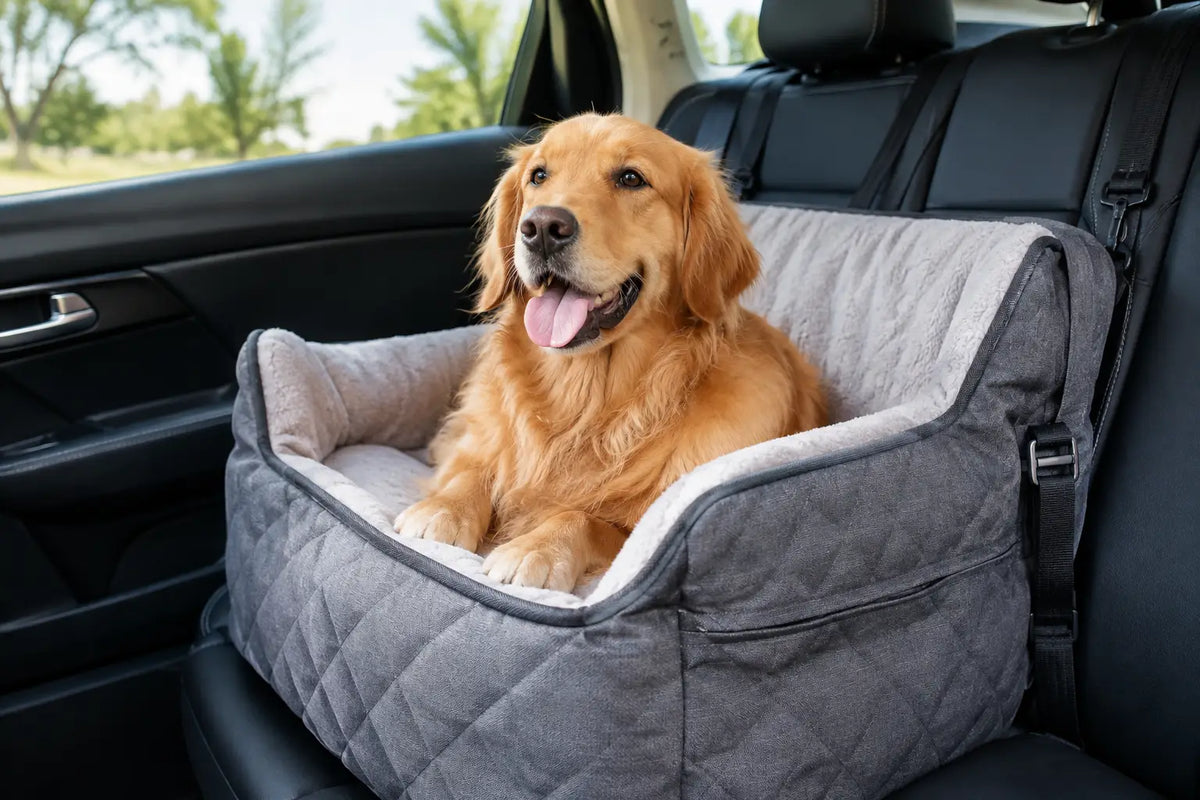
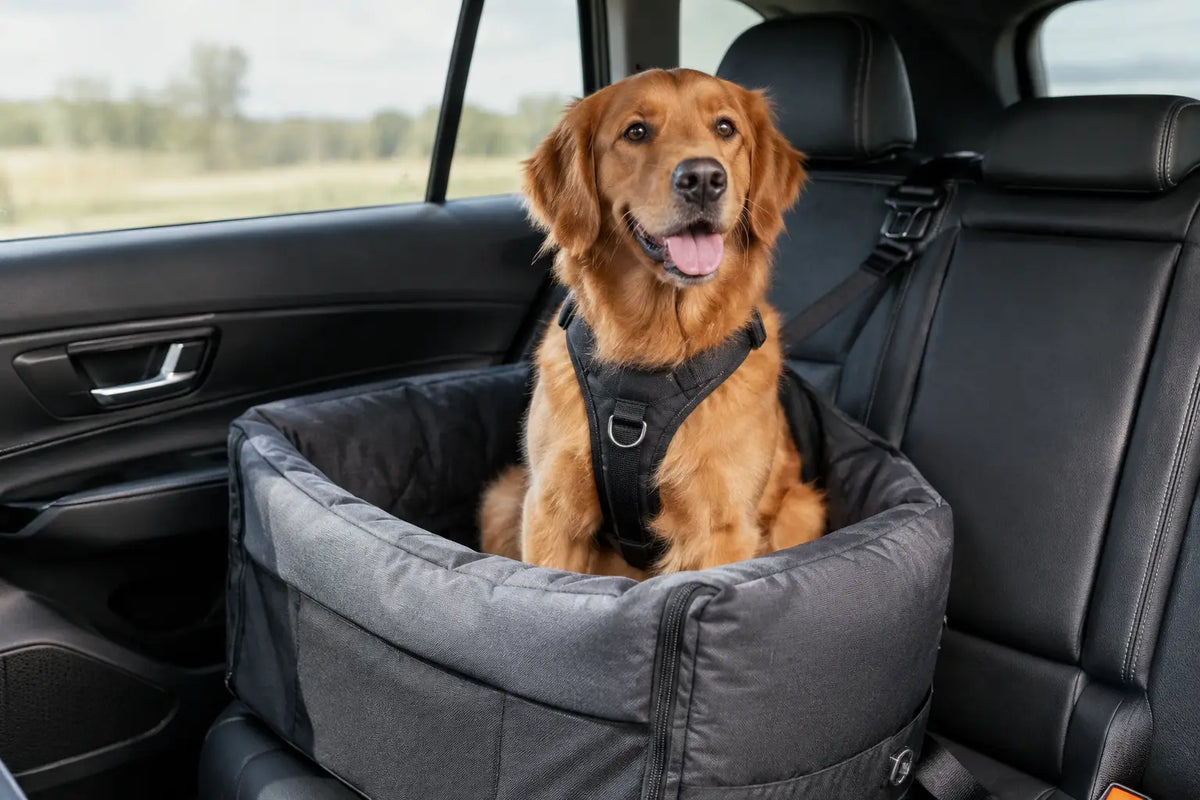
A pet car seat is usually best suited to small dogs and cats, provided it is designed to attach securely to the vehicle and used within its stated weight limit. Some models use the car's three-point seat belt, while others connect to ISOFIX anchor points where the product and vehicle are compatible. The raised position can help a small passenger feel included and may make travel more comfortable, but height alone is not a safety feature.
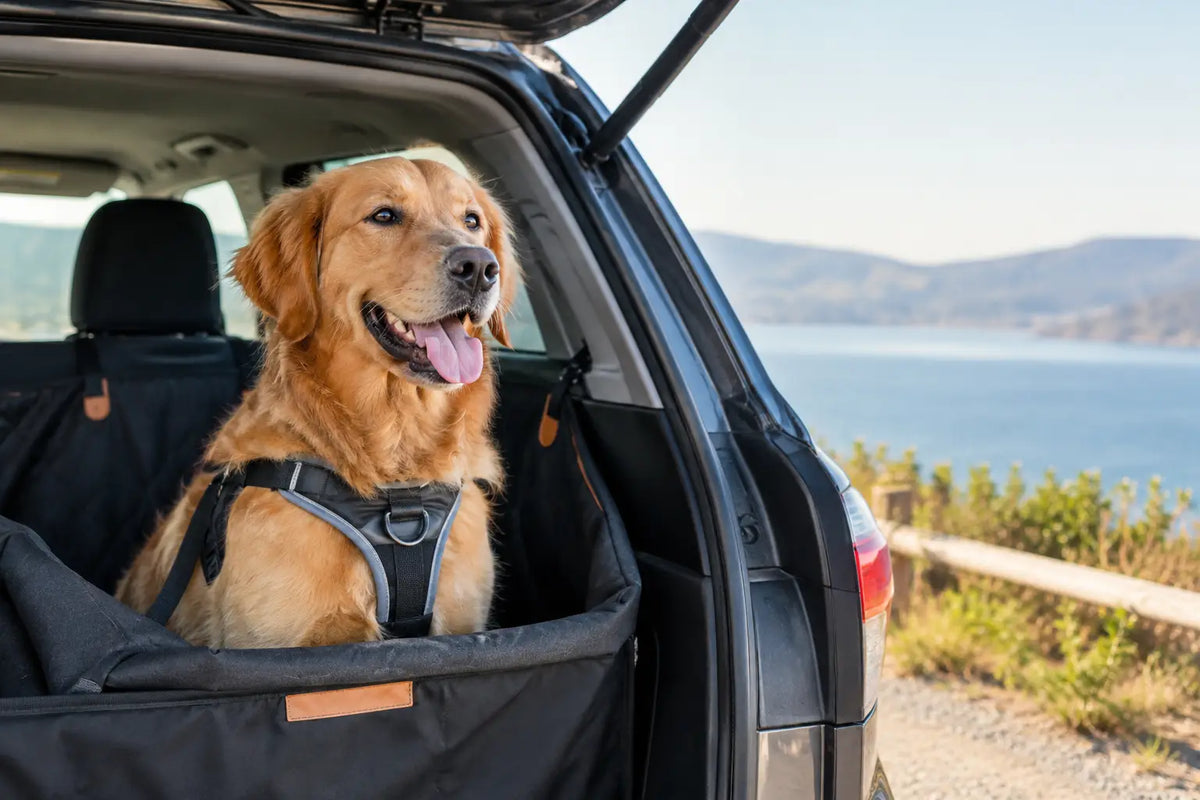
A crash-tested crate can be the stronger choice for many medium and large dogs. It creates a contained travel space and, when correctly fitted, helps manage the substantial forces involved in a collision. A dog guard can separate the boot from the passenger area, but it does not necessarily stop a dog moving around inside the load space or protect them in a sudden impact. In many cases, a properly secured crate offers more controlled containment.
Choosing a pet seat that supports safe travel
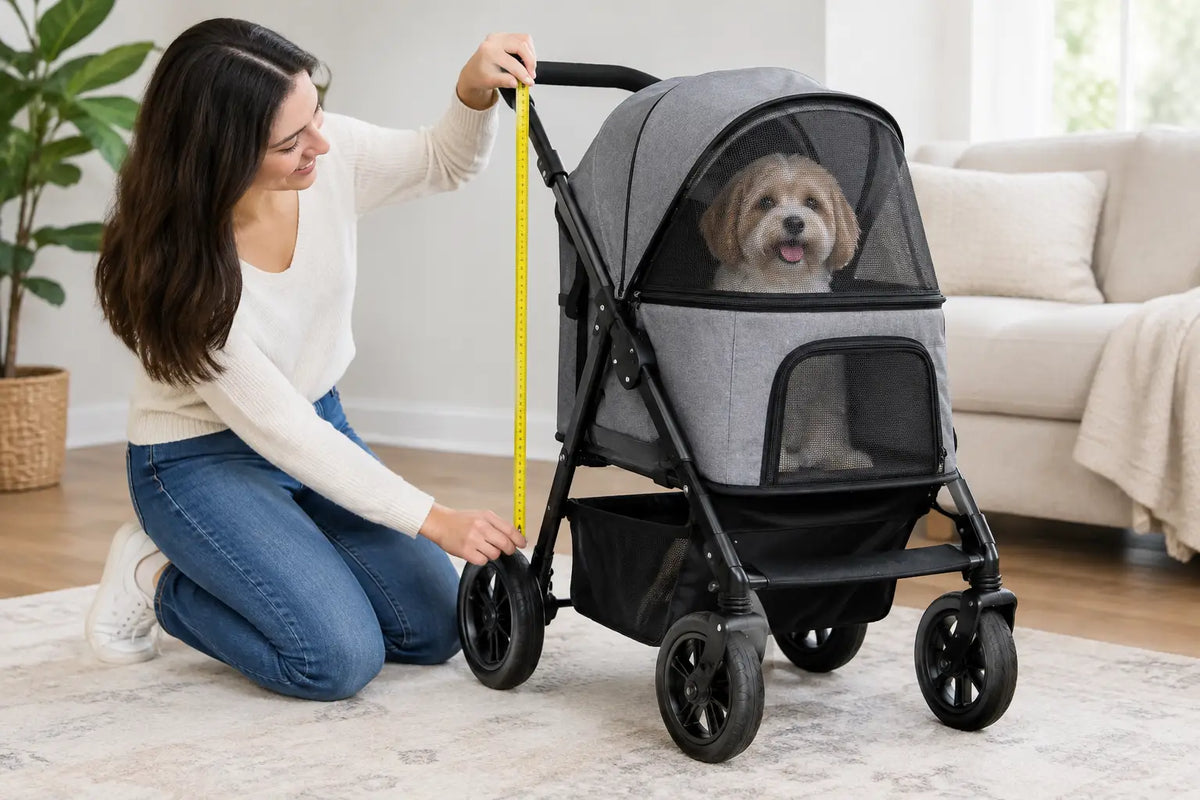
Start with the pet, then work back to the product. Measure your dog or cat while sitting and lying down, and check the manufacturer's maximum weight and dimensions. A seat that feels snug for a tiny terrier may be restrictive for a long-bodied dachshund, while an oversized seat may allow a nervous cat to slide around rather than settle.
For a car seat, look closely at the attachment method. A product should state clearly whether it is secured by the vehicle seat belt, ISOFIX, a top tether or a combination of these. Follow those instructions exactly. ISOFIX can provide a direct connection to the vehicle's anchor points, but it is not a universal shortcut to safety: the seat must be specifically designed for it, your car must have suitable anchorages, and the combined pet-and-product weight must remain within the stated limit.
If a seat includes an internal tether, attach it to a well-fitted travel harness rather than a collar. A collar connection can place dangerous force on the neck during sudden braking. The harness itself needs to fit snugly without limiting normal breathing or shoulder movement. For dogs with a broad chest, short legs, IVDD, arthritis or a recent operation, seek a design that spreads pressure more evenly and does not require them to climb or twist awkwardly into position.
Claims such as "crash-tested" deserve a closer look. They can be meaningful, but ask what was tested, at what pet weight, how the product was installed and whether the test reflects the configuration you plan to use. A crash-tested crate or carrier used incorrectly is not a crash-tested setup. Likewise, standards mentioned on a product should relate to the product and its intended installation, not simply to an accessory or a component.
Check the vehicle before buying
Your vehicle handbook is part of the safety equipment. Confirm where the ISOFIX points are, whether a top-tether anchorage is available, which seats permit a tether or carrier, and any restrictions on using the front passenger seat. Never place a pet carrier or car seat in front of an active airbag unless both the vehicle manufacturer and product instructions explicitly allow it.
Boot travel needs equal care. A crate must fit level, leave enough ventilation and be secured using the method specified by its manufacturer. Do not assume a heavy crate will stay put in an impact. In an estate car or SUV, also consider how the tailgate opens, whether the dog can enter safely, and whether the crate leaves room for luggage that could shift into it.
Before setting off, give the setup a firm check. The seat or crate should not slide, tip or rotate excessively. Buckles should be fully engaged, straps untwisted and excess webbing managed so it cannot become a chewing hazard. A five-minute fitting check at home is far easier than trying to solve a wobbling carrier in a supermarket car park.
Comfort is part of restraint, not an extra
A pet that is frightened, overheated or in pain is more likely to struggle against its restraint. That is why a safe setup should also provide a stable base, airflow and enough room to adopt a natural resting position. Add a familiar blanket if it does not interfere with the straps or door closure, and allow time for gradual introductions before a long drive.
For puppies and anxious pets, begin with the car stationary. Reward calm behaviour, then build up to short, quiet journeys. Do not let a dog travel with its head out of an open window, however much they enjoy the breeze. Flying debris, sudden swerves and the temptation to jump are risks no journey needs.
Senior and mobility-limited dogs need an especially thoughtful plan. A low-entry crate, supportive travel bed or rear-support harness can make loading less stressful than lifting under the abdomen. For a dog recovering from surgery, always follow veterinary advice on movement, travel duration and positioning. Inclusion should never come at the cost of comfort or recovery.
Common mistakes that undermine a good product
The most common mistake is buying for appearance rather than fit. A stylish booster may be lovely for everyday outings, but only if its weight limit, vehicle attachment and internal restraint suit the dog using it. The second is treating a short journey as lower risk. Most sudden stops are not planned around the length of the drive.
Owners also sometimes connect a tether to a collar, leave the car seat belt loosely routed, or place a carrier on a seat without securing it. These choices can undo the benefit of otherwise well-made equipment. Another frequent issue is carrying loose shopping, water bottles or heavy bags beside a pet. Secure those too, particularly in the boot.
For households with more than one animal, avoid assuming two pets can safely share one seat or crate just because they cuddle at home. In a sharp turn or collision, their combined movement changes the forces involved and can cause injury. Use products rated for the actual combined load only where the manufacturer permits shared travel.
Make every journey fit the pet in front of you
The right answer may be an ISOFIX pet seat for a compact companion, a secured carrier for a cat, or a crash-tested crate for a larger dog. Pet seat regulations set the principle - suitable restraint - while thoughtful product choice turns that principle into safer, calmer travel. Take the extra moment to fit, check and adjust the setup, then bring them along with confidence.