Dog Post Surgery Mobility and a Gentle Return
The first few days after an operation can make even a normally fearless dog seem unsure of their own body. Dog post surgery mobility is not about getting back to long walks quickly. It is about protecting healing tissue, preventing slips and strains, and helping your dog stay part of family life while their world temporarily becomes smaller.
Your veterinary team’s discharge instructions always come first. The right recovery plan varies hugely between a routine procedure, cruciate ligament surgery, spinal treatment, fracture repair and abdominal surgery. Still, a well-arranged home, calm handling and the right support equipment can make the daily practicalities safer and far less stressful for both of you.
Dog post surgery mobility starts with controlled rest
Rest is an active part of recovery, not a punishment. Your dog may feel brighter before the surgical site, bones or soft tissues are ready for normal activity. That mismatch is why a dog who seems perfectly happy can still overdo it by jumping on the sofa, racing to the front door or twisting suddenly when they spot a squirrel.
Create a recovery space on one level of your home, close enough that your dog does not feel isolated. A supportive, low-sided bed is easier to step into than a deep basket, while washable blankets can provide warmth without making the surface slippery. Keep water nearby, but not so close that they need to shift position constantly.
If your dog has been prescribed crate rest, use the crate or pen as a quiet recovery room rather than a place of frustration. Choose a size that allows them to stand, turn and lie comfortably, but not enough room to build up speed. Offer calm company, a safe food puzzle if your vet permits one, and plenty of opportunities for toilet breaks on lead.
Flooring matters more than many owners expect. Wood, laminate, tile and polished stone can turn a short walk to the garden into a risky scramble. Non-slip runners, yoga mats or securely fixed rugs create a clear route between bed, door and toilet area. Check that edges cannot curl under paws or catch a dragging foot.
Make each movement safer, not faster
For dogs allowed short lead walks, slow is the goal. A collar can put uncomfortable pressure on the neck, while a well-fitted harness gives you more control and helps prevent sudden lunges. It must not rub an incision or restrict breathing, so ask your vet which style is suitable for your dog’s procedure.
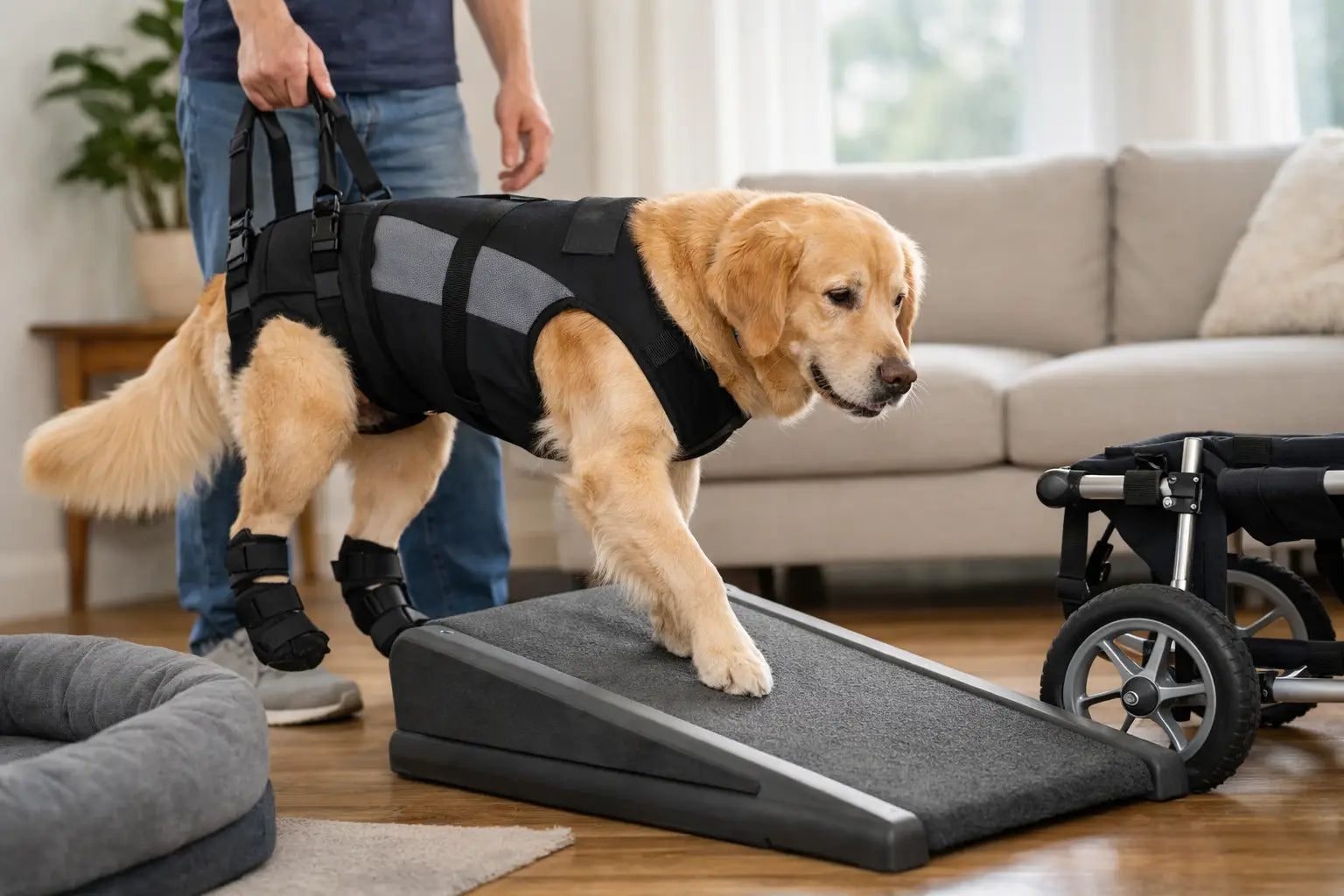
Some dogs benefit from a rear-support sling or a purpose-made support harness when toileting, stepping over a threshold or walking during early rehabilitation. These aids allow you to take some weight without lifting your dog awkwardly under the abdomen. They are especially useful for larger dogs, senior dogs and those recovering from orthopaedic or neurological problems.
Support should feel steady, not restrictive. If your dog is hopping, knuckling their paw, crying, resisting the harness or becoming more tired afterwards, stop and contact your vet or physiotherapist. An aid that is right for one diagnosis may be entirely wrong for another, particularly after spinal surgery.
Stairs are usually best avoided unless your veterinary surgeon has specifically said otherwise. A stair gate can prevent an opportunistic dash upstairs. Ramps may help in some situations, but they need a shallow incline, a high-grip surface and supervision. A steep or unstable ramp can be more hazardous than a carefully assisted lift.
Jumping is often the hidden setback
Dogs do not distinguish between a forbidden leap from the sofa and an enthusiastic jump into the car. Both can put force through a healing limb or pull at an incision. Block access to favourite furniture where possible and use a ramp, step or lift only if your vet approves it.
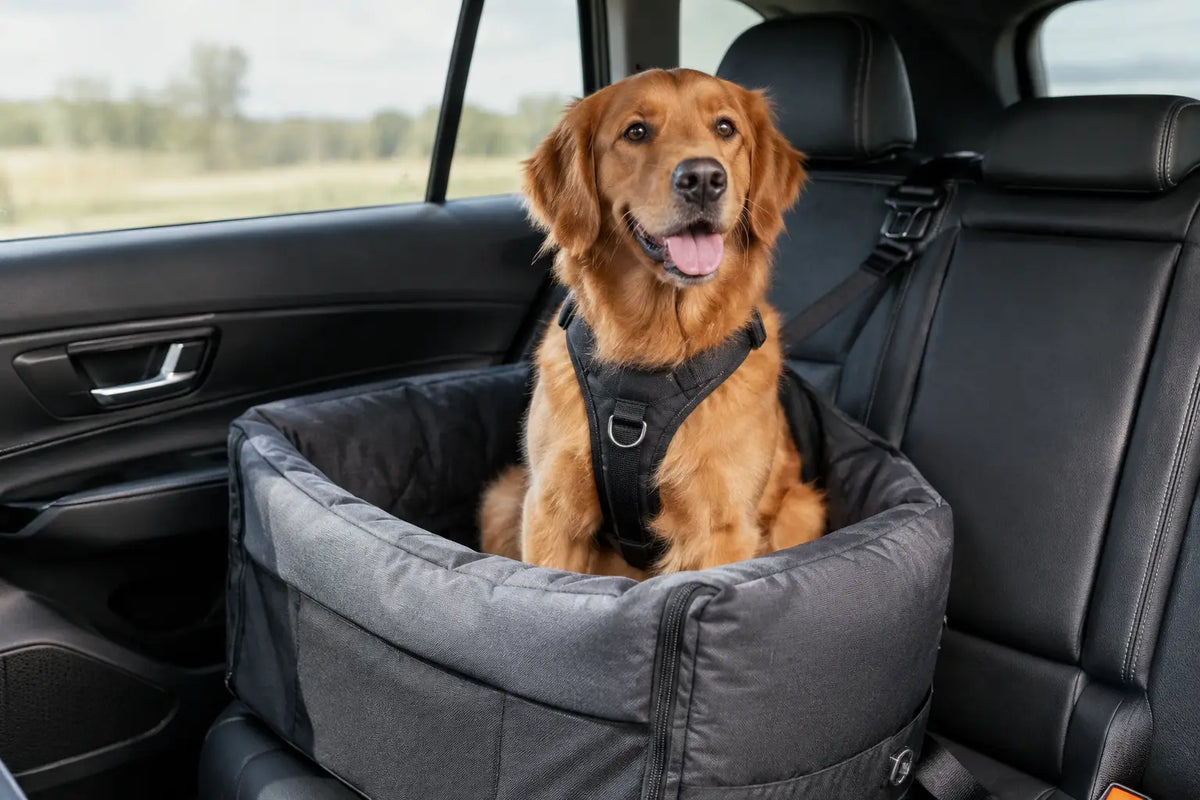
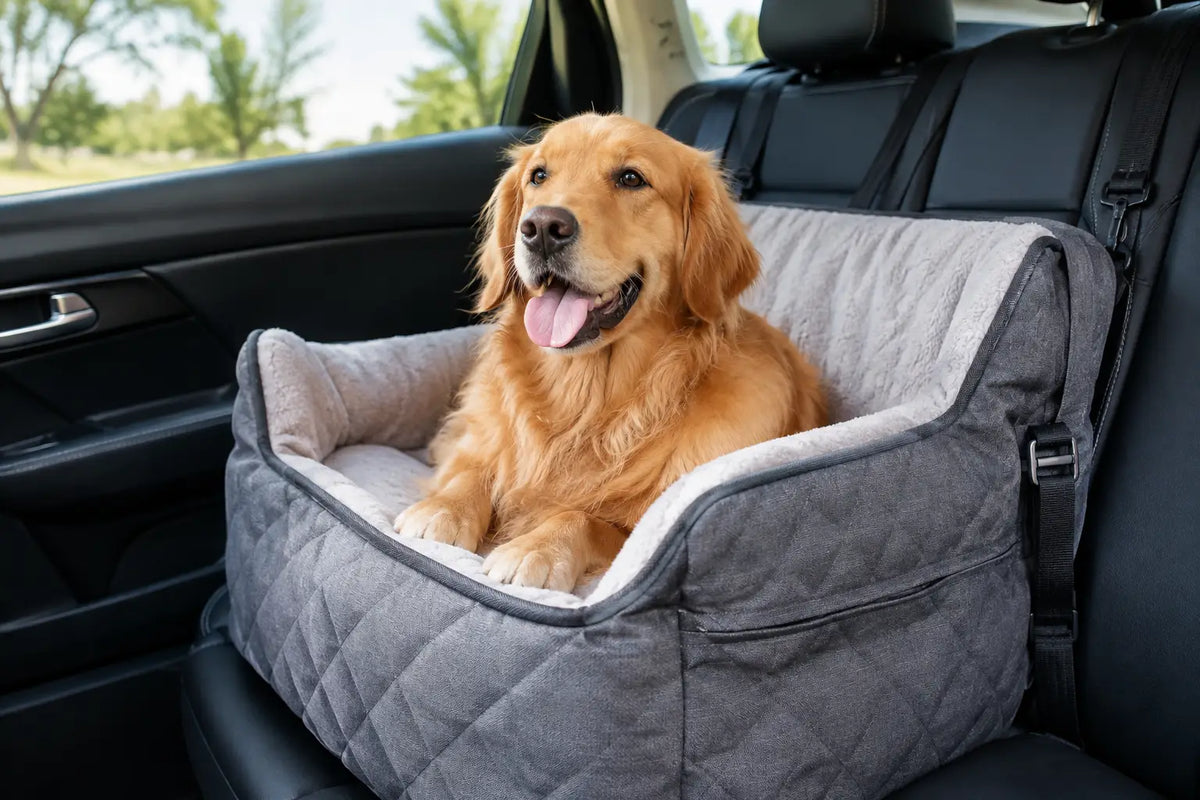
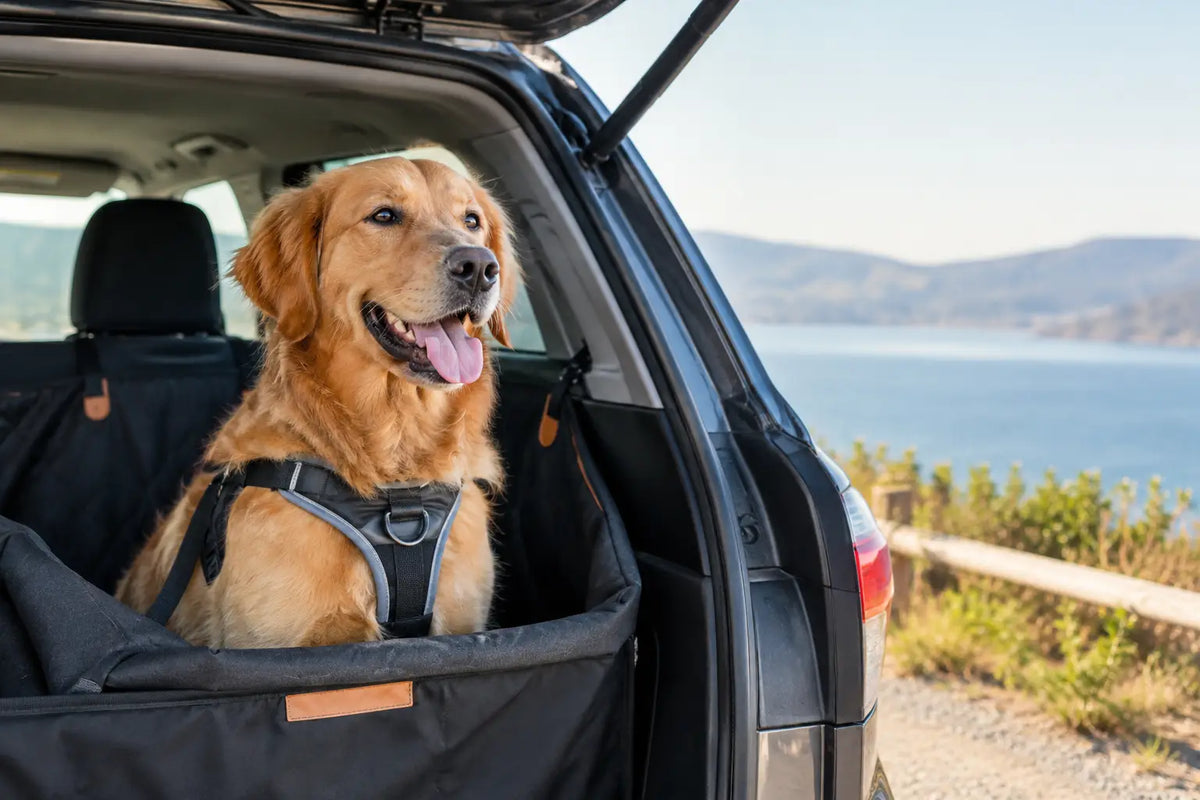
For car travel, keep journeys limited to necessary appointments in the early stages. Your dog needs a stable place to lie down, with enough room to settle naturally but not enough to slide around. Depending on their size and condition, that could be a properly secured crate, a supportive car seat or a flat, restrained travel area. Vehicle safety still matters when your dog is recovering - a sudden stop is not the time to discover that a recovery bed can move.
Use mobility equipment for the right job
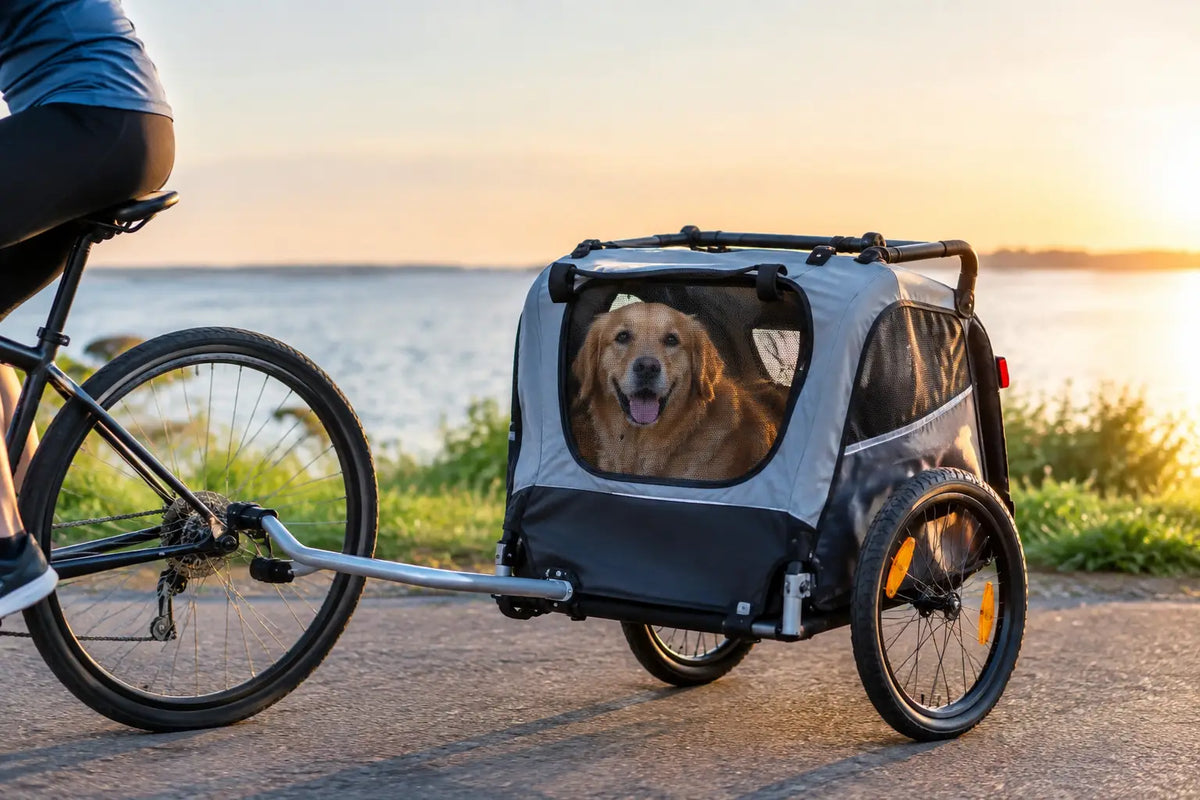
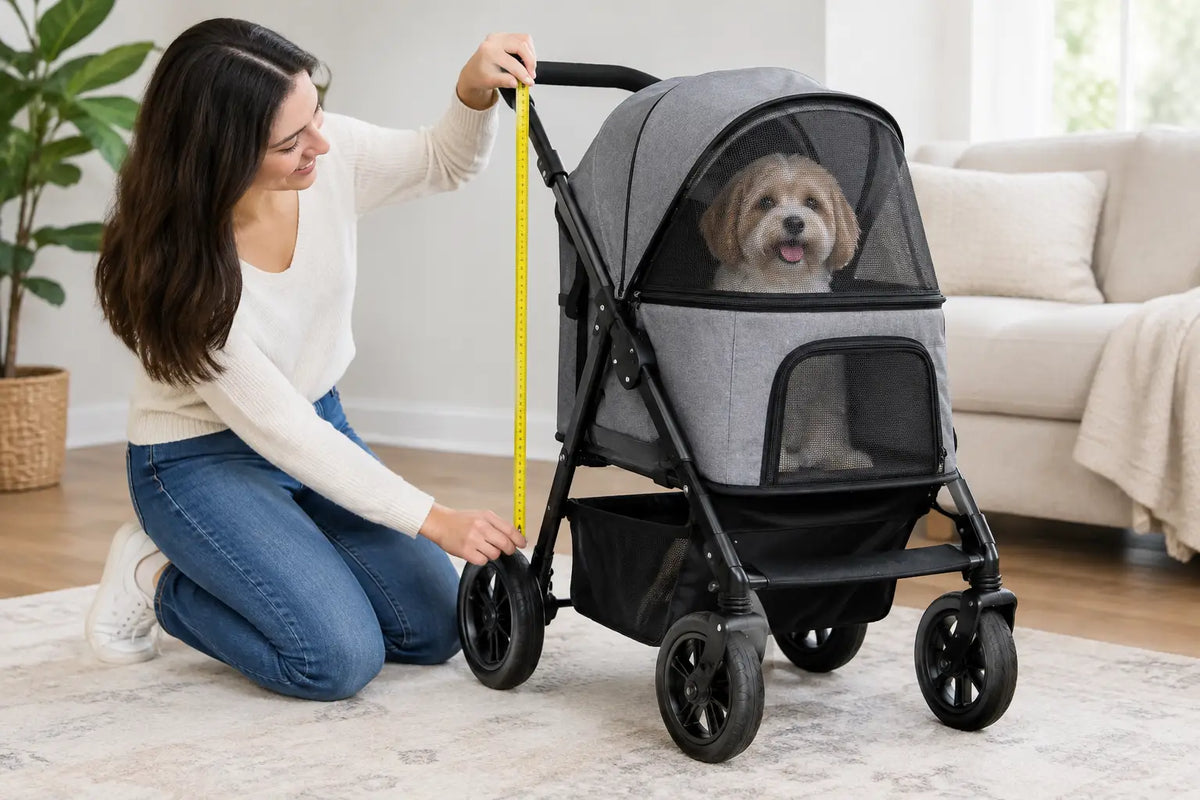
A dog stroller can be a wonderfully kind solution when your dog needs fresh air, a change of scene and family company without covering miles on paw. It is not a substitute for prescribed rehabilitation exercise, but it can prevent total social withdrawal during a period of restricted activity.
Look for a stroller with a stable frame, reliable brakes, secure closures and a weight rating that comfortably exceeds your dog’s weight. A low, supported entry is valuable for a dog that cannot be lifted easily. Inside, use non-slip padding and secure your dog according to the manufacturer’s guidance, so they cannot tumble when the pavement changes or the buggy turns.
For some dogs, a stroller makes the transition back to outings gentler. They can walk for the vet-approved portion of a route, then ride home before fatigue changes their gait. It also means an older dog recovering from surgery can still join a family café stop, school run or quiet park visit. Your dog deserves a seat on the adventure too, even when that adventure is only ten minutes around the block.
Dog wheelchairs are different. They can be transformative for dogs with longer-term hind limb weakness or paralysis, but they are not automatically appropriate after an operation. Wheel size, frame length, saddle support and the amount of weight borne through the limbs all need careful consideration. Speak to your veterinary surgeon or rehabilitation professional before introducing a wheelchair, especially while wounds are healing.
Watch comfort as closely as movement
Reduced mobility can affect more than muscles. A dog who cannot reposition easily may develop sore pressure points, become constipated, struggle to toilet or feel anxious when left alone. Check bedding stays dry and smooth, and inspect the skin each day if your dog is wearing a support sling, recovery suit or harness.
Pain can be subtle. Some dogs become quiet, avoid eye contact or stop settling rather than yelping. Panting at rest, trembling, reluctance to lie down, repeated licking around the operation site and a sudden refusal to move all deserve attention. Never change pain medication, give human medicines or restart supplements without veterinary advice.
Call your vet promptly if you see any of the following:
- increasing redness, swelling, discharge, bleeding or an opening around the incision;
- a marked drop in appetite, repeated vomiting or unusual lethargy;
- worsening weakness, dragging limbs or an inability to stand;
- distress when urinating or defecating, or no toileting when your dog normally would.
Give your dog a life beyond the recovery bed
Restricted activity can be emotionally difficult, particularly for bright, busy breeds. The answer is not to fill the day with excitement that prompts sudden movement. Instead, offer calm enrichment: scatter a measured meal across a snuffle mat if your vet allows, sit together in the garden, practise gentle chin-rest cues, or let your dog sniff a different blanket brought in from outdoors.
Keep visitors manageable. A beloved person arriving at the door can trigger the very jumping you have spent all day preventing. Ask friends to enter quietly, ignore your dog until they are settled and sit down to greet them. It may feel overly cautious, but a few quiet weeks can protect months of healing.
As your vet increases activity, resist the temptation to make up for lost time. Add distance, uneven ground, play and off-lead freedom gradually, one change at a time. A dog may manage a longer walk one day and still need a quieter day afterwards. Recovery rarely progresses in a perfectly straight line.
At Pets Own Us, we believe mobility support should protect dignity as much as it protects joints and surgical repairs. Whether your dog needs a non-slip route to the garden, a secure ride to an appointment or a comfortable way to stay close on a family outing, the best choice is the one that lets them rest, move and belong safely. For now, let their pace set the adventure.