Choosing a Crash Tested Dog Crate Safely
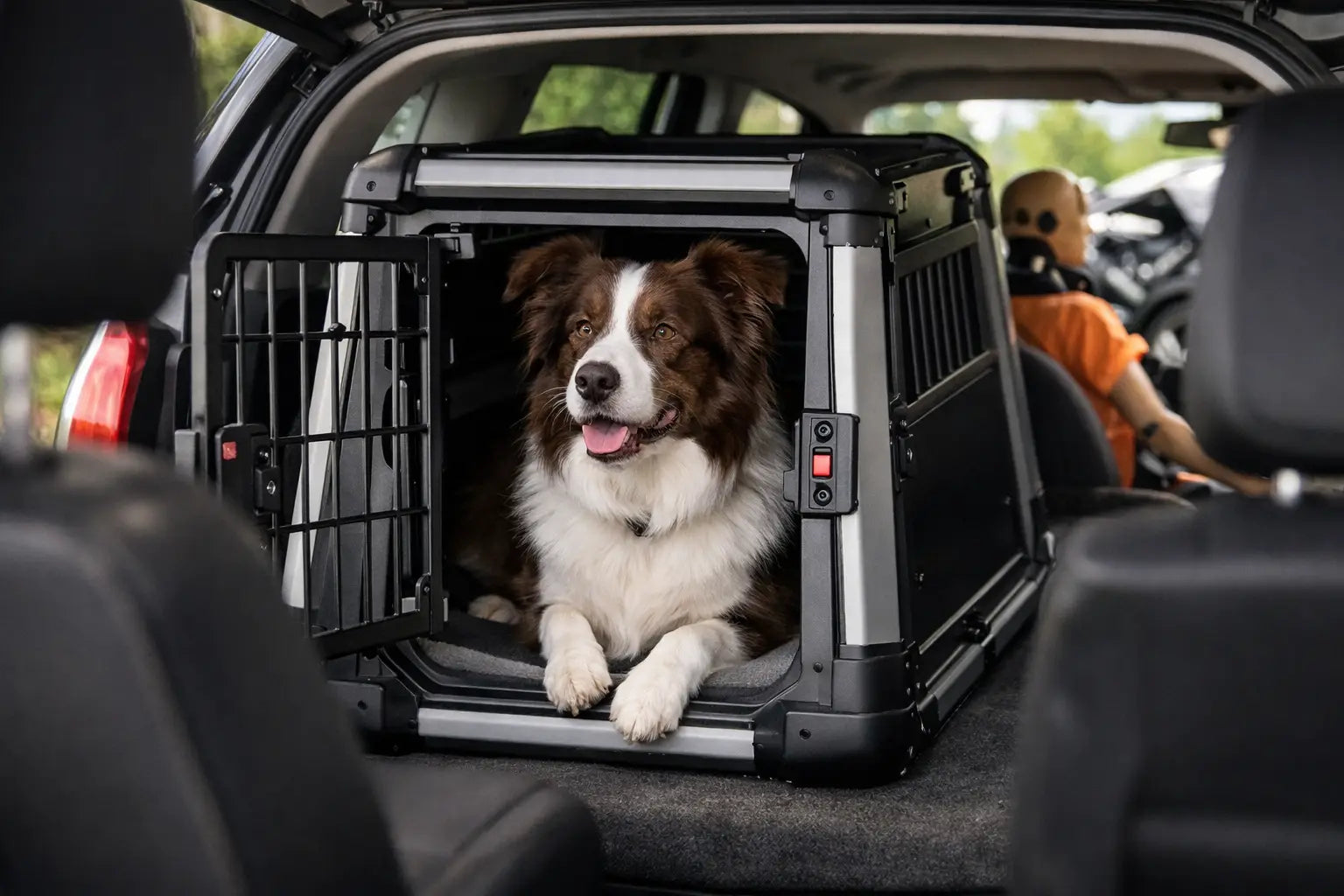
A boot full of shopping, a sudden stop and a dog who trusts you completely: that is the moment a crash tested dog crate is designed to account for. It is not simply a smarter-looking kennel for the car. When chosen for your dog, vehicle and journey type, it can help keep your companion contained, protected and comfortable when the unexpected happens.
For families who take their dogs everywhere - from the school run and muddy woodland walks to long holiday drives - a car crate can make travel calmer as well as safer. But the phrase “crash tested” is only the starting point. The quality of the test, the way the crate is installed and whether your dog actually fits inside all matter.
What does crash tested really mean?
A crash-tested crate has been subjected to an impact test intended to assess how it performs in a collision. Depending on the manufacturer and product, that may involve a simulated dog weight, a particular impact direction and a specified speed. The test can assess whether the crate stays secured, whether its door remains closed and how much the structure deforms.
That is valuable evidence, particularly compared with an ordinary fabric crate or a lightweight wire crate never designed for vehicle impact. Yet it does not mean every crate has been tested in the same way, or that it will perform identically in every car. A label alone cannot tell you the test speed, test method, dummy weight, anchoring approach or vehicle configuration.
Look for clear, specific information from the manufacturer. A premium travel crate should make it possible to understand what was tested and how the crate is intended to be secured. Vague claims without technical detail deserve a closer look, especially when you are buying equipment to protect a family member.
Why a normal crate is not automatically safe in a car
A home crate has a different job. It may provide a familiar sleeping space, support calm training or keep a dog out of mischief while you answer the door. In a collision, however, its materials, joints, latch and attachment points may be exposed to forces it was never built to withstand.
The risk is not only that a crate could break. An unsecured crate can move through the vehicle, putting passengers and the dog at risk. A door or panel that fails may leave a frightened dog loose after an incident, when the roadside is the last place they need to be uncontained.
A purpose-designed car crate is usually engineered around stronger construction, secure doors, ventilation and vehicle anchoring. It may cost more and weigh more, which are real trade-offs. For regular car travel, that additional engineering is often exactly what makes the investment worthwhile.
Choosing the right crash-tested dog crate
The best crate is not necessarily the largest, the heaviest or the most expensive. It is the one that suits your individual dog and can be fitted properly in your vehicle. Start with your dog, then work outwards to the car.
Measure for a safe, settled fit
Your dog should be able to stand naturally, turn around and lie down in a comfortable position. A crate that is too small can make journeys stressful, restrict movement and discourage your dog from settling. One that is dramatically oversized may allow more movement than is desirable during a sudden stop.
Measure your dog while standing from nose to base of tail, then measure height from the floor to the top of the head or ears, depending on how they travel. Compare these figures with the maker’s internal dimensions, not just the external size. For puppies, plan for their adult size only if the crate can still provide a secure fit during the growing stage.
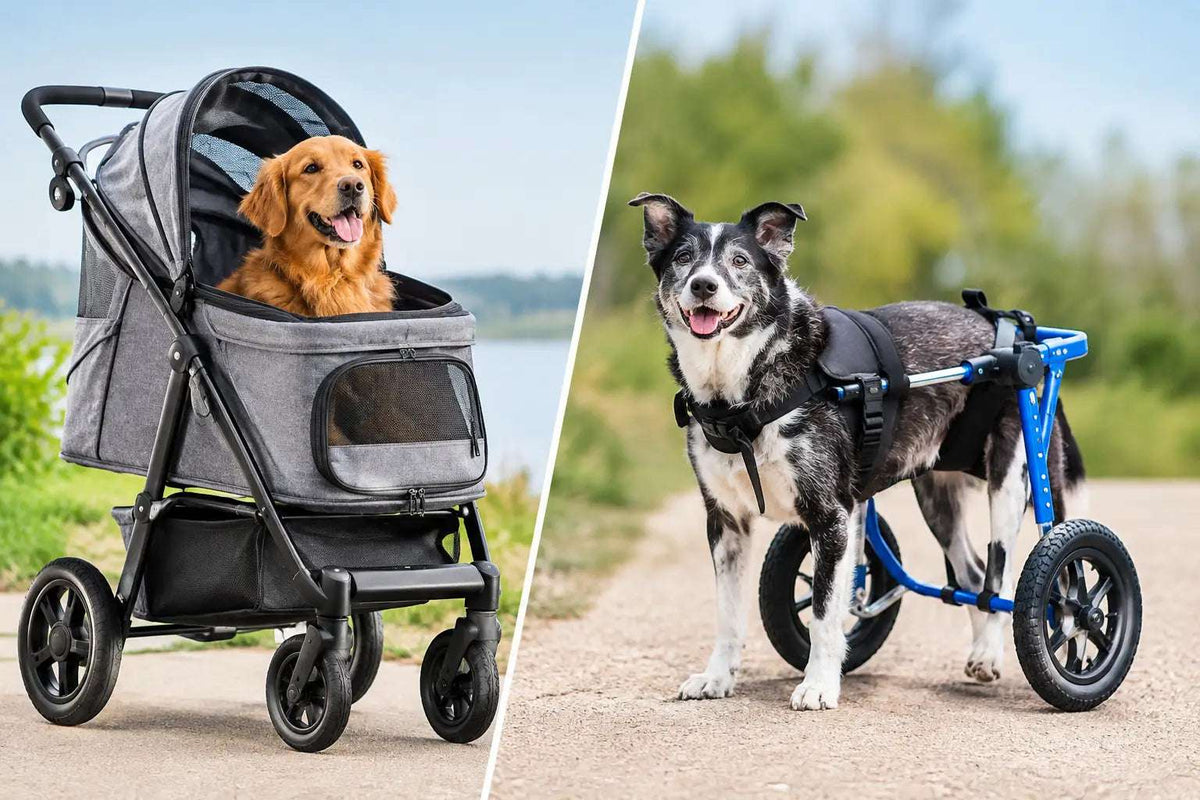
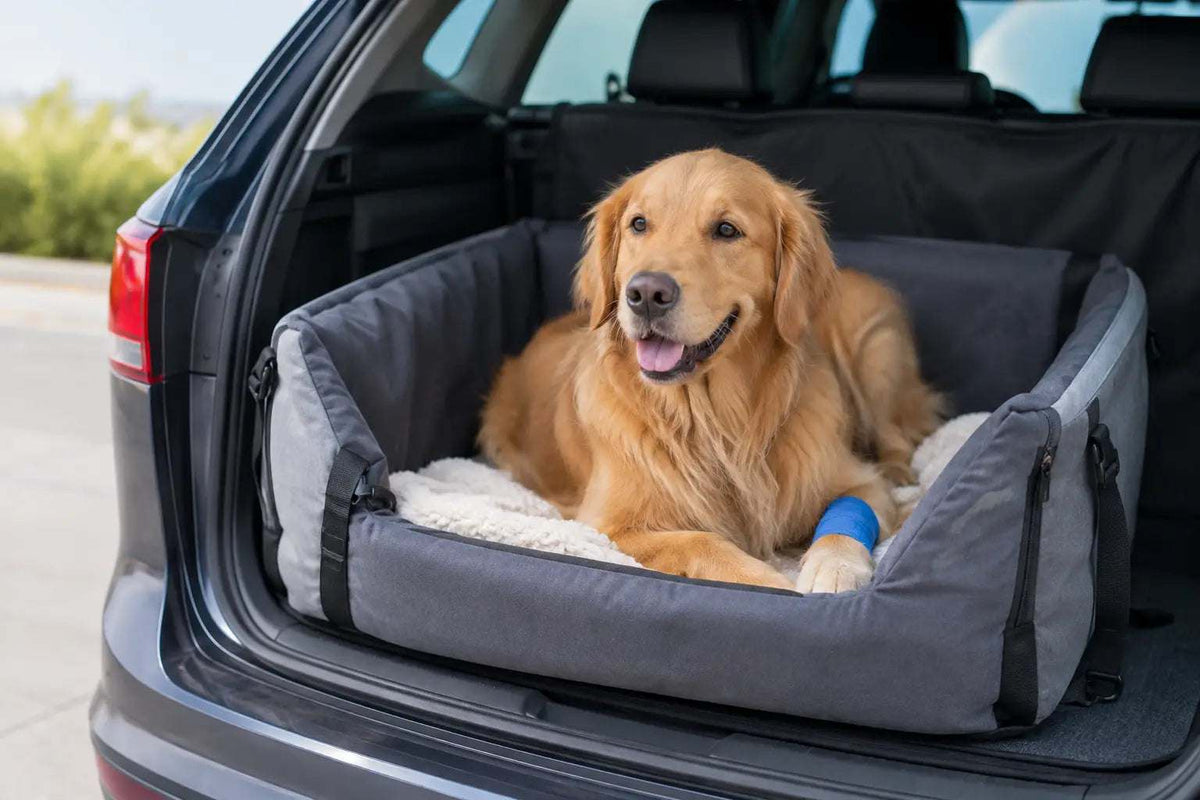
For senior dogs, dogs recovering from surgery or those living with conditions such as IVDD, access deserves equal attention. A low threshold, wide opening and enough space to turn gently can make travelling far more dignified. Some dogs may be better supported by a different travel solution, such as an appropriately tested car seat or a vehicle-compatible restraint, depending on their size and mobility.
Check your vehicle before you buy
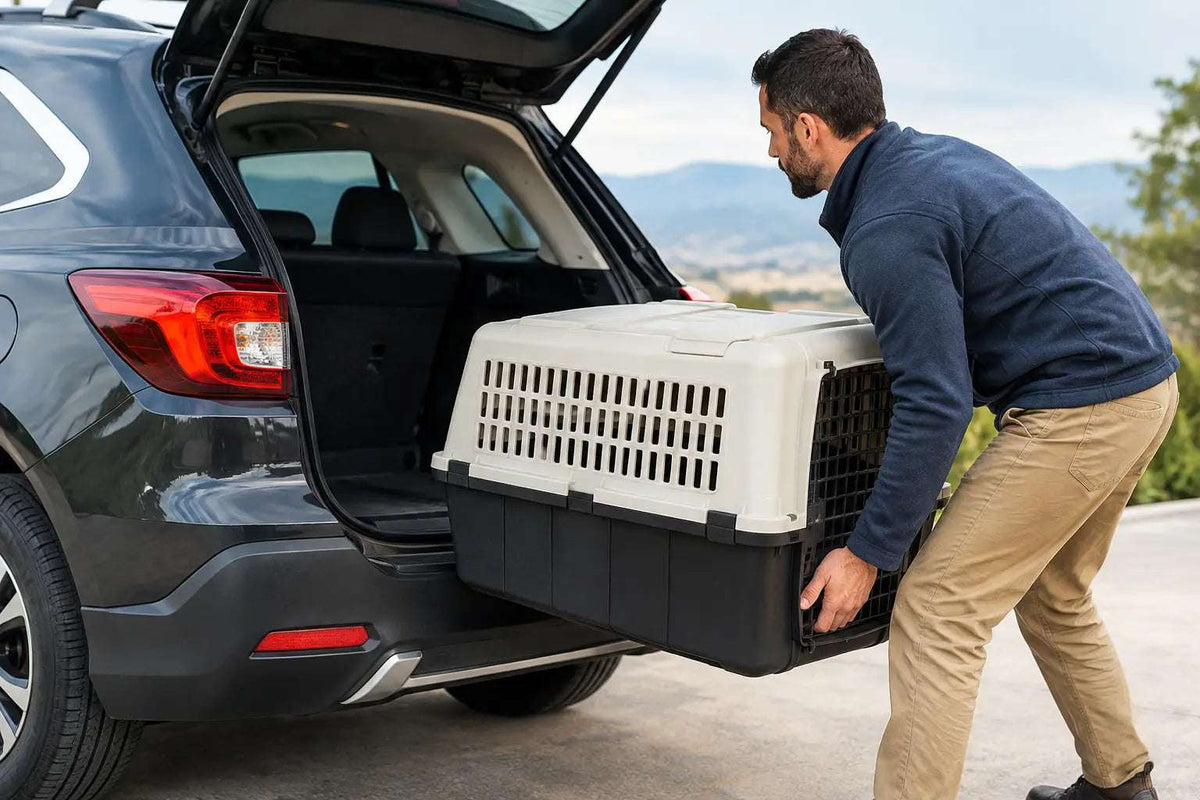
Measure the usable boot space with the rear seats in the position you normally use. Account for sloping tailgates, wheel arches, parcel shelves and the angle of the rear seatbacks. A crate may appear to fit on a product page yet prevent the boot from closing or sit unevenly once it is in your car.
Also check the vehicle points the crate is designed to use. Some systems secure using luggage anchoring points, while others are designed to sit tightly behind rear seats or use a specific mounting arrangement. Never assume a crate can be safely secured by threading a strap through any convenient gap. Follow the manufacturer’s instructions for both the crate and your vehicle.
Boot layout matters too. In some cars, the boot is a practical, well-ventilated location; in others, a rear-seat setup may suit the dog and vehicle better. If you drive an estate, SUV, hatchback or van, the geometry and anchoring options can differ considerably. A compatible crate is safer than a theoretically superior one that cannot be installed as intended.
Consider your dog’s travel temperament
A crate can give many dogs a reassuring little den, particularly when it is introduced gradually and associated with good things. It can also reduce the visual stimulation that leaves some dogs pacing, barking or trying to climb into the front.
Not every dog loves an enclosed space immediately. Dogs with confinement anxiety, very limited mobility or a history of car sickness may need a slower introduction and careful observation. Start with the crate at home, feed treats or meals nearby, then build up from short stationary sessions to brief local drives. Never make the first experience a four-hour journey to Cornwall.
Installation is part of the safety system
Even an excellent crate cannot deliver its intended protection if it is incorrectly installed. Read the full fitting guide before the first journey, rather than trying to interpret it in a supermarket car park with an impatient dog waiting beside you.
Before setting off, check that:
- the crate is secured using the specified points and hardware;
- all doors and latches are properly closed;
- the crate sits level and cannot slide, rock or tip;
- bedding is thin, non-slip and does not obstruct the door or vents; and
- loose items, including leads, water bottles and shopping, cannot enter the crate or become projectiles.
Crate, harness or car seat: which is right?
There is no one travel product for every dog. A properly fitted, tested crate often makes sense for dogs who travel in the boot, larger breeds, multi-dog households and dogs who settle better with their own defined space. It can also be practical when you need to keep muddy paws, shedding fur and damp towels contained after an adventure.
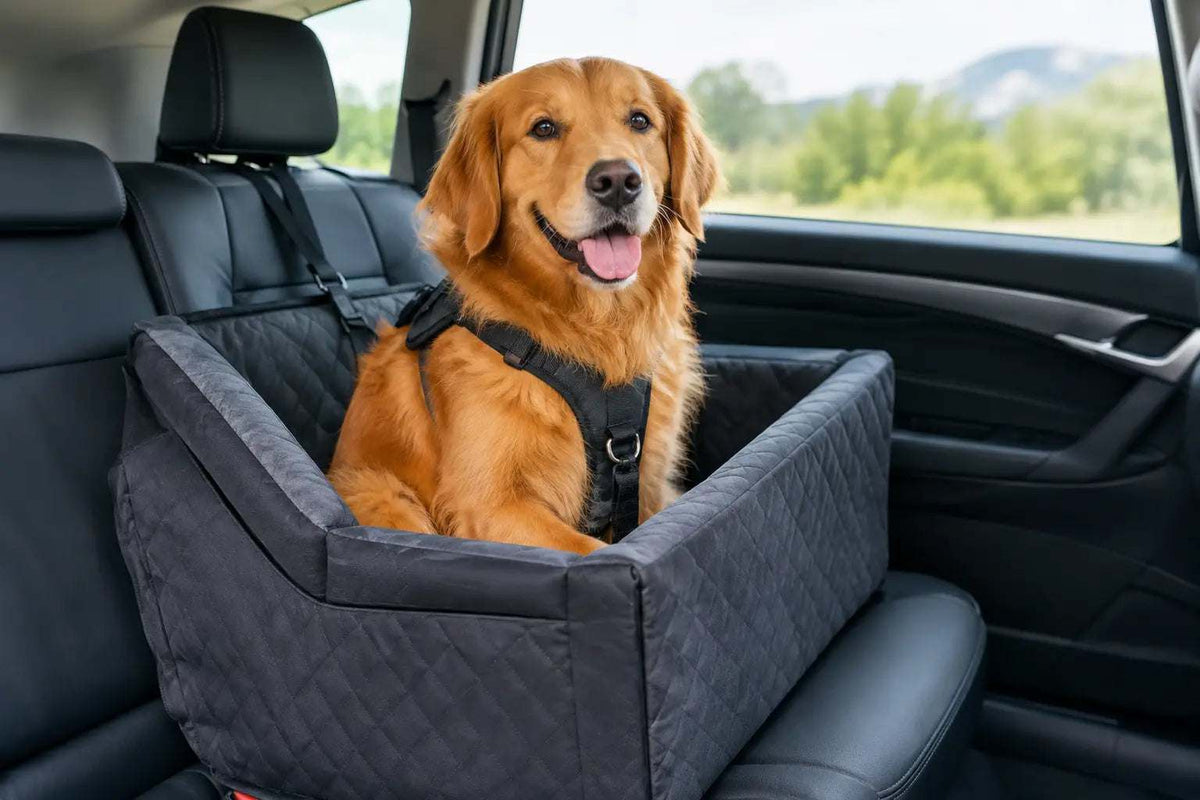
A tested harness may be more suitable where boot space is limited, where a dog needs to ride on the rear seat, or where the dog finds a crate difficult. The harness must be correctly sized and used with the manufacturer’s intended attachment system, not clipped casually to any lead point.
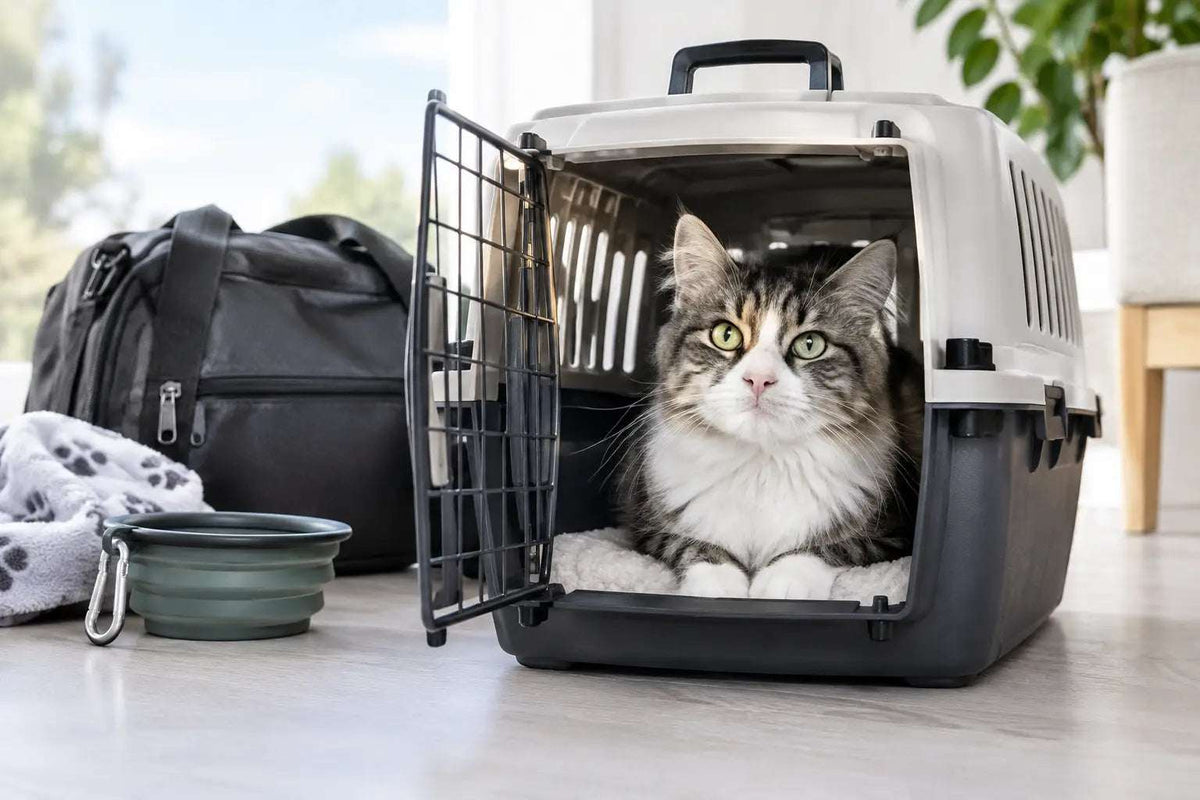
For small dogs and cats, a vehicle-compatible carrier or ISOFIX pet car seat can offer a more proportionate, cosy solution. The key is to choose a product rated for the animal’s weight, compatible with the seating position and comfortable enough for the journey ahead. Pets Own Us focuses on these details because “safe” is never just a product category - it is a fit between pet, vehicle and real life.
Questions worth asking before you commit
Ask what crash-test information is available, which dog weight or crate size was tested and whether the design is suitable for your vehicle. Check internal dimensions, door opening direction, ventilation, cleaning access and the product’s own weight. A substantial crate can be reassuringly solid, but you still need to be able to lift, fit and remove it safely when necessary.
Consider your routine as well. If your dog travels twice a day, easy cleaning and quick access may matter more than a crate intended only for occasional holidays. If they are elderly, a crate that allows a supportive bed and gentle entry may be the deciding factor. If two dogs travel together, each should usually have their own appropriately sized space unless the manufacturer explicitly states otherwise.
A crash-tested crate cannot remove every risk from driving, and no responsible retailer should pretend it can. It is one thoughtful layer of protection, alongside careful driving, correct installation and a dog who is comfortable with their travel setup. Take the time to get those details right, then pack the treats, close the boot and let your dog keep their place on the adventure.