Dog Car Sickness Travel Tips That Really Help
The first warning sign is often subtle: a little more lip-licking than usual, a worried stare, perhaps drool on the blanket before you have even left the drive. Dog car sickness travel tips are most useful before a difficult journey becomes a pattern. With the right preparation, secure travel set-up and veterinary support where needed, many dogs can learn that the car leads to good places - not an upset tummy.
Why dogs get sick in the car
Car sickness is not always simply motion sickness. Young dogs can be particularly prone because the parts of the inner ear involved in balance are still developing. Many grow out of it, but a bad early experience can create a second problem: anticipatory anxiety. Your dog may then feel sick before the wheels move because they have learned to associate the car with nausea, noise or an uncomfortable journey.
Look for yawning, whining, panting when the car is cool, repeated swallowing, lip-licking, drooling, restlessness, vomiting or diarrhoea. These behaviours can overlap with travel anxiety, so the detail matters. A dog who is relaxed until the road becomes winding may be struggling mainly with movement. A dog who starts trembling when you pick up the keys may need confidence-building as much as motion-sickness management.
If sickness begins suddenly in a dog who used to travel happily, speak to your vet. Ear problems, pain, medication changes and other health concerns can affect balance or make travelling far less comfortable.
Dog car sickness travel tips to use before you leave
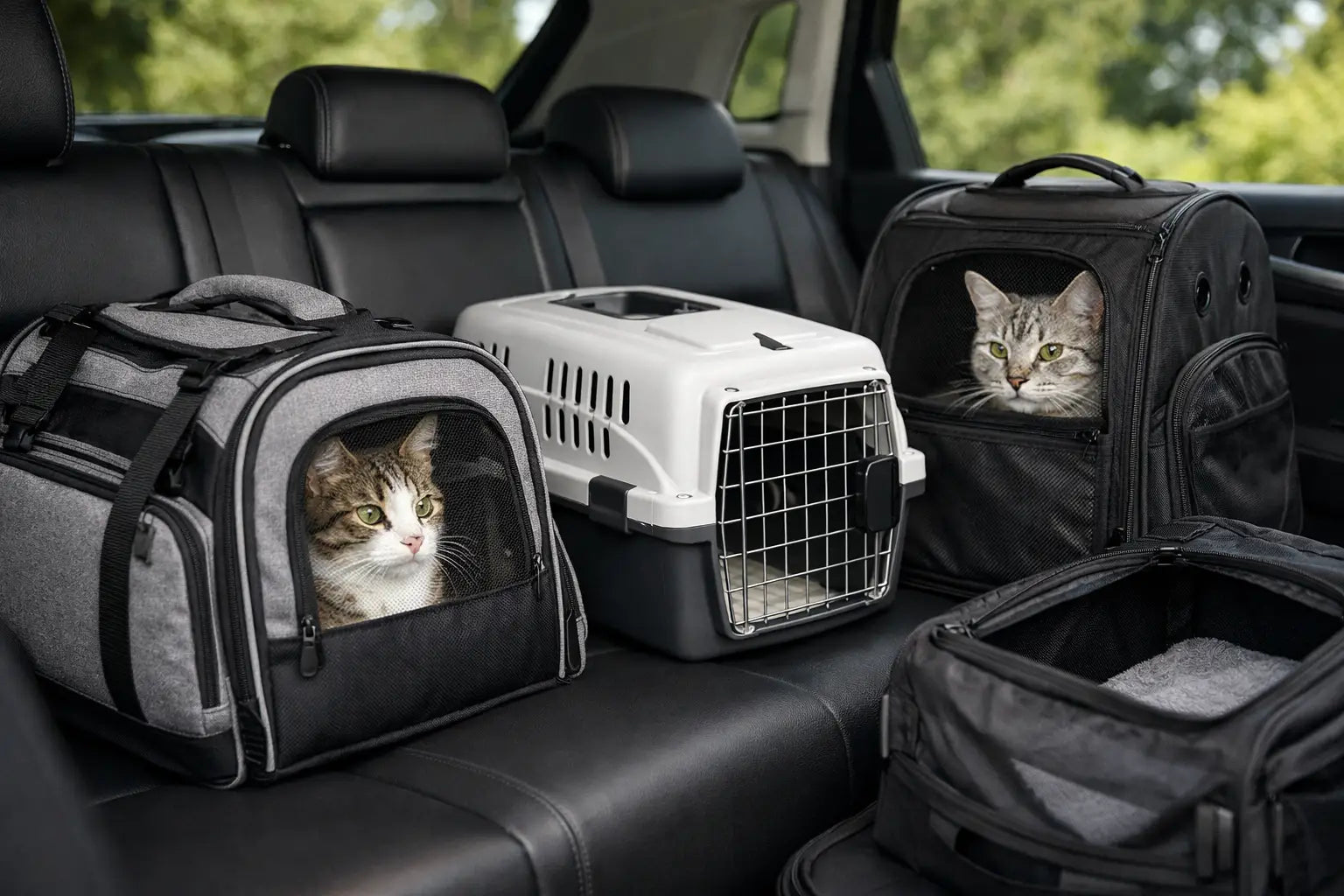
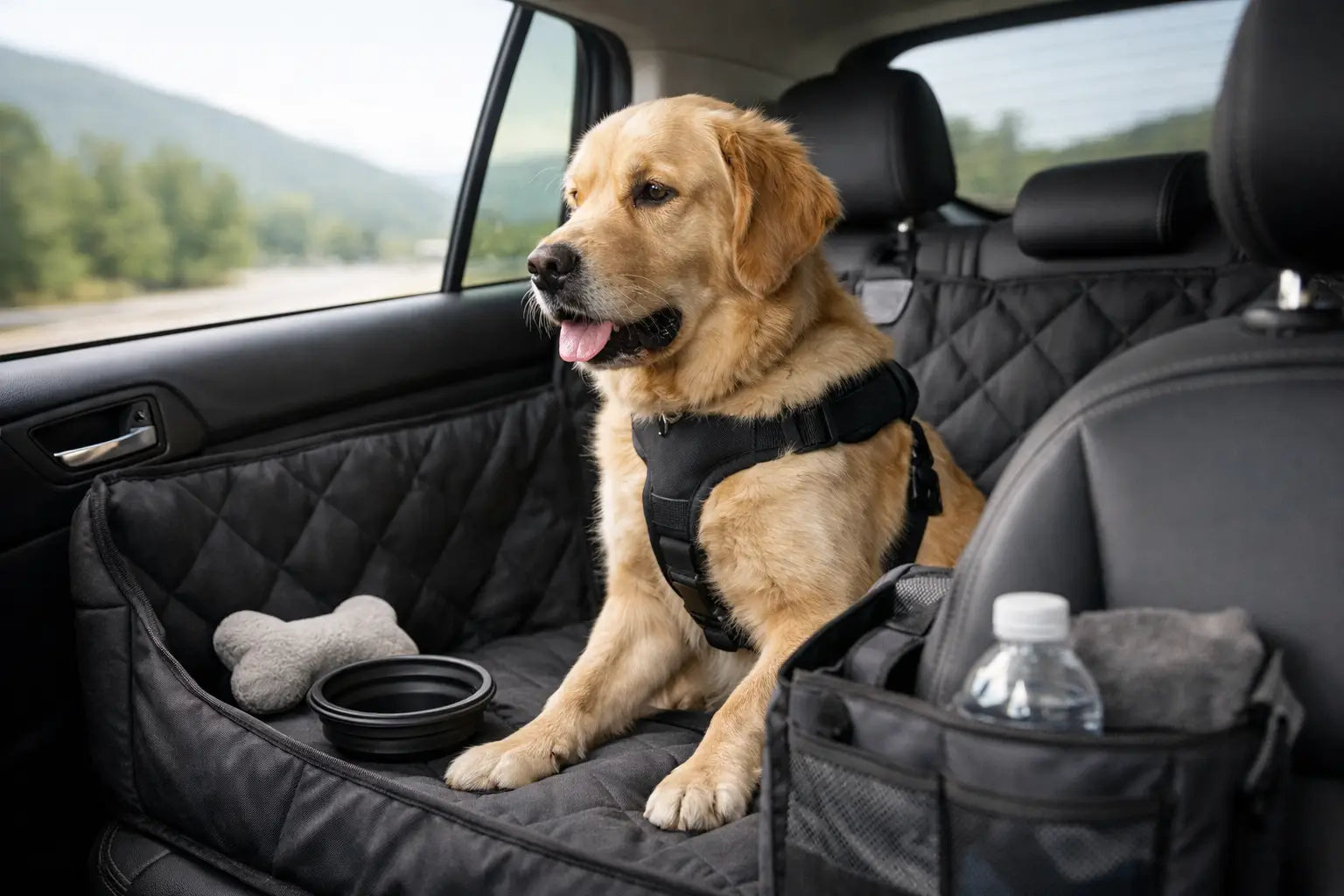
Start with the travel environment. Your dog should be properly restrained, but also able to settle in a position that supports their body. A well-fitted, vehicle-compatible car crate or ISOFIX pet car seat can reduce sliding and scrambling, which may worsen nausea and stress. Choose by your dog's measurements and weight, not just breed label, and follow the manufacturer's vehicle and installation guidance exactly.
A crash-tested restraint is designed for safety, while comfort comes from good fit, stable positioning and familiar bedding. Do not place a dog in the front passenger seat where an airbag could pose a serious risk. For a crate, make sure it is securely installed and cannot shift under braking. For a car seat or harness, check attachment points before every trip, particularly if seats are regularly folded or moved.
Keep the car cool and well ventilated. Strong air fresheners, fragranced cleaning sprays and the smell of petrol can be unpleasant for a nauseous dog, so a clean, neutral-smelling space is best. A washable blanket that smells like home can help them settle, but avoid deep, loose bedding that makes a small dog unstable or overheated.
Food timing is individual, but many dogs cope better when they have not eaten a large meal immediately before setting off. Offer water as normal, then consider feeding their main meal several hours before travel. Do not withhold food for long periods, especially for puppies, tiny dogs, senior dogs or those with medical needs. Your vet can advise on the safest routine for your dog.
Build car confidence in tiny steps
You cannot always train around a necessary vet visit or a long holiday drive, but gradual practice is one of the most effective long-term answers. The goal is not to persuade your dog to endure the car. It is to teach them that being in it is safe, predictable and worth doing.
Begin with the engine off. Let your dog choose to step into their secured crate or seat, reward calm behaviour, then get back out. Keep the session short enough that they remain relaxed. Next, sit in the parked car with doors closed, then repeat with the engine running. Only after that should you try a very short, smooth drive around the block.
Finish some journeys somewhere enjoyable: a quiet sniffy walk, a favourite person's house or a peaceful park. If every car journey ends at the groomer or vet, the association is harder to shift. Avoid overwhelming them with an hour-long motorway trip after two successful five-minute drives. Progress at your dog's pace, and go back a stage if they show stress.
Make the journey physically easier
Driving style matters more than people think. Gentle acceleration, early braking and smooth cornering help both dogs and humans with motion sensitivity. Where possible, choose a route with fewer sharp bends and stop-start sections, even if it takes a few minutes longer.
On longer journeys, plan regular quiet breaks for toileting, water and a stretch on a secure lead or harness. Never open a car door before your dog is safely attached to a lead, and do not leave them unattended in a vehicle. Even mild weather can turn a parked car dangerously warm far faster than expected.
It can be tempting to let an unsettled dog roam in the boot or climb on a passenger's lap. That creates a risk during braking, distracts the driver and often makes nausea worse because the dog cannot brace themselves. A stable, correctly sized travel space is kinder as well as safer.
When to ask your vet about medication
For some dogs, training and travel adjustments are enough. For others, especially those who vomit repeatedly or become panicked, veterinary treatment can make travel more humane. Your vet may recommend an anti-nausea medicine, an anxiety treatment, or a plan that combines medication with gradual conditioning.
Do not give human travel-sickness tablets, sedatives, herbal products or online remedies without veterinary advice. Some are unsuitable for dogs, may interact with existing medication or simply mask distress without addressing the cause. Sedation is not the same as feeling calm, and a drowsy dog still needs to travel in a properly secured crate, seat or harness.
Keep a simple note of what happens on journeys: when your dog last ate, how long they travelled, the road type, symptoms and whether they settled after a break. This gives your vet useful information and helps you spot small improvements that are easy to miss.
Extra care for senior, injured and mobility-limited dogs
Dogs managing arthritis, IVDD recovery, post-operative restrictions or reduced balance may find car travel uncomfortable even when they are not truly motion sick. Climbing into a high boot, sliding on a seat or bracing through corners can cause pain and lead to anxiety around the car.
Use a ramp, lifting support or suitable stroller for the approach to the vehicle where appropriate, and make the transfer unhurried. Inside, choose a set-up that gives enough room to lie naturally without being thrown about. A supportive bed or fitted cushion can reduce pressure points, but it must not compromise the restraint system or safe installation.
For these dogs, shorter journeys may be the better choice at first. Inclusion does not have to mean pushing through discomfort. A calm ten-minute trip to a local beauty spot can be a meaningful adventure when it is planned around your dog's capabilities.
Prepare for the messy moments without making them frightening
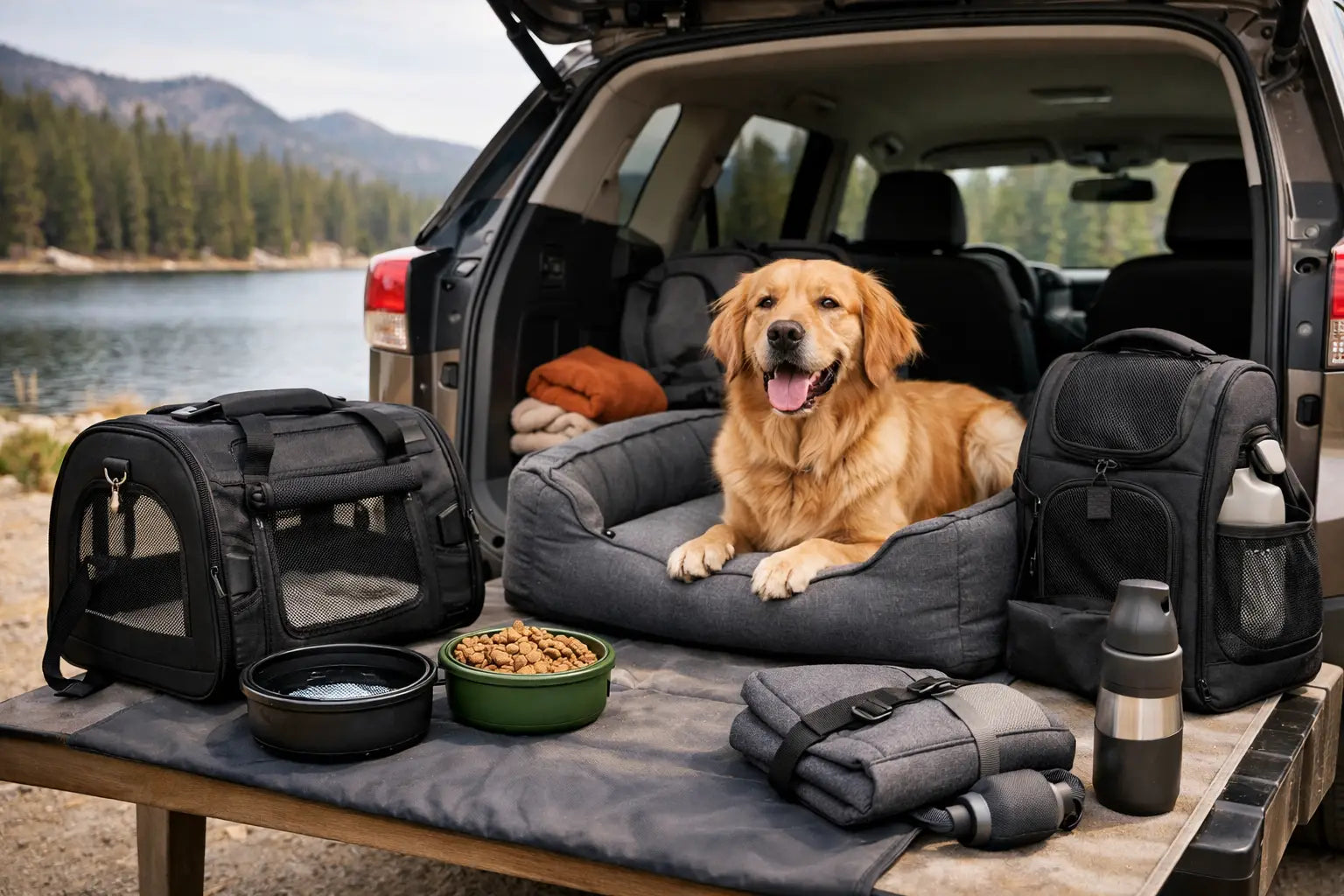
Pack absorbent towels, a spare blanket, waste bags, water and cleaning supplies in an easy-to-reach travel bag. If your dog is sick, pull over safely, speak calmly and clean the area without fuss. Scolding or sounding distressed can make the next journey harder, even though the accident was completely beyond their control.
Wash travel bedding promptly and allow it to dry fully before the next outing. If smells linger in the car, use a pet-safe, low-fragrance cleaner and ventilate the vehicle well. Your dog deserves a seat on the adventure too, and a few thoughtful changes can help that seat become a place where they can finally rest.