The Ultimate UK Guide to Buying a Dog Stroller in 2026: Types, Benefits & Top Picks
If you are searching for a dog stroller in the UK, you are likely looking for more than just a novelty item. A well-chosen stroller can transform an older dog’s twilight years, protect a recovering pet, or simply make a busy city journey safer and calmer for both of you. The market in 2026 has moved far beyond basic fabric carriers on wheels. You will find everything from lightweight city runners to robust all-terrain buggies capable of handling a muddy Lake District path. This guide cuts through the noise of hundreds of product listings to help you match a stroller to your dog’s breed, health, and your everyday routine.
Table of Contents
Why You Might Need a Dog Stroller in 2026
The sight of a dog being pushed along a pavement still raises an eyebrow from some passers-by, but the reasons behind the purchase are almost always rooted in care, not indulgence. A stroller is a practical mobility aid, not a fashion statement. For a senior Labrador whose hips ache after ten minutes of walking, a stroller means the difference between staring at the same four walls and still feeling the wind on its face during a family outing. For a Dachshund recovering from spinal surgery, it provides a controlled, flat surface that prevents further injury while allowing mental stimulation outdoors.
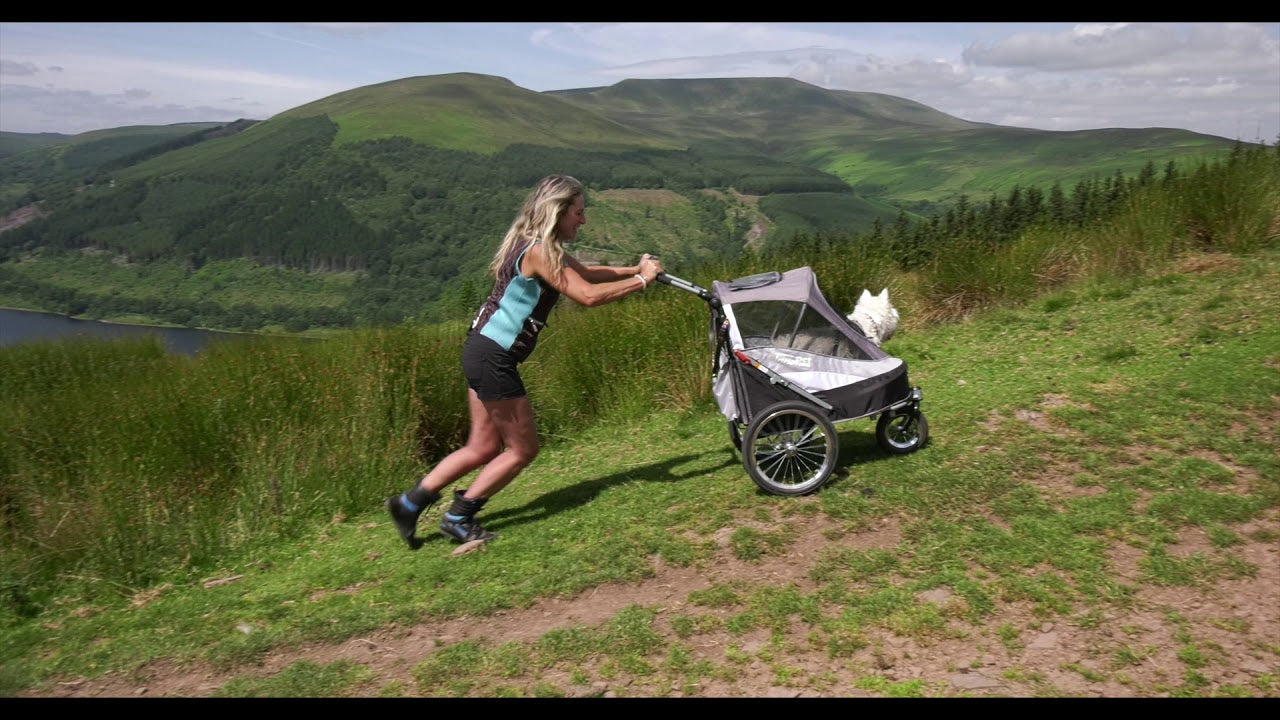
UK-specific scenarios make strollers particularly useful. Crowded high streets and narrow city pavements can be overwhelming for a small dog underfoot. A contained stroller keeps them safe from accidental kicks, shopping trolleys, and overexcited children. On public transport, where dogs are often required to be restrained or carried, a stroller with a secure cabin acts as a ready-made travel crate. The growing trend of adventure strollers also means owners no longer have to leave a small or ageing dog behind on a hike. These models feature chunky tyres and suspension that soak up bumps on bridleways and forest trails. Beyond the dog’s comfort, the built-in storage baskets on most models are a genuine help for carrying shopping, water bottles, and leads, while the cabin itself gives a dog a familiar, safe spot to settle in a busy pub garden or café.
Medical and Health Benefits
From a veterinary perspective, containment and rest are often the hardest things to enforce after an operation. A stroller keeps a dog immobile and clean, preventing stitches from being strained or contaminated on wet ground. For dogs with chronic arthritis or hip dysplasia, the reduced load on sore joints means they can still enjoy fresh air and changing scenery without triggering a painful flare-up. Brachycephalic breeds like Pugs and French Bulldogs face a particular risk in the UK summer. Even on a moderately warm day, these flat-faced dogs can struggle to regulate their body temperature. A well-ventilated stroller lets them participate in a walk while resting in the shade, dramatically lowering the risk of overheating and respiratory distress.
Key Features to Look for in a UK Dog Stroller
Choosing a stroller means thinking about where you will actually use it, not just how it looks. The most expensive model on the market is worthless if its wheels clog with mud on your first walk or it does not fit through your front door.
Wheel type and terrain compatibility should be your first filter. City strollers typically use small, hard plastic swivel wheels that glide smoothly across shopping centre floors and paved streets. They are light and easy to steer with one hand. The moment you step onto grass, gravel, or a sandy beach, those same wheels become a liability. All-terrain strollers use large, often pneumatic tyres with deep tread and built-in shock absorbers. For UK conditions, look for puncture-proof or solid rubber tyres. Nothing ends a walk faster than a flat tyre three miles from the car, and the combination of wet mud, flinty paths, and winter debris makes punctures a real risk.
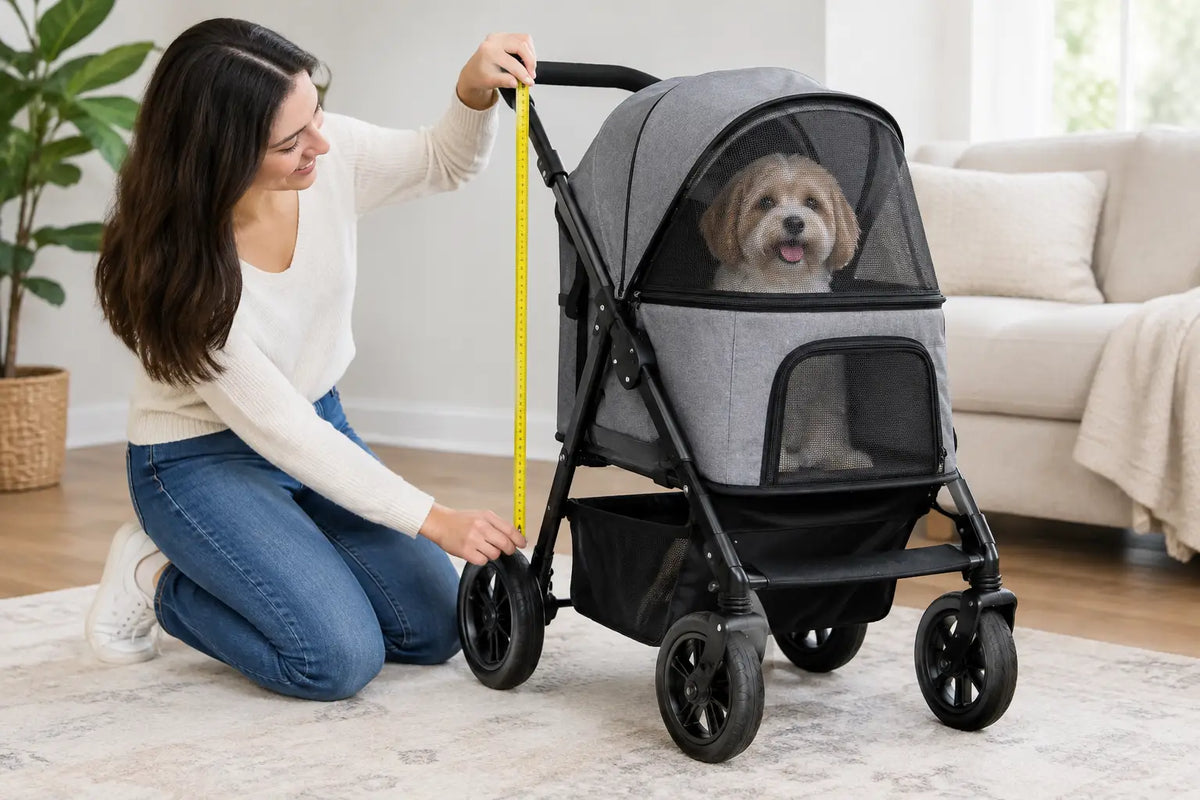
Weight capacity and dog size are not interchangeable. A stroller rated to 25 kilograms does not automatically suit every dog under that weight. A tall, lean Greyhound needs a completely different cabin shape to a short, dense Staffordshire Bull Terrier of the same mass. Measure your dog’s length from nose to rump and height from paw to shoulder when standing, then check internal cabin dimensions carefully. Exceeding the stated weight limit risks frame collapse, which can injure your dog and void any warranty.
Foldability matters enormously if you live in a flat, have a small car boot, or need to store the stroller in a hallway. One-click fold mechanisms have become standard on many models in 2026, allowing the whole unit to collapse flat in seconds. Check the folded dimensions against your car boot space before buying. A stroller that needs its wheels removed every time you pack it away will quickly become a source of frustration.
Safety features should be non-negotiable. Inside the cabin, there must be a tether point with a short lead that clips to your dog’s harness. This prevents them from jumping out when the canopy is open. If Ventilation is the priority then mesh should cover at least two sides to create a cross-breeze. For the darker months, reflective strips on the fabric and wheels keep you visible on unlit country lanes and dim city streets. Many Pet owners also like to have a reliable brake system, ideally one that locks both rear wheels simultaneously with a single pedal for stopping on slopes and when loading your dog.
Weather protection in the UK means a rain cover is not an accessory, it is a requirement. Look for covers made from clear, non-toxic PVC that attach securely with Velcro or zips and have ventilation flaps to prevent condensation building up inside. A UV-protective canopy is equally useful for blocking harsh summer sun, which can turn a dark-coloured stroller cabin into an oven within minutes.
The Main Types of Dog Strollers (And Which Dog Needs Which)
Standard three-wheel strollers remain the most popular choice for everyday use. The single front wheel gives excellent manoeuvrability, letting you pivot around tight corners and navigate shop aisles without reversing. Many three-wheel designs are built for light jogging, with a fixed or lockable front wheel that tracks straight at speed. These suit active owners who want a single stroller for pavement walks and occasional park runs.
Multi-function strollers have reshaped the market by combining several products into one. A 2-in-1 design might switch between a stroller and a car seat, while a 3-in-1 adds a trailer mode for cycling. The cabin detaches from the wheelbase and clips into a car seat base, secures with most seatbelts or clips to a bike hitch. This approach saves money and storage space for owners who travel frequently with their dog. The InnoPet range has pushed this concept hard, and models like the Adventure buggy can transition from a walk to a car journey without ever disturbing a sleeping dog. If your weekends involve driving to a trailhead, cycling a fire road, then walking the final stretch, a multi-function stroller covers all three stages with one piece of equipment.
Lightweight travel strollers prioritise portability above all else which is where the Beberoad range shines. They weigh as little as five or six kilograms, fold into a compact rectangle, and often come with a carry strap. Storage baskets are minimal, and the wheels are strictly for smooth surfaces. These are the strollers for Tube commuters, flat-dwellers with limited cupboard space, and anyone who needs to lift the whole unit onto a bus or train several times a day.
Double strollers solve the problem of walking two dogs when one or both cannot manage the distance. They sit side by side in separate cabins, each with their own tether. Before buying, measure your widest doorway. Some double strollers exceed 80 centimetres in width and will not pass through a standard UK interior door frame. Pavement width is another consideration in terraced streets where wheelie bins already narrow the path.
Luxury and heavy-duty strollers cater to larger breeds, with weight capacities reaching 50 kilograms on models like the Hercules and Mamut X-Large. These units use reinforced aluminium frames, large air-filled tyres, with built in suspension systems. The cabins are longer and taller, giving a big dog room to lie flat and sit up without hunching. The trade-off is weight and folded size; these are not strollers you will carry up a flight of stairs as easily.
Dog Stroller Safety Checklist (What Most Retailers Will Not Tell You)
Product pages list features. They rarely explain how to use them without putting your dog at risk.
Harness attachment is the most commonly misunderstood safety point. Never clip a lead to the stroller’s handle and then to your dog. If the stroller tips or you lose your grip, the dog is dragged or hanged. The correct method is to use the internal tether clip, attached to a properly fitted harness, not a collar. The tether should be short enough that the dog cannot climb over the cabin edge but long enough to lie down comfortably.
Weight limits exist for structural reasons, not marketing ones. Placing a heavy dog in a stroller designed for a small breed raises the centre of gravity and increases the risk of tipping on corners or cambered pavements. Always check the manufacturer’s maximum weight and, if your dog is close to it, Check with the seller before committing to a purchase. A wide wheelbase and low cabin floor make a stroller inherently more stable.
Ventilation is a year-round concern, not just a summer one. A rain cover that seals the cabin completely can create a humid, stuffy environment even in cool weather. Look for mesh panels so air can flow through when the canopy is closed. If your dog pants heavily or seems restless, open a rear panel immediately.
Stability testing should be part of your first outing. Load the stroller with a weight equivalent to your dog, then push it slowly across a sloped driveway or cambered pavement. A well-designed stroller keeps all wheels on the ground and resists tipping. If it feels tippy with a static weight, it will be worse with a dog that shifts position.
Dog Stroller vs. The Alternatives
A stroller is not always the right tool, and understanding the alternatives helps you avoid buying something you will not use.
A pet carrier or sling works for short trips with very small dogs. A Chihuahua carried across a train station in a sling is practical; carrying the same dog for a two-hour walk is not. Strollers take the weight off your shoulders and give the dog space to move and settle. They are the better choice for anything longer than a quick errand.
Dog backpacks suit active owners hiking on terrain too rough for wheels. The dog sits in a structured pack on your back, leaving your hands free for trekking poles. The limitation is weight. Carrying a ten-kilogram dog on your spine for several hours is physically demanding, and backpacks offer no solution for dogs that need to lie flat due to joint or spinal issues.
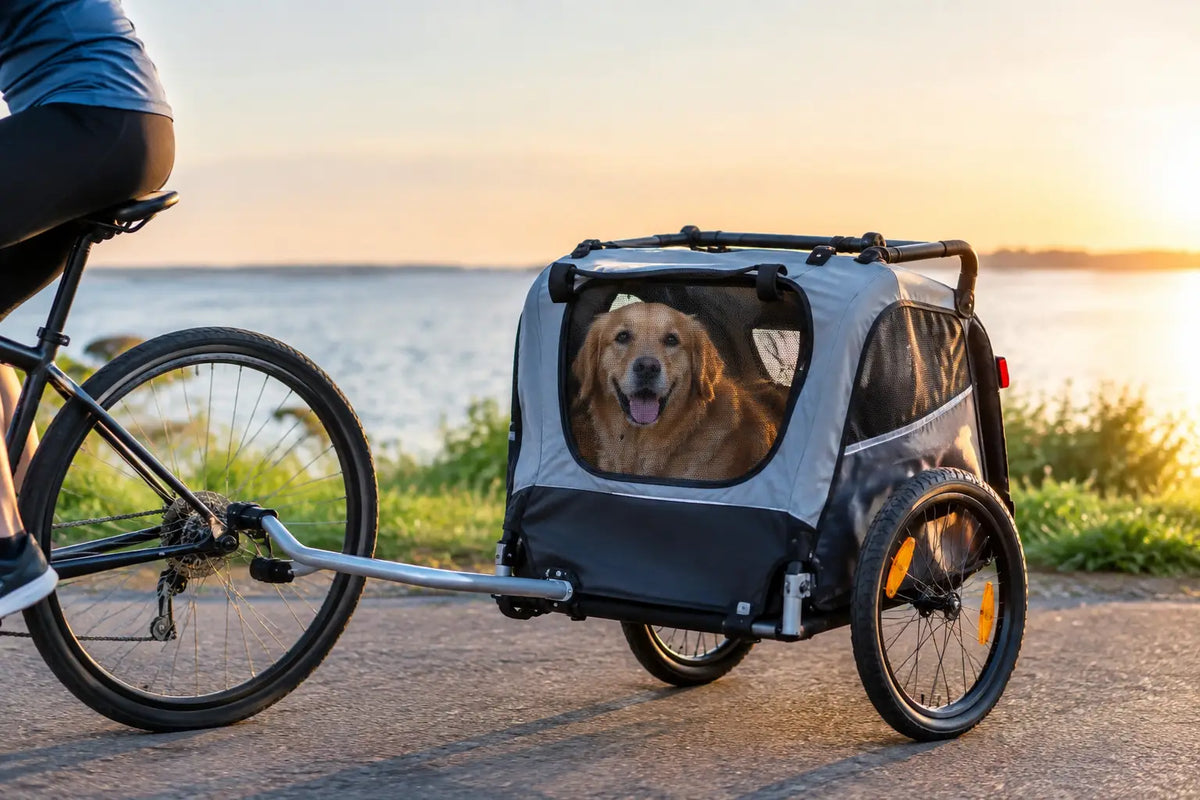
Bike trailers attach to a bicycle and let you tow a dog at speed. They are excellent for covering distance on tarmac or hard-packed trails but offer less control than a stroller. A trailer bounces more, and the dog is further from you, making it harder to monitor their comfort. For a senior or fragile dog, the slower pace and direct supervision of a stroller are safer.
Baby prams are not a substitute. Dog strollers use washable, durable liners designed to handle fur, mud, and the occasional accident. They include internal tethers and often a chew-resistant mesh. A baby pram lacks these safety features and is not built to contain an animal that might scratch or try to escape.
How to Choose the Right Dog Stroller for Your UK Lifestyle
Your postcode shapes your purchase more than you might think. Match the stroller to your routine, not an aspirational version of it.
The city walker needs a lightweight stroller with a compact fold and small swivel wheels. You will be navigating crowded pavements, lifting the stroller onto buses, and storing it in a hallway or under stairs. A rain cover is essential, and reflective details add safety during the dark winter commute. Cabin size should be just large enough for your dog to sit and turn around, keeping the overall footprint narrow.
The country walker or hiker needs the opposite: a robust, all-terrain stroller with large puncture-proof wheels and suspension or absorption. Look for a high enough ground clearance to clear rocks and roots, potentially a hand-operated brake for descending steep paths, and a cabin that fully encloses to keep mud spray off your dog. The extra weight of these strollers is a fair trade for durability and stability on uneven ground.
The senior dog owner should prioritise easy access. A low step-in height means an arthritic dog does not have to lift its legs high to enter. A supportive, padded bed base reduces pressure on sore joints, and a large canopy provides shade on sunny days. Some strollers designed for disabled dogs include a ramp or a drop-down front panel that converts into a loading platform.
The multi-dog owner faces a choice between a double stroller and a single with a high weight capacity. Two small dogs that get along well can often share a large single cabin, provided the combined weight stays under the limit and both dogs can lie down without crowding. If they need separate spaces, a double stroller is the only safe option, but check the width against your home’s doorways.
The budget-conscious buyer should look for value through durability and versatility. A stroller with replaceable parts, such as wheels and fabric covers, costs more upfront but avoids the waste and expense of replacing the whole unit when one component wears out. Multi-function strollers also offer better value by replacing several separate products. A 2-in-1 that works as a car seat and a stroller eliminates the need to buy both.
Frequently Asked Questions About Dog Strollers
Are dog strollers allowed on public transport in the UK?
Yes, but policies vary by operator. Most train companies and bus services allow folded strollers as luggage or require them to be carried on. A compact, one-click fold model makes this process smoother. Check the specific conditions of carriage for your local operator before travelling.
Can I use a dog stroller for a puppy?
You can, but wait until the puppy has completed its full vaccination course before placing it in a stroller used outdoors. The cabin should be well-ventilated, and the puppy must be secured with a harness and tether. A stroller can be a useful tool for socialising a young puppy to traffic, crowds, and new sounds from a safe, elevated position.
How do I clean a dog stroller?
Most quality strollers have removable fabric cabins that can be machine washed on a cold, gentle cycle. Air dry the fabric rather than using a tumble dryer, which can shrink or damage waterproof coatings. Wipe the frame and wheels with a mild soap solution and a cloth, paying attention to mud build-up in the brake mechanism and wheel axles.
Do I need a specific stroller for a disabled dog?
Yes. Look for a stroller with a very low entry point or a built-in ramp. A hammock-style bed that supports the dog’s body evenly is better than a flat board. The cabin should be long enough for the dog to lie fully stretched out, as disabled dogs often cannot curl up comfortably. Some specialist models are designed specifically for dogs with mobility impairments and are worth investigating if your dog uses a wheelchair.
Conclusion & Final Recommendations
The right dog stroller is an investment in your dog’s quality of life, not a luxury purchase. It keeps a senior dog engaged with the world, protects a recovering pet, and opens up new places for a small breed that cannot walk long distances. Your decision should rest on three practical factors: the size and health of your dog, the terrain you walk on most days, and how you need to store and transport the stroller.
With over 90 models available, finding the exact match for your needs is a matter of comparing these specifics rather than being swayed by marketing alone. As the UK’s largest independent dog stroller store, backed by a 4.8-star rating from more than 13,500 customers, we have seen how the right choice can change a dog’s daily life. Browse our full range to find the stroller that fits your dog, your home, and your next walk.
If you need specific help with finding the right stroller for your dog then we invite you to take our quiz here or click hereto message one of our team for profession pet mobility advice and recommendations.