Crash Tested Crate Versus Harness for Dogs
A muddy spaniel after a woodland walk, a nervous rescue on the school run, a senior terrier heading to hydrotherapy - car travel looks different for every family. That is why the crash tested crate versus harness question cannot be answered by simply saying one is always safer. Both can be excellent choices when they are genuinely tested, correctly sized, fitted as instructed and suited to your dog, vehicle and journey.
The right restraint should do more than stop your dog climbing into the front. It should help manage movement in a sudden stop or collision, reduce distraction for the driver and give your companion a secure, comfortable place to travel. Your dog deserves a seat on the adventure too - with safety designed into the journey.
Crash tested crate versus harness: the key difference
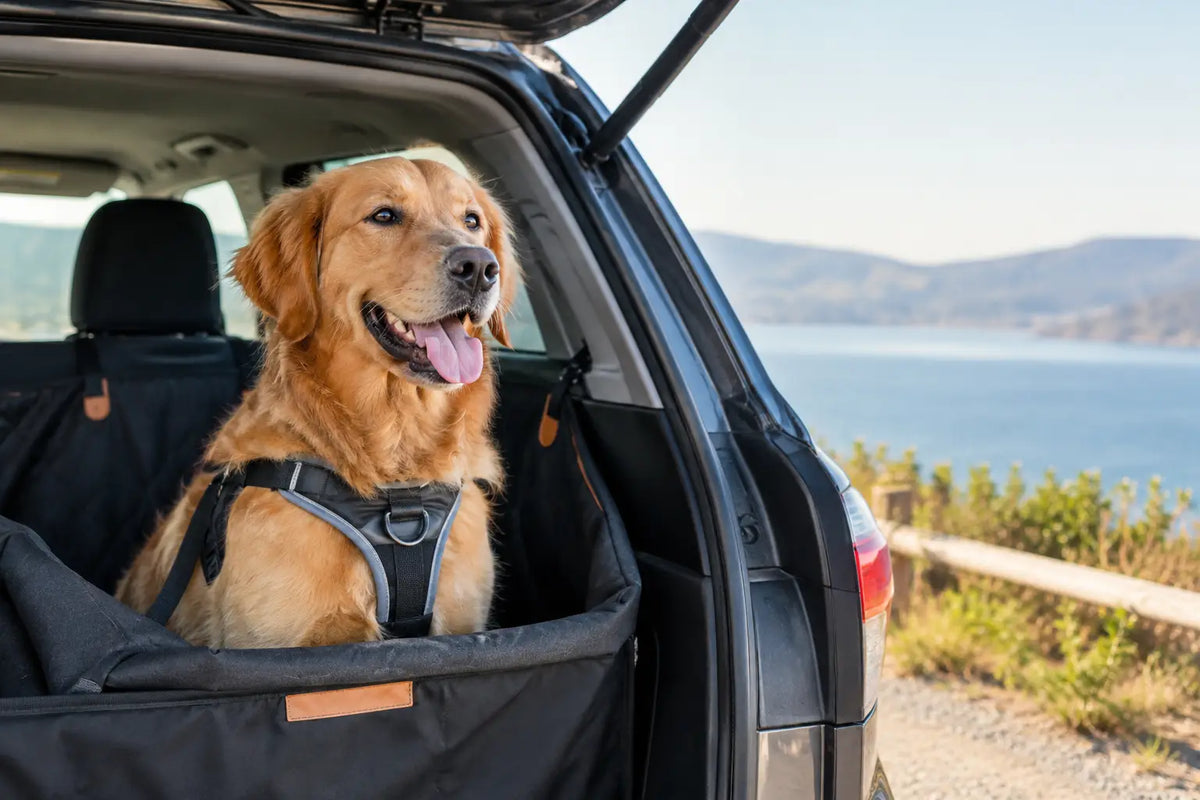
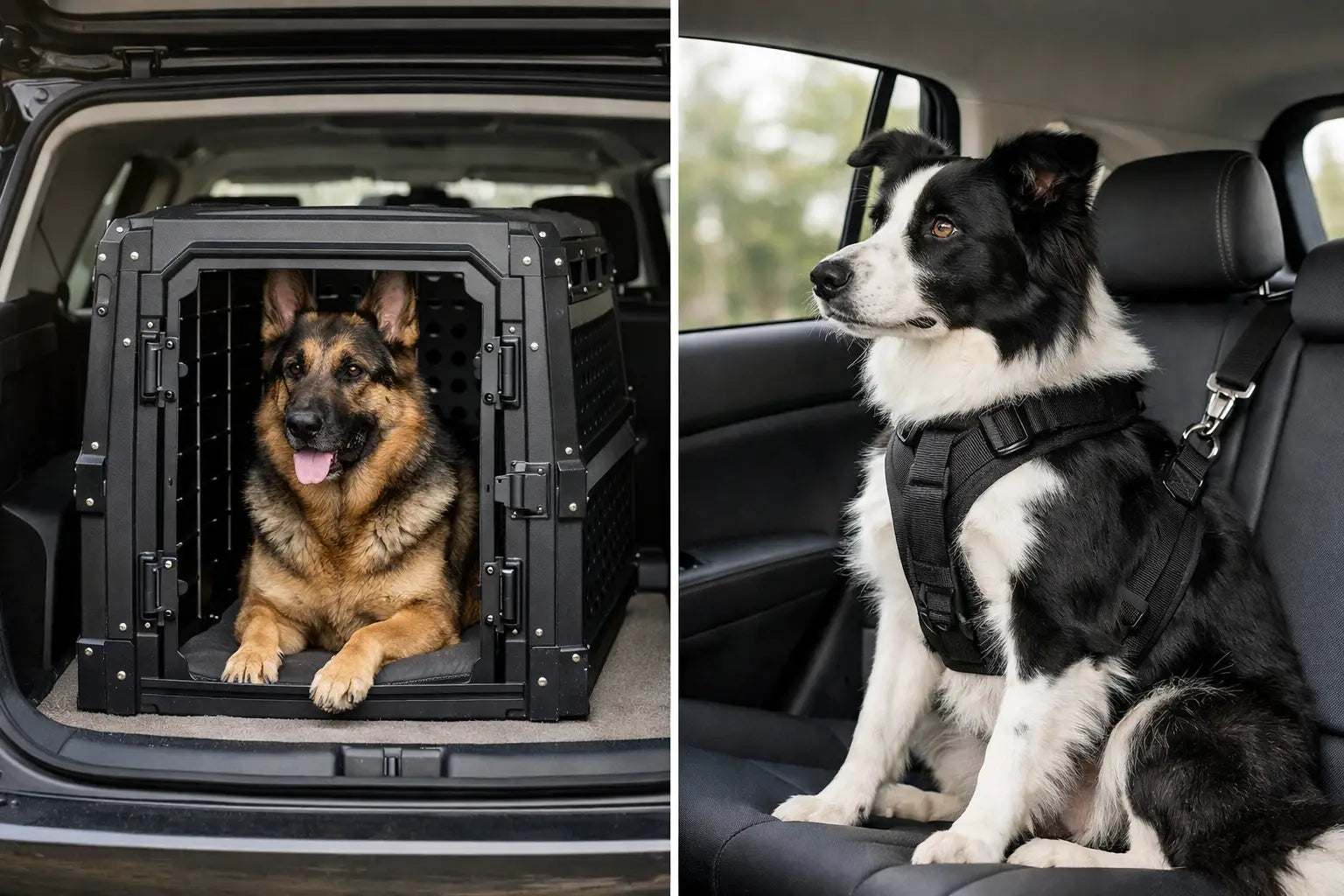
A crash-tested crate contains your dog in a rigid, enclosed space. In a suitable vehicle, it is usually installed in the boot or load area and secured using the manufacturer’s specified anchor points, straps or vehicle fittings. The crate is designed to manage forces during a collision while preventing the dog from being thrown around the cabin or escaping after an impact.
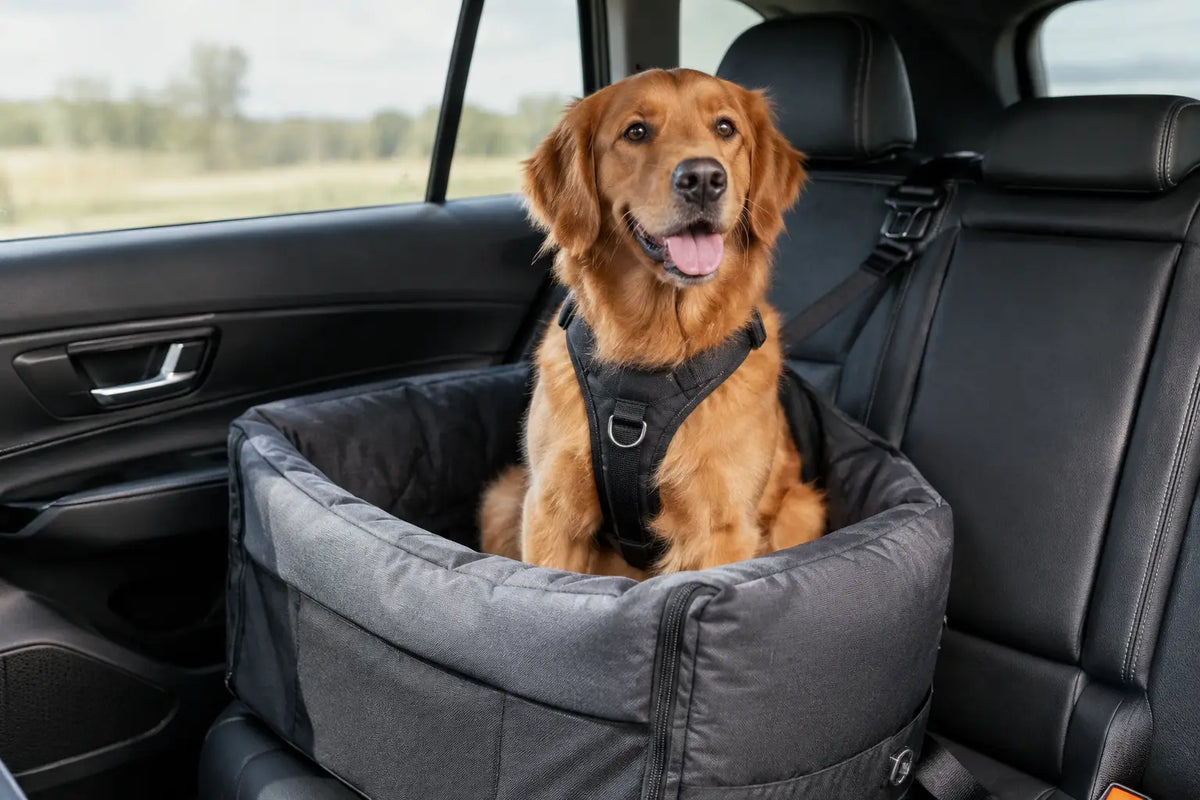
A crash-tested car harness secures your dog to the vehicle’s rear-seat belt system, or to a compatible attachment system where specified. It allows the dog to sit, lie down and change position within limits, while helping to restrain forward movement. A proper travel harness is not simply an everyday walking harness with a seat-belt clip added on. Its materials, stitching, connection points and tested weight range matter.
Neither category is automatically safe because its label says “car crate” or “car harness”. Look for clear information about the testing performed, the dog weight range covered, the vehicle installation method and any restrictions. A product tested for one configuration may not perform as intended when used with different straps, connectors or locations in the car.
When a crash-tested crate is the better fit
A crate often makes sense for dogs who settle best in an enclosed den-like space, families carrying more than one dog, or owners who regularly travel longer distances. It can also be a practical choice for wet, sandy or muddy adventures, as it keeps the rest of the vehicle cleaner and gives your dog a defined place to rest.
For some dogs, containment is an important part of safety. An excitable dog that twists, steps on the seat belt or tries to climb into the front can be difficult to manage in a harness, even if the harness itself is well made. A properly installed crate removes that temptation and can make the cabin calmer for everyone.
The trade-off is space. A crash-tested crate needs a vehicle with a suitable load area and enough room for the dog to stand, turn and lie comfortably without being oversized. Its external dimensions must also work with the shape of your boot, tailgate and rear seats. An estate car, SUV or larger vehicle may accommodate a crate beautifully, while a compact hatchback may not.
Crate placement deserves careful thought. Follow the crate manufacturer’s instructions exactly and never improvise with bungee cords, luggage straps or fixings not approved for that model. Consider the vehicle manual too, particularly where load restraints, tether points and airbag systems are concerned. A crate should not be chosen solely because it fits through the boot opening.
For dogs with reduced mobility, a crate can be reassuring once they are inside, but getting in and out may be the deciding factor. A low-entry vehicle, ramp or lifting support can protect an older dog’s joints and save a recovering dog from an awkward jump. Comfort is part of safe travel, especially when IVDD, arthritis or post-operative restrictions are involved.
What to check before choosing a crate
Check the crate’s tested dog-weight range rather than relying on breed descriptions alone. Measure your dog while standing and lying down, then compare those measurements with the usable internal dimensions. Also check your vehicle’s boot width, depth, height and access angle, including any sloping rear window or wheel-arch intrusion.
A crate should give your dog enough room to travel naturally, not enough room to be thrown across a large empty space. Add a thin, non-slip crate mat only if it is permitted by the manufacturer and does not interfere with doors, latches or fittings.
When a crash-tested harness is the better fit
A crash-tested harness is often the more flexible solution for small cars, occasional car trips and households that need the boot free for pushchairs, luggage or mobility equipment. It can be particularly useful for dogs that find a crate unfamiliar or stressful, provided they are calmly introduced to the harness and rear-seat routine.
Harnesses also make it easier to keep a dog close to the family in the rear cabin. For a small dog, that may mean travelling alongside a child or another pet, provided every passenger has adequate space and the product instructions allow the arrangement. For an owner with a dog who needs gentle assistance, the rear seat can be more accessible than a deep boot.
But a harness is only as good as its fit and connection. The chest section should sit where the manufacturer intends, straps should be snug without restricting normal breathing, and the attachment must be used with the supplied or approved car tether. Never connect a car restraint to a collar. In a sharp stop, the force concentrated around the neck can cause serious injury.
A dog should usually travel on the rear seat, not in the front passenger seat where airbag deployment creates additional risk. Do not assume that passing a seat belt through any loop on any harness is acceptable. Use the designated car attachment point and follow the instructions for belt routing, buckle position and permitted seat locations.
The limits of a harness
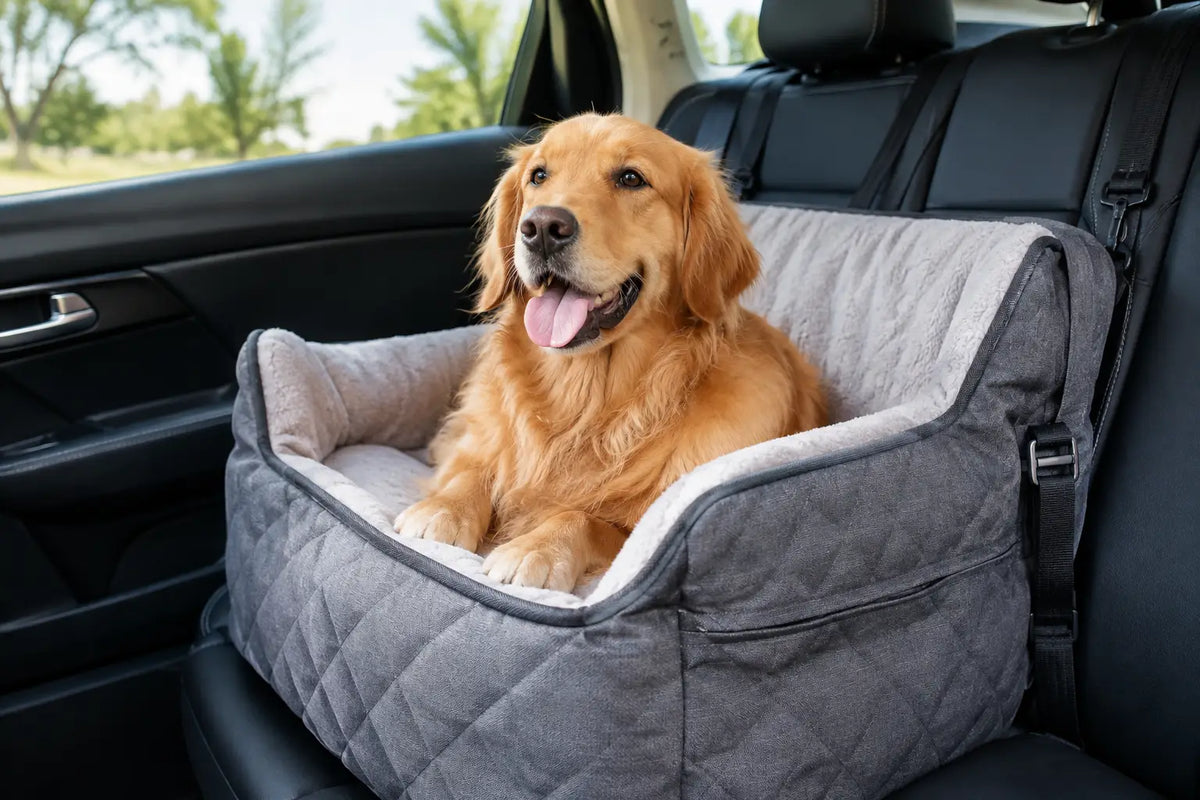
A harness may not be ideal for every dog. Large, powerful dogs can exceed a product’s tested capacity, while dogs that chew straps, panic when restrained or continually tangle themselves may travel more safely in a suitable crate. Very small dogs may also need a dedicated, tested car seat or carrier rather than a harness designed for a larger body shape.
For long journeys, observe how your dog rests. If they cannot settle, slide about on leather seats or repeatedly brace against the belt, reassess the setup. A non-slip seat protector may improve comfort, but it must not obstruct the seat belt, alter the harness connection or compromise the manufacturer’s instructions.
Safety claims: what “crash tested” should mean
The phrase “crash tested” can cover very different things. A credible product should identify that it has undergone impact testing and explain the standard, test method or certification where relevant. Some products may reference recognised vehicle or pet-restraint testing protocols; others may provide brand-specific testing information. The useful question is not whether a marketing badge exists, but what was tested, at what weight and in which installation configuration.
Be wary of universal promises. No restraint can remove every risk from a serious road collision, and no product can compensate for incorrect use. Safety also depends on sensible driving, a properly maintained vehicle and never letting a dog travel loose.
The most reassuring manufacturers are specific: they state compatible vehicles or attachment methods, maximum and minimum dog weights, approved accessories and fitting instructions. Premium travel equipment costs more because design, engineering, hardware and testing are doing real work. For a product used every week, often for years, that detail is worth considering.
Choose for the journey you actually make
Think beyond the annual holiday. If your dog joins you on daily walks, veterinary visits, grooming appointments and weekends away, choose the setup you can use correctly every time. The best restraint is not the theoretically perfect option that is too heavy to install, does not fit your car or leaves your dog distressed.
A crash-tested crate may be your best choice if you have suitable boot space, a dog that benefits from enclosure or a multi-dog household. A crash-tested harness may suit a smaller vehicle, a dog who travels calmly on the back seat or an owner who needs flexible cabin space. Some families eventually use both: a crate for longer journeys and a tested harness for trips in a second car.
Before your first proper journey, practise at home. Let your dog investigate the crate or wear the harness for short, positive sessions. Reward calm behaviour, keep early drives brief and check the fit again after your dog has settled. For nervous, senior or recovering dogs, a familiar blanket and a gentle routine can make the car feel less like a disruption and more like the start of a good day out.
When you choose with your dog’s body, temperament and your vehicle in mind, travel safety becomes less of a compromise. It becomes the quiet confidence that lets you take them with you, wherever the road leads.