Securing an ISOFIX Pet Car Seat Safely
A pet car seat should not merely stop your dog climbing into the front. It should give them a defined, comfortable place to travel while helping to limit movement when the vehicle brakes or turns. Securing an ISOFIX pet car seat properly is therefore a small routine with a big purpose: helping your companion stay safely included in every school run, weekend walk and holiday drive.
ISOFIX can make fitting more consistent than relying on a seat belt alone, but it is not a shortcut around the product instructions. The right seat, vehicle position, attachment method and harness all need to work together. Your dog deserves a seat on the adventure too - one that is fitted for the journey ahead.
What ISOFIX does for a pet car seat
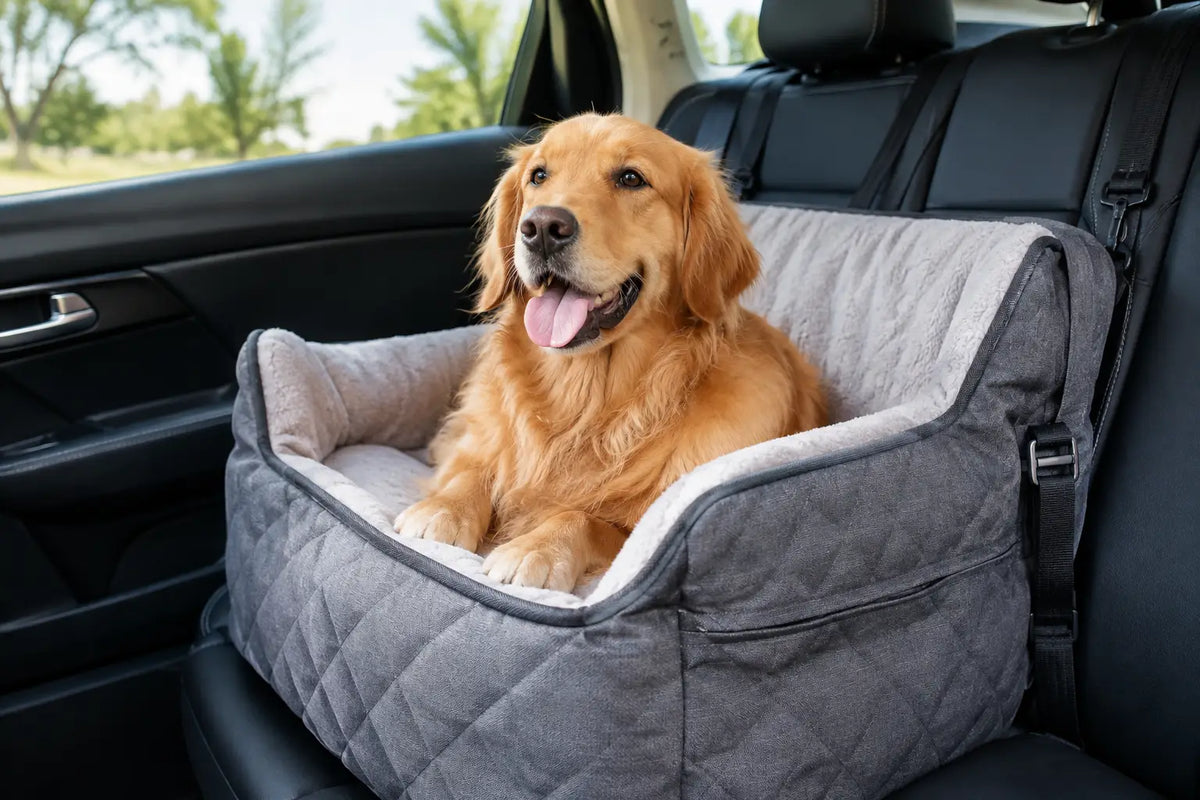
ISOFIX is a vehicle anchorage system with fixed points built into the gap between the backrest and base of a rear seat. Compatible pet car seats connect directly to these points using rigid connectors or ISOFIX latches. Once engaged, the seat is less likely to slide, tip or shift sideways during normal driving.
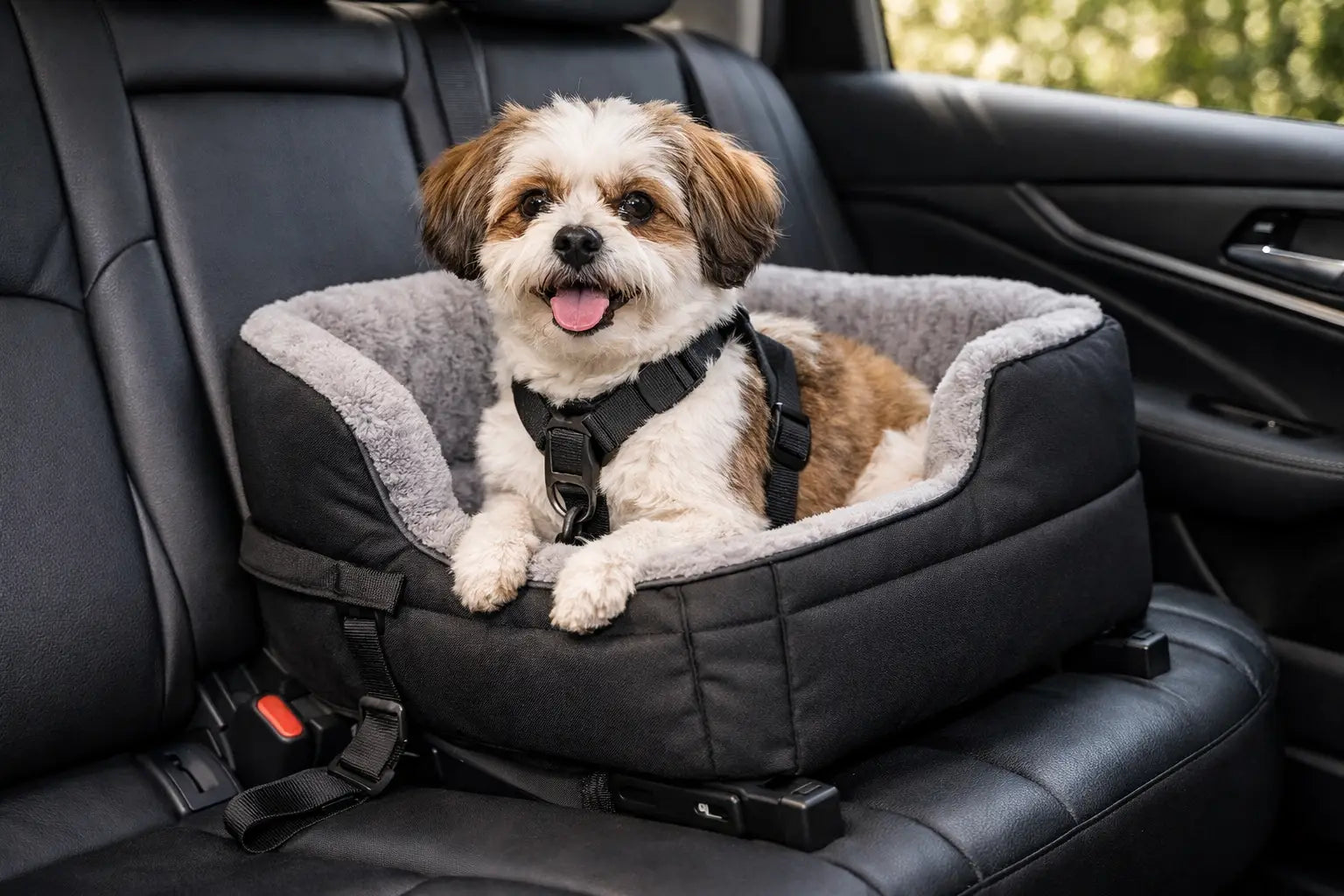
That reliable connection is especially useful for small dogs and cats who travel in raised booster-style seats, and for pets that find car journeys unsettling. Less movement in the seat can mean a steadier place to settle. It can also make everyday fitting simpler, provided the seat is genuinely compatible with your car.
ISOFIX does not make every pet seat crash-tested, nor does it make an incorrectly sized or incorrectly secured product safe. A quality ISOFIX seat is part of a wider travel set-up. Look closely at the manufacturer’s stated test information, pet weight limit, permitted attachment points and vehicle compatibility before choosing.
Before securing an ISOFIX pet car seat
Start with the vehicle handbook. It will show which seating positions have ISOFIX anchorages and whether there are any restrictions. Rear outer seats are commonly fitted with ISOFIX points, but layouts vary between cars, and some seats can be difficult to access beneath thick upholstery or protective covers.
Check the pet car seat instructions too. Some models use ISOFIX as their primary fixing method, while others require an additional vehicle seat belt. Others may be designed only for particular types of harness or have a specified direction of installation. Follow the seat manufacturer’s method exactly rather than mixing components from different systems.
Size matters just as much as the fixing. Your pet should be within the product’s stated weight range and able to lie down or sit comfortably without being compressed by the sides. A seat that is too spacious may not contain a very small dog securely, while one that is too tight can make a nervous or senior pet brace against the sides. For dogs with arthritis, spinal concerns, IVDD or post-operative needs, a low-stress route into the seat and supportive cushioning can be as important as the anchor points themselves.
How to secure an ISOFIX pet car seat correctly
Find the anchor points and prepare the vehicle seat
Move the front seat forward if you need more room to work, then locate the ISOFIX symbols or guides on the rear seat. Remove bulky objects from the vehicle seat and make sure the backrest is fully upright and locked in place. A thick, loose blanket underneath can interfere with the seat sitting level, so use only a protector approved for use with your chosen car seat if one is needed.
Extend the ISOFIX connectors on the pet seat as directed. Align them with the vehicle’s anchor points and push firmly until each side clicks into place. Most systems have an indicator that changes colour, commonly from red to green, when a secure connection has been made. Do not assume a click alone is enough: inspect both indicators.
Remove slack and check for movement
Where the design includes an adjustment strap, support leg or additional belt, fit and tighten it precisely as the instructions specify. Do not improvise a top tether or attach straps to head restraints unless the product is explicitly designed for that use.
With the seat fitted, hold its base and give it a firm, controlled tug. There should be very little side-to-side or forward movement at the attachment point. A little movement in the seat’s upper structure may be normal for some designs, particularly cushioned booster seats, but a loose base, one unlatched connector or a seat that lifts away from the vehicle seat needs attention before your pet gets in.
If the indicators will not turn green, release the connectors and try again. Check for fabric obstructing the anchor points, make sure the connectors are level, and consult both manuals. Never force an ISOFIX fitting. If compatibility is uncertain, expert advice before travelling is far preferable to guessing on the drive.
Attach your pet to the seat’s internal restraint
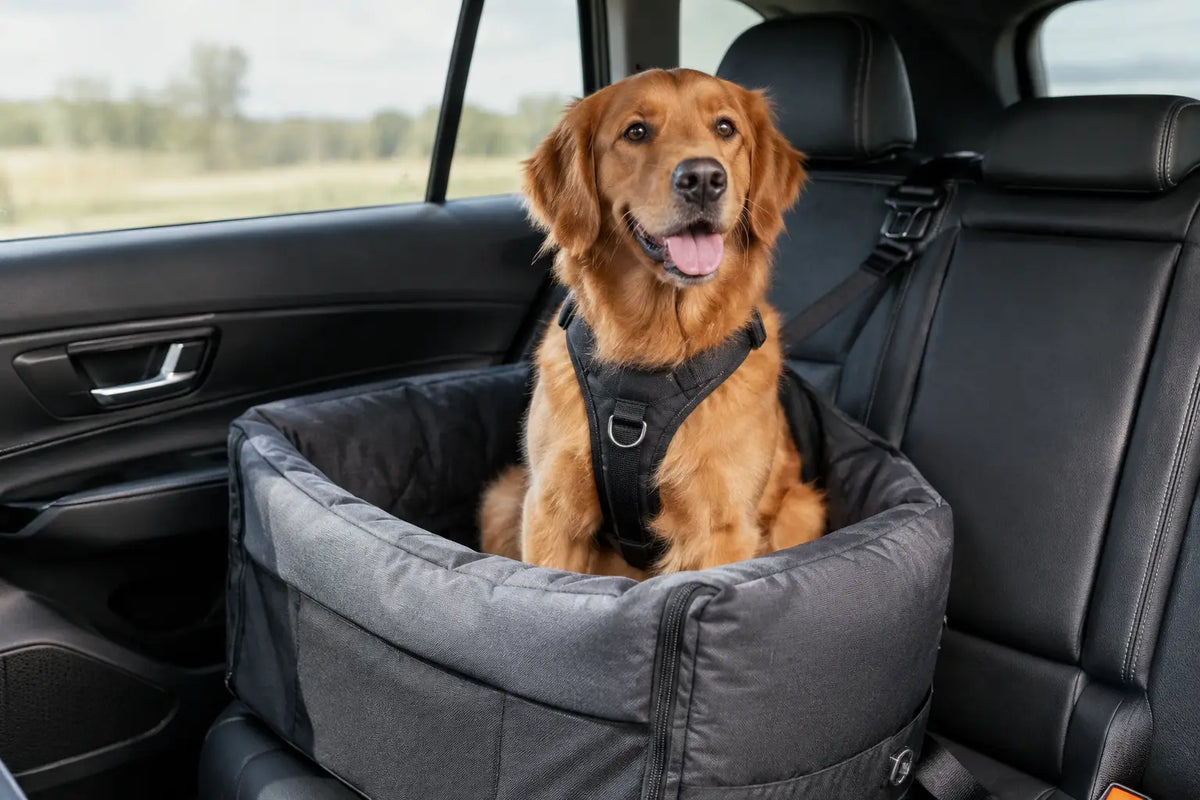
The internal tether supplied with a pet car seat is intended to help keep your dog or cat within the seat. Attach it to a properly fitted travel harness, using the harness’s designated connection point. Never clip a restraint to a collar. In sudden braking, force through the neck can cause serious injury.
The harness should be snug enough that your pet cannot step out or turn around inside it, yet comfortable enough for normal breathing and movement. You should generally be able to slip two fingers beneath the harness straps. Check the fit with your pet standing and sitting, as a harness can shift once they settle into the seat.
A tether is not the same thing as a crash-tested harness. If the product instructions require a particular harness type or state that a separate tested restraint is needed, treat that as a non-negotiable part of the system. Never use a seat’s internal lead as a substitute for a restraint it was not designed to replace.
Choosing the safest place in the car
The rear seat is usually the sensible place for a pet car seat. It keeps your companion away from the front passenger airbag and gives the driver fewer distractions. Do not place a pet in front of an active airbag unless both the vehicle and pet-seat manufacturers expressly permit it and you understand the required conditions.
Where there is more than one ISOFIX position, think about the whole journey. A dog with a sore leg may need the side that gives them easier access from the pavement. A very anxious pet may settle better where they can see you without constantly watching passing traffic. If two pets travel together, each needs their own suitable restraint system - sharing a seat or tether creates avoidable risks.
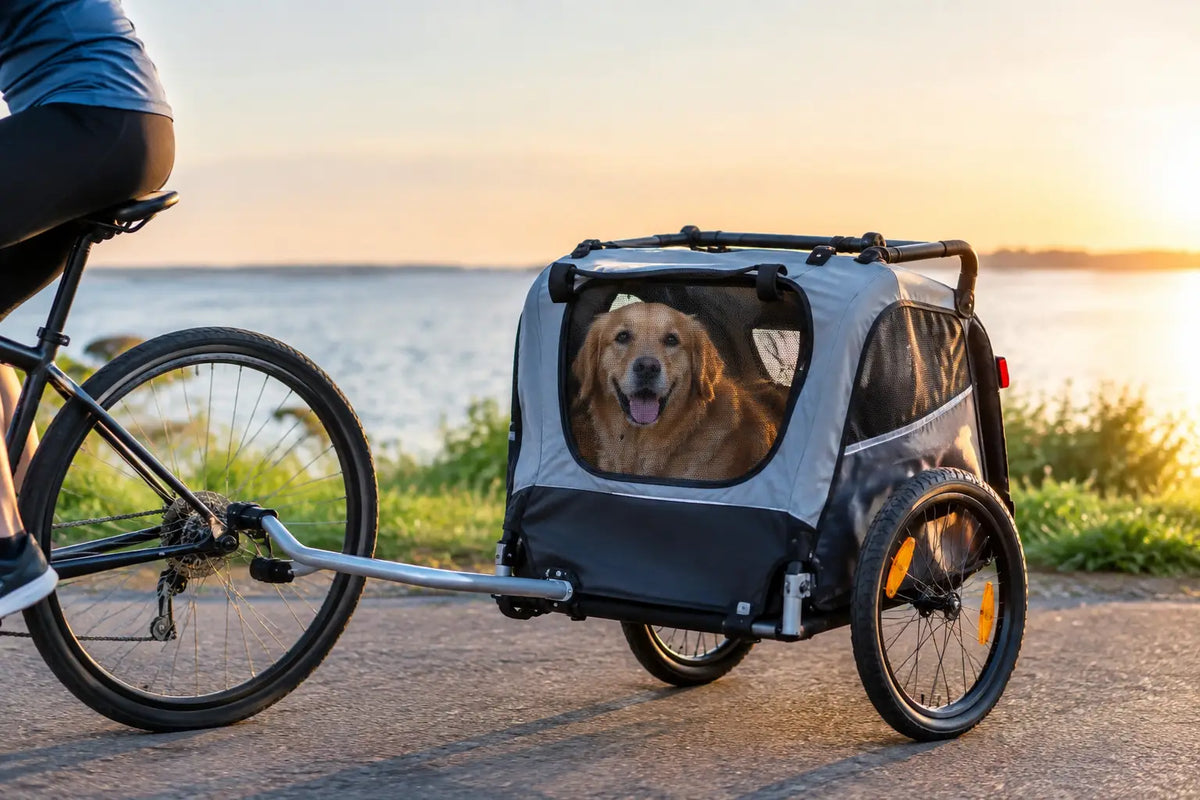
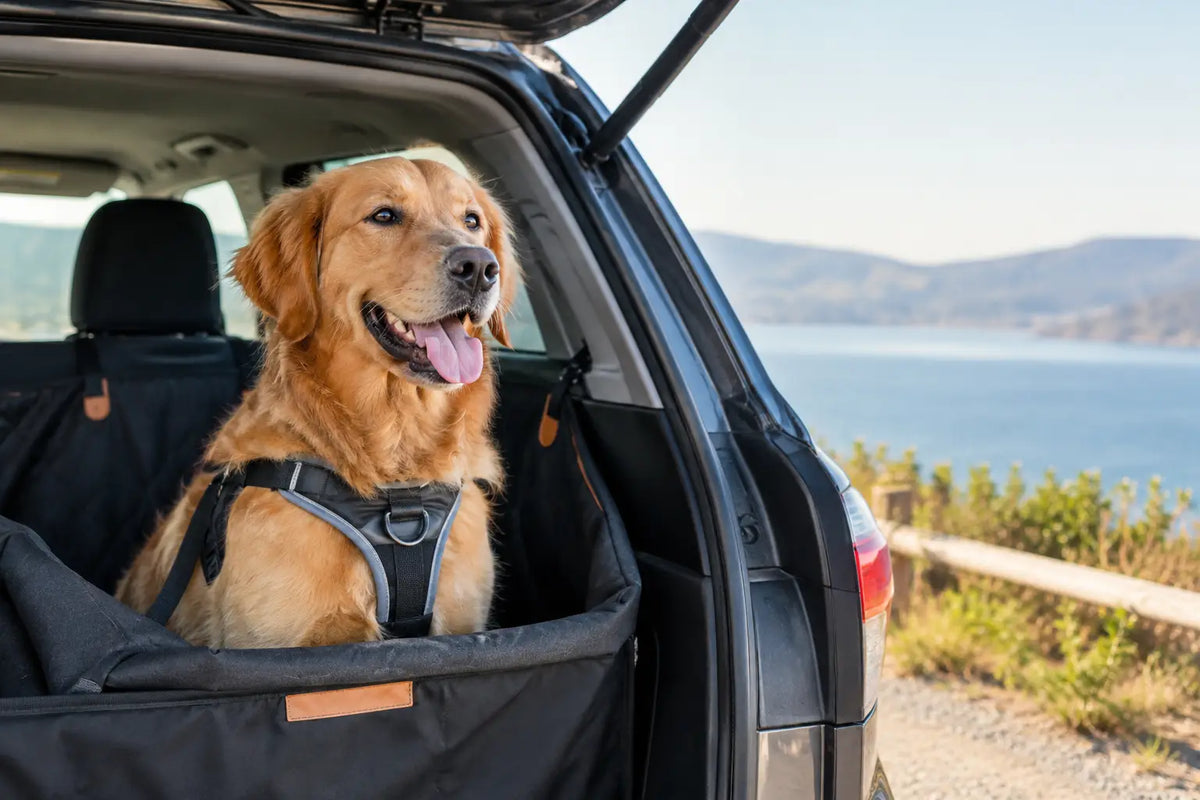
For some dogs, an ISOFIX pet car seat will not be the best option. A larger dog may need a crash-tested crate, vehicle-specific boot solution or a tested harness arrangement instead. A dog who cannot jump, cannot be lifted comfortably, or needs to remain fully supported may be better served by a carefully selected crate or travel bed. Safe travel is not about forcing every pet into the same product category. It is about matching the set-up to their size, health, temperament and vehicle.
Make the seat a calm place before a long journey
A perfectly installed seat can still feel strange to a pet who has never travelled in one. Begin with the car parked. Let them investigate the seat, then reward calm behaviour with a favourite treat or familiar blanket. Keep the first few trips short and uneventful, gradually building up to longer drives.
Avoid feeding a large meal immediately before travel, particularly if your pet is prone to motion sickness. Keep the car well ventilated, drive smoothly and plan regular stops for water and toilet breaks on longer journeys. Never leave a pet unattended in a parked car, even on a mild day.
Before every drive, take ten seconds to check that both ISOFIX connectors are engaged, any required additional restraint is secure, and the harness is attached to the correct point. Recheck after moving the car seat, folding the rear seats or cleaning the vehicle. It is a simple habit that protects the family member travelling behind you.
Pets Own Us is built around the belief that safety and inclusion belong together. Choose the right travel solution, fit it with care, and your dog or cat can spend less time sliding about and more time enjoying the fact that they get to come with you.