Post Surgery Dog Comfort for a Calmer Recovery
The first evening home after an operation can feel longer than the surgery itself. Your dog may be sleepy, unsteady, unsettled or unusually clingy, while you are trying to remember medication times, protect an incision and keep normal life quiet. Good post-surgery dog comfort is not about making recovery completely still or silent. It is about creating a safe, predictable routine that lets your dog rest with dignity while following the veterinary plan.
Every procedure has different restrictions. A dog recovering from a routine neutering operation will need a different set-up from one healing after cruciate ligament surgery, spinal treatment, a fracture repair or an IVDD episode. Your vet’s discharge instructions always come first, particularly around pain relief, wound care, toileting, lead walks and when mobility support is appropriate.
Create a recovery space that asks very little of them
After anaesthetic, even a normally confident dog can misjudge a step, slide on a floor or try to follow you before their body is ready. Set up a recovery area close to family life but away from busy doorways, visiting children and other pets. Being included matters, but so does uninterrupted sleep.
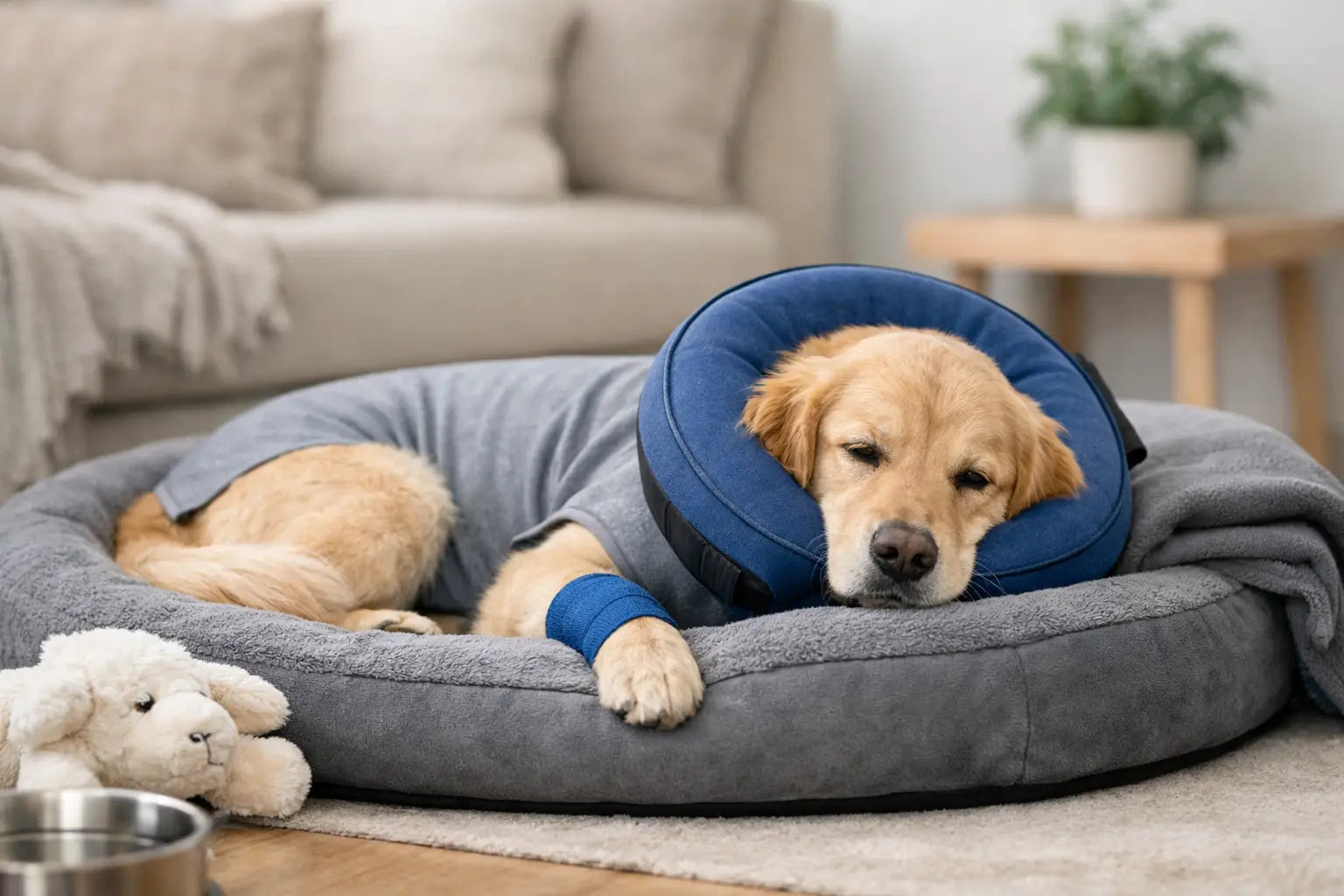
Choose a supportive bed with enough room for your dog to settle without curling tightly around a sore area. Orthopaedic foam can be particularly helpful for older dogs or those recovering from orthopaedic surgery, as it spreads pressure more evenly than a thin cushion. Add a washable blanket for warmth, but avoid bulky bedding that makes it difficult for a weak or wobbly dog to stand.
Non-slip flooring is one of the simplest comforts you can provide. Rugs with grippy backing, runners or rubber-backed mats can create a clear route between bed, water bowl and the door. This is especially valuable after leg, hip or spinal procedures, when one awkward skid can be painful and frightening.
Keep essentials close. Fresh water should be easy to reach without stretching, and food bowls may need raising slightly if your vet advises it for your dog’s condition. If they wear a cone, check that it does not make bowls or bed edges difficult to navigate. Some dogs settle better in a pen or a crate during the earliest phase, but only if it is large enough for safe repositioning and your dog is already comfortable with confinement. A crate should feel like a calm bedroom, never a punishment.
Post-surgery dog comfort starts with controlled movement
Rest does not always mean no movement at all. Many dogs need short, slow toilet breaks on a lead, while others are prescribed carefully staged exercises by their vet or physiotherapist. The trade-off is delicate: too much activity can strain healing tissue, but complete inactivity can lead to stiffness, frustration and poor toileting habits.
Keep journeys from bed to garden short and supported. A rear-support sling can reduce load through the hind legs when a dog is weak, sore or unable to balance well. For front-leg, shoulder or spinal cases, however, the wrong lifting method can cause discomfort, so ask your veterinary team to demonstrate the safest support for your dog’s specific surgery.
Avoid stairs, jumping on sofas and leaping from the car unless your vet has explicitly cleared them. A ramp may be useful later in recovery, but it must have a non-slip surface, a gentle enough angle and secure footing. For some dogs in the immediate post-operative period, lifting with correct support is safer than asking them to manage any incline.
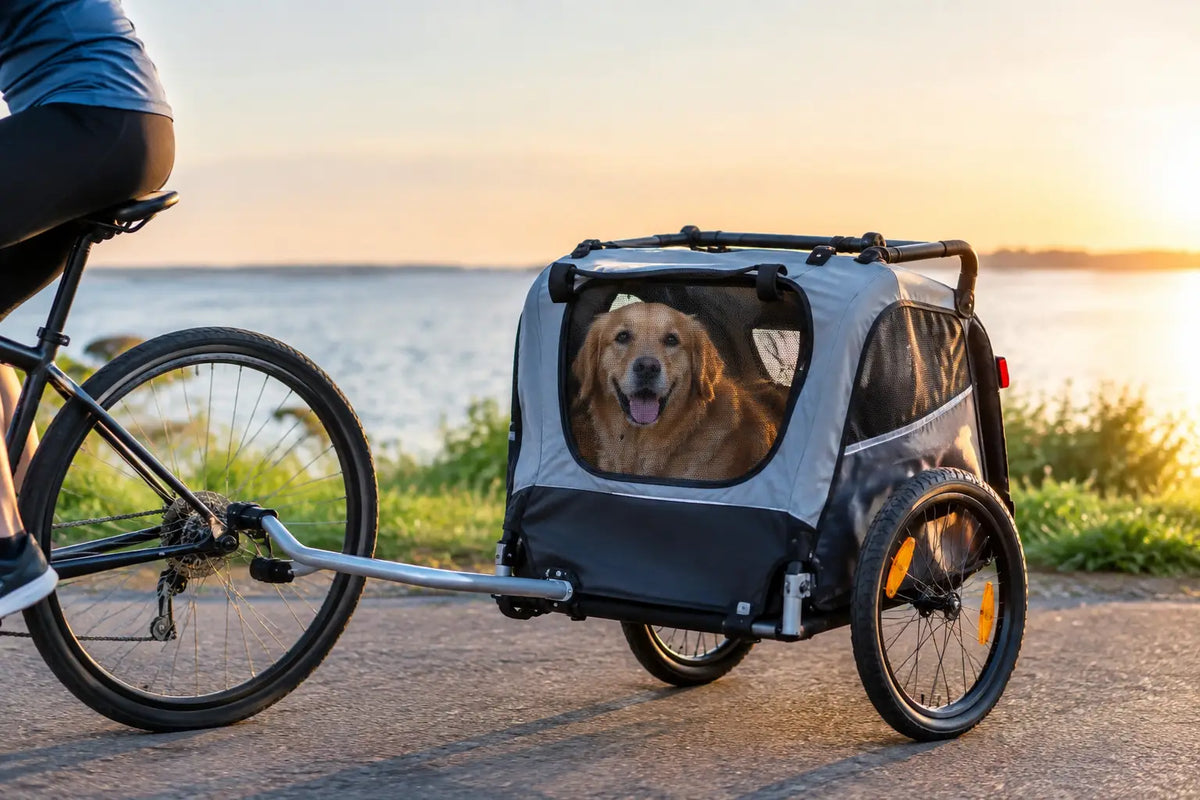
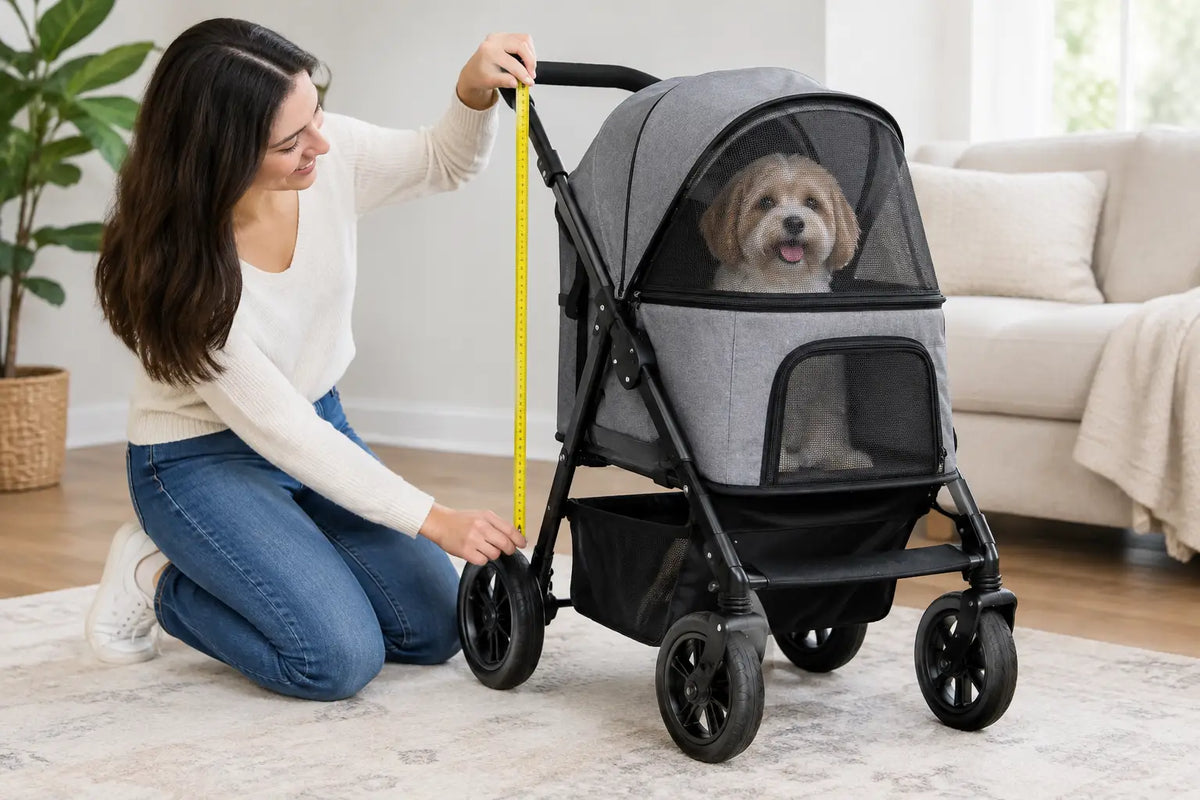
A dog stroller can be a thoughtful option once your vet agrees that fresh air and a change of scene are suitable. It allows a dog to come along for a gentle family outing without covering walking distance before they are ready. Choose a model with a flat, stable base, secure restraint points and enough internal room for your dog to lie naturally. The purpose is transport and inclusion, not a substitute for rehabilitation or a way to extend an outing beyond your dog’s tolerance.
Make car travel gentler and safer
Follow-up appointments are often unavoidable, and the journey can be uncomfortable when a dog is sore or sedated. Before travelling, think about how your dog will get into the vehicle, where they will lie, and how they will be prevented from sliding during braking or cornering.
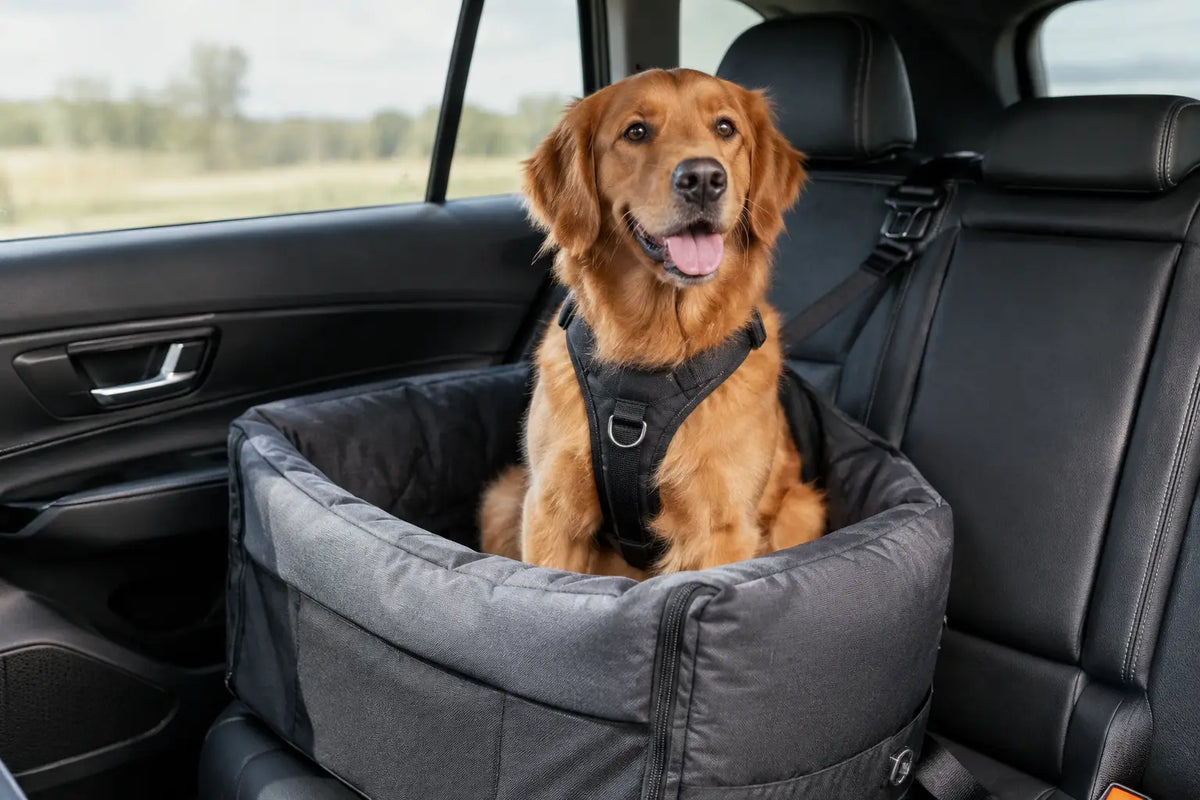
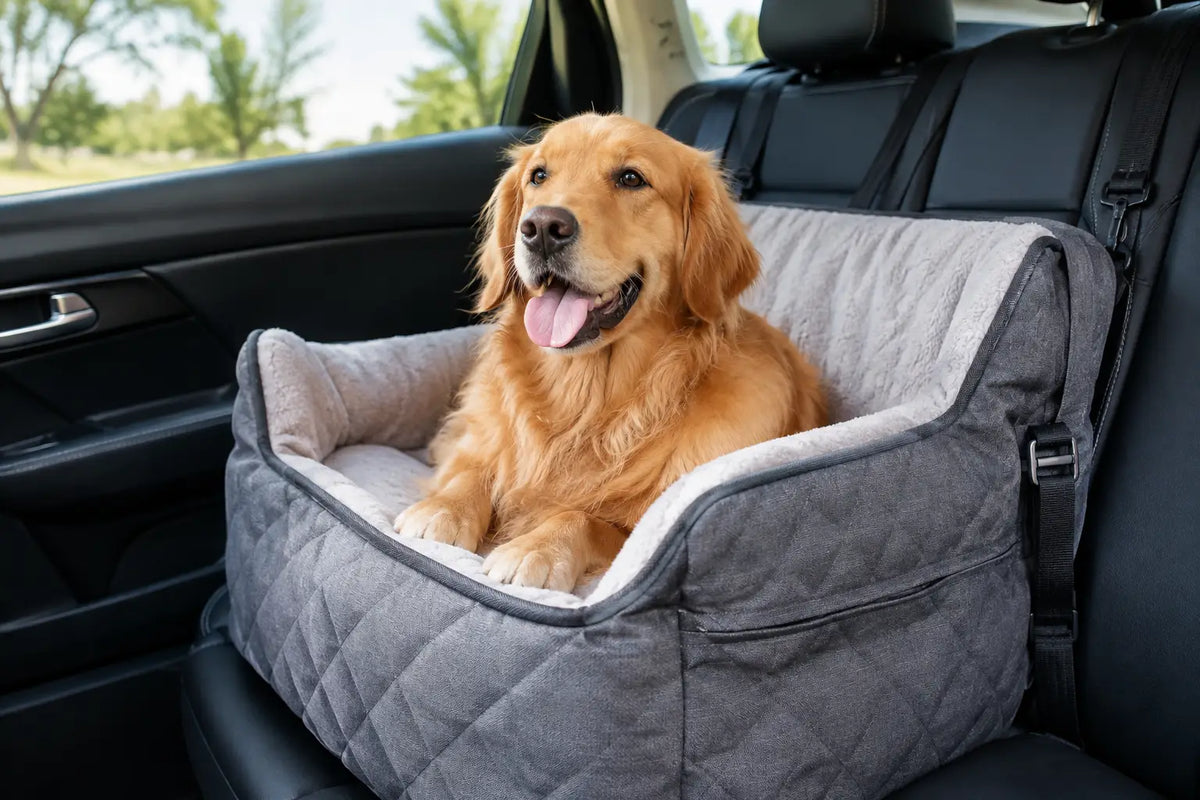
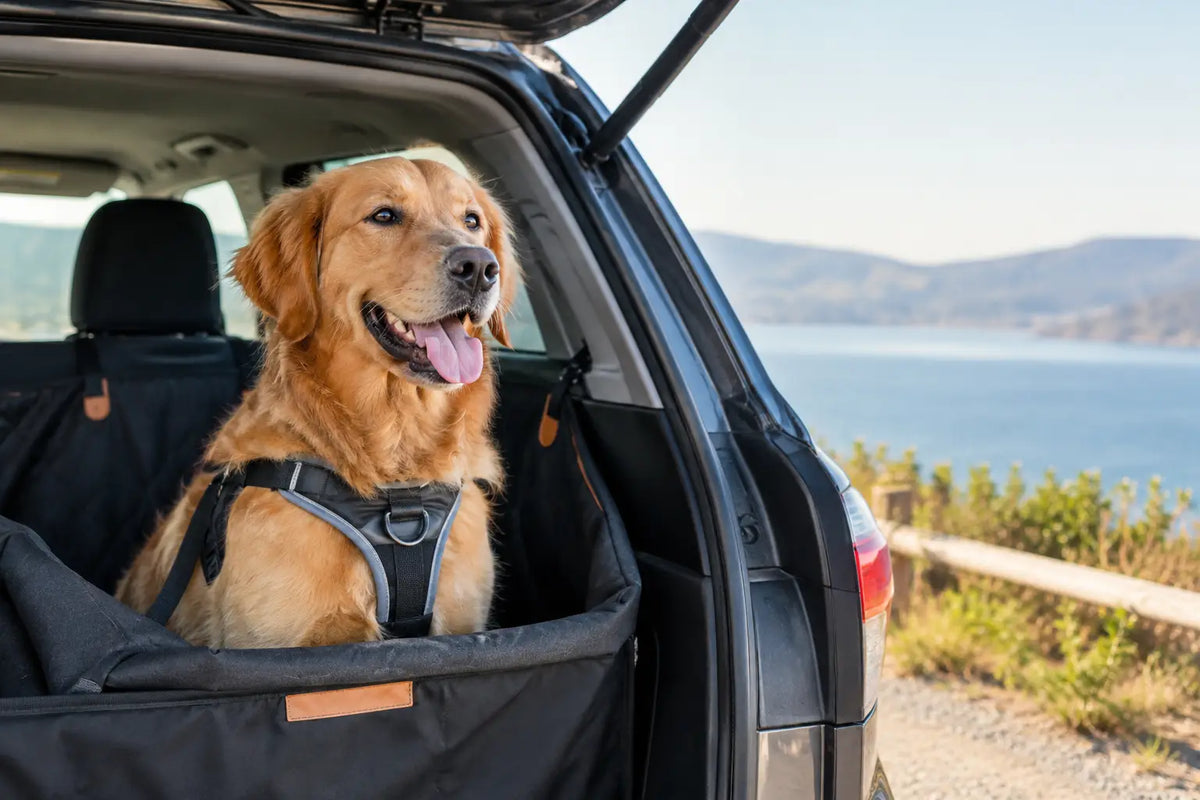
For a small dog, a well-fitted car seat or carrier may provide a contained, padded space. For larger dogs, a correctly sized crate can offer far more stability than a loose bed in the boot. A crash-tested crate or vehicle-compatible restraint is worth considering because post-operative dogs are less able to brace themselves if the car stops suddenly.
Comfort and vehicle safety need to work together. Do not pile loose pillows around your dog if they reduce the effectiveness of a restraint system, obstruct ventilation or create an unstable surface. A familiar blanket can help with reassurance, provided it does not interfere with the crate door, harness attachment or access to the dog during the journey.
Keep trips quiet and direct. Warm the car or use ventilation before loading your dog, drive smoothly, and avoid asking them to wait in the vehicle. If nausea, heavy panting, distress or worsening pain occurs, contact your vet for guidance rather than assuming it is simply travel anxiety.
Help them settle without overdoing stimulation
A dog used to long walks may find restricted activity harder than physical discomfort. The answer is not necessarily more exercise. Calm enrichment can give their brain something to do while protecting the surgical site.
Offer quiet company, gentle conversation and a familiar routine. Food puzzles may work for some dogs, but skip anything that causes vigorous pawing, twisting or frustration. A lick mat can be soothing if your vet is happy with the food used and your dog can manage it safely while wearing any protective collar. For dogs on restricted diets or medication, confirm treats with the practice first.
Watch your dog rather than the clock alone. A little tail wag or a request to join you does not always mean they are ready for normal activity. Equally, a dog who is resting more than usual may simply be recovering from anaesthetic and pain relief. Look for the overall trend: are they becoming more comfortable, eating and drinking as advised, and able to settle after brief activity?
Know when comfort needs veterinary attention
You know your dog’s normal mannerisms better than anyone, but post-operative changes should be taken seriously. Call your veterinary practice promptly if you notice persistent crying, repeated vomiting, laboured breathing, collapse, marked swelling, bleeding, a foul-smelling wound, discharge, pale gums or a sudden refusal to use a limb. Also ask for advice if your dog cannot settle, will not eat or drink as instructed, or seems significantly more painful after initially improving.
Do not use human painkillers, creams or sedatives unless your vet has specifically prescribed them. Common household medicines can be dangerous for dogs, and even well-meant wound cleaning can disrupt healing. If you are unsure whether something is normal, a quick call is kinder than waiting and worrying.
Plan for the dog in front of you
Recovery equipment should fit the stage of healing, not just the diagnosis. A spacious bed may be enough for a small dog after dental surgery, while a large senior dog recovering from knee surgery may benefit from non-slip routes, a lifting aid and carefully controlled transport. For a dog with long-term mobility changes, a wheelchair or supportive stroller can preserve family outings and independence once a professional has assessed their needs.
Measure carefully before buying any support product. Weight range matters, but so do chest shape, body length, doorway width, car space and your ability to lift or manoeuvre the equipment safely. Pets Own Us believes mobility support should help dogs stay part of the adventure, but recovery is never a race back to normal.
For now, the kindest plan may be wonderfully ordinary: a soft place near you, a safe route outside, medication on time and no pressure to do more than heal. Your dog does not need to earn their place in the family while they recover. They already have it.