How to Choose a Dog Wheelchair That Fits
The right wheelchair can turn a hesitant trip to the garden into a proper sniff, a tail wag and a little more of your dog’s old confidence. But knowing how to choose dog wheelchair support is not simply a matter of picking a frame by breed or weight. Your dog’s diagnosis, strength in their front legs, body shape, measurements and day-to-day routine all affect what will feel supportive rather than restrictive.
A mobility aid should preserve comfort and dignity, not ask your dog to work around poor fit. Take a little time to assess their needs before ordering and you will be far more likely to find a wheelchair that helps them stay part of family life.
Start with your dog’s mobility, not the wheelchair
A dog wheelchair is usually most helpful when the hind legs are weak, paralysed, painful or unable to support the dog reliably. This can happen with IVDD, degenerative conditions, spinal injury, arthritis, hip problems, recovery from surgery or age-related weakness. The aim may be active rehabilitation, supported exercise or simply giving a dog the freedom to move about without their back end collapsing.
Before choosing a frame, speak with your vet or veterinary physiotherapist. They can help establish whether exercise is suitable, how much weight your dog can safely bear through their front legs and whether a wheelchair should be used temporarily or long term. This matters particularly after surgery, when the wrong amount of activity can slow recovery.
Watch how your dog moves at home. Do they still place and use their back paws, but tire quickly? Do they drag both legs? Are their front legs strong and comfortable, or are the shoulders already sore? A dog who can move their rear legs may benefit from a design that allows a more natural stepping action, while a dog with little or no rear-leg function may need secure stirrups to keep the paws clear of the ground.
How to choose a dog wheelchair configuration
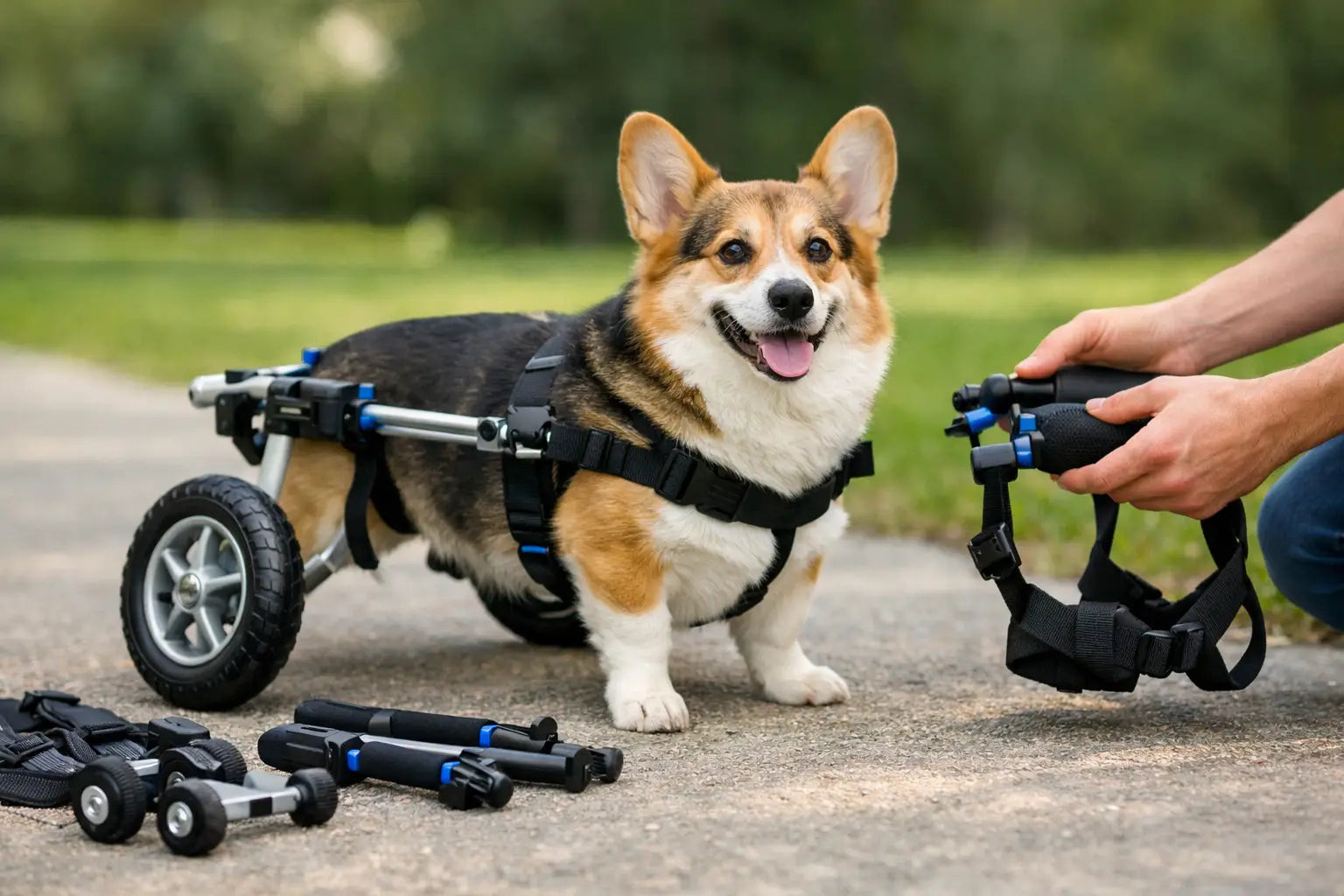
Most dogs with hind-leg weakness need a rear-support wheelchair. This style has a lightweight frame and wheels behind the body, with a harness or saddle supporting the pelvis. It allows the front legs to provide propulsion while the rear end is held at an appropriate height.
For dogs affected in both the front and rear legs, a quad or full-support wheelchair may be more appropriate. These four-wheel designs support more of the body, but they are not automatically the better choice. They are larger, can take more room to turn indoors and require a dog to have enough comfort and tolerance for the additional support system. Assessment from a veterinary professional is especially valuable here.
A rear wheelchair is often the more practical option for a dog with healthy front limbs. It is generally easier to use for garden exercise, pavement strolls and accessible paths. If your dog is recovering and their needs may change, an adjustable system can offer useful flexibility as strength returns or declines.
Do not assume that a cart designed for one condition will suit another. A dog with hip dysplasia, for example, may need a different body position and exercise plan from a dog with complete hind-leg paralysis. Good support should keep the spine level and the hips comfortably aligned, without lifting the rear so high that the front legs take too much load.
Accurate measurements make the difference
Breed labels are a useful starting point, but they are not a fitting method. Two dogs of the same breed can have very different chest widths, leg lengths and body proportions. Follow the specific manufacturer’s measuring guide exactly, as each wheelchair design may use slightly different reference points.
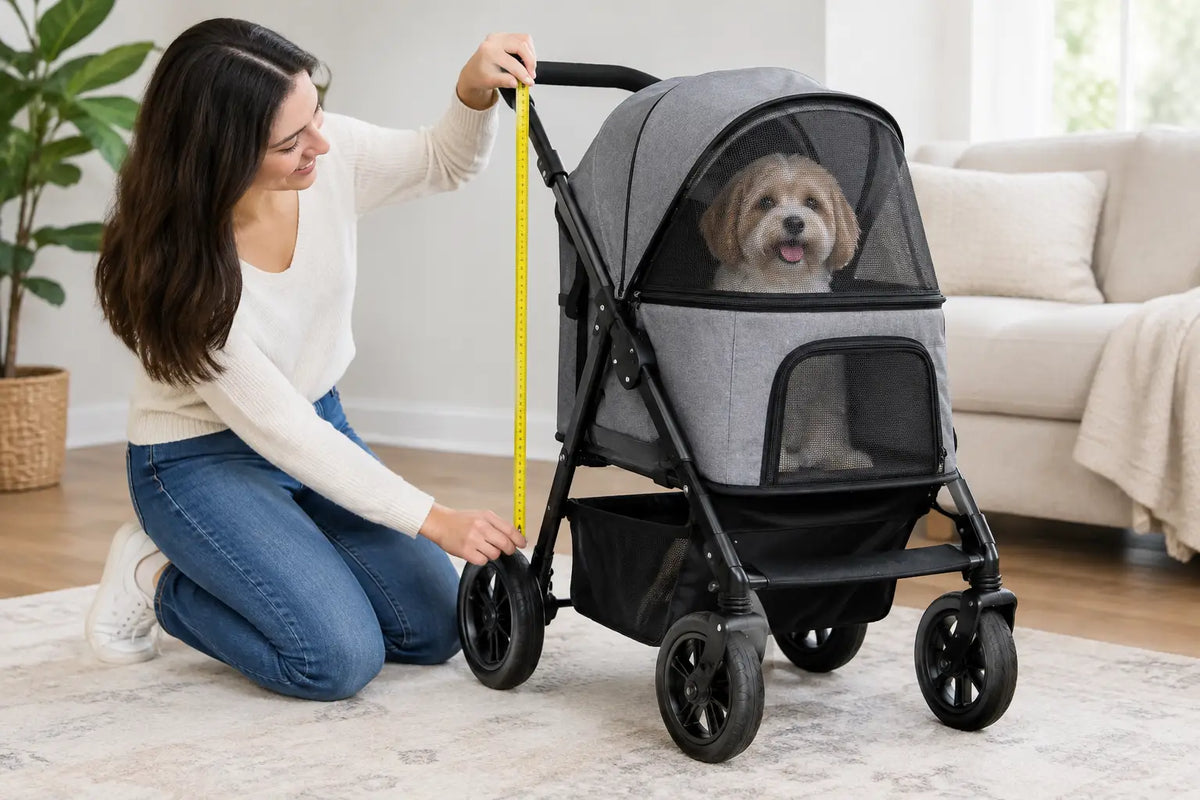
In most cases, you will need your dog’s weight, height at the hind leg, back length, chest or hip width, and sometimes girth. Measure while your dog is standing as naturally as possible on a level surface. If standing unsupported is difficult, ask another person to gently steady them, or seek help from your vet team.
Use a soft tape measure and write every figure down. Measure twice, especially the rear-leg height, as this often determines the wheel size and frame setting. If your dog is between sizes, avoid guessing. A specialist adviser can help you assess whether the better answer is an adjustable frame, a different harness arrangement or a made-to-measure option.
Weight capacity matters too. It is not only about whether the wheels can carry your dog. The harness, frame and fittings must all be suitable for their body weight, including any gradual changes caused by reduced activity, recovery or a senior dog’s changing condition.
What a good fit looks like
Once adjusted, your dog should stand in a balanced, neutral position. Their back should be broadly level rather than arched or dipped, and their front legs should not look as though they are taking all the strain. The pelvic support should hold them securely without pressing into the groin, abdomen or genitals.
The wheels should sit at an appropriate height for the terrain and should not catch the body or interfere with the legs. If your dog retains some hind-leg movement, they should have room to make a natural stepping motion. If their legs need to be lifted into stirrups, check that the paws are protected and do not twist or knock against the frame.
Expect a short adjustment period, but do not dismiss persistent discomfort as your dog ‘getting used to it’. Reluctance to move, chafing, redness, panting, hunched posture or shoulder fatigue are all reasons to pause and reassess the fit. Check skin and pressure points after every early session, particularly on short-coated dogs and dogs with reduced sensation.
Choose materials for real daily life
Premium wheelchair design is not about appearance alone. A lightweight but strong frame is easier for your dog to propel and easier for you to lift into the car. Adjustable components can accommodate small changes in posture or condition, while padded, washable harnesses make regular use more comfortable and manageable.
Think honestly about where your dog will use it. For smooth indoor floors and short garden outings, smaller wheels may be perfectly adequate. If your dog will be joining you on park paths, firmer ground or longer family walks, more durable wheels and a stable frame become more valuable. No wheelchair is intended to make steep, rough or muddy terrain risk-free, so choose routes with your dog’s safety in mind.
Also consider the practical moments around the walk. Can you put the wheelchair on without a struggle? Does the frame fit through your doors? Will it fit in your car alongside a travel crate, bed or other essentials? A model that is technically suitable but too cumbersome for everyday use may spend more time stored away than supporting adventures.
Introduce the wheelchair slowly and positively
The first fitting is not the day for a long walk. Let your dog investigate the wheelchair indoors, with calm praise and favourite treats. Once fitted, encourage a few supported steps on a non-slip surface, then finish before they become tired or worried.
Build duration gradually. A few positive minutes can be more useful than pushing for distance. Keep sessions within the activity level advised by your veterinary team, and allow time for rest, toileting and hydration. Some dogs understand the new movement quickly; others need several short sessions across days or weeks.
Never leave your dog unattended in a wheelchair. They can become caught on furniture, lose balance on a slope or struggle if the frame catches. Supervision also lets you spot subtle signs that an adjustment is needed before discomfort becomes a sore spot.
Ask for help before you commit
A wheelchair is a considered purchase, especially when your dog’s needs are complex. Prepare your measurements, recent weight, diagnosis where relevant, photos or video of how your dog stands and moves, and a clear picture of where they will use the cart. Specialist advice can help translate that information into the right configuration rather than the closest-looking option.
At Pets Own Us, the focus is on practical mobility support that helps dogs remain included in the everyday moments that matter. The best wheelchair will not make every limitation disappear, but a well-fitted one can make room for more fresh air, more independence and more chances for your dog to come along when the family heads out.