Dog Wheelchair Review: What Actually Matters
A dog wheelchair is not a sign that adventures are over. For many dogs, it is the moment walks become possible again: the familiar sniff at the gate, a gentle lap of the park, or simply following the family from room to room. This dog wheelchair review focuses on what makes a mobility cart genuinely useful, comfortable and safe, rather than merely impressive in a product photograph.
The right frame can preserve independence for a dog living with IVDD, degenerative myelopathy, hip dysplasia, post-operative weakness or age-related loss of strength. But wheelchairs are not one-size-fits-all. The best choice depends on where your dog needs support, how their condition affects them day to day, and whether the cart can be adjusted accurately to their shape.
Dog wheelchair review: start with the support needed
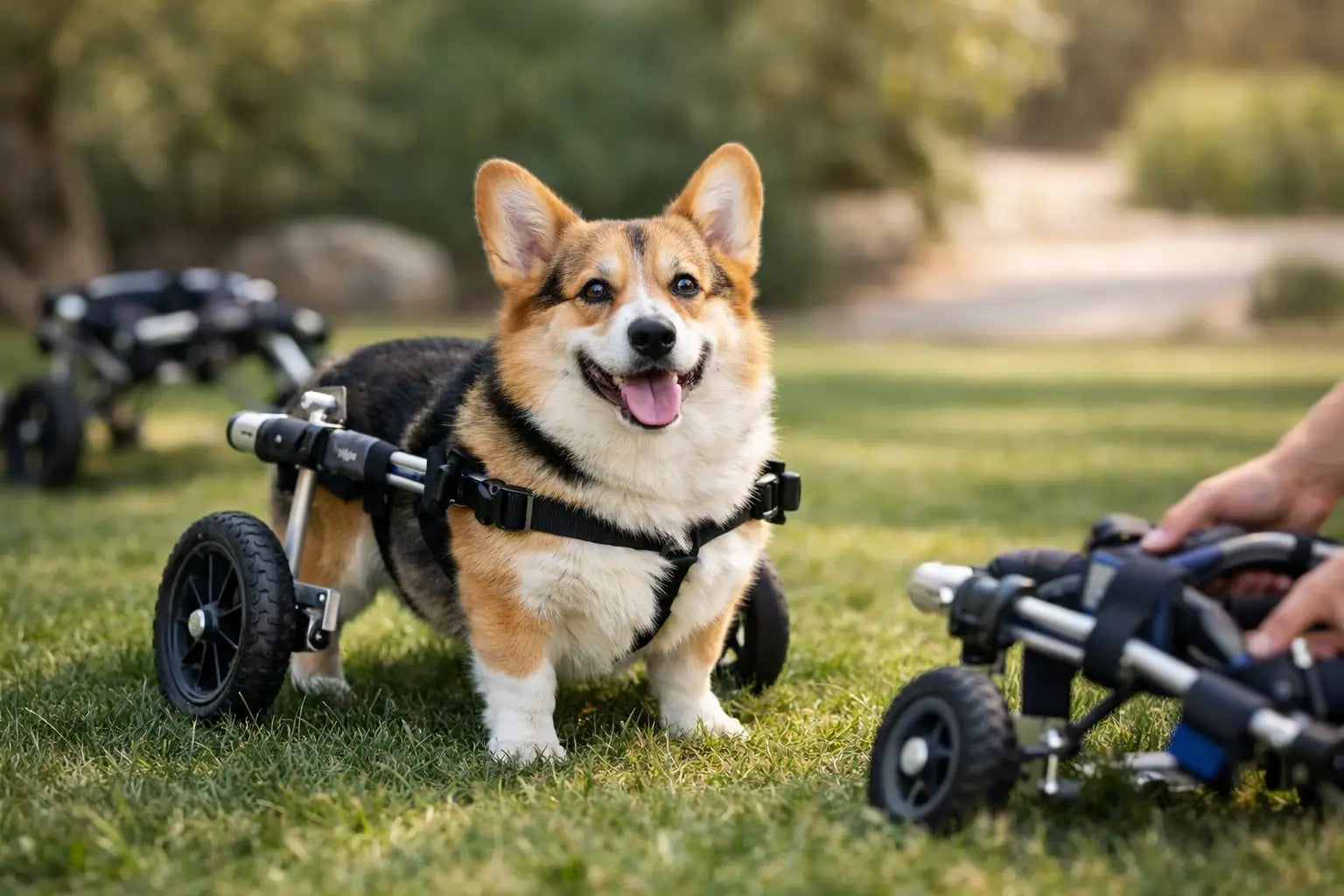
Most canine wheelchairs are rear-support carts. These support the hindquarters while the dog uses their front legs to walk, making them a common choice for rear-leg paralysis, weakness or recovery. A well-fitted rear cart allows the back legs to be held safely off the ground or, where clinically appropriate, to touch down and practise a natural stepping movement.
Front-support and full-support wheelchairs are for dogs who cannot safely bear enough weight through their front limbs as well. They are more involved to fit and use, but can make a meaningful difference for dogs with widespread weakness or progressive neurological conditions. This is where a conversation with a veterinary professional or canine physiotherapist is particularly valuable. A wheelchair supports movement; it should never be used to push a dog through pain, exhaustion or an unsuitable level of activity.
Before comparing frames, be clear about the job the wheelchair must do. A dog recovering from surgery may need short, controlled outdoor sessions for several weeks. A senior dog with a long-term condition may need a durable everyday cart that manages pavements, grass and family holidays. Those are very different demands.
Fit is the feature that matters most
Premium materials and clever wheels cannot compensate for poor fit. If the frame is too long, too narrow or set at the wrong height, your dog may hunch their back, overreach with the front legs, scuff their paws or resist moving altogether. Discomfort is not something they should have to “get used to”.
Accurate measurements usually include height from the ground to the groin, body length, hip width, chest measurement and weight. Follow the individual manufacturer's measuring instructions rather than assuming one set of measurements translates across brands. Some dogs have broad chests, deep bodies or unusual proportions that make an adjustable model the wiser investment.
When your dog is standing in a correctly adjusted rear cart, their spine should look neutral rather than dipped or rounded. Their front legs should move freely beneath the shoulders, and the body should not sway from side to side. The wheel axle is commonly positioned around the hip area, helping the cart balance the rear body without loading too much weight onto the front end.
Harness design matters just as much. Look for broad, padded contact points that spread pressure across the chest and pelvis rather than narrow straps that can rub. Secure buckles should be easy for an owner to operate but difficult for a determined dog to escape. For male dogs, check that the rear support arrangement permits comfortable toileting. It is a small detail until it becomes the detail that determines whether the cart works in real life.
Adjustable versus fixed-size frames
A fixed-size wheelchair can suit a dog with stable measurements and a clearly matched size range. It may also be simpler to set up. Adjustable frames offer more scope to refine height, length and width, which is useful during rehabilitation, for dogs between standard sizes, or when a condition changes over time.
Adjustment brings responsibility. Re-check the fit after a few short walks and whenever your dog's weight, coat length or mobility changes. A cart that fitted well in winter can need attention once a thick coat is clipped or a dog loses muscle mass.
Wheels should suit your usual routes
Wheel choice is often presented as a technical extra, but it affects how likely you are to use the cart. Small, lightweight wheels can be perfectly practical for smooth indoor floors and level pavements. Larger pneumatic or all-terrain wheels generally cope better with grass, gravel, uneven paths and the bumps of a country walk.
There is a trade-off. Bigger wheels can add weight and bulk, and pneumatic tyres need occasional pressure checks. Lightweight foam wheels are low-maintenance and puncture-free, though they may not roll as smoothly over rough ground. Think about your ordinary week, not the one picturesque woodland route you visit twice a year.
For town-based dogs, manoeuvrability matters too. Measure narrow hallways, garden gates and car boot openings before ordering. If the wheelchair will travel regularly, check whether it folds down or can be dismantled without tools. A cart that is awkward to lift into the car may end up staying at home, even when your dog is ready to go.
Comfort is observed, not assumed
The first sessions should be calm and brief, ideally on flat, familiar ground. Some dogs take to wheels immediately. Others need several gentle introductions, treats and reassurance before they understand that they can move forward confidently. Let your dog set the pace.
Watch their body language closely. Eager sniffing, a relaxed posture and a willingness to move are encouraging signs. Repeated stopping, trying to sit, frantic pulling at straps, heavy panting in cool conditions, or red marks after use suggest that something needs changing. It may be the fit, the duration, the terrain or a pain issue that needs veterinary attention.
A wheelchair does not replace daily skin checks. Inspect the groin, chest, underarms, abdomen and any area contacting a harness after every outing at first. Dogs with reduced sensation can develop pressure sores without signalling discomfort clearly. Keep coats clean and dry, and remove the cart when your dog is resting unless a clinician has advised otherwise.
The practical details that separate a good cart from a frustrating one
In a thoughtful dog wheelchair review, the unglamorous details deserve attention. A frame should be strong enough for the dog's bodyweight but manageable for the person who will lift, adjust and clean it. Aluminium is popular because it is light and corrosion-resistant, while a well-made harness should tolerate regular washing.
Consider these four everyday questions before committing:
- Can you put the cart on and take it off without turning every walk into a wrestling match?
- Are replacement wheels, straps and harness parts available if something wears out?
- Will the frame cope with your dog's expected weight and the surfaces you actually use?
- Does the seller provide clear sizing help when the measurements are not straightforward?
When a wheelchair is not the whole answer
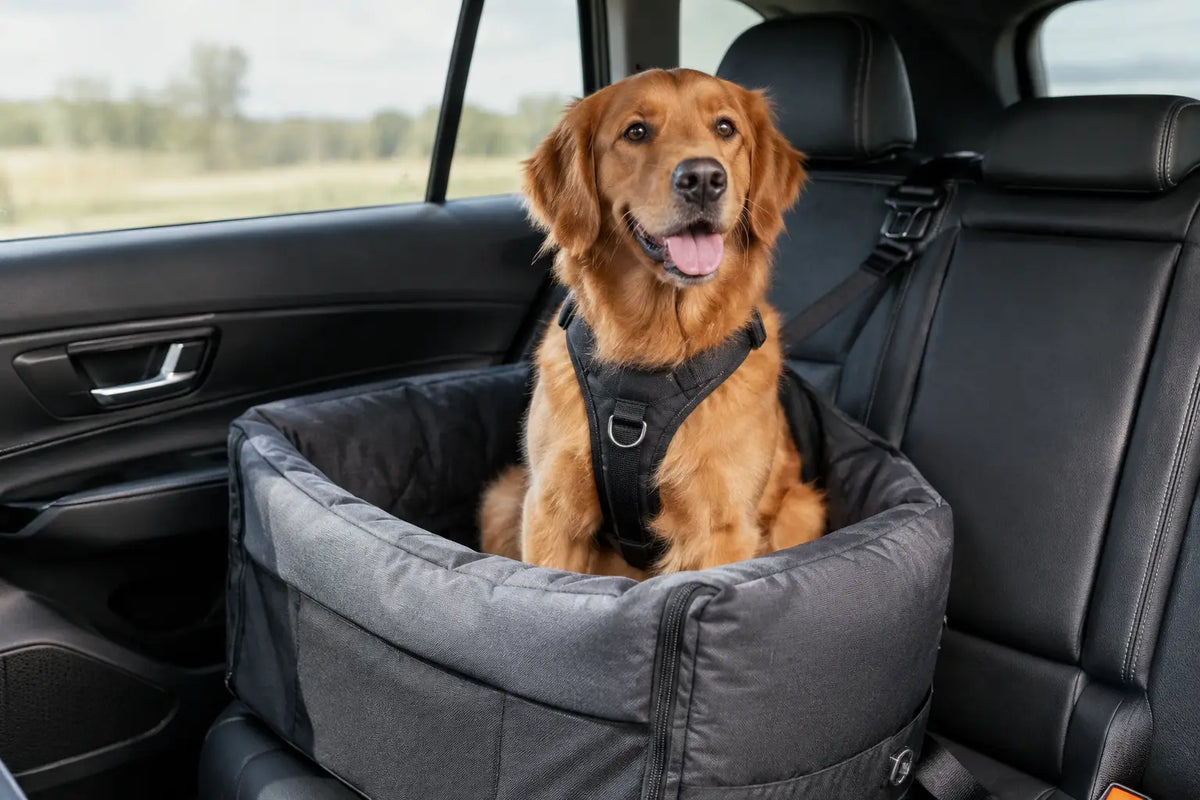
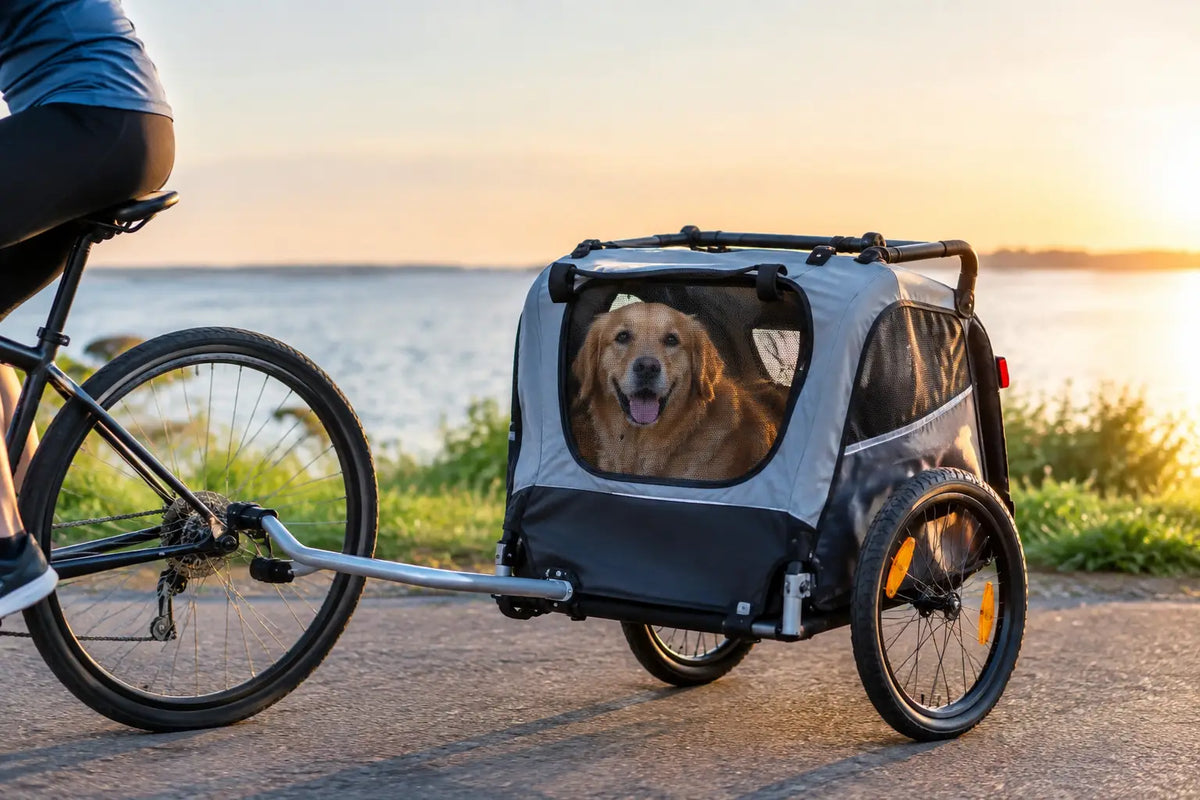
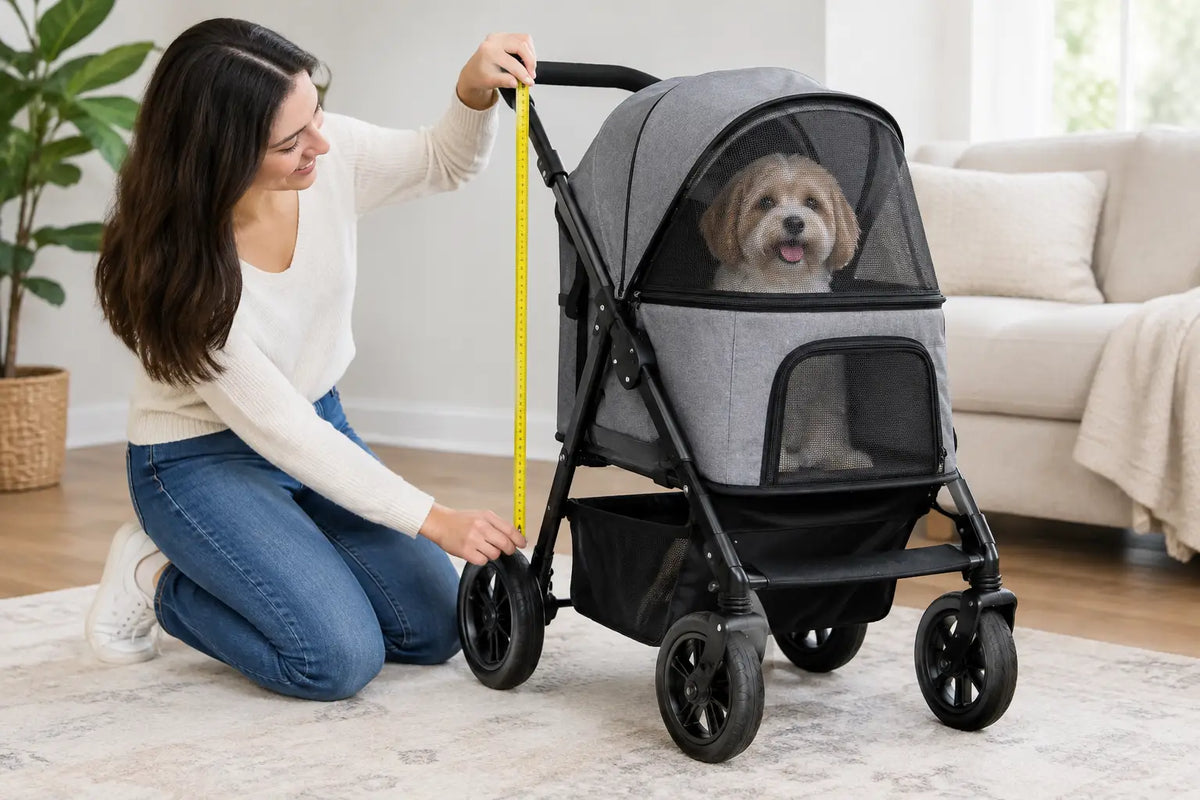
A cart may be one part of a broader mobility routine. Non-slip flooring at home, supportive bedding, ramps, a lifting harness and carefully managed exercise can all reduce strain and make daily life easier. Dogs with poor stamina may benefit from a stroller for longer outings, allowing them to enjoy the fresh air and family company without being asked to walk beyond their comfort zone.
For some dogs, a wheelchair is unsuitable at a particular stage of recovery or illness. Severe pain, unstable spinal injuries, open wounds, significant front-leg weakness or breathing difficulties all warrant professional guidance before use. There is no failure in choosing rest, rehabilitation or another support option first.
The most successful cart is not necessarily the lightest, the most adjustable or the most expensive. It is the one that fits your dog properly, meets their current physical needs and makes ordinary life feel more possible. Start slowly, make adjustments with care, and celebrate the first confident steps. Your dog still deserves a seat on the adventure too.