Dog Strollers: Keep Every Adventure Within Reach
A dog that once led the way round the park can find a full walk tiring long before their curiosity runs out. That is where dog strollers earn their place. They are not a novelty or a sign that your dog is being fussed over. For many families, they are a practical way to keep a senior, recovering, small or mobility-limited dog comfortable, safe and included.
Your dog deserves a seat on the adventure too. A well-chosen stroller lets them enjoy the smells, sounds and companionship of a day out without being pushed beyond their physical limits. It can turn a shortened walk into a shared outing again, make city days more manageable, and give a dog on restricted exercise a welcome change of scene.
When dog strollers make a real difference
The clearest case for a stroller is a dog whose mobility has changed. Arthritis, IVDD, hip dysplasia, spinal conditions and age-related weakness can make distance painful or exhausting, even when a dog is still bright, sociable and keen to be involved. A stroller allows them to rest when needed rather than being left at home when the family heads out.
They are equally useful during recovery. After surgery or injury, your vet may prescribe strict rest or very limited lead exercise. That does not mean your dog has to lose all enrichment. A secure pram can help them accompany you for a gentle coffee stop, a school run or a trip to a quiet green space, provided it fits the recovery plan your vet has set.
Small dogs benefit too. Little legs cover far more ground than we often realise, particularly on a busy day in town, at an event or on holiday. A compact dog may be perfectly fit but become overwhelmed by crowds, hot pavements, bicycles and unpredictable feet. Having a familiar, enclosed place to retreat to can reduce stress as well as prevent fatigue.
There is a trade-off. A stroller should support your dog's life, not replace healthy movement. If your dog is physically able to walk, allow them regular opportunities to sniff, explore and exercise at their own pace. The most useful routine is often a combination: walking for short, comfortable stretches, then riding when they slow down or the environment becomes too demanding.
Choosing dog strollers for your dog and your routine
A premium stroller is worth assessing as carefully as any other travel equipment. The most attractive design is not necessarily the right fit if the cabin is cramped, the wheels are unsuitable for your usual route, or the stated capacity is too close to your dog's weight.
Start with size, shape and weight capacity
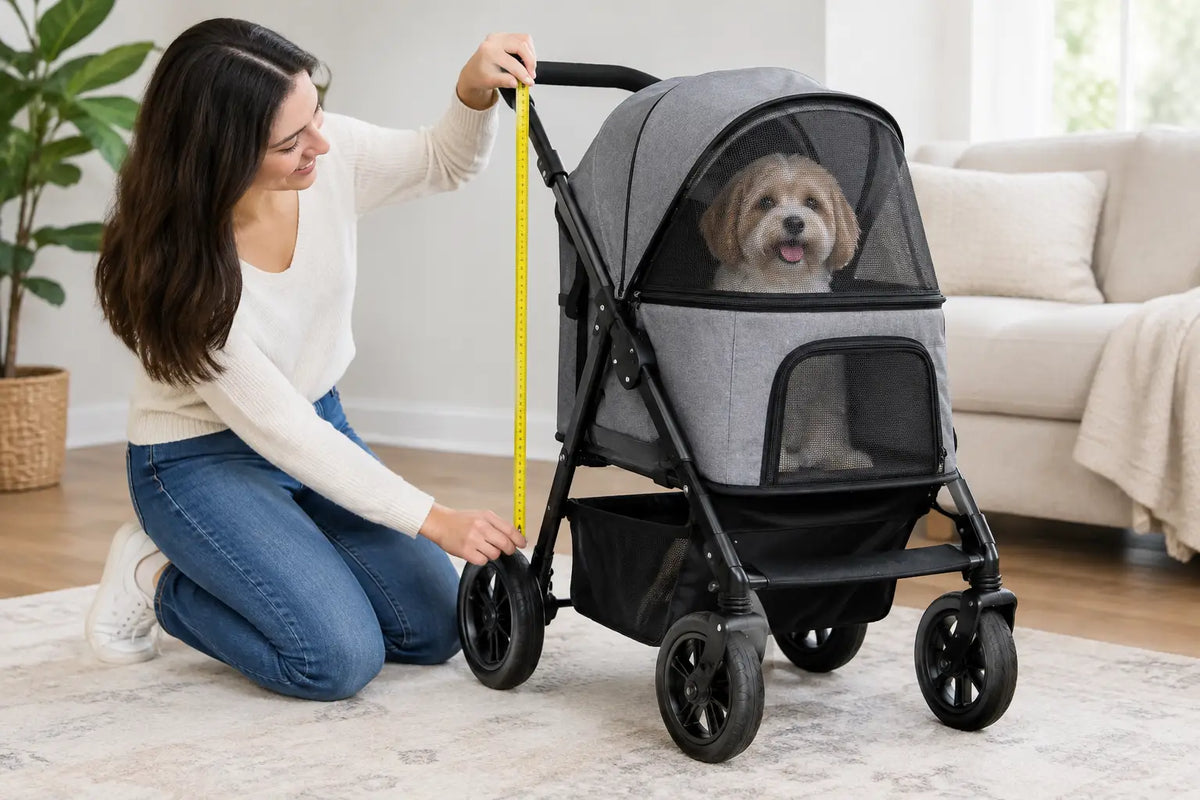
Check the manufacturer's maximum weight capacity, then measure your dog while they are standing and lying down. They should be able to sit upright, turn around and settle comfortably without pressing against the canopy or sides. For a dog who likes to curl up, interior length matters. For a taller terrier or a dog with a long back, cabin height is often the detail that decides whether a model will work.
Do not treat the maximum weight as a target. Choosing a stroller with some capacity in hand tends to give a steadier, more comfortable ride and can reduce strain on the frame, wheels and brakes. If you are transporting two small dogs, consider their combined weight and whether they can genuinely share the space calmly.
Match the wheels to where you actually walk
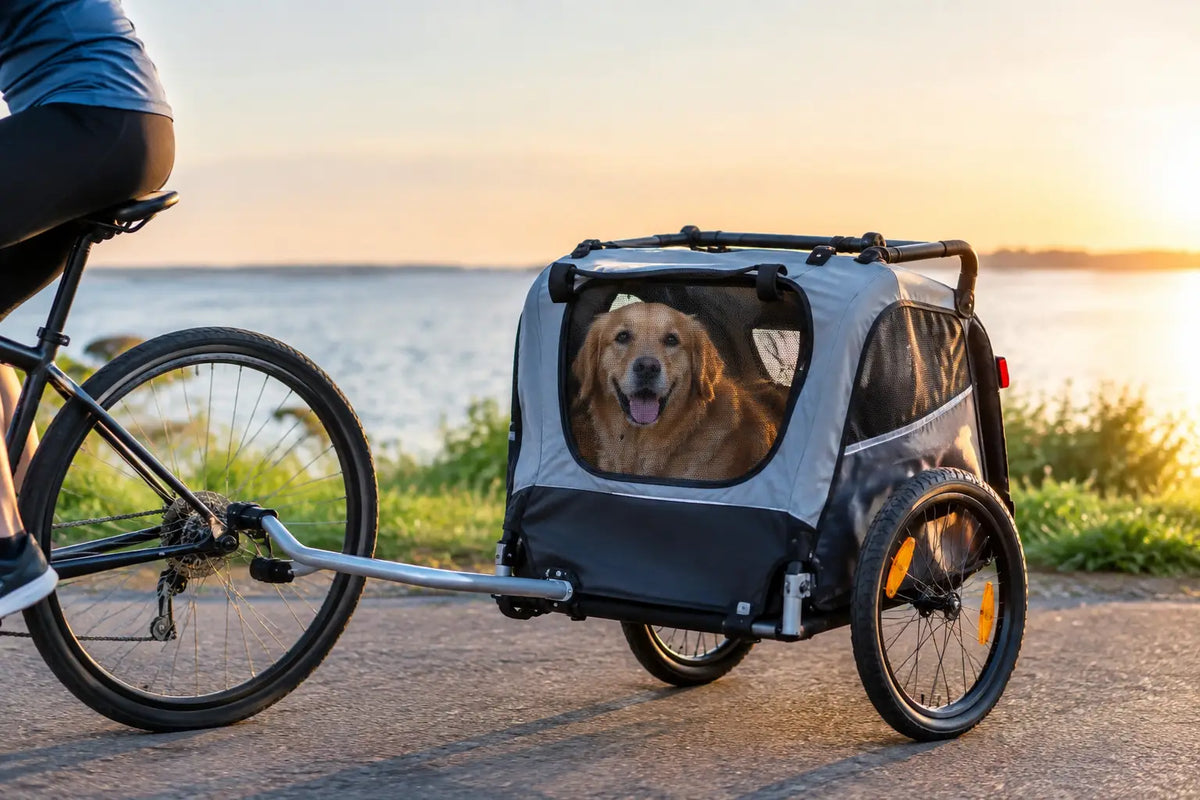
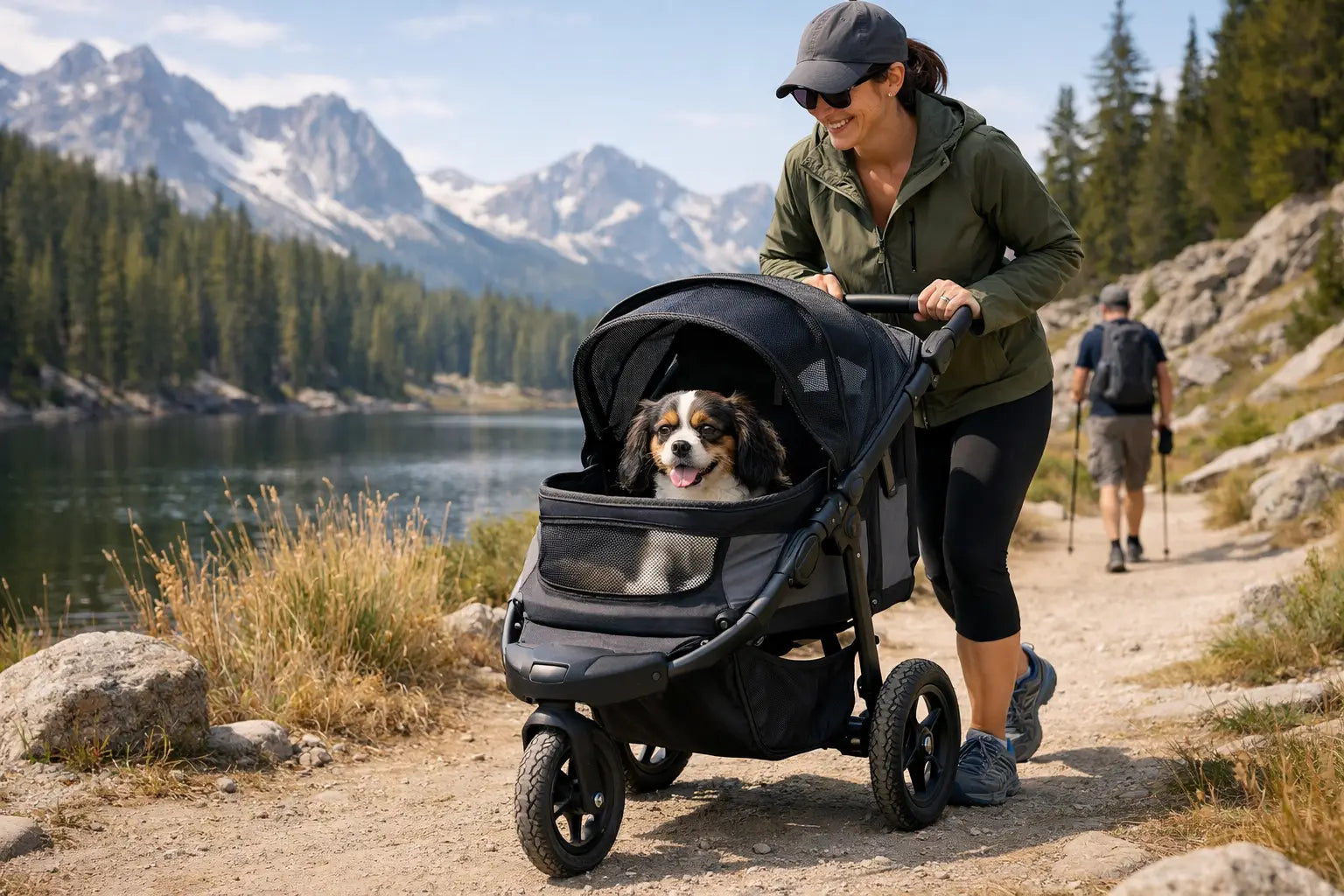
The route matters. Small swivel wheels are easy to manoeuvre through shops, pavements and cafés, making them a sensible choice for urban outings. Larger air-filled or foam-filled wheels generally cope better with gravel, uneven park paths and country terrain. Three-wheel designs can feel agile, while four-wheel frames often offer reassuring stability at low speeds and when stopping.
Look for reliable rear brakes, a secure parking position and a frame that does not feel top-heavy when your dog moves. If you plan to fold the stroller into a car boot, check the folded dimensions as well as the weight of the unit. A stroller that is excellent on paper but too bulky to lift comfortably may stay at home.
Prioritise a safe, calm cabin
A proper dog stroller needs more than a zipped cover. Ventilated mesh panels help air circulate and allow your dog to look out without feeling exposed. A canopy gives protection from light rain, wind and strong sun, although it should never be used as an excuse to leave a dog unattended or in warm conditions.
Internal safety tethers can be helpful for dogs that might try to jump out, but they must be attached to a well-fitted harness, never a collar. Check the fastening points, zip quality and the strength of the mesh. A nervous dog may lean against the sides, while an excited one may test every opening. The cabin must contain them securely without making them feel trapped.
A removable, wipe-clean liner is a practical advantage, particularly for older dogs, puppies or those recovering from illness. Add a familiar blanket on cooler days, but avoid piling bedding so high that it affects balance or blocks ventilation.
Help your dog see the stroller as a good place
Even a dog who loves being carried may be unsure about the movement, sound and enclosed feel of a new pram. Introduce it at home with the brakes on. Leave the cabin open, place a favourite blanket inside and reward calm investigation. There is no need to rush the first ride.
Once your dog is happy to step in or be lifted in, fasten the harness tether and close the canopy only briefly at first. Push the stroller a few metres indoors or on a smooth, quiet path, then stop and reward. Build up gradually. This approach is especially important for dogs managing pain, anxiety or reduced vision, as a sudden bumpy journey can make them reluctant to use it again.
Watch their body language. A relaxed dog may sit or lie down, sniff through the mesh and settle easily. Repeated panting in cool weather, frantic scratching, rigid posture or attempts to escape suggest they need a slower introduction, more space or a different style of carrier.
Use a stroller safely on everyday outings
Before each trip, check that tyres, brakes, fastenings and tethers are working properly. Keep your dog secured whenever the cabin is open enough for them to jump out, and apply the brake whenever you stop. Avoid hanging heavy bags from the handlebar unless the manufacturer expressly permits it - this can make a stroller tip backwards.
Think about temperature as carefully as you would for a child’s buggy. Mesh ventilation, shade and access to water are essential in warm weather. On cold days, use appropriate layers and a dry blanket, but do not seal the cabin so tightly that air cannot circulate. Paw pads can still be at risk when your dog gets out, so test hot surfaces with the back of your hand.
A stroller can also make public spaces more approachable, but courtesy matters. Keep it close to you, avoid blocking narrow aisles and ask before entering cafés, shops or attractions. If you use public transport, check the operator's current pet and folded-pram rules before travelling. Being prepared makes the experience easier for everyone around you, including your dog.
For dogs with complex mobility needs, pair the stroller with professional advice. Your vet, physiotherapist or rehabilitation specialist can help you judge appropriate walking time, rest periods and support equipment. A stroller may sit alongside a wheelchair, rear-support harness or orthopaedic bed as part of a wider plan that protects comfort and independence.
At Pets Own Us, the focus is on thoughtfully selected travel and mobility equipment because the right support can give families more shared time, not less. The best stroller is the one that suits your dog's body, confidence and usual adventures - whether that means a gentle roll to the local park or a full day out with the people they love.