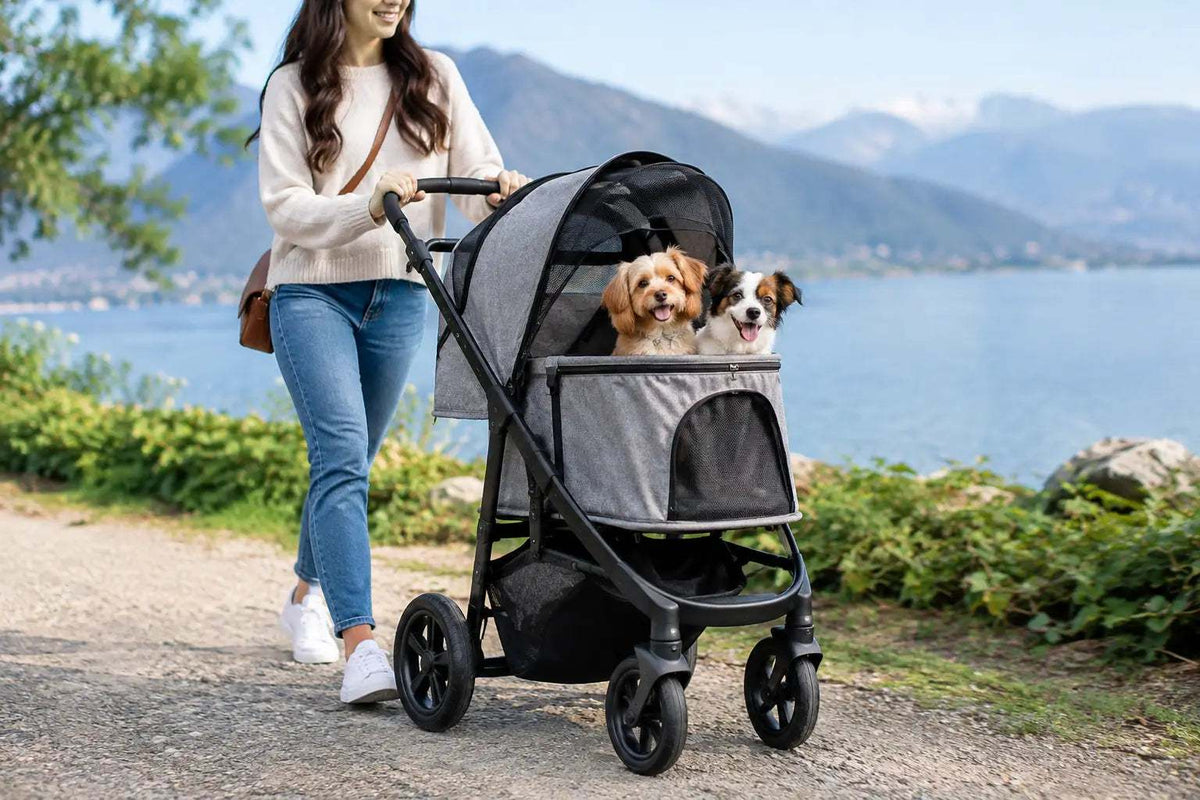
Are Dog Prams Safe for Everyday Adventures?
A dog who can no longer manage a long pavement walk should not have to miss the park, the café stop or a family day out. But are dog prams safe? They can be an excellent, welfare-led way to keep a small, senior, injured or mobility-limited dog included, provided the pram is properly designed, correctly sized and used with the same care you would give any piece of travel equipment.
A pram is not simply a basket on wheels. It is a moving enclosed space, often used around kerbs, traffic, other dogs and unpredictable weather. The right model protects your dog from falls, fatigue and overstimulation; the wrong fit or careless use can create discomfort, overheating or a tipping risk. Safety comes down to the product, the dog and the journey you have planned.
Are dog prams safe? The short answer
Yes, quality dog prams are safe when they have stable construction, effective brakes, secure closures and a cabin that suits your dog's size and needs. They are particularly valuable for dogs recovering from surgery, living with arthritis, IVDD or neurological conditions, as well as very young puppies who have not yet built up walking stamina.
They also make ordinary outings more manageable for little dogs with short legs. A compact terrier may be perfectly happy on a local walk but become tired after navigating busy high streets, station platforms and long days away from home. Letting them rest in a pram is not indulgent. It can be a sensible way to avoid overexertion while allowing them to remain part of family life.
There is a limit, though. A dog pram does not make an unsafe route safe, and it is not a substitute for a properly secured car crate or crash-tested car seat in a vehicle. Nor should it be used to push a distressed dog through situations they are struggling to cope with. Think of it as comfortable, contained transport for walking outings, not an all-purpose restraint system.
What makes a dog pram safe?
Start with stability. A good pram should have a wide, balanced wheelbase that feels planted when you turn, stop and pass over minor surface changes. Larger rear wheels and reliable suspension can make a meaningful difference on uneven paths, while smaller wheels are often best suited to smooth urban pavements and shops. Your usual route matters as much as the pram's appearance.
Brakes are essential. A parking brake lets you secure the pram when waiting to cross a road, speaking to someone or taking a break. Test that it is easy to engage with your foot and holds the pram firmly on a gentle slope. Never leave a dog unattended in a parked pram, even with the brake applied.
The cabin should be enclosed enough to prevent an eager dog climbing or jumping out, with strong zip closures and breathable mesh panels. Mesh provides airflow and lets your companion see out without leaving them exposed. A useful canopy offers shelter from light rain, wind and bright sun, but it must not restrict ventilation.
Inside, look for a firm, supportive base rather than a sagging fabric floor. This is especially relevant for senior dogs and those with sore joints, spinal conditions or reduced balance. A padded liner can improve comfort, but it should sit flat and not create an unstable surface under their paws.
Most quality prams include an internal safety tether that clips to a harness. This is a helpful back-up, not a reason to use a collar. A sudden stop with a tether attached to a collar can put pressure on the neck and throat. Use a well-fitted harness, leave enough length for your dog to sit and turn comfortably, but not enough to jump over the side.
Weight limits are a safety feature, not a suggestion
Every pram has a stated maximum carrying weight. Respect it, even if your dog only exceeds the limit by a small amount. A heavier dog can affect steering, strain the frame and increase the chance of tipping at kerbs or on slopes.
Weight alone is not the whole story. Measure your dog from nose to base of tail, their shoulder height when sitting, and their natural lying position. They should be able to sit, lie down and reposition without being cramped. A very long, low dog may need more cabin length than a rounder dog of the same weight.
If you are transporting two small dogs, check both the combined weight limit and whether the cabin gives each dog enough personal space. Two dogs shifting position at once can alter balance, and a close cabin may not suit dogs who become tense around food, toys or unfamiliar activity.
Safe habits for using a dog pram
The safest pram can still be used badly. A few everyday habits make the experience calmer and safer for everyone.
- Secure your dog with the internal tether attached to a harness, then close all zips before moving off.
- Use the brake whenever you stop, especially at kerbs, crossings, cafés and on inclines.
- Take kerbs slowly, keeping the pram balanced rather than hauling it up or dropping it down.
- Keep bags, shopping and heavy drinks out of the handlebar area unless the manufacturer specifically permits them there.
- Check wheels, brakes, zips, tether clips and frame locks before longer outings.
Avoid steep hills, broken paving, loose gravel and crowded places if your pram is designed mainly for town use. If you regularly walk woodland trails or coastal paths, choose a model built for rougher terrain and still assess each route honestly. Even all-terrain wheels cannot remove the risk of deep mud, hidden roots or sharp drops.
Heat, weather and your dog's comfort
A pram gives a dog less opportunity to move away from sun, wind or a warm surface, so temperature management matters. On warm days, use shade, open ventilation panels and offer water at regular intervals. Never cover a pram with a blanket to create shade, as this can trap heat and reduce airflow.
Watch your dog, not just the weather forecast. Heavy panting, drooling, restlessness, red gums or unusual lethargy mean they need to get somewhere cool quickly. Flat-faced breeds, older dogs, puppies and dogs with respiratory or heart conditions may overheat faster than you expect.
In colder weather, a fitted blanket or cosy liner can help, particularly for slim, elderly or short-coated dogs. Keep bedding dry and make sure it does not obstruct the tether, ventilation panels or door closure. A wet dog sitting still can become chilled surprisingly quickly.
Give your dog time to learn the pram
Many dogs take to a pram immediately, particularly when it contains familiar bedding and leads to pleasant places. Others need a gradual introduction. Set it up indoors, let your dog investigate it at their own pace and reward calm behaviour. Once they are content to sit inside with the door open, practise closing it briefly, then move the pram a short distance on level ground.
Do not force a frightened dog into the cabin and set off through a busy town. Fear can turn into scrambling, chewing or attempts to escape, which compromises safety and makes future journeys harder. Slow, positive practice is especially worthwhile for rescue dogs and dogs recovering from restrictive veterinary treatment.
When a dog pram may not be the right answer
A pram may be unsuitable for a dog who panics when enclosed, becomes reactive at close range to people or other dogs, or is too large for the available weight capacity. In those cases, a different mobility aid, a quieter walking route or behaviour support may be the better choice.
Dogs with recent surgery, severe pain, spinal disease or heart and breathing problems may need specific guidance from their vet or physiotherapist before travelling. A pram can reduce walking strain, but lifting your dog into it, vibration over rough ground and the position they travel in can all matter during recovery.
For a dog with hind-limb weakness, check whether they can settle without sliding and whether the entry height allows safe loading. Some owners find a rear-support harness useful for transfers, while others need a pram with a lower opening or a more supportive cabin. The best option is the one that preserves comfort and dignity, not simply the one with the highest weight rating.
A carefully chosen dog pram can give your companion a rest when their legs have had enough, while keeping their nose in the breeze and their place in the family day out. Choose for the journeys you genuinely make, practise before the big adventure, and let your dog's comfort set the pace.