
Can Dogs Use Wheelchairs? A Practical Guide
A dog who cannot keep up on a familiar walk may still have plenty of curiosity, energy and desire to be beside you. So, can dogs use wheelchairs? Absolutely. When properly selected and fitted, a dog wheelchair - often called a mobility cart - can support independence, exercise and dignity for dogs with weak or paralysed limbs.
The key is to see a wheelchair as one part of a thoughtful mobility plan, not a one-size-fits-all fix. The right support depends on your dog’s diagnosis, strength, size, gait and daily routine. For some dogs, a cart opens up the park again. For others, short, carefully supervised sessions at home are the best place to begin.
Can dogs use wheelchairs safely?
Many dogs adapt remarkably quickly to wheels. They tend not to dwell on what has changed in the way people do. If they feel comfortable, balanced and able to move towards something they love - whether that is a sniffy verge, a favourite person or their dinner - confidence can build fast.
Safety comes down to appropriate veterinary guidance, correct sizing and gradual use. A wheelchair should support the body without rubbing, pinching or forcing the spine and joints into an unnatural position. It must also be suited to the type of weakness your dog has. A rear-support cart, for example, is designed for a dog whose front legs remain strong enough to steer and bear weight.
Dogs may benefit from a wheelchair following an injury or surgery, with degenerative myelopathy, hip dysplasia, arthritis, neurological conditions, IVDD, hind-leg paralysis or age-related weakness. The underlying condition matters. A vet or qualified canine rehabilitation professional can advise whether movement is appropriate, how much is sensible, and whether your dog needs rehabilitation alongside mobility equipment.
A cart is not always suitable straight away. A dog in acute pain, one with an unstable spinal injury, significant front-leg weakness or a healing wound may need a different form of support first. Never use a wheelchair to push a dog through pain or exhaustion.
Choosing the right dog wheelchair
The best wheelchair is the one that fits both your dog and the life you want to share. Premium mobility equipment is worth considering because adjustment, harness design, frame strength and wheel quality directly affect comfort and control. A cart that looks similar on paper can feel very different once your dog starts moving.
Match the support style to the mobility need
Rear-support wheelchairs are the most common option. They lift and support the hips and back legs while leaving the front legs free to propel and steer. They can be a good choice for dogs with hind-leg weakness who still have sound front-end strength.
Full-support or quad wheelchairs support both the front and rear of the body. These are generally considered when weakness affects all four limbs or when a dog cannot safely carry enough weight through their front legs. They require particularly careful fitting and professional input, as balance and pressure distribution are more complex.
Some dogs with mild weakness may only need a rear support sling for short toilet breaks, steps or getting in and out of the car. A sling gives you hands-on control, whereas a wheelchair gives a dog more freedom over level ground. Neither is universally better; they serve different moments in the day.
Measure carefully, then check adjustability
Do not choose by breed alone. Two spaniels, dachshunds or labradors can have very different body proportions. Most wheelchairs require measurements such as weight, back height, body length, chest width and the distance between the rear legs. Take measurements while your dog is standing as naturally as possible, ideally with another person helping them stay balanced.
Look for a model with adjustment across the frame, harness and leg supports. This matters for growing dogs, dogs changing weight during recovery, and dogs whose posture varies as their condition progresses. The aim is for the back to sit in a neutral, comfortable position, not slumped down or hoisted too high.
If your dog has a long back, deep chest, unusually narrow waist or a condition affecting their posture, expert advice before ordering is especially valuable. A few accurate measurements can prevent a great deal of frustration.
Consider where you will use it
Small, lightweight wheels may suit smooth pavements, indoor flooring and gentle park paths. Larger pneumatic-style wheels usually cope better with uneven ground, grass and longer outdoor adventures, though they can add weight and need more maintenance.
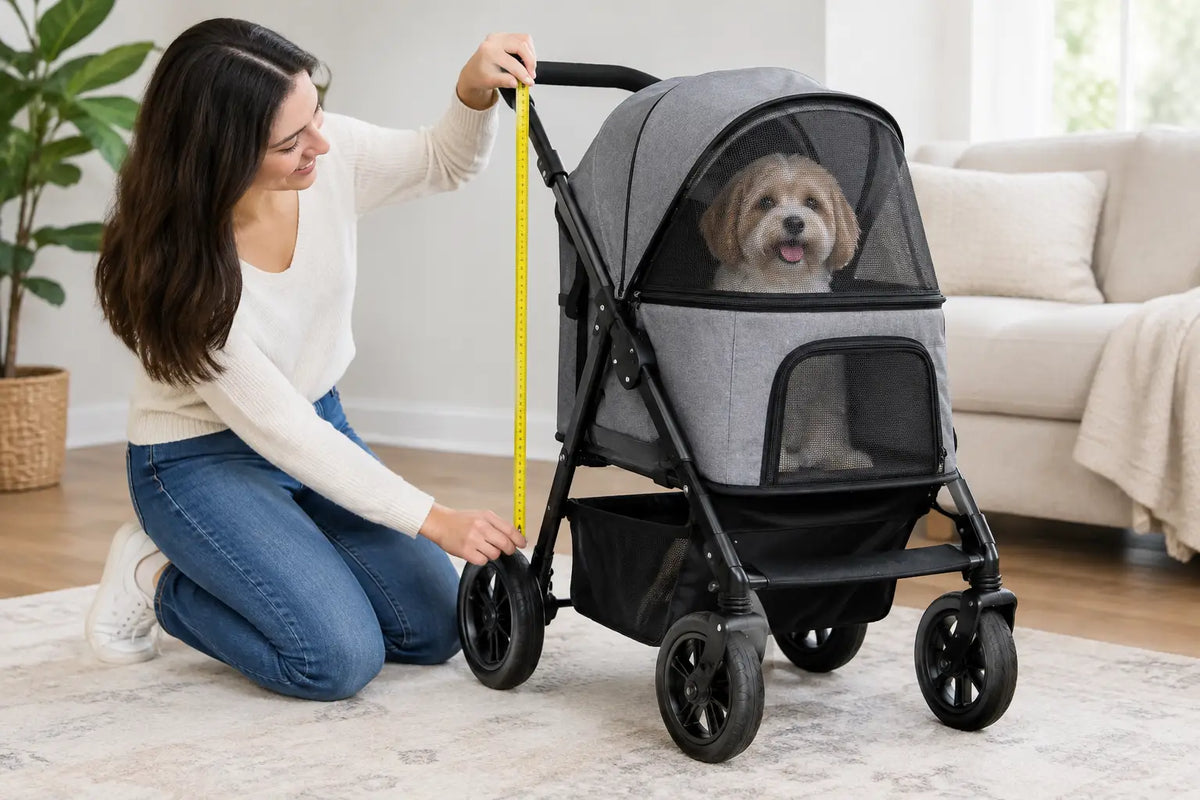
Think about your everyday routes. A dog who mainly needs help around the house and garden has different requirements from one joining weekend woodland walks. Also consider storage, boot space and how easily the frame can be lifted. If your dog cannot walk far before or after using the cart, a supportive dog stroller can be a kind companion for the rest of the outing.
How should a dog wheelchair fit?
A well-fitted wheelchair lets a dog stand and move without obvious strain. Their body should be level rather than tipped forwards or backwards. The harness should sit securely without pressing into the throat, armpits, groin or soft tissue, and the wheels should track straight without knocking their legs.
For a rear wheelchair, the dog’s paws may either touch the ground lightly or be held up in stirrups, depending on their condition and professional advice. Light ground contact can help some dogs maintain muscle activity and awareness of their limb position. However, dragging paws can cause painful scrapes, torn nails and sores. Protective boots or stirrups may be needed.
Check skin and coat after every early session, particularly beneath straps and around the chest, belly and rear legs. Redness that does not quickly fade, hair loss, rubbing, swelling, reluctance to be harnessed or a changed gait all signal that something needs adjusting. Stop using the cart and seek advice if you notice any of these signs.
Introducing a wheelchair without overwhelming your dog
The first session should be brief, calm and positive. Let your dog sniff the wheelchair before it is fitted. Use a familiar, non-slip surface and have favourite treats ready if food motivates them. Once fitted, encourage a few natural steps towards you rather than trying to complete a walk immediately.
Some dogs set off as though nothing has happened. Others freeze, step sideways or look confused at first. That is normal. Keep the early sessions short and end before frustration or fatigue develops. Several successful five-minute sessions are more useful than one demanding outing.
Avoid pulling the wheelchair forwards or steering your dog by the frame. Your dog needs to learn their own balance and turning circle. Stay close enough to prevent collisions and guide them away from steps, kerbs, steep slopes and tight gaps. A cart can increase mobility, but it does not make a dog invulnerable.
Build duration gradually based on how your dog feels afterwards, not only on how enthusiastic they look in the moment. Watch for heavy panting, slowing down, reluctance to move, front-leg fatigue or stiffness later that day and the following morning. Dogs with hind-leg weakness can place much more load through their shoulders, elbows and wrists when using a rear cart.
Everyday care while your dog uses a cart
Mobility equipment works best alongside the unglamorous essentials: weight management, clean dry skin, suitable bedding, regular toileting support and rest. Keeping your dog lean can reduce strain on their remaining strong limbs. A supportive bed gives joints and pressure points a chance to recover after activity.
Dogs who are incontinent or who drag their rear legs need extra skin checks and hygiene care. Make sure fur is dry, clean and free from trapped debris before fitting any harness. If your dog’s condition affects their bladder or bowel function, ask your vet for tailored management advice.
Keep the wheelchair clean and inspect it routinely. Remove mud and grit from wheels, check fastenings and straps, and look for worn padding or loose parts. A premium frame is designed for regular use, but every mobility aid needs basic maintenance to remain safe.
Keep the adventure, change the pace
A wheelchair may change the shape of a walk, but it does not have to shrink your dog’s world. Choose flatter routes, allow extra sniffing time and plan rest stops. Bring water, especially in warm weather, and avoid hot pavements that can burn paws. On days when wheels are not practical, a stroller can help your dog still join the family outing without overdoing it.
The most meaningful goal is rarely a certain distance or speed. It is seeing your dog able to make choices again: following a scent, greeting a friend, exploring the garden or coming along for a coffee stop. With the right support, careful fitting and a pace that respects their body, your dog deserves a seat on the adventure too.