Senior Dog Mobility Guide for Happier Days
The walk that once began with a joyful spin at the front door may now start with a long pause, a careful stretch, or a look back at you for reassurance. Ageing does not mean your dog has to miss out. This senior dog mobility guide is about noticing the small changes early, adapting routines kindly, and choosing support that keeps your companion comfortable, safe and part of family life.
Mobility changes are common in older dogs, but they are never something to dismiss as ‘just old age’. Stiffness, weakness and reduced confidence can have many causes, from arthritis and spinal conditions to reduced vision, recovery from an injury or a sore paw. Your vet should always be the first call when you notice a change, particularly if it is sudden, painful or worsening.
Recognising when your dog needs extra support
Dogs are remarkably determined. Many will carry on walking, jumping or playing long after it has become uncomfortable, which means the signs can be easy to miss. Look beyond an obvious limp. A dog who is slower to rise after resting, reluctant to use stairs, hesitant at kerbs, or no longer keen to get into the car may be telling you that everyday movement feels harder.
You may also notice slipping on laminate or tiled floors, a change in posture, shorter walks, scuffed nails, trembling back legs, or needing more frequent rests. Some dogs become quieter; others seem grumpy when touched around a painful area. These are not personality changes to correct. They are useful information to share with your vet.
Urgent veterinary advice is needed if your dog suddenly cannot stand, drags a limb, cries out in pain, loses bladder or bowel control, or seems distressed. Conditions such as IVDD can progress quickly, so prompt assessment matters.
Start with the home: make every step less demanding
The best mobility aid is sometimes a small change in the place your dog spends most of their time. Slippery surfaces force older dogs to brace through sore joints and can make them fearful of moving around. Non-slip runners, mats and rugs create dependable routes between their bed, water bowl, garden door and favourite spot beside you.
A supportive orthopaedic bed is equally valuable. Choose one large enough for a full stretch, with dense cushioning that keeps your dog off a cold, hard floor. Put it somewhere calm but connected to household life. Senior dogs often need more rest, not less company.
Ramps can reduce the repeated impact of jumping into a car or onto furniture, but they need a secure, grippy surface and a gentle enough incline for your dog to use confidently. Introduce one slowly with treats and praise rather than lifting them straight onto it. If a ramp feels too steep or wobbles underfoot, it can create more anxiety than it solves.
For dogs who need toileting breaks overnight, shorten the journey. A temporary bed downstairs or a simple barrier to prevent unaided stair use may be kinder than asking them to manage steps when tired.
Choose mobility support for the problem, not the label
There is no single ‘senior dog product’ that suits every dog. The right choice depends on where support is needed, how much control your dog still has, their size and temperament, and the life you want to continue sharing together.
Harnesses and rear support
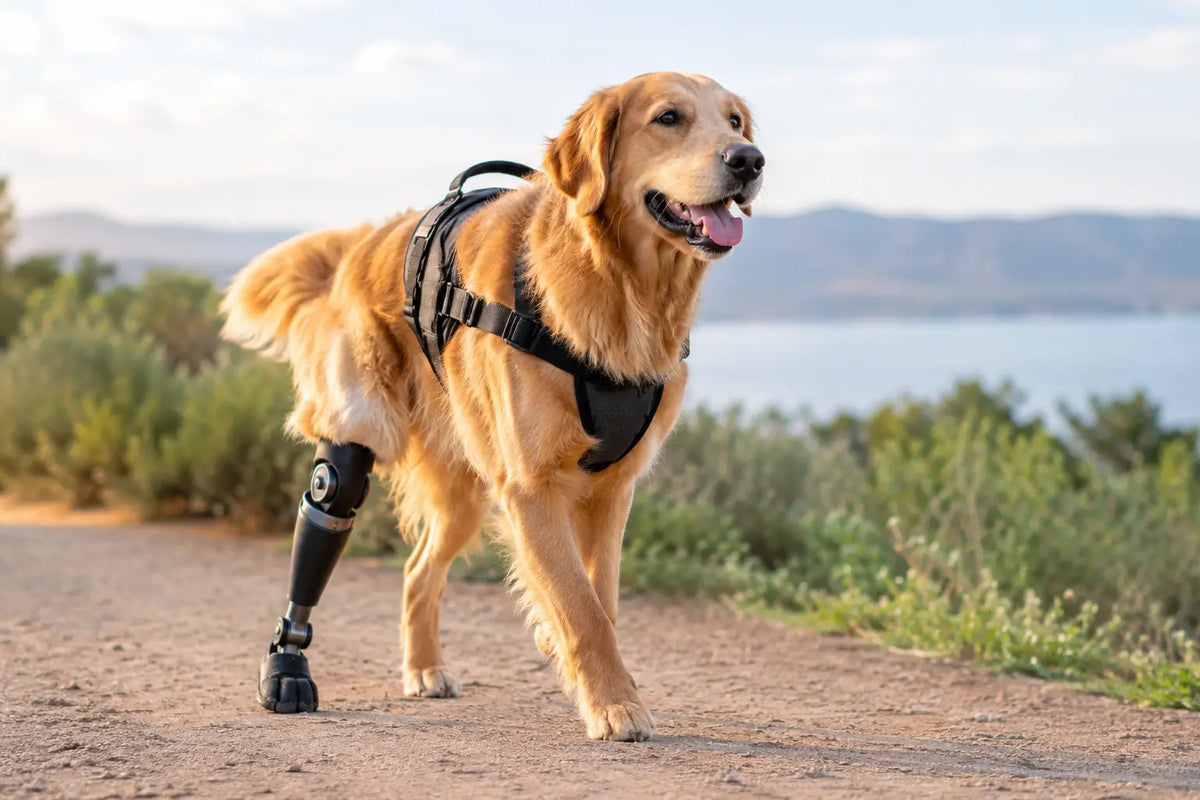
A well-fitted support harness can make transitions safer: standing up, stepping over a threshold, managing a few stairs under supervision, or getting in and out of the car. Rear-support designs are particularly useful for dogs with weak hind legs because they allow you to take some of the weight without pulling on the neck or compressing the abdomen.
Fit matters more than convenience. The support section should sit where it can lift comfortably, straps should not rub in the armpits or groin, and your dog should still be able to toilet normally. A harness is a helping hand, not a way to carry a dog for long periods unless the design is specifically made for that purpose.
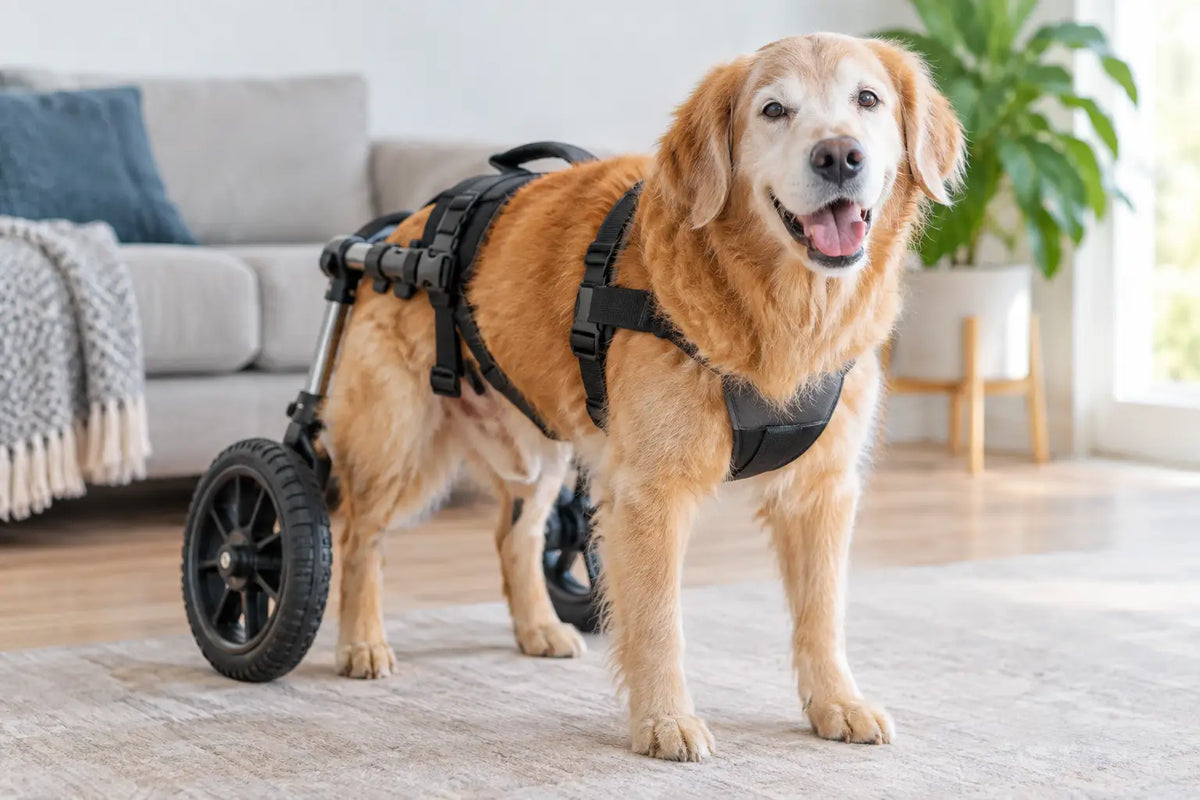
Dog wheelchairs for supported independence
A dog wheelchair, sometimes called a mobility cart, can be life-changing for a dog with reduced hind-leg function. It may allow them to explore, sniff, toilet and move under their own power again, while the frame supports the weaker end of the body.
Wheelchairs are not only for complete paralysis. Some dogs benefit from a cart during rehabilitation or on shorter outings when fatigue limits them. Others may find that a cart asks too much of their front legs or feels frustrating if pain is not well managed. Assessment by your vet or a qualified canine rehabilitation professional can help establish whether a wheelchair is appropriate.
Accurate measurements are essential. Weight capacity, shoulder height, back length, hip width and leg clearance all affect fit. A properly adjusted wheelchair should keep the spine in a natural position, allow comfortable movement and avoid pressure points. Introduce it in short, positive sessions on level ground. A few confident minutes are more useful than a long first attempt.
Strollers for longer days out
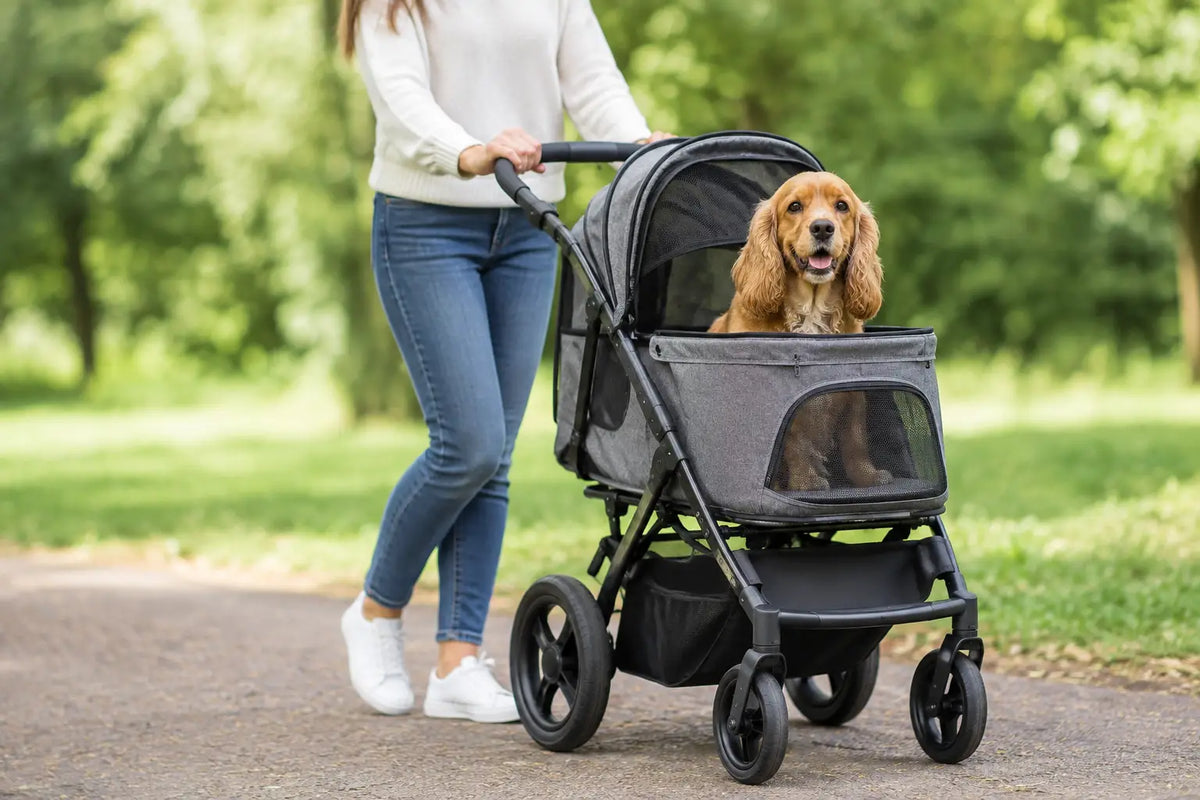
A dog stroller is not giving in. For many senior dogs, it is what makes a proper family outing possible. Your dog can walk and sniff for the part they enjoy, then rest securely when the distance, weather or busy pavement becomes too much. That balance can preserve both their enthusiasm and their energy.
Choose a stroller with a stated weight capacity that comfortably exceeds your dog’s weight, a stable frame, reliable brakes and enough internal space for turning and lying down. Good ventilation matters in every season, while a rain cover can be particularly useful in British weather. For uneven paths, look for larger wheels and suspension rather than assuming a compact city stroller will cope with country ground.
Secure your dog using the attachment point provided and never leave them unattended in the stroller. If they have spinal pain, make sure entry is low and easy, or use a ramp where suitable. The aim is a calm resting place, not another awkward climb.
Adjust exercise without shrinking their world
Older dogs still need stimulation, fresh air and choice. The answer is rarely to stop walks altogether. Instead, trade one long, tiring route for shorter outings with time to sniff, rest and take in the surroundings. A gentle ten-minute wander can be far more rewarding than marching for distance.
Watch what happens after exercise, not only during it. If your dog is markedly stiffer later that day or the following morning, the outing was probably too much. Reduce duration or intensity and build a steadier routine. Consistency is usually kinder to sore joints than a quiet week followed by an ambitious weekend walk.
Mental enrichment helps when physical activity must change. Scatter part of a meal in the garden, offer simple scent games, or let your dog choose a slow route around a familiar park. These moments keep them involved without demanding miles from their body.
Travel safely when getting in and out is the hard part
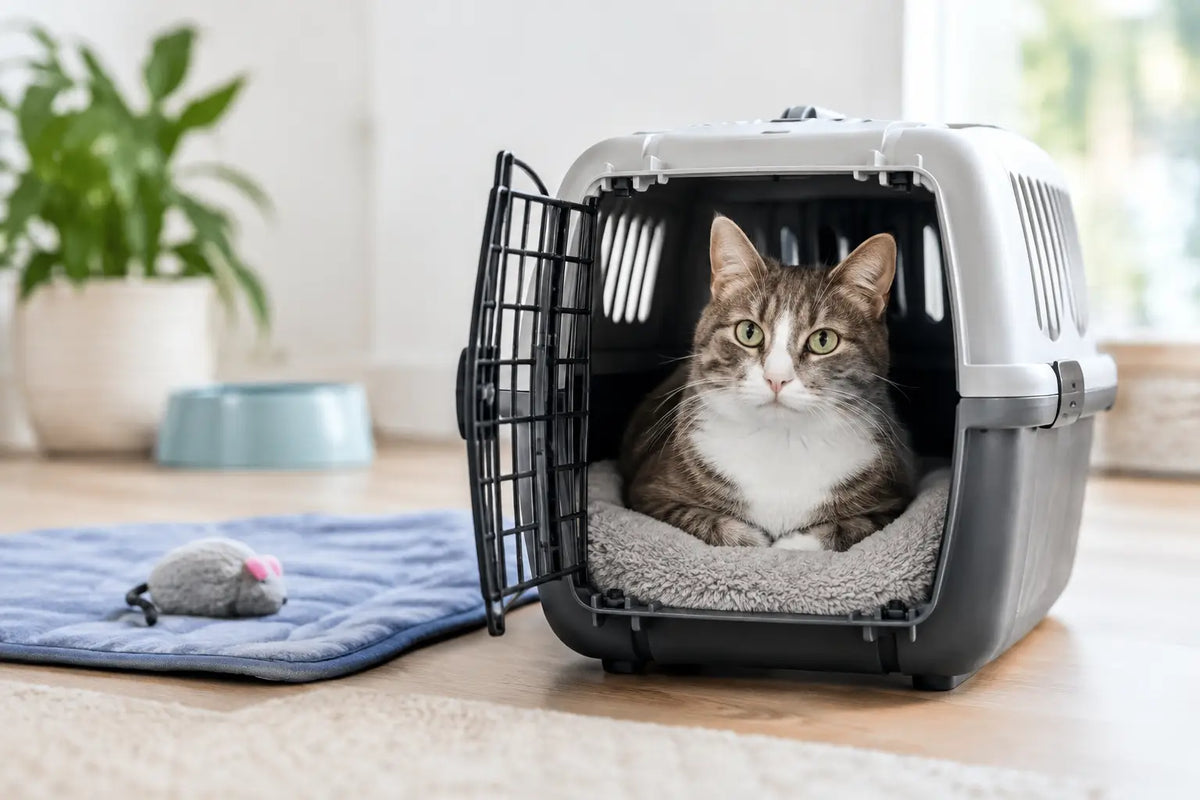
Car travel can become one of the biggest barriers to inclusion. The lift into a boot, the unstable landing, and the need to balance during braking are all harder for a senior dog. A ramp or carefully fitted lifting harness can make loading safer, while a crash-tested crate or suitable vehicle restraint helps protect them once you are on the road.
Avoid letting an older dog roam loose in the car, even on a short trip. They can lose their footing when you brake and may struggle to reposition themselves. Give them a padded, stable space with enough room to settle naturally. For dogs who cannot manage a long journey comfortably, plan more frequent breaks and keep the destination realistic.
If your dog enjoys days out but tires quickly, combine short walks with stroller time. Your dog deserves a seat on the adventure too, especially when their heart is willing but their legs need a little help.
Keep comfort under review
Mobility support should evolve as your dog does. Check harnesses, wheelchairs and bedding regularly for rubbing, loose fittings and changes in body shape. Keep nails trimmed to improve grip, and speak to your vet about weight management, pain relief, physiotherapy or hydrotherapy where appropriate. Even a small amount of excess weight can add meaningful strain to ageing joints.
Most of all, let your dog set the pace. A slower walk, a supportive lift, or a comfortable place to rest is not a smaller life. It is a thoughtful way to protect their dignity while making room for the things they still love: fresh air, familiar scents, your company, and the chance to come along.