How to Reduce Cat Carrier Stress Before Travel
The carrier appears from the cupboard and your cat vanishes beneath the bed. For many families, that sequence begins long before the journey itself - and it is exactly why the best way to reduce cat carrier stress is to make the carrier part of ordinary life, not a warning that something unpleasant is about to happen.
Cats rely on familiarity, control and predictable routines. A carrier removes all three at once if it is only used for vet appointments, car journeys or boarding. The aim is not to persuade your cat to love travelling overnight. It is to build enough safety and trust that being carried, secured in the car or taken through a busy station feels manageable rather than terrifying.
Reduce Cat Carrier Stress by Changing What It Means
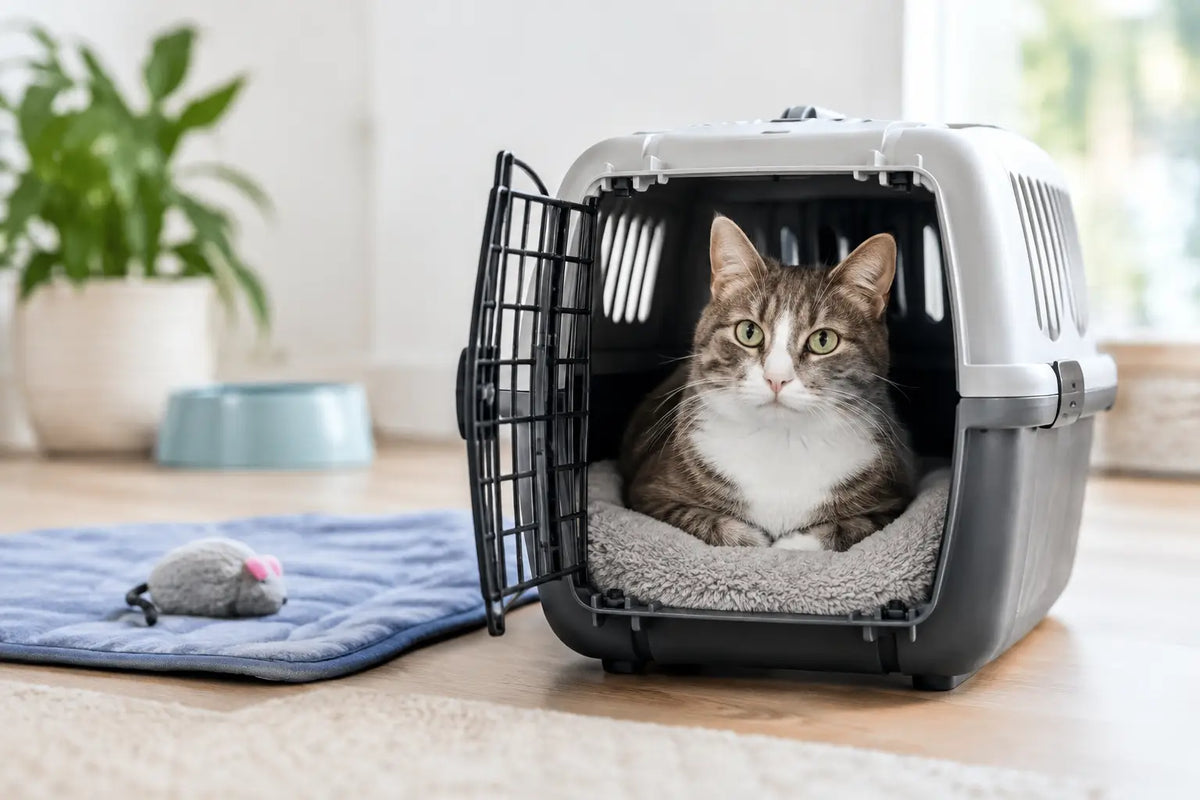
A carrier should become a safe resting place before it becomes transport. Leave it out in a quiet room with the door open, ideally for several weeks before it is needed. Add a soft, washable blanket that smells like home and place it where your cat already chooses to rest. Avoid repeatedly lifting them out of it or shutting the door during these early stages.
Some cats will investigate immediately; others need patience. You can place a few favourite treats just inside the entrance, then gradually farther back as confidence grows. For food-motivated cats, serving a small portion of their meal near the carrier and eventually inside it can create a useful positive association. If your cat avoids it completely, start by putting treats beside it. Pushing too quickly can teach them that the carrier is something to fear.
The key is choice. Your cat should be able to enter, turn around, settle and leave freely at first. Once they are comfortable resting inside, briefly close the door, offer a reward, then open it again. Build from seconds to minutes over several calm sessions. Keep your manner matter-of-fact. A worried voice, frantic chasing or a last-minute battle all confirm that something alarming is happening.
Choose a carrier that fits the journey and the cat
The right carrier is not necessarily the largest one. Your cat needs enough room to stand, turn around and lie in a natural position, without sliding from side to side during transport. For a long journey, a little extra space can be helpful, particularly for a larger breed, a senior cat or a cat travelling with a small water dish where appropriate. For a short trip, an oversized carrier may feel less secure and be harder to stabilise safely.
Look for firm structure, reliable ventilation and closures that cannot pop open when handled. A carrier with a top opening is often kinder for cats who dislike being pushed through a front door. It allows gentle, supported placement from above, which can be especially useful for older cats or those with painful joints.
Soft-sided carriers can be lighter and easier to carry, and some are designed to meet airline cabin dimensions. They suit calm cats and journeys where weight matters. A rigid carrier offers greater protection in a car and is usually easier to clean after an accident. There is no universal winner: the safest choice depends on your cat’s temperament, size, travel method and the carrier’s ability to be securely restrained.
Make the Carrier Feel and Smell Familiar
Scent matters more to cats than a smart-looking travel set-up. A blanket from their usual sleeping spot is often more reassuring than a brand-new padded insert. If you use a pheromone spray, apply it to the bedding or carrier interior around 15 minutes before travel, rather than spraying it while your cat is inside. This gives the alcohol carrier time to evaporate.
A light cover over part of the carrier can reduce visual overload during a car journey or in a crowded waiting room. Never block ventilation, and check your cat’s response. Some feel calmer in a den-like space; others become more distressed when they cannot see their surroundings. A breathable carrier cover or a loosely draped familiar blanket gives you the option to adjust.
For cats that toilet or drool when anxious, line the base with an absorbent pad beneath their usual blanket. Pack a spare liner and a sealable bag for the return trip. This small preparation prevents a wet, uncomfortable carrier from making an already difficult journey worse.
Practise the Journey in Tiny Steps
Carrier training works best when it extends beyond the living room. Once your cat can settle with the door closed, lift the carrier for a few seconds, put it down and reward calm behaviour. Then walk slowly around the house. The next step might be sitting in the parked car with the engine off, followed by a very short drive around the block.
Do not measure success only by silence. Some cats freeze when frightened, while others meow, scratch or pant. Watch body language: ears pinned back, wide pupils, rapid breathing, excessive salivation and frantic escape attempts all suggest the pace needs slowing down. A little vocal protest may be normal, but open-mouth breathing or severe distress needs veterinary advice.
For a car journey, secure the carrier so it cannot move during braking or cornering. A loose carrier on a seat or in the footwell is unsafe and unsettling. Follow the carrier and vehicle guidance carefully; many owners use the rear seat with a properly routed seat belt, while a suitable rigid carrier may be positioned in a secure, well-ventilated boot area in an estate car. Never place a cat carrier in front of an active airbag.
Keep the car cool and quiet. Avoid loud music, strong air fresheners and unnecessary stops where the carrier may be opened. However tempting it is to offer reassurance, do not open the door outside or in an unfamiliar vehicle. A frightened cat can escape in seconds.
Plan differently for vets, holidays and flights
Not every trip calls for the same routine. For a veterinary visit, ask whether you can wait in the car or use a quieter appointment time if your practice offers it. Covering the carrier and keeping it off the floor can help reduce exposure to unfamiliar dogs, smells and movement in the waiting room.
For a holiday, help your cat acclimatise to the carrier well in advance, then take breaks only when they are safely contained in a secure indoor space. Many cats cope better staying at home with a trusted sitter than travelling to an unfamiliar place, even when they are deeply loved family members. It depends on the cat, the duration of the trip and whether the destination can be made genuinely safe and calm.
Flying needs more planning. Airlines set their own cabin and hold requirements, including maximum dimensions, weight limits, ventilation rules and whether a soft or rigid carrier is accepted. Confirm the rules directly with the airline before buying or travelling, and discuss the journey with your vet if your cat is anxious, elderly or has an existing health condition.
Avoid the Common Fixes That Backfire
Do not chase your cat around the house at departure time if you can avoid it. Instead, close internal doors earlier in the day and keep them in a calm, familiar room with the carrier available. This is not a trick; it is a way to prevent the panic cycle that makes the next journey harder.
Avoid sedatives unless prescribed specifically for your cat and journey by a vet. Some medicines alter balance or behaviour without relieving fear, and can create additional risks during travel. Your vet may recommend behaviour support, a medication trial at home or a different travel plan, particularly if your cat has shown severe distress before.
It is also worth resisting the urge to keep checking on your cat by opening the carrier. Speak softly if that helps them, but let the secure space do its job. Calm, predictable handling is more reassuring than constant intervention.
A cat who has learned that their carrier contains familiar scent, steady support and a safe return home is not being asked to become an adventurous traveller. They are being given a fairer, gentler way to take part in the journeys life requires. Start with one peaceful minute in the carrier today, and let that small success carry forward.