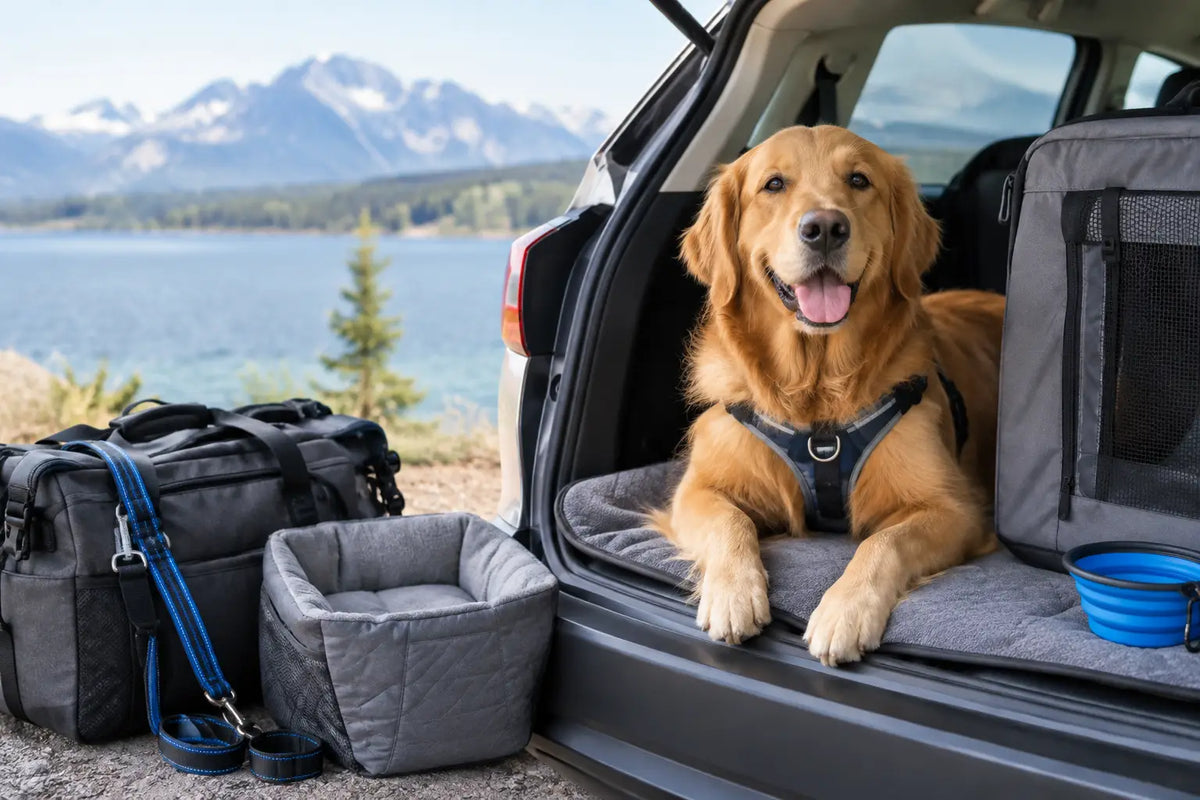
Safest Dog Travel Accessories for Every Journey
A dog leaning into the boot as you pack, waiting by the front door for the lead, is making their feelings clear: they are coming too. The safest dog travel accessories do more than make outings easier. They protect your dog in a sudden stop, reduce stress in unfamiliar places and make it possible for puppies, older dogs and dogs with limited mobility to remain part of family life.
Safety is not about buying the most accessories. It is about choosing the right restraint, carrier or support for the journey you are actually taking, then fitting and using it properly every time.
Start with the journey, not the product
A carrier that is ideal for a flight may be unsuitable for a car. A soft-sided sling may be pleasant for a short walk but offers no meaningful protection in a collision. Before choosing anything, consider how you travel, the size and temperament of your dog, and whether they can sit, stand, turn around and settle comfortably.
For car travel, containment and crash performance should lead the decision. For trains, busy pavements and cafés, secure handling, ventilation and manageable weight matter more. For cycling, stability and weather protection become critical. If your dog is recovering from surgery, managing IVDD or tiring more quickly with age, support and smooth movement may be the deciding factors.
The safest option is rarely the one-size-fits-all option. A confident 6kg terrier, a nervous cat-like small dog and a 32kg retriever have very different travel needs, even when they are going to the same place.
Car safety: choose tested protection where possible
Unrestrained dogs can be seriously injured in a collision and can distract the driver long before an accident happens. They should travel in a way that prevents them moving freely around the vehicle, while allowing enough room to travel without distress.
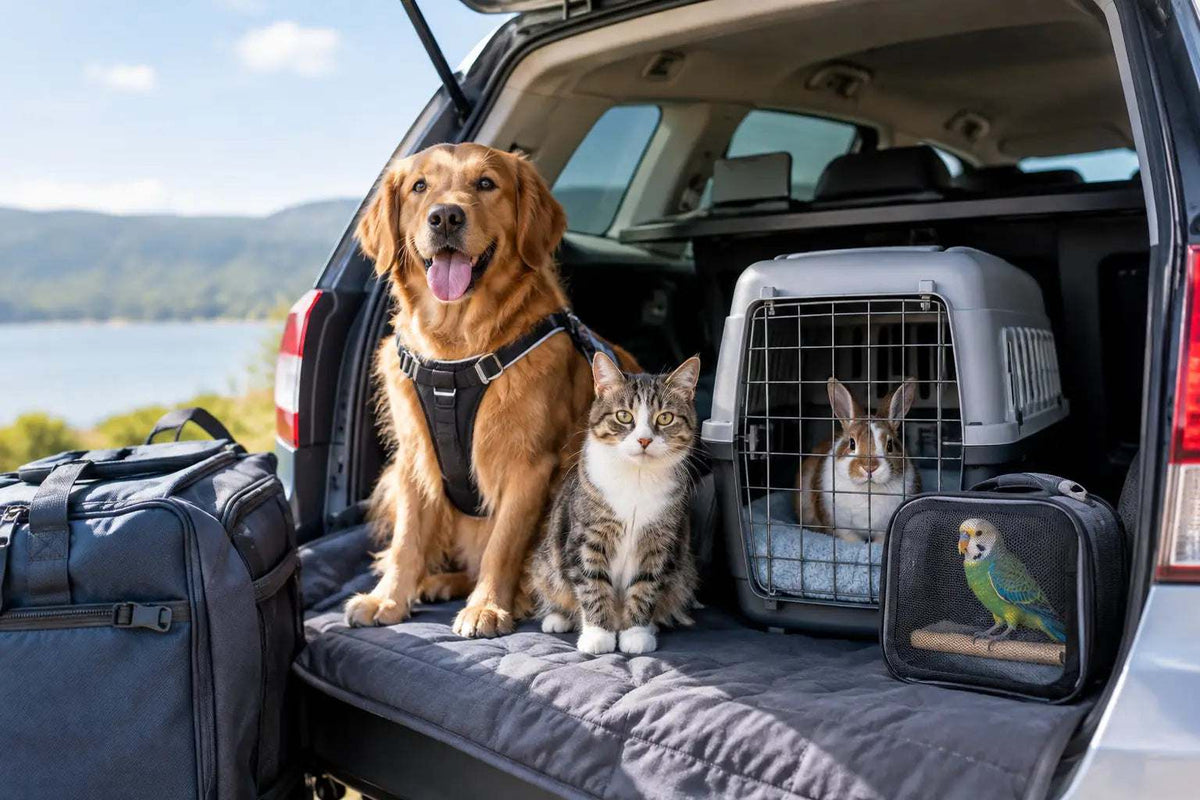
Crash-tested crates for boot travel
A crash-tested car crate is often the strongest choice for dogs travelling in the boot of an estate car or SUV, provided the crate is compatible with the vehicle and installed exactly as instructed. Look for evidence of independent crash testing rather than vague claims such as “heavy duty” or “safe design”. Test standards, the vehicle orientation used during testing, anchoring method and dog weight range all matter.
Measure the usable boot space carefully, including the slope of the rear seats, wheel arches and tailgate clearance. Then measure your dog while standing and lying down. They need space to stand naturally, turn around and lie in a relaxed position, but a crate should not be so oversized that they are thrown across it during sudden braking.
A crate is particularly useful for dogs who settle better with a defined den-like space. Add a fitted, non-slip mat or washable bedding that does not bunch beneath their feet. Avoid loose toys, glass water bowls and hard accessories that could become hazards in an impact.
ISOFIX pet car seats for smaller dogs
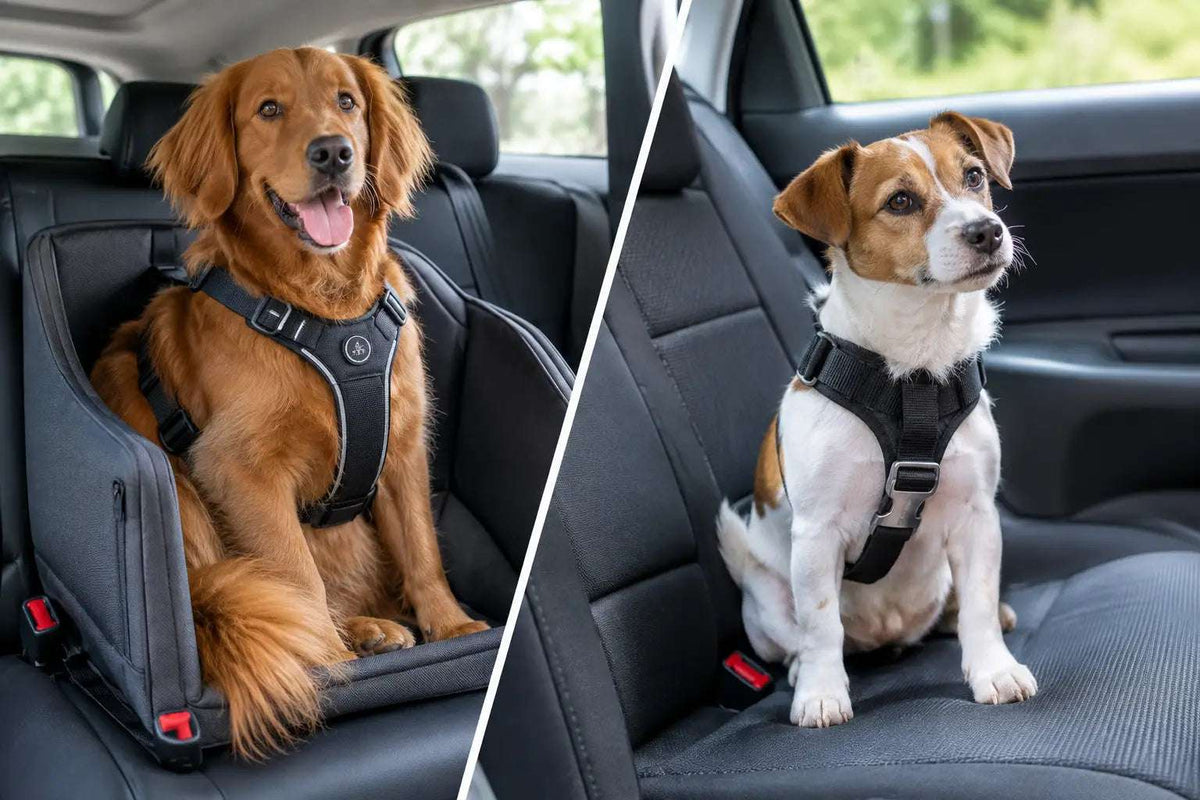
For small dogs travelling on the rear seat, an ISOFIX pet car seat can offer a secure, elevated place to settle when it is designed for vehicle use and correctly connected to the car’s ISOFIX points. A good seat should have firm sides, a stable base and a short internal tether that attaches to a properly fitted harness, not a collar.
ISOFIX helps reduce movement of the seat itself, but it does not make every seat equally protective. Check the stated maximum dog weight, attachment system and whether the manufacturer provides collision or impact-test information. Never use a dog car seat in a front passenger seat where an active airbag could pose a serious risk.
Harnesses and seat-belt attachments
A travel harness can be a practical solution for some dogs, especially when boot space is limited. However, a standard walking harness is not automatically suitable for vehicle restraint. Choose a purpose-designed car harness with clear weight guidance and credible testing information, then pair it only with the attachment specified by the manufacturer.
The harness should fit snugly without restricting breathing or shoulder movement. You should be able to slide two fingers beneath the straps, but your dog should not be able to reverse out of it. Attachments that are too long allow excessive forward movement in a sudden stop. Attachments that are too short can make it impossible for a dog to change position and settle.
Safe carriers for public transport and flights
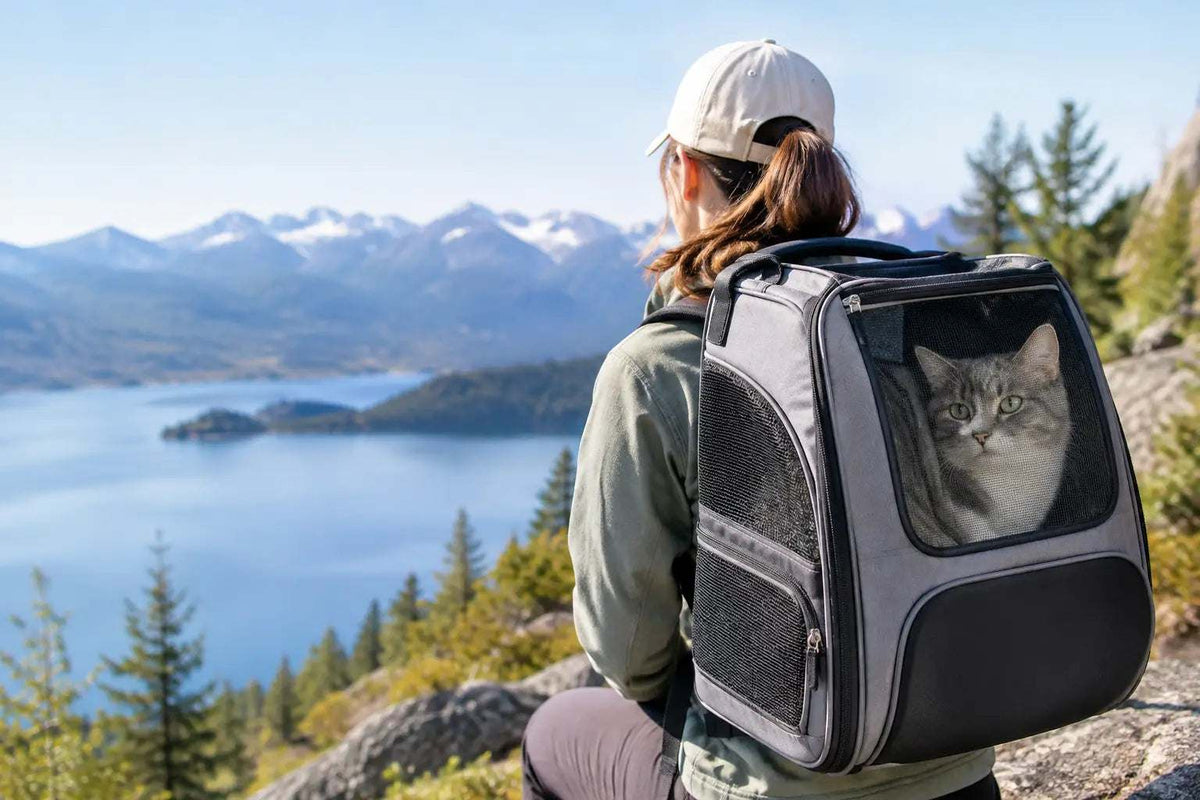
A secure carrier gives smaller dogs a protected base in crowded stations, hotel lobbies and waiting rooms. For public transport, prioritise a structured carrier with reliable zips, escape-resistant closures, good ventilation and a stable base. Your dog should be able to lie down and turn around without pressing against the sides.
For air travel, airline-compliant does not mean universally accepted. Each airline may set its own limits for external dimensions, weight, materials and whether a pet can travel in the cabin. Confirm those rules before purchasing and before booking. Hard carriers are commonly required for hold travel, while cabin travel often calls for a soft carrier that fits beneath the seat in front.
Build positive associations well ahead of departure. Leave the carrier open at home with familiar bedding, offer treats inside and take short, calm practice trips. On the day, use an absorbent liner and carry a spare. Do not sedate your dog unless a vet has specifically advised it, as sedation can affect breathing, balance and temperature regulation during travel.
Strollers and prams: safe inclusion for slower days
A dog stroller is not simply a luxury for a dog who enjoys being carried. It can give senior dogs, injured dogs and smaller breeds a way to enjoy longer outings without overdoing their physical limits. It also provides a safe reset point in busy places where little legs can become overwhelmed.
Choose a stroller with a locking mechanism, parking brake, internal safety tethers, a secure zipped enclosure and weight capacity that comfortably exceeds your dog’s weight. A low entry can be helpful for dogs with arthritis or reduced rear-leg strength. Suspension and larger wheels make a noticeable difference on uneven paths, while a rain cover should allow ventilation rather than sealing your dog into a stuffy compartment.
Always secure the tether to a well-fitted harness. Keep it short enough to prevent a leap out when the canopy is opened, but never use it to pull a reluctant dog into position. For dogs with pain or mobility concerns, ask your vet or physiotherapist whether a stroller, rear-support harness or wheelchair is most appropriate for their condition.
Cycling with dogs needs extra caution
Bike trailers can make shared adventures possible, but cycling introduces speed, vibration and unpredictable road conditions. Select a purpose-built dog trailer with a rigid frame, low centre of gravity, secure hitch, parking brake and a stated dog weight limit. A safety flag, reflectors and weatherproof but ventilated mesh improve visibility and comfort.
Introduce the trailer while stationary. Let your dog investigate it, sit inside for a few minutes and become used to the zipped enclosure before you move. Start with smooth, quiet routes and short distances. If your dog braces constantly, pants excessively, whines or refuses to enter after gradual familiarisation, a bike trailer may not be enjoyable for them.
Never attach a lead directly to a bicycle or allow a dog to run beside you in traffic. Even a well-trained dog can react to a squirrel, another dog or a sudden sound.
Small details that make travel safer
The safety of premium travel equipment depends on the everyday details. Check buckles, zips, tethers and mounting points before longer trips, especially after washing or storing an item. Replace damaged straps rather than improvising repairs.
For warm weather, use ventilation, shade and planned breaks rather than relying on cooling accessories alone. Never leave a dog unattended in a parked car, even on a mild day. For winter travel, keep bedding dry and use a coat only when it does not interfere with a harness or create pressure beneath straps.
Bring water, a collapsible bowl, poo bags, a lead and any medication your dog needs. These are simple essentials, but they prevent rushed decisions and help your dog feel settled wherever you stop.
How to get the fit right
Measure before ordering, then introduce the new item gradually at home. For crates and carriers, record your dog’s height while standing, body length from chest to base of tail and width at their widest point. For harnesses, measure the neck and chest girth exactly where the manufacturer specifies. Breed labels are only a rough guide.
Watch your dog rather than assuming quiet means comfortable. Repeated repositioning, lip licking, frozen posture, reluctance to get in or out, and heavy panting in cool conditions can all signal stress or poor fit. Make small adjustments, shorten the first journeys and reward calm behaviour.
Your dog deserves a seat on the adventure too. Choose equipment with real safety evidence, fit it with care and give them time to learn that travelling with you is a comfortable, secure part of life.