Safe Postoperative Dog Transport After Surgery
The journey home can be the most awkward part of a dog's recovery day. They may be sleepy from anaesthetic, sore around an incision, confused by a cone or unsettled by the smells and sounds of the clinic. Thoughtful postoperative dog transport is not about getting home quickly at any cost. It is about keeping movement controlled, protecting the surgical site and giving your dog a calm, secure place to rest from the moment they leave the vet.
Your veterinary team's discharge instructions always come first. They know whether your dog must avoid stairs, jumping, pressure on a particular limb or prolonged sitting. But a little planning around the vehicle, restraint and route home can make those instructions far easier to follow.
Plan transport before the operation
Ask the practice what to expect at collection. Will your dog be able to walk, or should you bring someone to help lift them? Will they have a protective collar, a bandage, a drain or a limb splint? Are they likely to be drowsy, nauseous or sensitive to movement? These details affect whether a car crate, carrier, rear seat or flat boot area is most suitable.
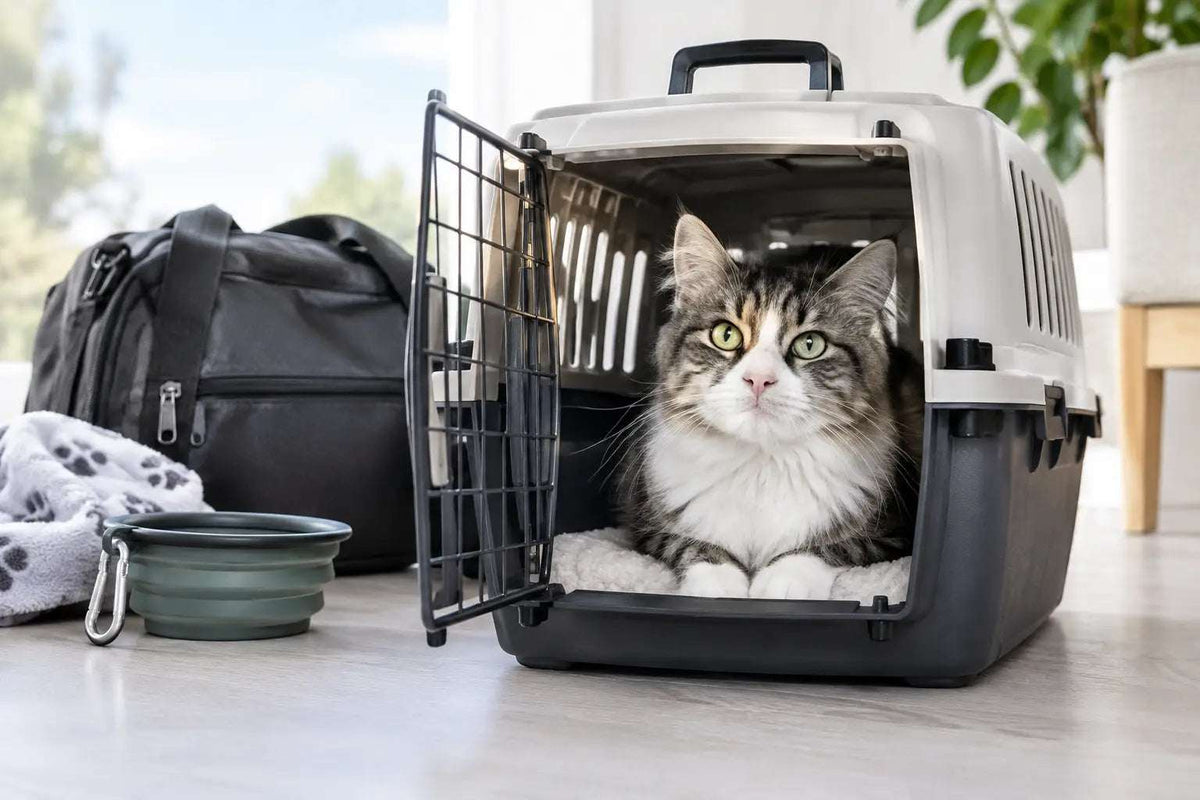
For a small dog, a well-ventilated carrier with a firm, level base is often the gentlest option. It limits wandering and jumping while allowing them to settle in a familiar blanket. Choose one large enough for your dog to lie in a natural position without curling tightly or pressing against the sides.
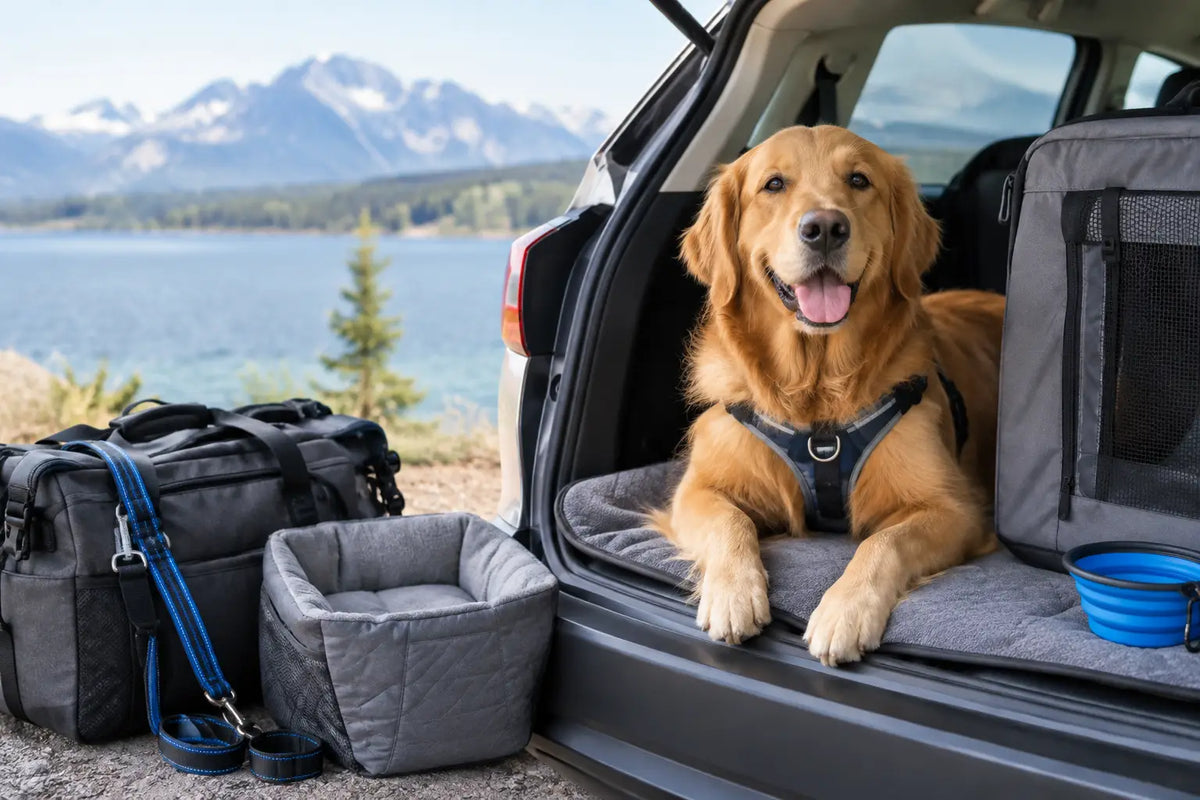
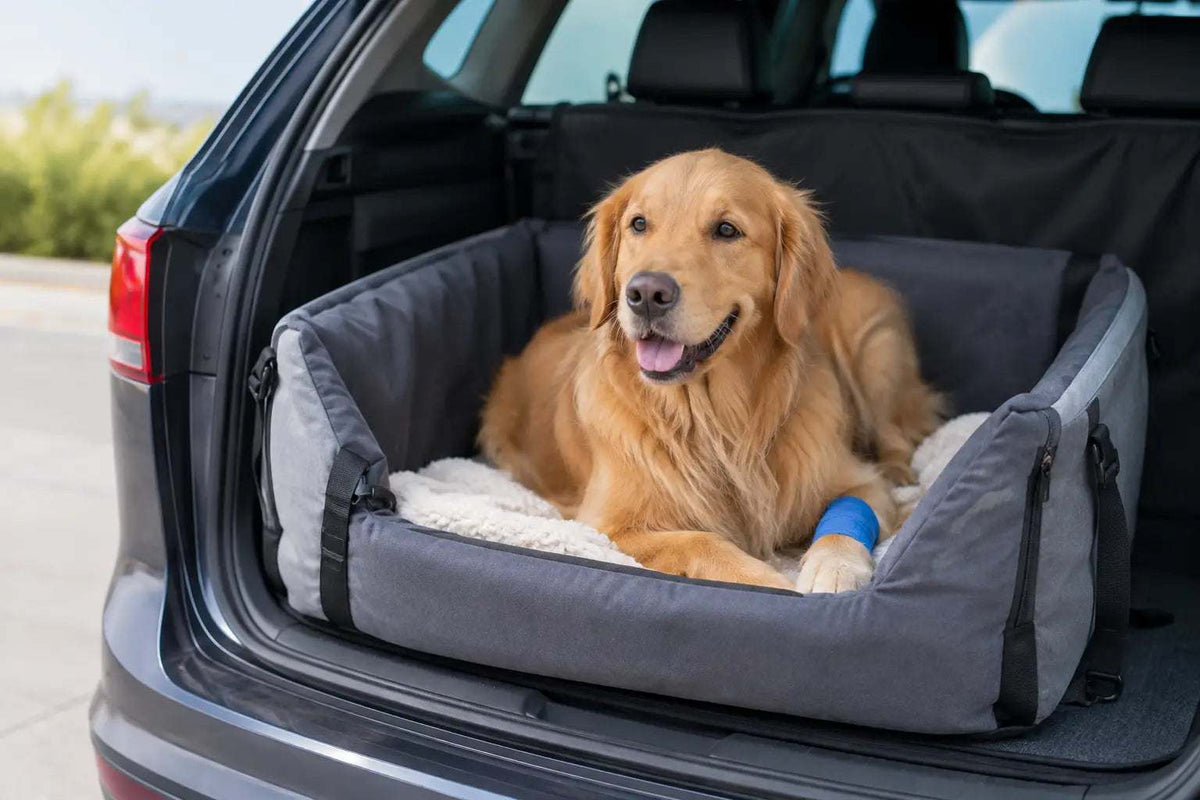
For a larger dog, the best answer depends on their procedure and mobility. A properly sized travel crate can provide excellent containment if your dog can step in without climbing or being twisted into position. A spacious boot setup may work for a dog who needs to lie flat, provided it is secure, well ventilated and appropriate for your vehicle. If the boot requires a leap upwards, it is not suitable for an animal who has just had surgery.
Do not assume a usual car harness is the right choice for the journey home. Harnesses can sit across tender areas, put pressure on chest or abdominal wounds, or be difficult to fit around bandages. Ask your vet whether it can be used. The same applies to a pet car seat: it can be helpful for a small dog after a minor procedure, but only if the tether and sides do not restrict their surgical area or encourage them to climb out.
Create a stable, low-stress travel space
The aim is to prevent sliding, scrambling and sudden changes of position. Line the travel area with clean, non-slip bedding that has enough padding to cushion bumps but is not so deep that your dog sinks or struggles to stand. Waterproof layers underneath are sensible, especially after a procedure involving sedation, gastrointestinal upset or urinary issues.
Keep the space uncluttered. Toys, food bowls and loose bags can roll around, while a loose lead can tangle around legs or a recovery collar. Bring a spare towel, absorbent pads, water for later and any medication you have been instructed to give, but do not offer food or medicine in the car unless the veterinary team has advised it.
Temperature matters more than many owners realise. Anaesthetic can affect how well a dog regulates body temperature, and a clipped surgical area may leave them feeling chilly. Warm the car gently before collection if it is cold, but avoid overheating them with direct blasts from a heater. In warmer weather, use ventilation or air conditioning and never leave your dog waiting in a parked car.
Quiet helps too. Keep the radio low, avoid an unnecessary detour and ask family members to save enthusiastic greetings for later. Your dog deserves a seat on the adventure too, but the first trip after surgery is not an adventure. It is a carefully managed transfer back to their recovery space.
Getting your dog in and out safely
The most vulnerable moments are often the few seconds around the car. A dog who normally launches happily from the boot may attempt exactly that while sore, disorientated or unsteady. Keep them on a short lead if they are permitted to walk, and have a clear route from the practice door to the vehicle.
Small dogs should be supported under the chest and hindquarters, keeping their body level wherever possible. Never lift by the front legs, collar or abdomen. For a larger dog, two people may be needed: one supports the front end and one the rear. If the dog has had spinal, orthopaedic or abdominal surgery, ask the veterinary staff to show you the safest handling technique before you leave.
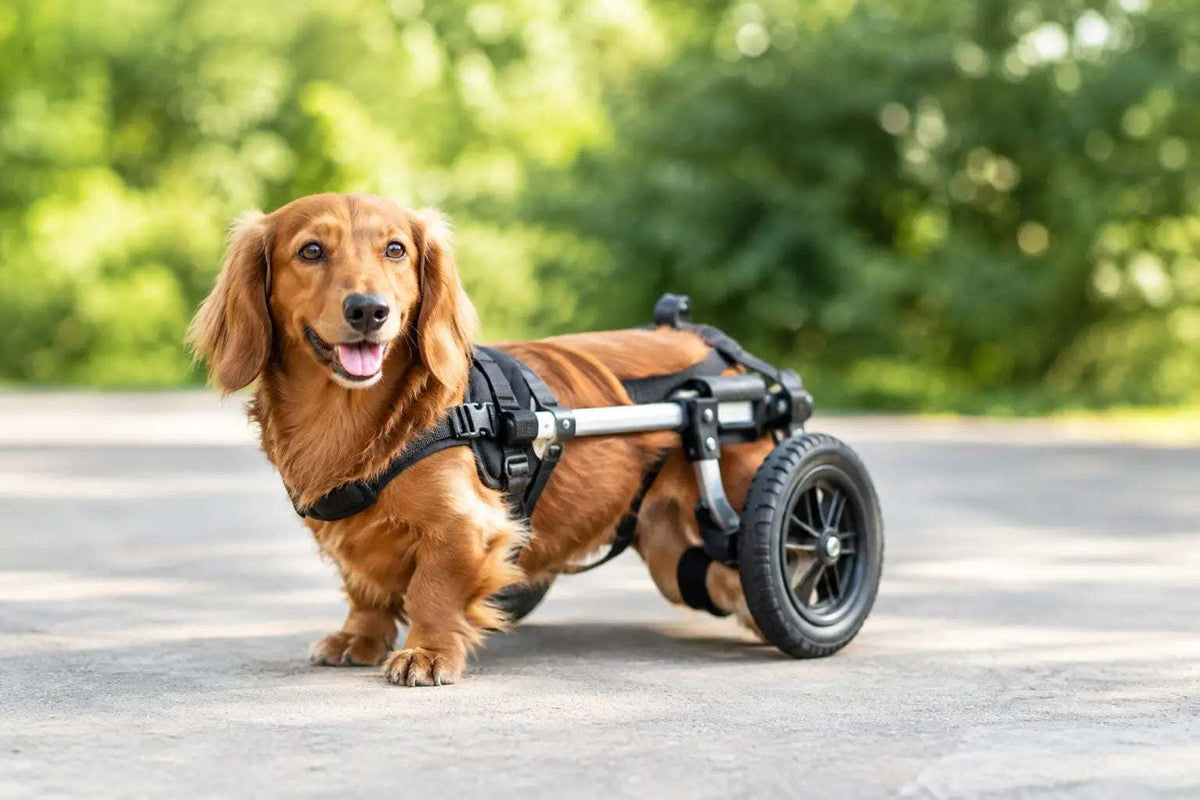
A ramp can reduce the need for jumping for dogs who are steady enough to walk, but it is not right for every patient. A slippery or steep ramp may create more risk than it removes, especially while a dog is groggy. For dogs who cannot bear weight safely, a supportive sling or purpose-designed rear support can help with short, vet-approved transfers. This is one area where suitability matters more than convenience.
Once home, reverse the process slowly. Do not open the car door until the path indoors is clear and another person is ready to help if needed. If stairs cannot be avoided, confirm the safest approach with your vet. Some dogs will need carrying, temporary confinement on one floor or a different route into the house.
Choosing the right restraint after surgery
Safe postoperative dog transport does not mean simply placing a dog on a passenger's lap. Even the calmest companion can shift suddenly if a car brakes, and human arms cannot provide reliable protection in a collision. A contained, vehicle-appropriate travel solution is usually safer for both dog and driver.
Crash-tested crates, where correctly installed and selected for the dog's size, are a strong choice for many dogs travelling in an estate car or suitable boot area. Their rigid structure can also prevent a recovering dog from changing position too freely. However, the crate must allow a comfortable resting posture and be accessible without forcing a painful entry.
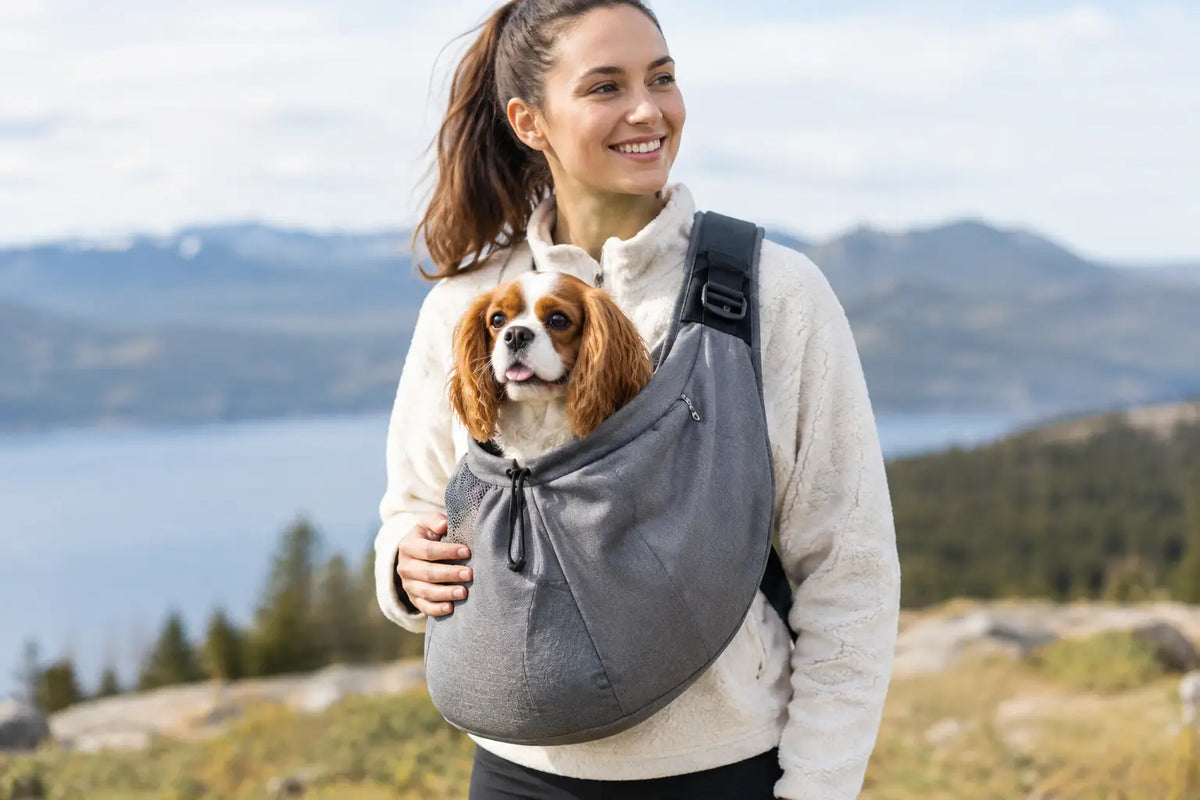
For smaller dogs, an ISOFIX-compatible car seat or secure carrier may offer a more contained option in the rear passenger area. Check the product's weight range, attachment method and internal dimensions rather than relying on breed labels. A secure fit in the car is as important as a secure fit for the dog.
There are trade-offs. A large crate may be safest in a crash but impractical if it requires your dog to climb in after cruciate surgery. A carrier can be easy to carry from clinic to home but too small for a dog with a bulky bandage. The right choice is the one that supports the veterinary restrictions, fits your vehicle and lets your dog rest without strain.
Watch the journey, not just the destination
If another adult can travel with you, ask them to sit close enough to observe your dog without repeatedly touching or disturbing them. Look for persistent panting, crying, shaking, heavy drooling, repeated attempts to stand, worsening lethargy or signs that the restraint is pressing on a wound or bandage. Stop somewhere safe if you need to assess them, and contact the practice if anything feels wrong.
For a straightforward journey home, avoid stops unless necessary. Your dog may not be ready to toilet, and getting in and out adds another transfer. On a longer trip, ask the vet in advance how often to stop and whether your dog should be offered water. Never leave them unattended in the vehicle while you go inside a service station.
Sedation can make a dog seem oddly cheerful or restless before the tiredness arrives. Do not mistake that burst of energy for readiness to walk, jump or resume normal life. Maintain the same calm boundaries when you arrive home.
Set up the first hour at home
Prepare a quiet recovery area before you leave for the appointment. Ideally, it should be on one level, away from slippery floors, busy children and other pets who may want to investigate. A supportive bed, fresh water within easy reach and low lighting are usually more helpful than a crowd of worried faces.
Take your dog straight from the car to this space, following any toileting guidance from the veterinary team. Check the incision or bandage only as instructed, then let them settle. A good transport setup earns its value here: less scrambling in the car usually means a calmer dog arriving home.
If you are unsure whether a crate, carrier, car seat or mobility support suits your dog's procedure, ask for specialist advice before collection. The right equipment should protect their recovery without making them feel excluded from family life. For now, the destination is simple: a quiet room, a comfortable bed and the reassuring knowledge that you are close by.