IVDD Wheelchair Questions: What Owners Need to Know
A dog who has suddenly lost strength in their back legs can make every walk, wee break and trip to the garden feel frighteningly complicated. The most common IVDD wheelchair questions come from a place of love: will a cart help my dog feel like themselves again, or could it do more harm than good? The honest answer is that it depends on your dog's diagnosis, pain level, recovery plan and ability to support their front end.
A well-chosen wheelchair can give some dogs with intervertebral disc disease the freedom to sniff, explore and stay included in family life. It is not, however, a shortcut through veterinary treatment or a substitute for rest, rehabilitation and careful monitoring. Think of it as a mobility tool that should fit around your dog's clinical plan - and their personality - rather than dictate it.
When is a wheelchair suitable for a dog with IVDD?
IVDD affects the discs that cushion the vertebrae. When a disc bulges or ruptures, it can put pressure on the spinal cord, causing pain, weakness, wobbliness or paralysis. The condition can range from relatively mild discomfort to an urgent neurological emergency, so the first decision is always veterinary-led.
A wheelchair may be appropriate when your vet or veterinary physiotherapist is happy that controlled supported movement is safe. This is often the case for a dog with lasting hind-leg weakness or paralysis, particularly once acute pain is under control and any prescribed period of strict rest has ended. For dogs recovering after spinal surgery, the timing is especially individual. Some will need a support sling and short, controlled rehabilitation exercises before they are ready for a cart.
A wheelchair is usually not appropriate during an untreated painful episode, when a dog has been told to remain on strict crate rest, or if their spine is unstable. It can also be the wrong choice for a dog who cannot comfortably bear weight through their front legs. A cart transfers more work forwards, so shoulder, elbow, wrist and neck health matter just as much as the back end.
Will a wheelchair help my dog walk again?
Sometimes it helps a dog practise a more natural movement pattern. Sometimes its greatest value is independence and joy while recovery remains uncertain. It is not a cure for IVDD and it cannot repair spinal cord damage.
For a dog with some voluntary hind-leg movement, a rear-support wheelchair may allow them to place their paws, build confidence and take part in a rehabilitation programme. Whether this is useful depends on the goal set by the clinical team. In some cases, a dog may be encouraged to use their legs with support; in others, dragging or repeated poor movement may need to be avoided.
For a permanently paralysed dog, a wheelchair can be life-changing for a different reason. It gives them a way to move through the park, keep up with their people and enjoy the everyday business of being a dog. Progress should not be judged only by whether they regain walking. A relaxed face, eager movement and a good appetite for adventures count for a great deal.
What type of wheelchair does an IVDD dog need?
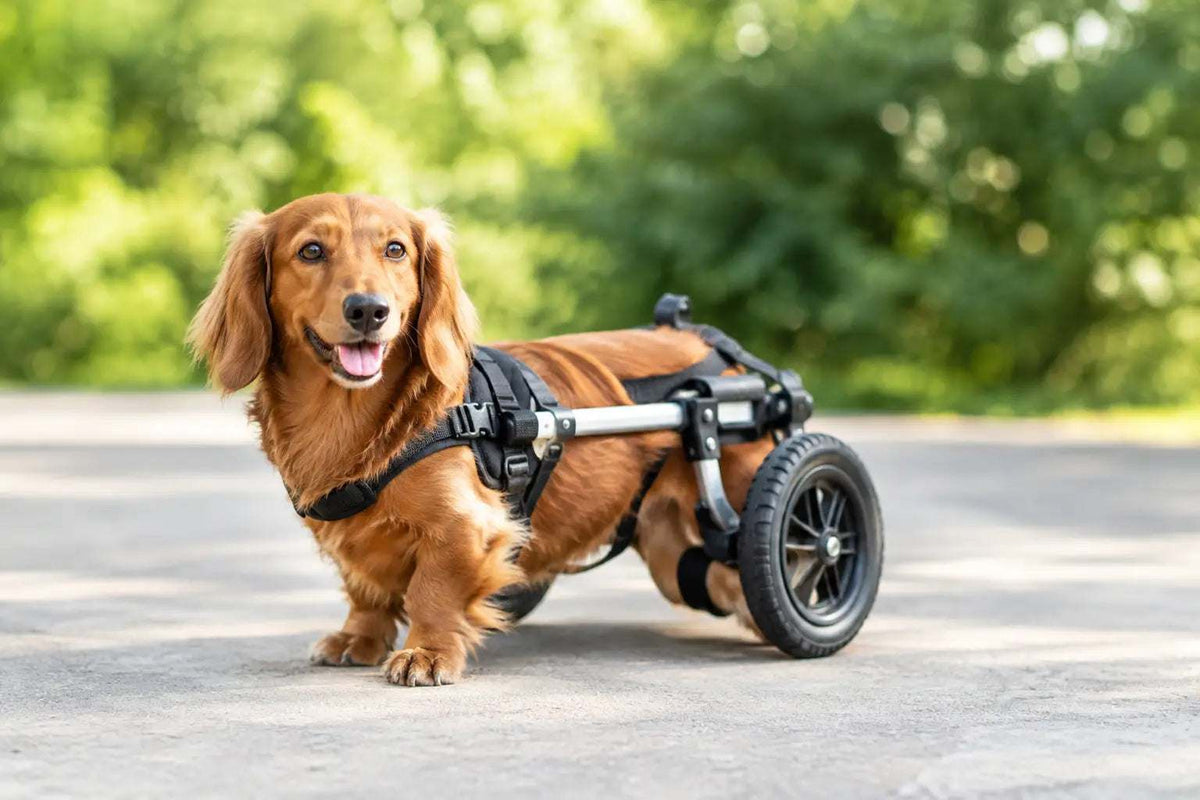
Many dogs with IVDD use a rear-support wheelchair. This design supports the pelvis and hindquarters while the dog propels themselves with their front legs. It can suit a dog with strong, comfortable front limbs and reduced use of the back legs.
If your dog also has meaningful weakness in the front end, poor balance, or another condition affecting more than the hindquarters, a four-wheel or full-support design may be considered. These are more specialised and should be selected with professional guidance. More support is not automatically better: a cart that restricts natural movement, fits poorly or is heavier than your dog can manage may create new problems.
Frame adjustment matters. Dogs with IVDD are not all built alike, and a compact Dachshund, a French Bulldog and a large crossbreed will need very different proportions, harness settings and wheel sizes. Look for a properly adjustable system, stable wheels suited to the surfaces you use, and supportive contact points that do not press into the abdomen, groin or ribs.
How do I measure my dog for an IVDD wheelchair?
Accurate measurements are the difference between useful support and an expensive source of rubbing. Follow the manufacturer's measuring instructions exactly, ideally with your dog standing squarely with assistance if needed. Do not estimate from breed or body weight alone.
The usual measurements include your dog's weight, back height, length from shoulder to rump, hip width and chest size. Some systems also require the height from the ground to the groin or the point where the body support will sit. Measure twice, and take a clear photo from the side and above for your own reference.
Body condition can change during recovery. A dog may lose muscle after crate rest, gain weight while activity is limited, or become stronger through rehabilitation. Adjustable straps and frame settings provide useful flexibility, but they do not replace choosing the right base size. If you are uncertain, ask for expert fitting guidance before ordering.
How should a wheelchair fit?
In a correctly fitted rear wheelchair, the frame should sit parallel to the ground and the wheels should not trail too far behind the body. Your dog should be able to stand in a balanced, comfortable posture, with their front feet landing naturally underneath them rather than stretched too far forwards.
The harness and saddle should feel secure without pinching. You should be able to check the skin easily, and your dog should be able to breathe freely, wee and poo without the support getting in the way. Their back should not be pulled into an unnatural arch or allowed to sag.
Check the fit at the beginning and end of every session, particularly in the first few weeks. Watch for redness, chafing, heat, swelling, reluctance to be fitted, altered breathing or a change in posture. Dogs with reduced sensation may not react to discomfort in the usual way, which makes visual skin checks essential.
How long should my dog use the cart each day?
Start smaller than you think. A few calm minutes on level, non-slip ground gives your dog time to understand the new sensation without becoming tired or overwhelmed. Reward curiosity and movement, then finish while the experience is still positive.
Build duration gradually according to your vet or physiotherapist's advice. A strong, experienced cart user may enjoy longer outings, but an IVDD dog can still fatigue quickly because their front limbs are doing extra work. Heat, hills, rough ground, weight, age and the amount of neurological function they have will all change what is reasonable on a particular day.
A wheelchair should not become an all-day holding device. Your dog needs regular rest, comfortable positioning, skin checks and opportunities to change position. If they are incontinent, keep the saddle area clean and dry, and inspect it carefully after each use.
Can my dog use a wheelchair indoors and outdoors?
They can, but the environment matters. Indoors, tight doorways, rugs, furniture legs and stairs may make a cart impractical or unsafe. Many families use a rear sling for quick toileting trips around the house and save the wheelchair for open spaces.
Outdoors, begin on flat paths or short grass rather than steep slopes, deep mud or loose gravel. Avoid busy areas until your dog is settled in the cart. Sudden turns, excited greetings and chasing squirrels are much harder to manage when balance is changing.
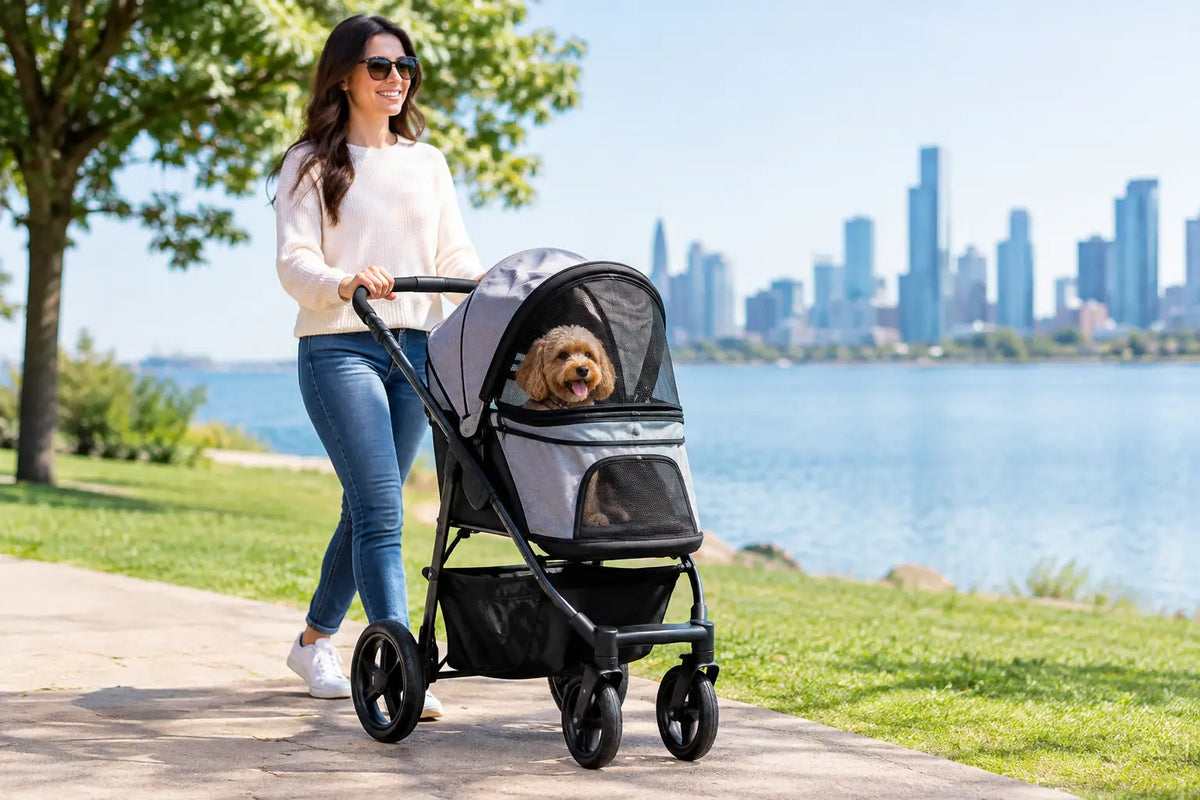
For longer family days out, a dog stroller can be a thoughtful companion to a wheelchair. Your dog can enjoy a gentle roll to the café, waterfront or park entrance, then use their cart for a short, purposeful outing when they are fresh. Inclusion does not have to mean asking them to keep going when their body has had enough.
IVDD wheelchair questions to ask your vet or physiotherapist
Before introducing a cart, ask whether your dog is ready for supported exercise, what movement is encouraged or restricted, and how long each session should last. It is also worth asking whether your dog should use their back paws in the cart, have them protected from scuffing, or have them supported up. The answer can change as recovery develops.
Ask what signs mean you should stop. These may include increased pain, trembling, vocalising, dragging that causes injury, worsening weakness, unusual tiredness or changes in bladder and bowel function. Sudden deterioration in an IVDD dog warrants urgent veterinary advice, not an attempt to adjust the wheelchair and carry on.
A good mobility plan has room for ordinary life: rest on a soft bed, gentle enrichment, safe transport, toilet routines and the occasional adventure paced around your dog's energy. The cart is one part of that plan, not the whole plan.
Your dog does not need to return to exactly the life they had before IVDD to have a wonderfully full one. With the right clinical advice, careful fitting and a pace that respects their body, they can still have a place beside you for the fresh air, the favourite routes and all the small moments that make a day feel like theirs.