Dog Crate Safety for Calm, Safer Car Travel
A crate can give your dog a reassuring little den on the road, but dog crate safety is about far more than closing a door before you set off. The crate must fit your dog, suit the way you travel and stay properly secured in the vehicle. Get those details right and your dog has a protected, comfortable place to settle while they remain part of every family adventure.
Dog Crate Safety Begins With the Right Job
Not every dog crate is designed to do the same thing. A lightweight fabric crate can be useful for supervised downtime at a dog show, holiday cottage or campsite, but it is not a replacement for a vehicle crate. Similarly, a standard wire crate may work well at home for sleep and calm training, yet offer limited protection in a collision.
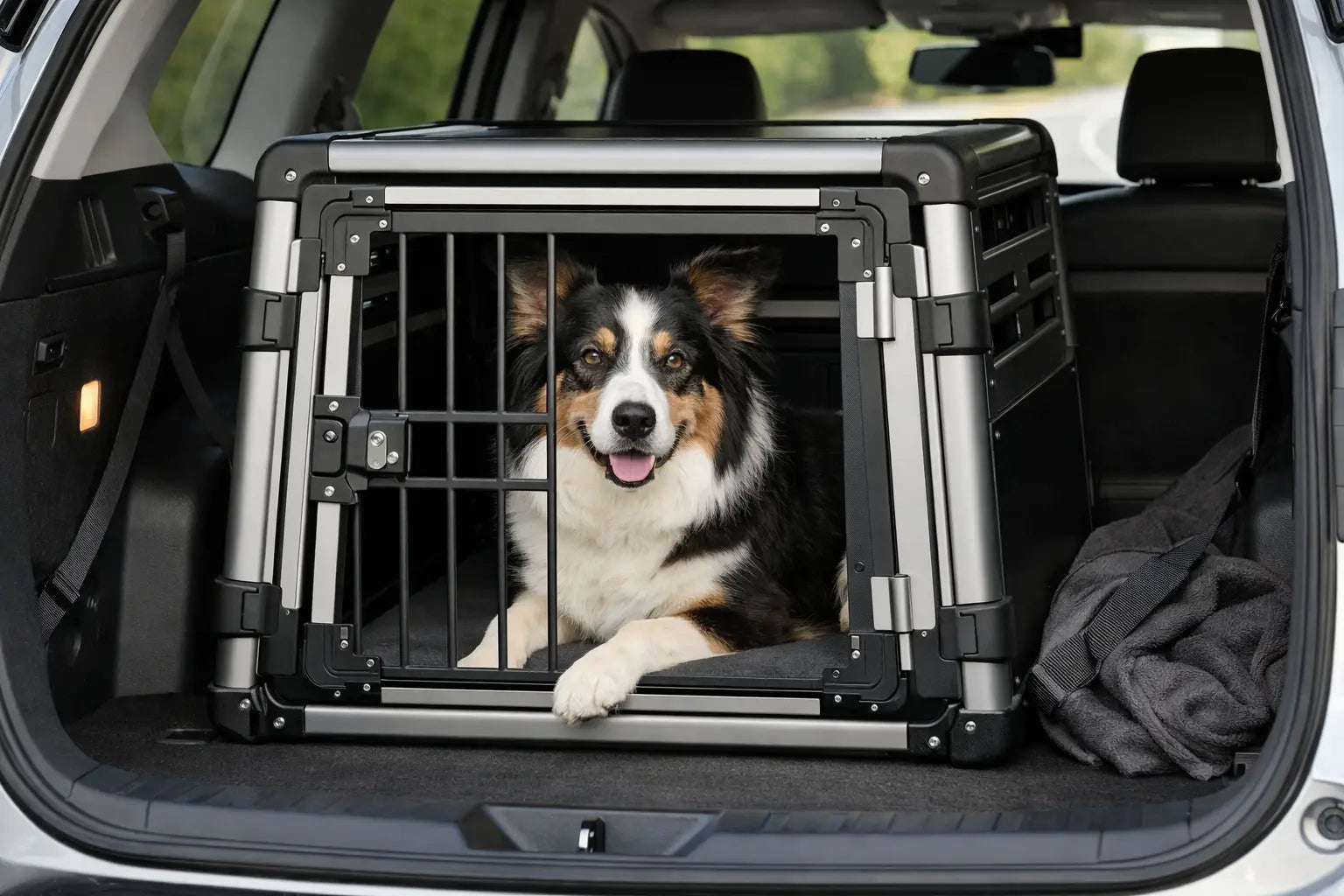
For car travel, choose a crate specifically designed and tested for vehicle use. Look closely at what any safety claim means. A crate described as crash-tested has been assessed in a defined test scenario, but the result can depend on the crate size, the dog’s weight, the vehicle position and the fitting method used. Check the manufacturer’s stated weight limit, compatible vehicle types and instructions for anchoring it.
This distinction matters because a crate should not become a loose, heavy object in an emergency stop. A well-engineered car crate is built to contain the dog and manage forces more effectively than a general-purpose crate, but only when it is installed as intended. Premium equipment earns its place here through thoughtful design, tested materials and clear fitting guidance, not simply a smart finish.
Home crate, travel crate or carrier?
A home crate should feel safe and restful, particularly for puppies, anxious dogs and dogs recovering from surgery. It needs ventilation, room to stand and turn, and a bed that supports comfortable rest. It does not necessarily need the same structural strength as a car crate.
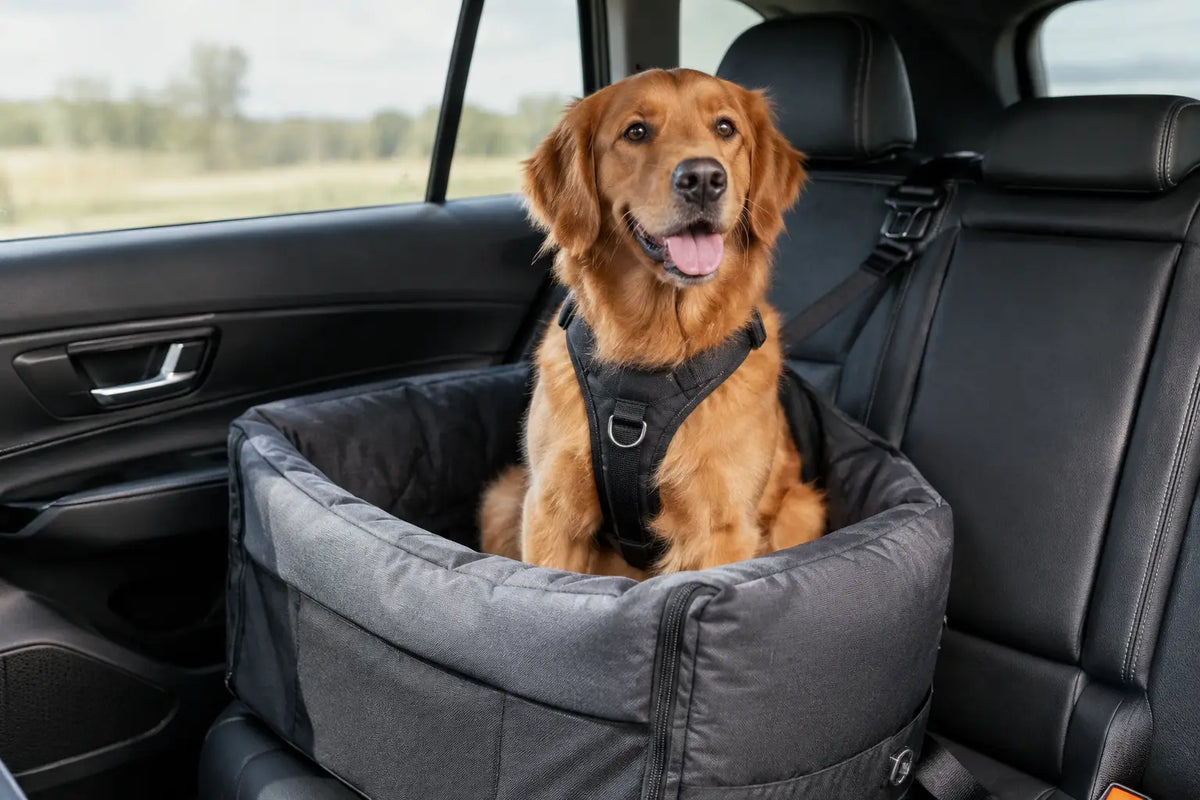
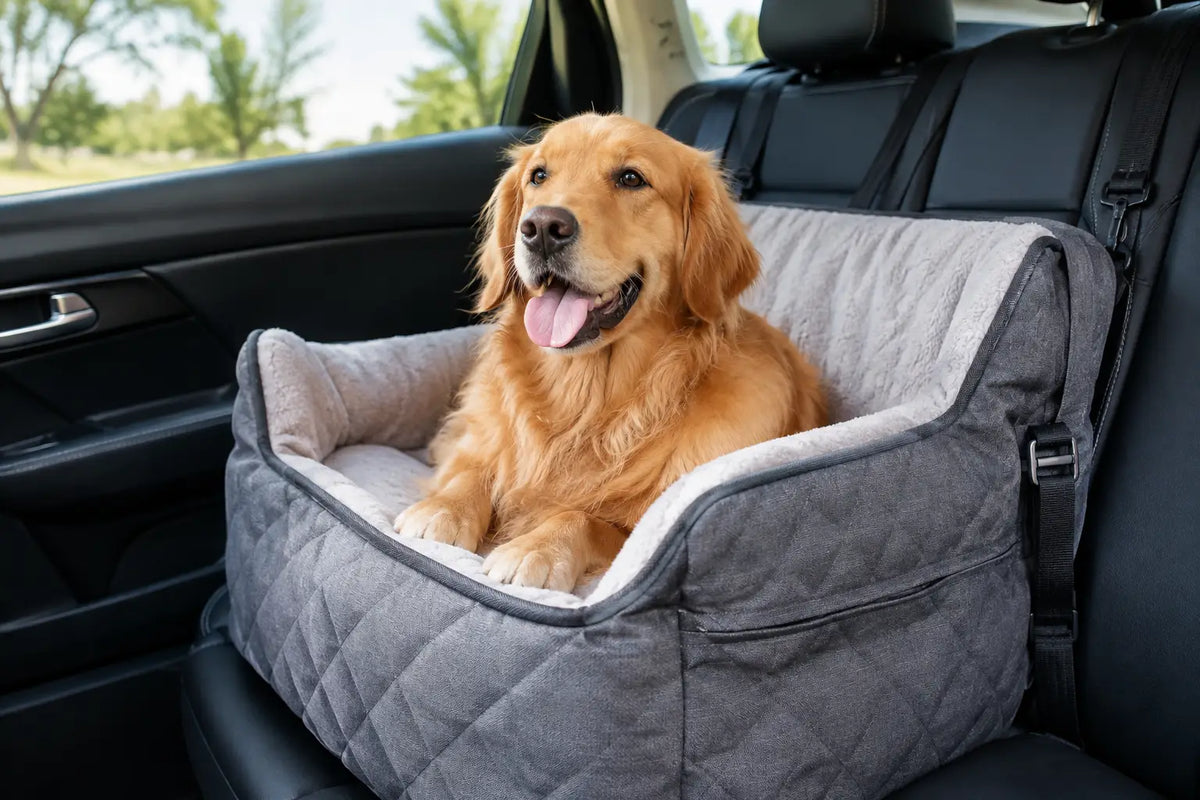
Small dogs may travel safely in a properly secured carrier or an ISOFIX-compatible pet car seat, depending on their size and the product’s specification. Larger dogs often benefit from a purpose-built boot crate, provided the vehicle has a suitable crumple-zone arrangement and the crate is compatible with the car. There is no single best option for every dog or every vehicle.
Choosing a Crate That Fits Properly
A crate should be large enough for your dog to stand naturally, turn around and lie down in their usual sleeping position. It should not be so oversized that they slide across the space during braking or cornering. For a growing puppy, resist the temptation to buy an enormous crate with no adjustment. A divider can create a more secure area while allowing room to grow.
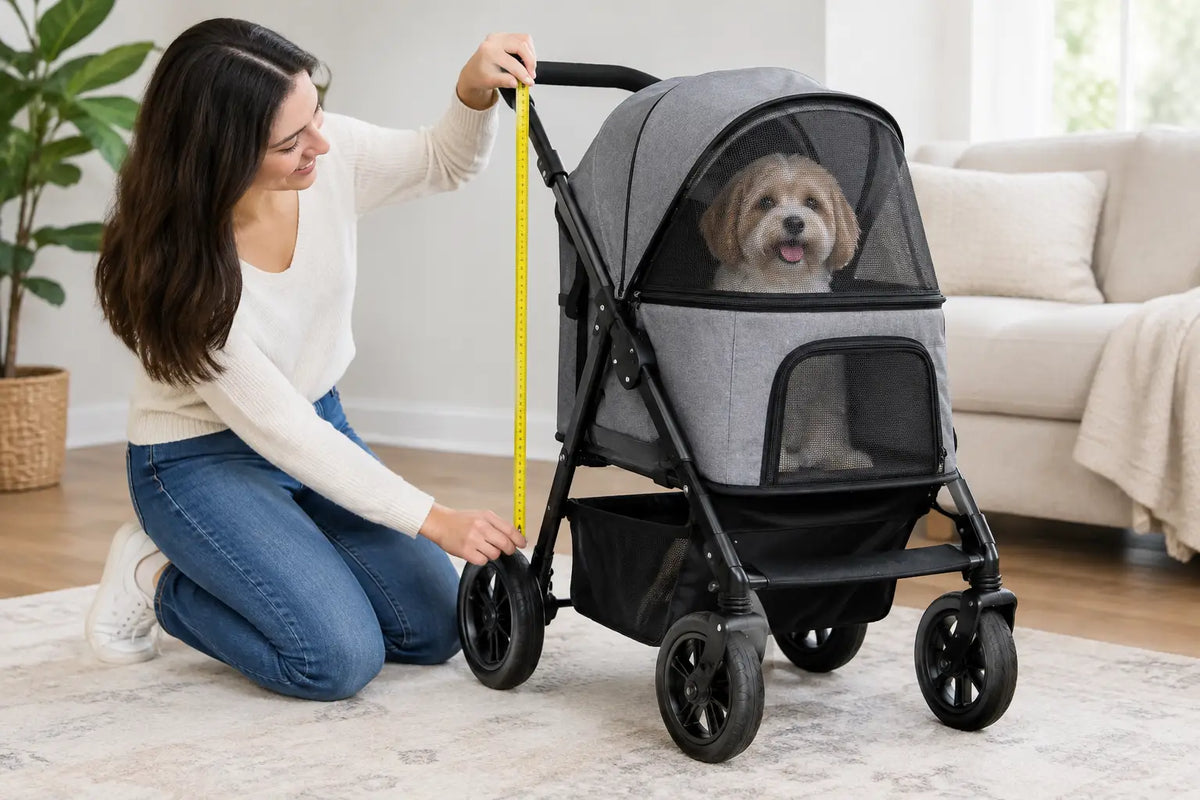
Measure your dog when they are standing rather than guessing from breed. Take their height from floor to the top of the head or ears, their length from nose to base of tail, and their width at the broadest point. Then compare those measurements with the manufacturer’s internal dimensions, not only the crate’s external size.
Pay attention to posture and individual needs. A dachshund managing IVDD, a senior Labrador with arthritis or a dog wearing a post-operative cone may need additional room and a low, easy entrance. Yet more space is not always safer in a moving car. The goal is secure support without restriction or discomfort.
For dogs travelling together, separate crates are generally the safer choice. Even close canine companions can become unsettled in a sudden stop, and sharing makes it harder to ensure each dog has enough room and protection.
Secure the Crate to the Vehicle, Not Just the Boot
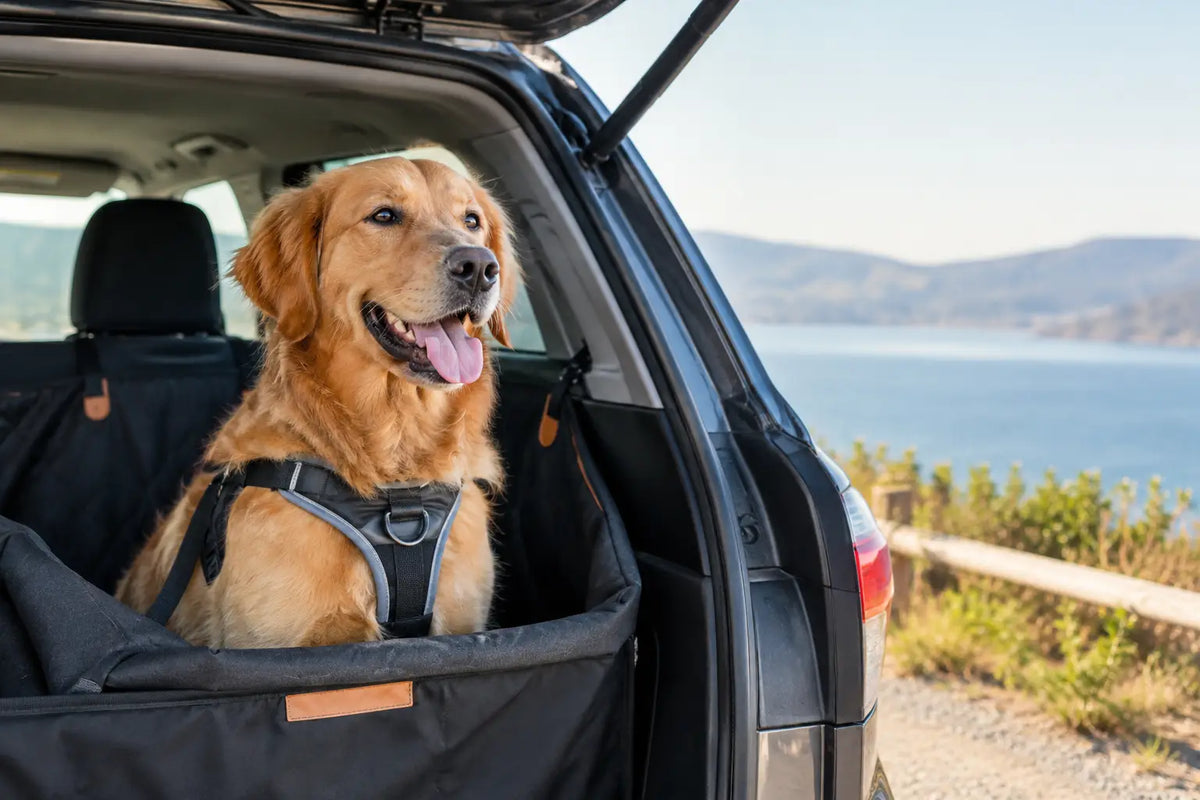
A crate placed in the boot is not automatically secured. It needs to be fixed according to the crate manufacturer’s instructions, using the vehicle’s designated anchor points or an approved fitting system where specified. Never improvise with bungee cords, leads or straps that are not rated for the purpose.
The safest position depends on the design of both crate and car. Many vehicle crates are intended to sit against the rear seats in the boot, but this is not universal. Estate cars, SUVs, hatchbacks and vans all have different layouts, loading heights and rear-impact protection. Before buying, measure the available space carefully, including the angle of the rear window, wheel arches and tailgate opening.
Do not assume that folding a rear seat down creates a suitable installation point. It may interfere with the crate’s intended placement or leave it less supported. If a crate requires a solid boot floor, rear-seat contact or specific tie-down points, follow that guidance exactly.
The Highway Code states that dogs and other animals must be suitably restrained so they cannot distract the driver or injure themselves, or you, if you stop quickly. A properly secured crate can help meet that responsibility while giving your dog a predictable place to travel.
Check the crate before every journey
Even the best crate needs a quick inspection. Before setting off, make sure the door closes and latches fully, fastening straps are tight and undamaged, and the crate has not shifted from its fitted position. Check that bedding has not bunched up against the door or created an unstable surface.
Avoid leaving a collar or harness on an unsupervised dog in a crate if it could snag on the bars, door or bedding. During car travel, follow the guidance supplied with your specific crate and restraint system. The aim is to prevent entanglement as well as escape.
Make the Crate a Calm Place Before the Car Moves
A technically excellent crate will not feel safe to a dog who has only ever encountered it when they are rushed into the car. Introduce it at home with the door open. Let your dog investigate at their own pace, then offer meals, a familiar blanket or a quiet chew inside. Keep early sessions short and pressure-free.
Once your dog is happy resting in the crate, practise closing the door for a few moments while you remain nearby. Build gradually to sitting in the parked car, then very short drives. Calm praise and predictable routines help more than trying to force confidence in one long journey.
For some dogs, especially rescues or dogs with previous travel anxiety, progress may be slow. Watch for persistent panting, drooling, trembling, repeated attempts to escape or distress that does not ease once the journey begins. These signs deserve attention. Speak to your vet or a qualified behaviour professional rather than assuming your dog will simply get used to it.
A familiar, washable blanket can make the space more inviting, but avoid overfilling the crate. Thick piles of bedding may reduce usable space, trap heat or become a hazard if the dog chews them. Choose a stable, well-fitting crate mat where possible, with enough cushioning for joints but no loose corners to catch claws.
Ventilation, Temperature and Breaks Matter Too
A crate protects your dog only if the conditions around it are safe. Air must circulate freely around the crate, so avoid covering it completely or packing luggage tightly against the ventilation panels. In warm weather, the boot area can heat up quickly, even when the cabin feels tolerable. Never leave your dog in a parked vehicle, and do not rely on a cracked window to manage heat.
On longer journeys, plan regular stops for water, toileting and a gentle leg stretch. The right frequency depends on your dog’s age, health, weather conditions and usual routine. Puppies, senior dogs and dogs with mobility limitations may need more frequent breaks, while an excitable dog may benefit from a calm, quiet pause rather than a high-energy play session.
If your dog uses a wheelchair, rear-support harness or other mobility aid, secure the equipment separately so it cannot move around the vehicle. Allow time at each stop to help them in and out of the crate carefully. Dignity matters just as much as practicality when a dog needs a little extra support.
Common Dog Crate Safety Mistakes
The most common problem is treating a crate as a one-size-fits-all solution. A crate that is too small can cause pressure, stress and overheating. One that is too large or unsecured can allow excessive movement in a crash. Another frequent mistake is buying based on breed labels alone, rather than your own dog’s measurements and travel needs.
It is also worth avoiding second-hand car crates with unknown damage or missing fittings. Small bends, worn latches and altered straps can affect performance. If you are using a crate after an accident or significant impact, seek the manufacturer’s advice before using it again, even if damage is not obvious.
Finally, do not make a crate the only place your dog ever experiences confinement. Balance travel safety with positive walks, sniffing time, comfortable rest and choices wherever practical. The crate is there to protect their place in family life, not to shrink it.
The best setup is the one your dog can settle into comfortably and that you can fit correctly every time. When their crate is chosen for their body, your vehicle and the journeys you genuinely take, they are ready for the road ahead - safely included, beautifully looked after and never left behind.