Dog Car Safety Guide for Safer Family Journeys
A loose dog climbing into the front footwell, leaning out of an open window or launching across the back seat is not having more freedom - they are one sudden brake away from serious injury. This dog car safety guide is about making every journey feel calm, comfortable and properly protected, whether you are heading to the woods, the vet or a much-needed holiday.
Your dog deserves a seat on the adventure too. The right set-up lets them come along as part of the family while giving the driver the clear focus they need on the road.
Start with the non-negotiables
In the UK, the Highway Code states that dogs and other animals must be suitably restrained so they cannot distract the driver or injure themselves or others if the vehicle stops quickly. That does not mean any lead clipped to any collar will do. A restraint needs to limit dangerous movement without creating a new risk around the neck, chest or spine.
A dog should never travel on a driver's lap, in the front passenger footwell or loose on a seat. Airbags can also cause severe injury to a dog travelling in the front. Where a front-seat arrangement is unavoidable, follow both the vehicle and product manufacturer's instructions exactly, including any guidance on deactivating the airbag.
The safest choice depends on your dog's size, temperament, health, the vehicle you drive and how often you travel. A confident Labrador in an estate car has different needs from a nervous Chihuahua in a hatchback, and a senior dog with arthritis needs a gentler route in and out than either of them.
Dog car safety guide: choose the right restraint
The goal is not simply to stop your dog roaming. It is to create a secure travel space that is appropriately sized, well ventilated and fitted as the manufacturer intended. Premium travel equipment can cost more because the engineering, attachment points, materials and testing matter when forces rise dramatically in a collision.
Crash-tested car crates
A crash-tested crate is often an excellent option for dogs travelling in the boot of an estate, SUV or suitable hatchback. It gives clear physical containment and can help dogs who settle better in a den-like space. Look for a model tested for vehicle use, not merely a sturdy-looking household crate.
Fit is central. Your dog should be able to stand, turn around and lie down naturally, but a crate that is far too large can allow them to be thrown around inside. Measure your available boot space and your dog's height, length and weight before choosing. Check whether the boot layout, rear seat position and anchoring arrangement are compatible with the crate.
Not every boot is suitable for every dog. A sloping rear window may reduce headroom, while a shallow boot can make the crate sit too close to the tailgate. Never compromise ventilation, door clearance or secure installation just to make a particular size fit.
Travel harnesses and seat-belt restraints
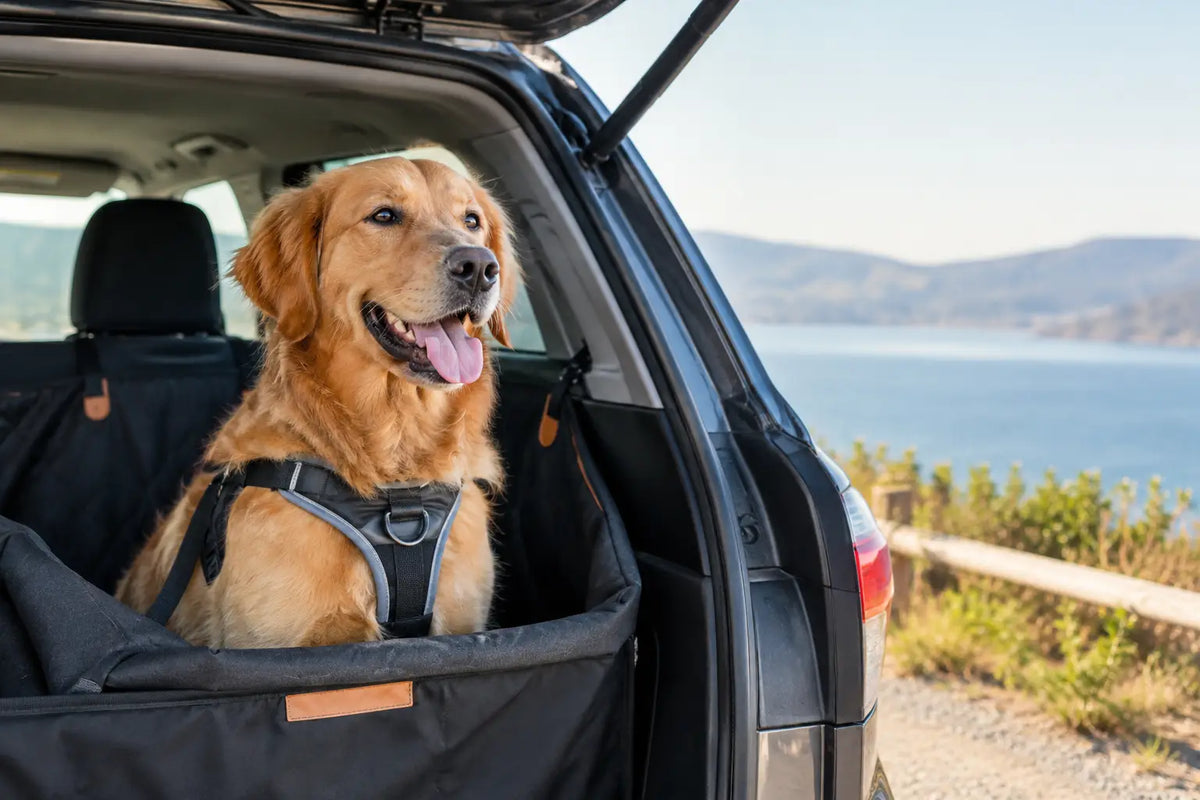
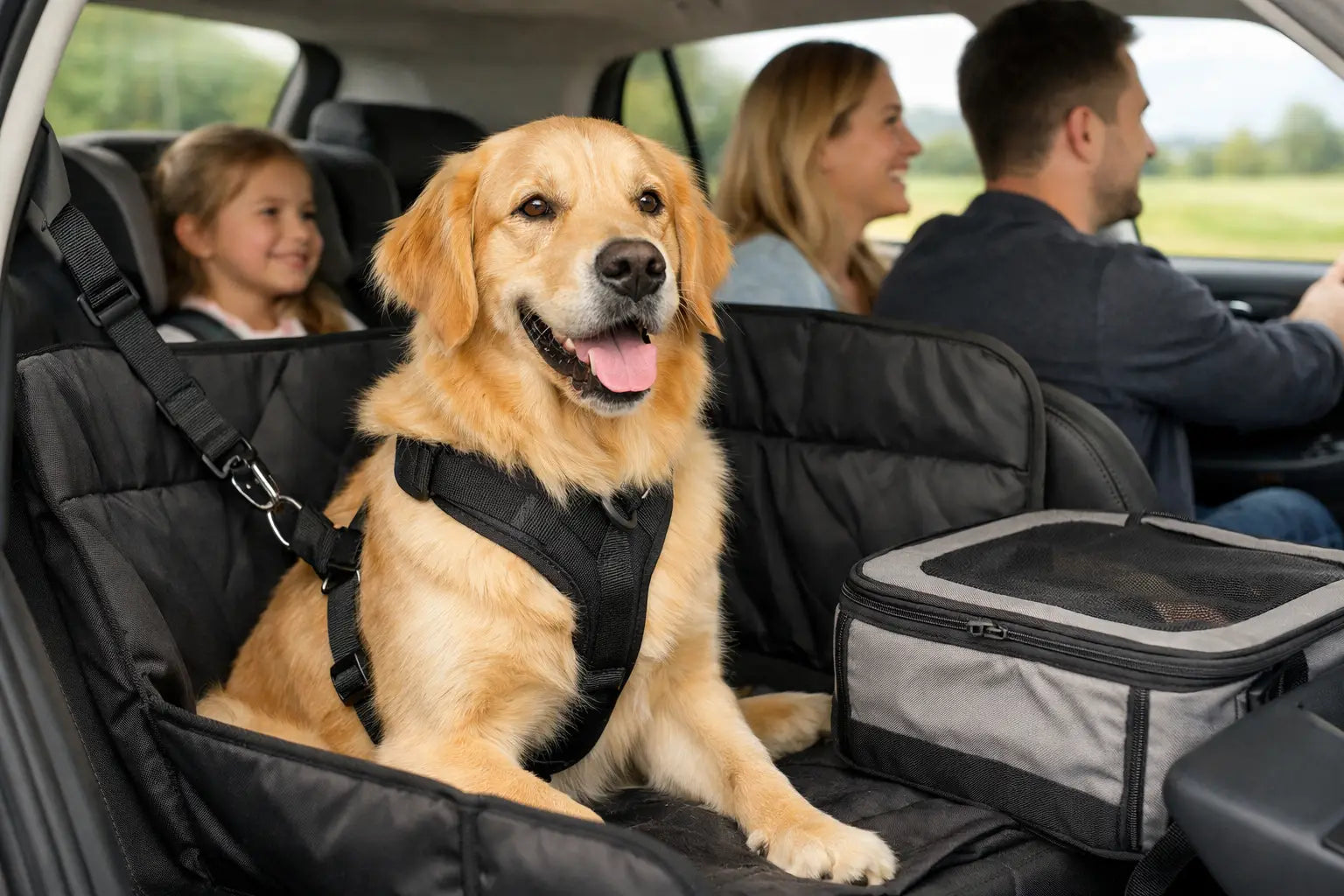
A vehicle-specific dog harness can suit dogs travelling on the rear seat, especially when a crate is not practical. Choose a harness designed for car use and, where possible, one that has been independently crash tested at a weight relevant to your dog. A walking harness is not automatically safe for vehicle travel.
The harness should spread force across the chest and torso rather than loading the neck. It must be snug enough to prevent escape, yet allow normal breathing and a comfortable lying position. Attach it only to the approved seat-belt connection or anchor point specified by the product maker. Clipping a tether to a collar is a poor substitute and can cause neck injury in a sudden stop.
A harness can be a practical everyday answer, but it does leave your dog more exposed than a crate. Some dogs also become tangled if a tether is too long. The best set-up gives them enough room to sit and lie down, not enough to reach the front seats.
ISOFIX pet car seats
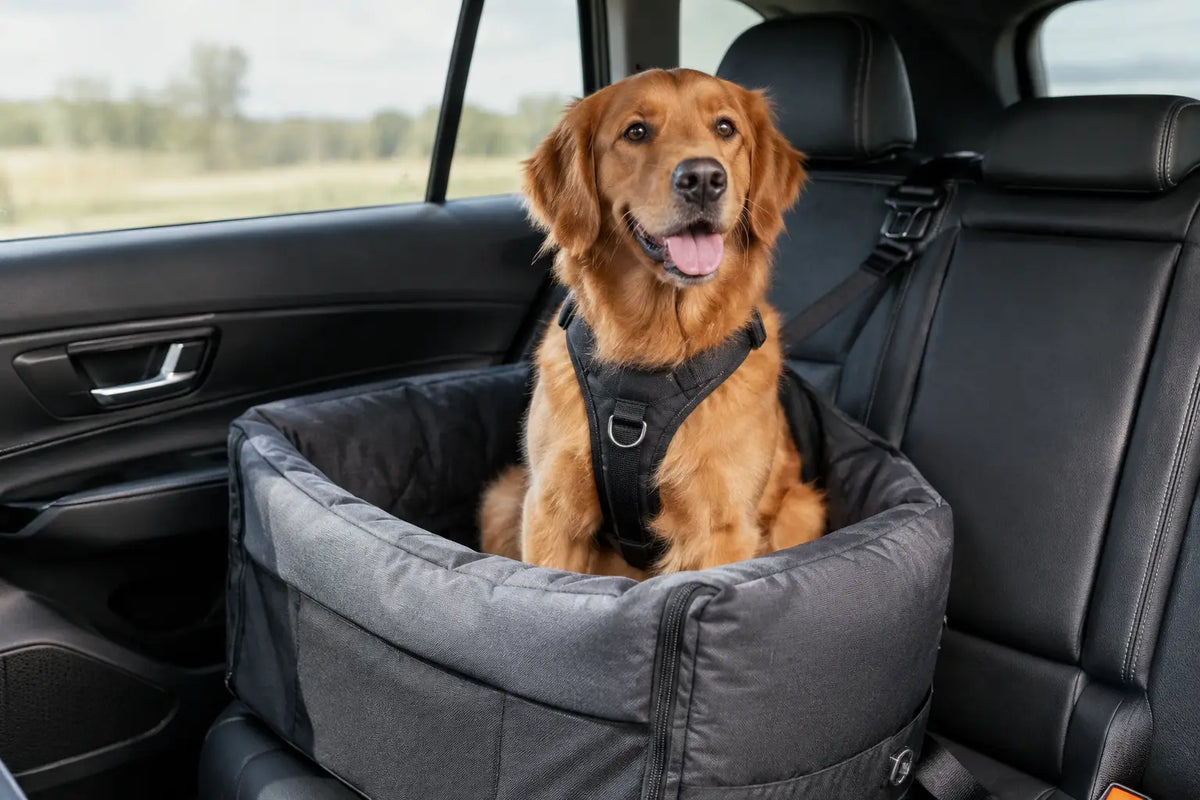
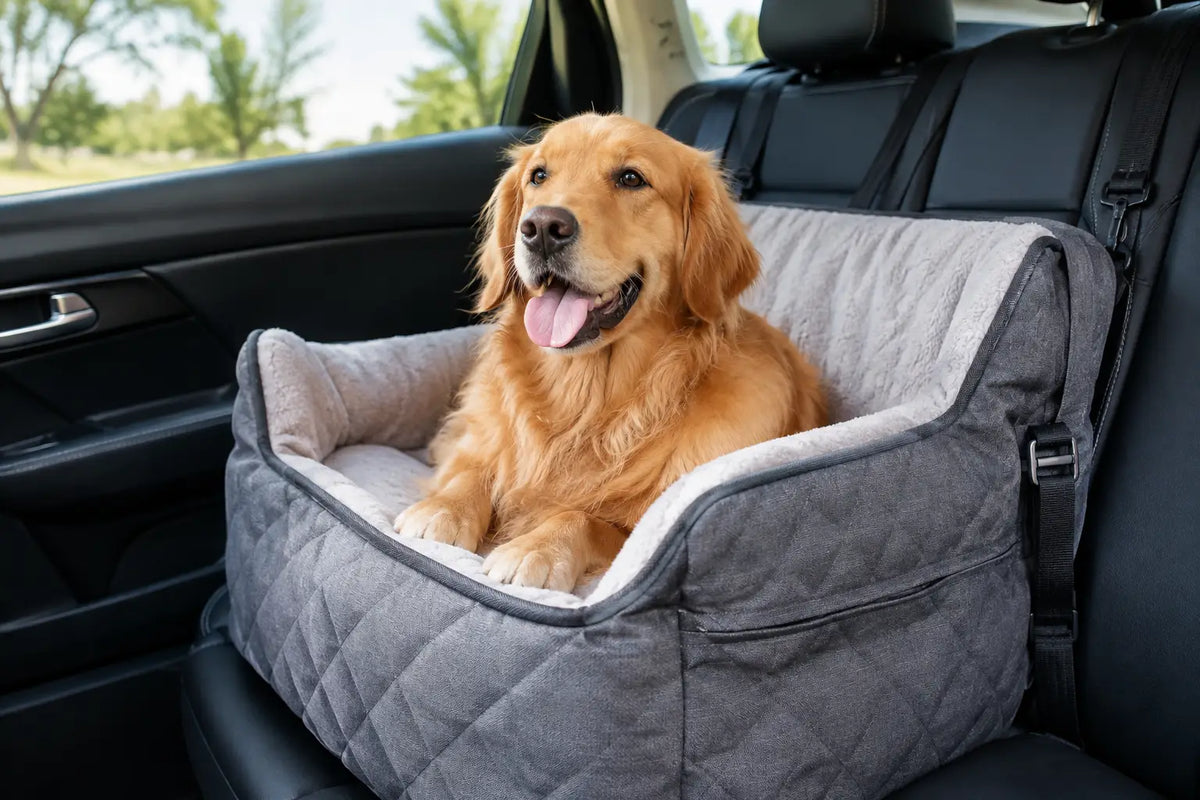
For small dogs, an ISOFIX-compatible pet car seat can offer a stable, contained perch and a reassuring view of their people. It is particularly useful for dogs who feel unsettled on a flat rear bench or who need a little extra support during travel.
Check the maximum pet weight, the compatible seating position and whether your car has accessible ISOFIX points. The internal tether should attach to a well-fitted harness, never directly to a collar. A car seat is not simply a cosy bed with straps: its stability and attachment system are what make it appropriate for travel.
Boot barriers and guards
A properly fitted vehicle-specific dog guard or barrier can separate the boot from the passenger compartment, but it is not a complete crash-safety solution by itself. It may prevent a dog entering the cabin, yet it does not necessarily prevent them being propelled within the boot in a collision. Pairing a guard with an appropriate crate or other secure containment is usually the stronger approach.
Fit the system before the big journey
The first fitting should happen on your driveway, not five minutes before a motorway run. Read the instructions in full and take the time to test every buckle, tether, crate latch and anchor point. If a product is crash tested, its performance depends on it being installed in the same approved configuration used for testing.
Let your dog investigate the crate, harness or seat at home first. Use calm praise, a familiar blanket and short sessions. For a crate, begin with the door open and offer a chew or a few treats inside. For a harness, build positive associations before connecting it to the car. Forcing an anxious dog into unfamiliar equipment can make future journeys harder.
Before moving off, check that no straps are twisted, no tether can wrap around a leg and no blanket interferes with a latch or ventilation panel. Remove dangling leads, food bowls and hard loose objects from your dog's area. In a collision, everyday items can become projectiles.
Make comfort part of car safety
A secure dog who is overheating, nauseous or frightened is still not travelling well. Keep the car comfortably ventilated and never leave a dog unattended in a parked vehicle, even on a mild day. Cabin temperatures can change quickly, and cracked windows do not make a car safe.
For longer trips, plan regular stops in a safe location. Offer water, allow a toilet break and use a secure lead before opening any vehicle door. Dogs can bolt after a stressful journey, particularly in unfamiliar places or near fast-moving traffic.
Avoid a large meal immediately before travel if your dog is prone to sickness. If they drool heavily, vomit, pant excessively, shake or refuse to get into the car, speak to your vet. Motion sickness, pain and travel anxiety are treatable problems, but no restraint can solve them on its own.
Do not rely on an open window for enrichment. A dog with their head out of the window can be hit by debris, injured by branches or distracted into frantic movement. Fresh air is useful, but secure ventilation is safer than a face in the wind.
Extra care for senior, injured and mobility-limited dogs
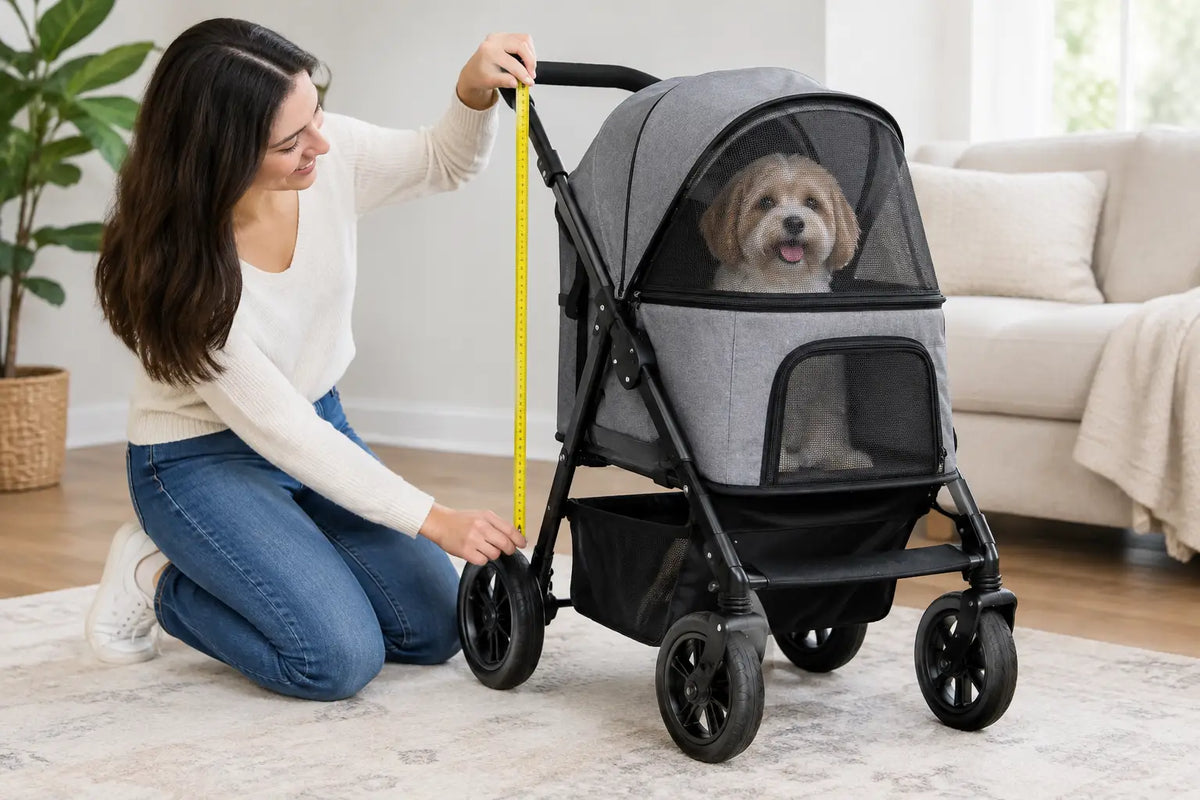
For a dog managing IVDD, recovering after surgery, living with arthritis or using a wheelchair, safe car travel starts before they are inside. Jumping into a boot can aggravate pain or cause a fresh injury. A ramp, supportive lift or low-entry car seat may protect joints and give your dog more dignity and confidence.
Inside the vehicle, consider how the restraint supports their specific condition. A crate may need an orthopaedic, non-slip mattress that does not reduce usable space or block the door. A dog with spinal concerns may need to avoid twisting while being lifted. If your vet or physiotherapist has given handling advice, make that part of your travel routine.
There is no prize for taking a longer journey than your dog can comfortably manage. Short, positive outings can rebuild confidence after illness, then gradually become café visits, countryside walks and holidays again.
Check your set-up after every change
Reassess your arrangement if you change cars, add a second dog, replace rear seats, buy a new crate or notice your dog's weight changing. A growing puppy can outgrow a harness sooner than expected, while a heavier dog may exceed a product's approved weight range.
After any road traffic collision or significant impact, replace equipment according to the manufacturer's guidance, even if it looks intact. Hidden damage to straps, buckles, crate frames or attachment hardware may affect future performance.
The best dog travel set-up is the one you can fit correctly every time and your dog can settle into willingly. Get that right, and the car becomes less of a compromise and more of a doorway to the places you can enjoy together.