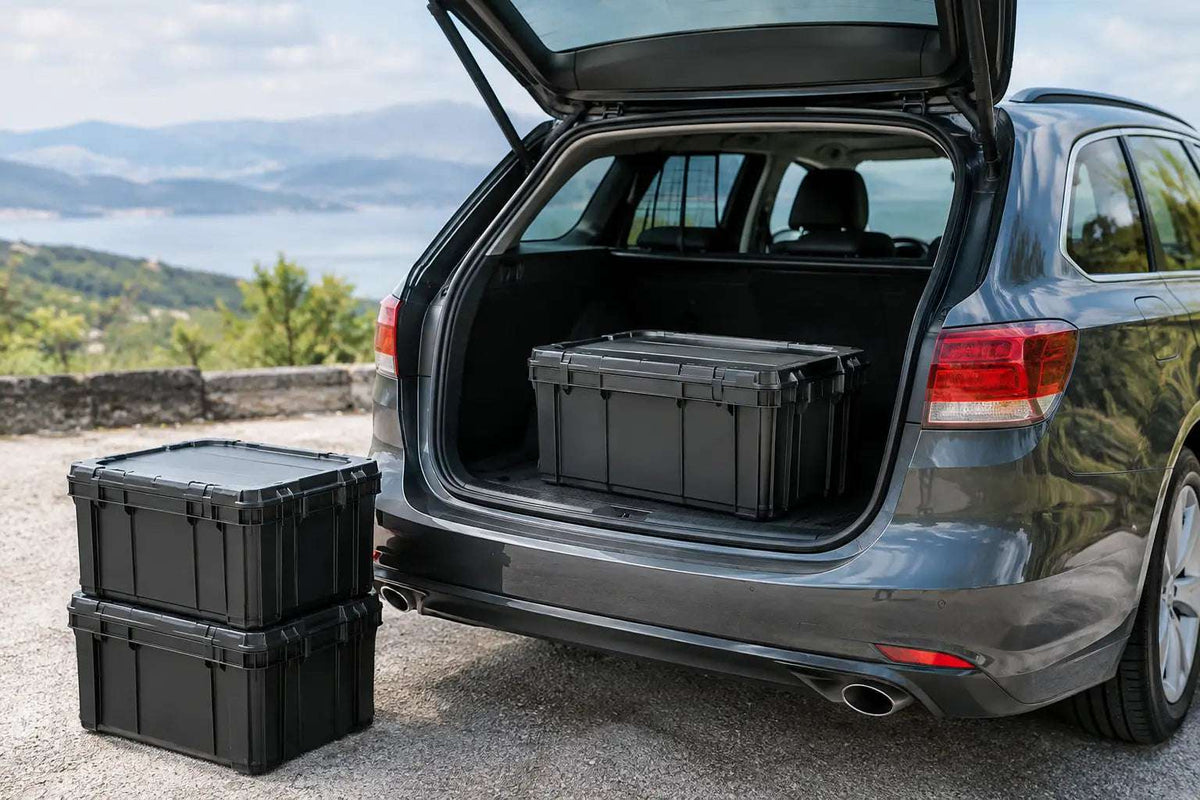
Best Crates for Estate Cars That Fit Safely
An estate car can feel like it was made for dog days out: a wide opening, generous load space and room for muddy paws after a long walk. But the best crates for estate cars are not simply the biggest models that will fit through the boot. A crate needs to suit your dog, your specific vehicle and the way you travel together - whether that is the school run, a weekly agility class or a family holiday.
For many dogs, a well-chosen car crate creates a reassuring little den. For owners, it offers clear boundaries, protects the vehicle and, when properly specified and secured, can provide a more controlled form of travel than a loose dog in the boot. The details matter, though. Estate boots vary more than their long silhouettes suggest.
What makes a crate right for an estate car?
Estate cars are often excellent crate vehicles because they offer useful length behind the rear seats. Yet the narrowest point is usually between the wheel arches, not at the boot opening. The rear window may slope forward, the floor may rise towards the seat backs, and a removable parcel shelf or load cover can take away precious height.
Start with the dimensions of the usable boot, with the rear seats in the position you normally use. Measure the width between the wheel arches, depth from the rear seats to the inside of the tailgate, and height from floor to the lowest point of the roof or glass. Then measure the boot opening itself. A crate may fit once inside but be impossible to angle through the opening.
It is also worth considering the boot lip. A high lip may make lifting a crate awkward, while an older dog, a dog recovering from surgery or one with limited mobility may need a ramp rather than a jump into the vehicle. A lower-profile crate can sometimes be the kinder and more practical choice, even if your car could accommodate something taller.
Measure for your dog, not just the boot
Your dog should be able to stand in a natural position, turn around and lie down comfortably. More space is not automatically better in a moving vehicle, however. A crate that is excessively large can allow a dog to be thrown farther within it during sudden braking or a collision.
Measure your dog from nose to base of tail while standing, then take their floor-to-head height while sitting or standing naturally. Use the manufacturer’s sizing guidance alongside those measurements, particularly where a crate is designed for vehicle use. Breed labels can be a useful starting point, but a lean Whippet, compact Labrador and broad-chested spaniel can each need very different proportions.
The best crates for estate cars come in different forms
The right style depends on your dog’s size, temperament and travel needs, as well as your car’s shape. There is no single best crate for every estate.
Vehicle-specific and crash-tested crates
For regular car travel, a purpose-designed vehicle crate is often the strongest option. Premium models may use aluminium frames, reinforced doors and shaped sides that maximise room around sloping rear windows. Some are available in single and double configurations, allowing two dogs to travel separately while sharing the boot space.
If safety is your priority, look beyond phrases such as “heavy-duty” or “secure”. Ask whether the crate has been crash tested, what test method was used, which vehicle orientation it was tested in, and how it must be anchored. There is no single universal crash-test standard that makes every pet crate directly comparable, so the evidence behind the claim matters.
A tested crate still has to be installed exactly as instructed. That may mean using vehicle tie-down points, dedicated straps or a fitting system specified by the manufacturer. Do not assume a crate is safely restrained simply because it feels heavy or does not move around when the car is parked.
Folding metal crates
A folding wire crate can be useful for occasional travel, shows, holidays and dogs who already settle happily in one at home. It is usually easier to store and may offer excellent airflow. However, it is not automatically suitable as a protective car crate, especially if it has not been engineered and tested for vehicle use.
Wire crates can also rattle, and exposed sides may leave a nervous dog feeling overly visible. A tailored cover can make the space feel calmer, provided it does not restrict ventilation or interfere with safe access.
Fabric and soft-sided crates
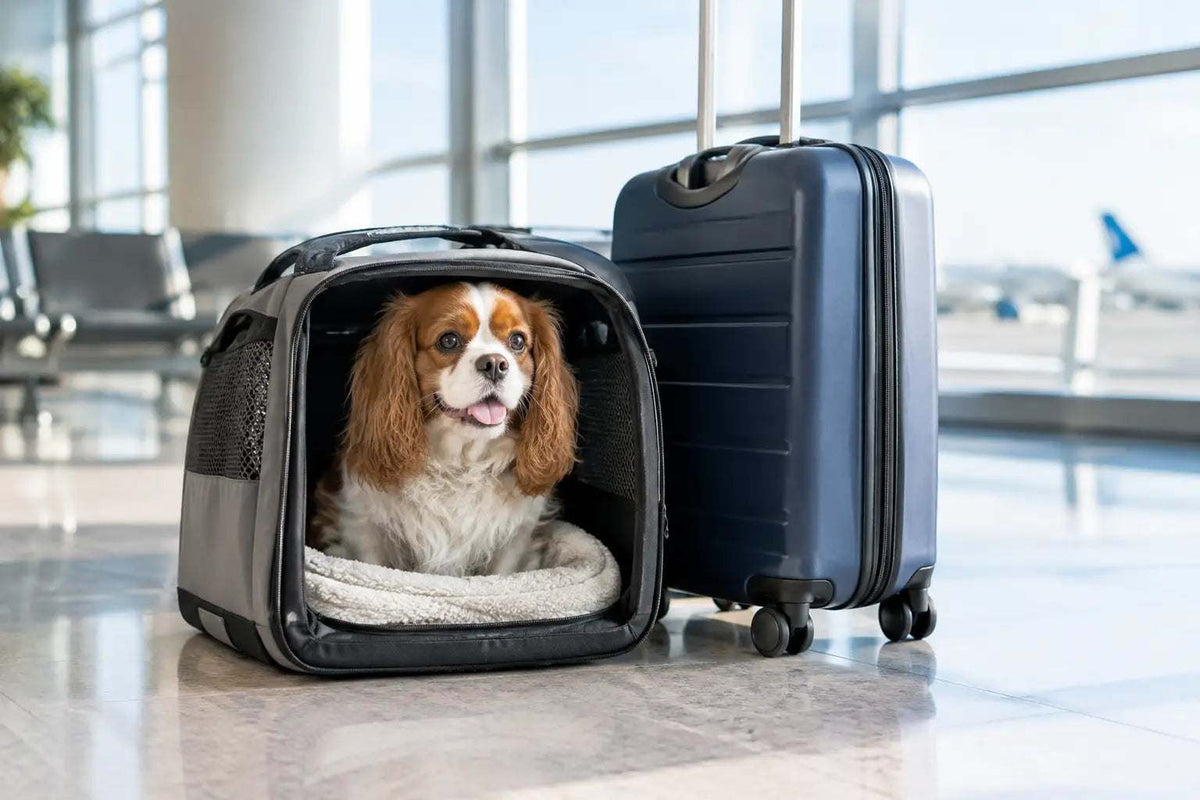
Soft crates suit calm, crate-trained dogs and lighter-use situations. They are often lightweight, simple to carry and comfortable for a dog who needs a familiar resting spot away from the car too. They are not the choice for a dog that chews, panics when confined or needs meaningful impact protection.
For most motorway journeys with an energetic medium or large dog, a properly fitted rigid crate is usually the more sensible investment. Soft-sided options have their place, but they should be selected for comfort and containment rather than treated as a substitute for a crash-tested transport solution.
Fitting a crate securely in the boot
A crate should sit flat and stable, positioned as the manufacturer recommends. In many estate cars, placing it directly behind the rear seats makes the best use of depth and limits movement. Avoid balancing it on folded seats, packing it in at an angle or wedging it against trim without an approved securing method.
Use the car’s designated load-lashing points where appropriate, with straps rated for the job and tightened according to the crate instructions. Check that straps do not rub against sharp edges, block door operation or create a snagging risk for your dog. If the crate has an emergency escape door, make sure it remains reachable.
A tailgate should close freely without pressing against the crate. There should also be space for air to circulate around it. On a warm day, glass and metal boots heat quickly, even in the UK. Good ventilation means more than mesh panels: it means never leaving your dog unattended in a parked car and planning journeys around the weather.
Comfort belongs in the safety plan
A secure crate should not feel clinical. Add a non-slip, washable mat that offers cushioning without taking up too much internal space. For senior dogs, choose supportive bedding that is easy to step onto and does not bunch beneath their paws. Avoid loose blankets that can become tangled around a dog who shifts frequently in transit.
For two dogs, a double crate may be practical, but only if both dogs genuinely rest well beside each other. Dogs that guard space, become unsettled by close contact or have different temperature needs are often happier in separate compartments. Being family does not mean every dog wants to share a bedroom on wheels.
Build positive associations before your first long journey. Let your dog explore the crate at home, serve meals nearby or inside it, and begin with short, quiet drives. A dog that associates their crate with comfort is more likely to settle, which helps everyone arrive in a better mood.
A practical estate-car crate checklist
Before choosing, confirm these four points rather than relying on a product photo or a broad breed recommendation:
- Your boot’s narrowest width, usable depth, height and opening dimensions.
- Your dog’s standing length, natural height and ability to turn and lie down.
- The crate’s intended vehicle use, test evidence and specified anchoring method.
- Daily realities such as a high boot lip, two-dog travel, wet coats, a mobility ramp or the need to keep rear seats available.
The right crate should make getting out together feel easier, not like a loading puzzle before every drive. Once it fits securely and your dog steps inside willingly, your estate car becomes what it ought to be: a comfortable starting point for the next walk, visit or holiday with the whole family aboard.