Dog Buggy Versus Wheelchair: Which Helps Most?
A slow walk should not have to mean a smaller life. When a dog starts tiring halfway around the park, is recovering from surgery, or can no longer use their back legs reliably, choosing between a dog buggy versus wheelchair can feel daunting. Both can protect comfort, confidence and family time outdoors, but they solve very different problems.
A buggy carries your dog when walking is difficult or inadvisable. A wheelchair supports your dog to move under their own steam when their body still has the strength and veterinary approval to do so. For many dogs, the kindest answer is not one or the other, but the right tool at the right point in the day.
Dog buggy versus wheelchair: the essential difference
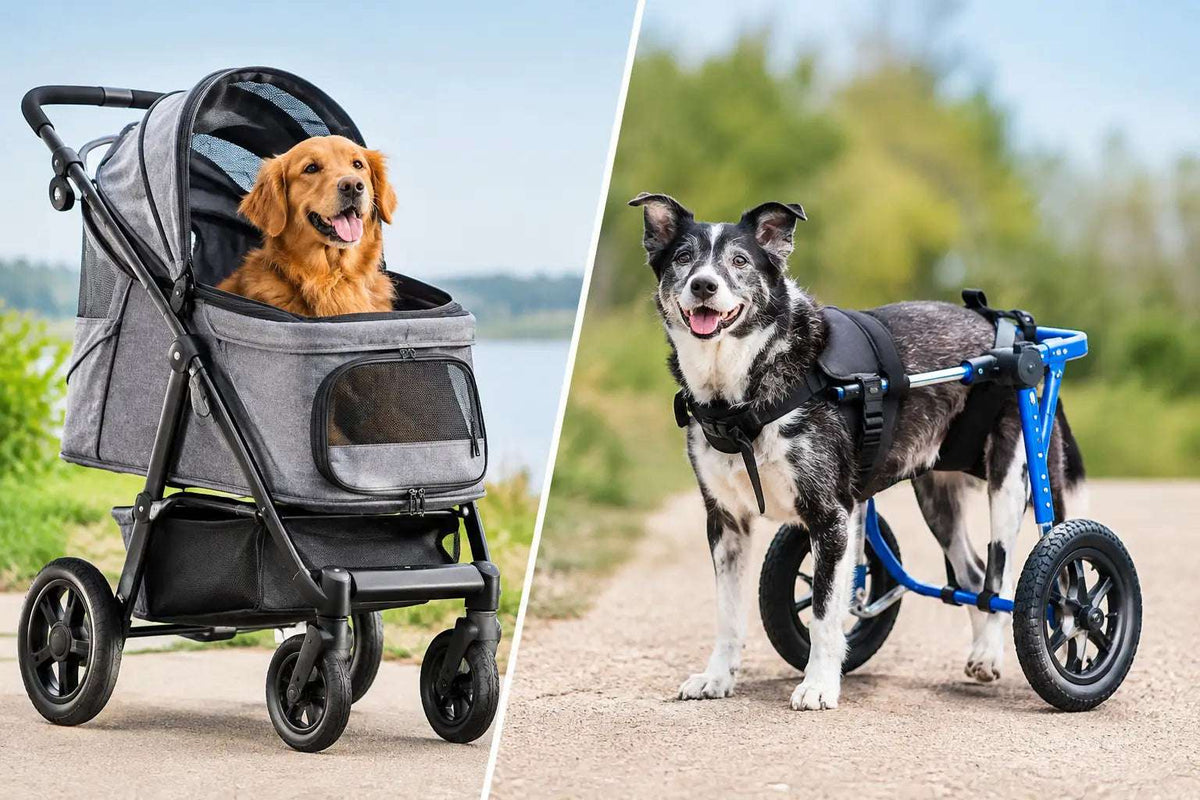
A dog buggy, also called a pram, is a transport solution. Your dog rests safely inside while you push. It is particularly valuable for dogs that cannot manage distance, need to avoid weight-bearing during recovery, become distressed in busy places, or simply need regular breaks. A well-designed buggy lets them stay close to the sights, sounds and sniffs of an outing without asking too much of their body.
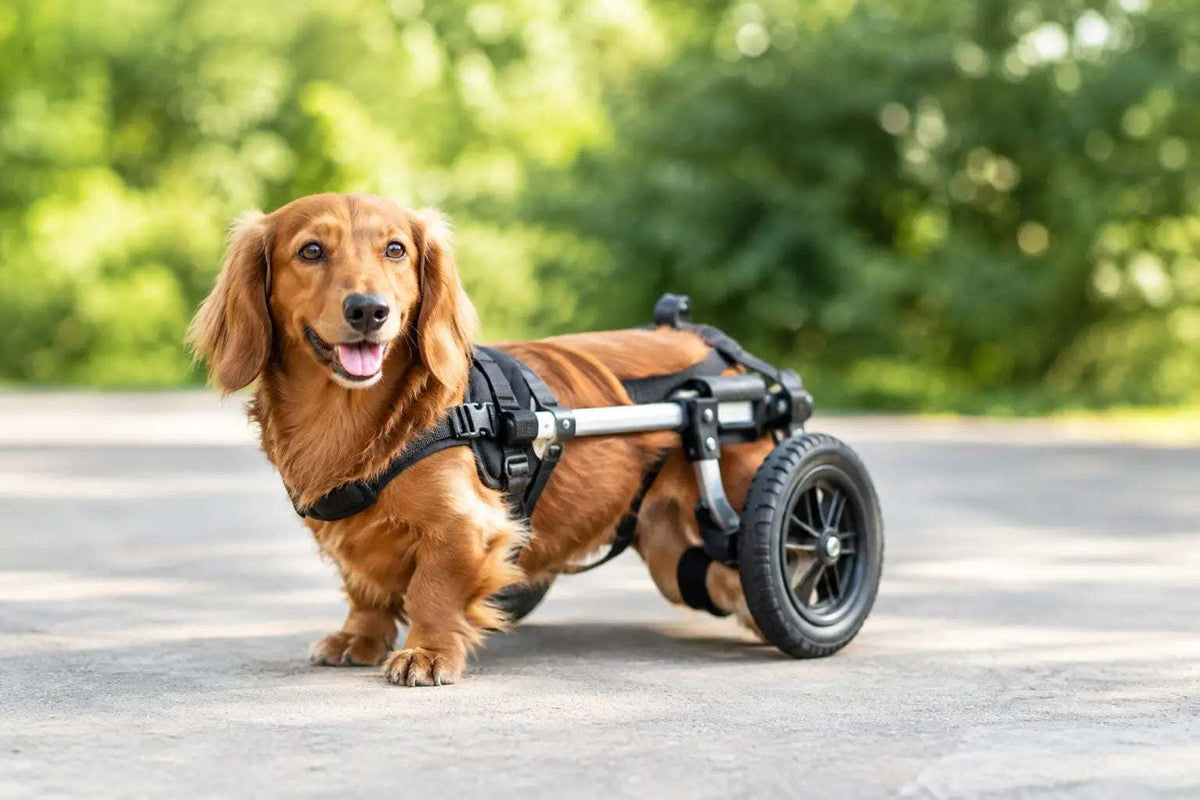
A dog wheelchair is a mobility aid. Most commonly, a rear-support wheelchair takes weight off weak or paralysed back legs while allowing the dog to propel themselves with their front legs. Some dogs with more extensive weakness need a quad or full-support design. The aim is not to carry your dog from A to B, but to help them stand, exercise, toilet and explore with greater independence.
That distinction matters. A wheelchair is not automatically a gentler option just because it has wheels. If a dog is in pain, has an unstable spinal condition, is fatigued, or has been instructed to rest after an operation, enthusiastic movement can do more harm than good. Equally, a buggy should not become a permanent substitute for safe, supported movement when a dog is able and keen to remain active.
When a dog buggy is the better choice
A buggy is often the more useful option for senior dogs with declining stamina. They may still enjoy a gentle potter around the garden, then need a comfortable ride to join the rest of the walk. It is also a sensible choice for dogs with arthritis, heart or respiratory conditions, post-operative restrictions, or painful flare-ups where walking beyond a short distance is not fair on them.
Small dogs can benefit too. Pavements, crowds, hot surfaces and long days out can be overwhelming at their level, even when they are otherwise fit. A secure stroller gives them a protected place to settle while remaining part of the occasion. For nervous dogs, a partially enclosed cabin can create valuable breathing space away from passing feet and unfamiliar dogs.
Look for a stable frame, dependable brakes, secure attachment points and sufficient internal room for your dog to lie down and turn comfortably. Weight capacity is only the start. A tall, long-bodied dog may technically fall within a buggy's limit but still need more cabin length and headroom. Ventilation, weather protection, suspension and wheel type also change the experience considerably, especially on uneven paths.
A buggy is practical when your dog needs rest, but it is not merely a retreat. Many dogs become visibly brighter when they can return to favourite routes, woodland paths and café stops without the physical cost of completing every mile. Your dog deserves a seat on the adventure too.
When a wheelchair can give a dog more freedom
A wheelchair may suit a dog with hind-limb weakness or paralysis who is comfortable, alert and motivated to move. It can be life-changing for some dogs managing conditions such as IVDD, degenerative mobility changes, nerve damage or limb loss. The ability to move independently can support muscle condition in the working limbs, mental stimulation and everyday confidence.
However, a wheelchair needs a more careful decision-making process than a buggy. Your vet, and ideally a canine physiotherapist or rehabilitation professional, should advise whether it is appropriate for your dog's diagnosis and stage of recovery. This is especially vital following spinal surgery, during acute IVDD episodes, or where pain and neurological signs are changing.
A correctly fitted chair distributes support without rubbing the groin, chest or armpits, and keeps the dog in a natural, balanced position. Rear wheels should not sit so far back that your dog is forced to drag their front end, nor so far forward that they tip or lose stride. Adjustable height, length and width matter because a chair that is almost right can still cause discomfort, poor posture and skin sores.
First sessions should be short and calm. Some dogs understand the chair within minutes; others need several gentle introductions over days or weeks. Start on level, non-slip ground, supervise closely and stop before your dog becomes tired. Check paws, harness contact points and skin after every outing, particularly if your dog has reduced sensation or cannot easily signal discomfort.
Why some dogs benefit from both
For a dog with a long-term mobility condition, a buggy and wheelchair can work beautifully as a pair. The chair gives them agency: time to sniff, move and use the toilet independently. The buggy provides a safe ride when they have had enough, when the route is too rough, or when travelling to and from the place they can exercise comfortably.
Think of a dog who can use a rear wheelchair for ten enjoyable minutes on a smooth park path but cannot manage the busy high street, long pavement walk or journey home. Bringing a buggy means the outing ends when their body needs rest, not when the family has to turn back. It also removes the temptation to push through fatigue just because your dog is having fun.
This combination can be especially helpful on holidays, at outdoor events and during longer family days out. Plan around accessible ground, shade, water and easy places to stop. A mobility aid should make life more inclusive, not create pressure to do more than your dog can comfortably manage.
Choose based on your dog's needs, not the diagnosis alone
Two dogs with the same diagnosis can need entirely different equipment. One older spaniel with arthritis may be happiest walking short stretches beside a buggy. Another may be pain-free but unable to use their back legs, making a rear-support wheelchair more suitable. Observe your individual dog rather than buying according to a label.
Before choosing, consider four practical questions:
- Can your dog walk comfortably, and for how long before their gait changes or they need to stop?
- Is the priority rest and safe transport, independent exercise, or a mixture of both?
- Has your vet advised restricted activity, supported activity or progressive rehabilitation?
- Where will you use the equipment: smooth pavements, parks, rougher trails, shops, public transport or holidays?
It is worth considering the human side as well. A large stroller needs to fit through your front door, into your car and around the routes you genuinely use. A wheelchair needs to be easy to adjust, clean and store, and its harness must be manageable for you to put on without a daily struggle. The best equipment is the equipment that supports your dog's routine consistently.
Comfort signs to watch once you start using an aid
A dog should look settled, not resigned. In a buggy, watch for easy breathing, relaxed posture and enough room to shift position. In a wheelchair, look for an even front-leg stride, a level body position and enthusiasm that does not tip into exhaustion.
Stop and reassess if you see panting unrelated to heat, reluctance to move, rubbing, red skin, toe dragging, unusual stiffness afterwards or a change in toileting. These signs do not necessarily mean the aid is wrong, but they do mean the fit, duration or activity level needs attention. Regular veterinary reviews are sensible for any dog with ongoing mobility needs.
The right choice is the one that lets your dog remain comfortable, dignified and included in the life they love. Whether that means a cosy buggy ride, the happy purpose of a well-fitted wheelchair, or both packed for the day, small adjustments can keep a great many adventures within reach.