Are Dog Prams Worthwhile? A Practical Guide
A slow walk should not have to mean a smaller life. If your dog tires halfway round the park, is recovering from treatment, or simply cannot manage the pavement as they once did, you may be asking: are dog prams worthwhile? For many families, the answer is yes - not as a novelty, but as a practical way to keep a dog comfortable, secure and included.
A good dog pram gives them a place to rest while the day carries on. That might mean joining the school run, enjoying a longer weekend walk, visiting a pet-friendly town centre or accompanying the family on holiday. The value comes down to your dog's needs, your usual outings and whether the pram is properly sized and built for the journeys you take.
When are dog prams worthwhile?
Dog prams are most worthwhile when walking is possible in short bursts, but not for the entire outing. They allow dogs to get fresh air, smells, company and a change of scene without being pushed past their physical limits.
Senior dogs are an obvious example. Arthritis, reduced stamina and age-related weakness can make kerbs, uneven paths and long distances uncomfortable. A pram lets an older dog walk at their own pace, then settle down when their legs have had enough. That is often kinder than leaving them at home every time the family heads out.
They can also be genuinely useful during recovery. After an operation, injury or flare-up of a long-term condition, a vet may advise restricted exercise. A pram is not a substitute for that advice, but it can make controlled outdoor time possible while your dog heals. For dogs managing IVDD or other spinal concerns, minimising jumping and unnecessary strain is particularly important, so choose a design with easy, low-stress access and follow your veterinary team's guidance.
Small dogs benefit too. Tiny legs cover a surprising amount of ground, but they may struggle with long urban walks, busy events, hot paving or a day that involves lots of waiting around. A secure enclosed pram can give them a quiet retreat before they become overtired or overwhelmed.
A pram is not an excuse to stop walking
The best use of a dog pram is usually a mix of movement and rest. If your dog is able to walk safely, let them enjoy suitable stretches on the lead, sniffing at their own pace, then offer the pram when they slow down, sit frequently or show signs of fatigue. They remain part of the walk rather than being carried through every minute of it.
That distinction matters. Dogs need appropriate exercise, enrichment and opportunities to explore. A pram supports those needs when distance is the problem. It should not replace regular movement for a healthy dog who is comfortable walking.
For anxious or reactive dogs, a pram can be helpful in selected situations, but it is not an automatic fix. Being higher off the ground may make some dogs feel safer; others may feel trapped or become more alert to passing dogs and people. Start somewhere calm and watch their body language. A relaxed posture, soft eyes and willingness to settle are encouraging. Panting when it is not warm, trembling, barking or frantic attempts to get out suggest the experience needs to be slowed down.
The benefits that make the difference
A quality pram can protect comfort, preserve dignity and make daily logistics much easier. This is particularly meaningful for a dog who still wants to be with you but no longer has the physical capacity for every mile.
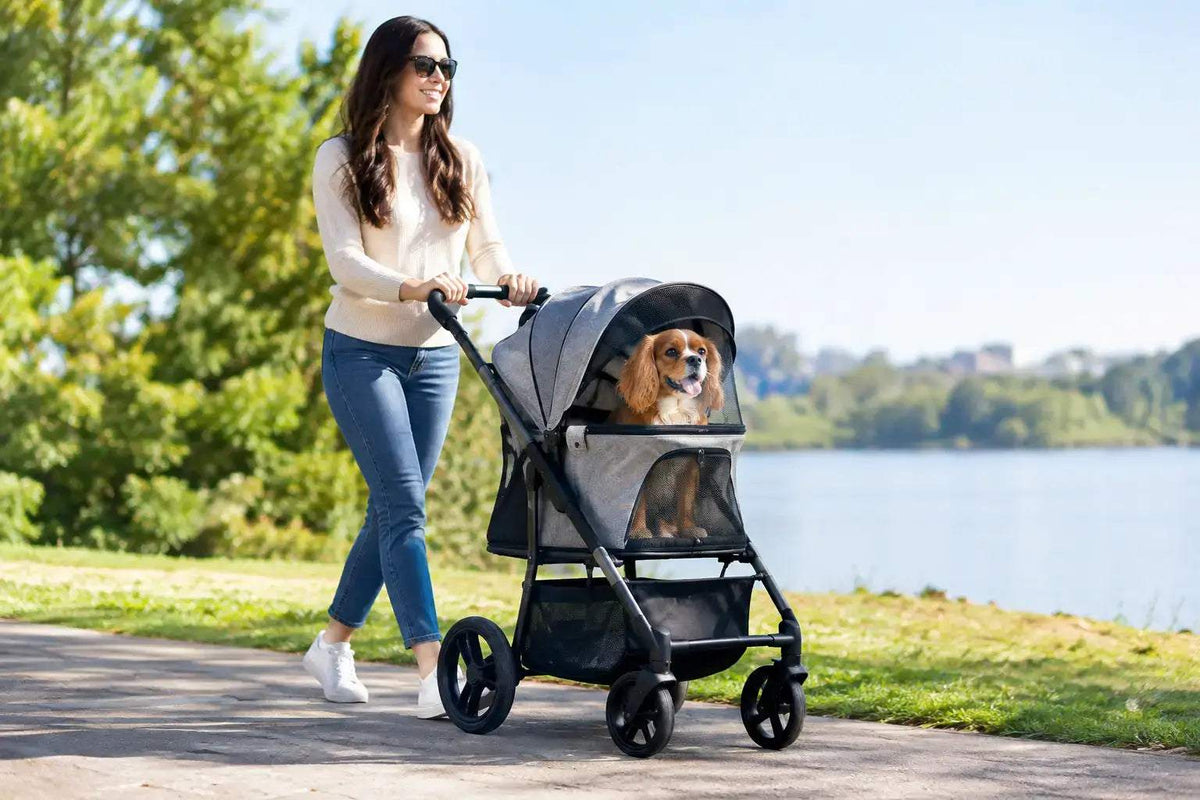
It also offers practical protection in busy places. A covered cabin can create distance from feet, bicycles and other dogs, while mesh panels provide ventilation and let your pet see what is happening. On hot days, however, shade and airflow are not a licence to stay out too long. Dogs can overheat quickly, especially in enclosed spaces, so avoid the hottest part of the day, carry water and never leave a dog unattended in a pram.
For households with more than one dog, a pram can prevent the slower dog from being excluded while a fitter companion still gets an enjoyable outing. It can make a family day out feel less like a compromise. Your dog deserves a seat on the adventure too.
There is a human benefit as well. Carrying a small dog when they become tired can be awkward and hard on your back, particularly if you are also managing leads, bags or children. A well-designed pram keeps the weight stable and gives you useful storage for essentials.
When a dog pram may not be the right purchase
Prams are not worthwhile for every dog or every route. A large, powerful dog may exceed the safe weight capacity of many models, and an active dog who loves rough woodland tracks may be better suited to shorter tailored walks than being pushed over terrain a pram cannot handle.
Consider where you actually go. Smooth pavements, park paths, promenades and shopping areas are generally straightforward. Deep gravel, muddy fields, narrow stiles and steep countryside trails are another matter. Larger wheels and a sturdier frame improve handling, but no pram is designed to conquer every surface.
Storage is worth thinking about before you buy. Measure the folded pram against your car boot, hallway or cupboard space. If you rely on buses or trains, check whether you can comfortably fold, lift and manage it when travelling. A pram that is too heavy or bulky for your routine may end up unused.
Finally, some dogs simply dislike being enclosed. Gentle training can change that, but do not force it. A supportive harness, rear support aid or dog wheelchair may be a better mobility solution depending on the underlying condition and advice from your vet or canine physiotherapist.
Choosing a pram your dog will actually enjoy
Start with the manufacturer's stated weight limit, then look beyond it. Your dog needs enough internal length to lie down comfortably, enough headroom to sit naturally, and sufficient floor space to turn around. Measure your dog while they are resting, not only when standing, and allow for a cushion or blanket if you plan to use one.
A premium pram should feel stable rather than top-heavy. Look for a strong frame, reliable wheel brakes, secure zip fastenings and internal tether points that attach to a harness, never a collar. Suspension and larger wheels are valuable if your local routes include uneven paving, while swivel front wheels make town use and tight corners easier.
Ventilation matters throughout the year. Mesh windows help air circulate and allow your dog to look out, but a rain cover or weather-resistant canopy is useful for the famously changeable British forecast. Check that any cover still allows adequate airflow. Removable, washable liners are another small feature that makes a big difference after muddy paws or travel sickness.
If you will lift the pram into a car, check its folded weight as well as your dog's carrying capacity. If your dog has limited mobility, think carefully about entry height. A wide opening and a low step-in design can reduce the need to lift or twist them awkwardly.
Help your dog see the pram as a safe place
Introduce the pram at home with the brakes on. Leave it open, place a familiar blanket inside and reward your dog for looking at it, approaching it and stepping in voluntarily. Keep the first sessions short and calm. There is no prize for rushing.
Once they are happy inside, close the canopy briefly, then open it again before they become unsettled. Next, move the pram a few steps indoors or in a quiet garden. Your first outdoor trip should be short, smooth and low-key, ideally ending before your dog has had enough.
Use a well-fitted harness attached to the internal safety tether if provided, but keep the tether short enough that your dog cannot jump out. Check brakes whenever you stop, especially near slopes, kerbs or roads. Never hang heavy bags from the handlebar unless the manufacturer specifically permits it, as this can make the pram tip backwards.
The real measure of value
A dog pram is worthwhile when it gives your dog more good days, not merely more miles. For an elderly terrier who can still enjoy ten minutes of sniffing before resting, a recovering dachshund who needs a safe route back into normal family life, or a tiny companion who wants to join a full day out, it can be an investment in comfort and belonging.
Choose it with the same care you would give any piece of safety and mobility equipment: match the size, terrain, capacity and access to your dog's real life. Then take it slowly. The best first journey is not the longest one - it is the one where your dog settles in, looks around and remains happily alongside you.