How a Dog Rear Support Harness Helps Dogs Walk
The moment a dog’s back legs begin to wobble, slip or give way, ordinary routines can become surprisingly difficult. A dog rear support harness gives you a secure, comfortable way to help with walks, steps, getting in and out of the car, and those essential toilet trips - without asking sore or weakened hind legs to do more than they can manage.
For many dogs, mobility support is not about stopping life. It is about keeping them included in it. The right harness can help a senior dog continue their favourite garden patrol, support a dog recovering from surgery, or give an owner the confidence to take a slower, safer walk together.
When a Dog Rear Support Harness Can Help
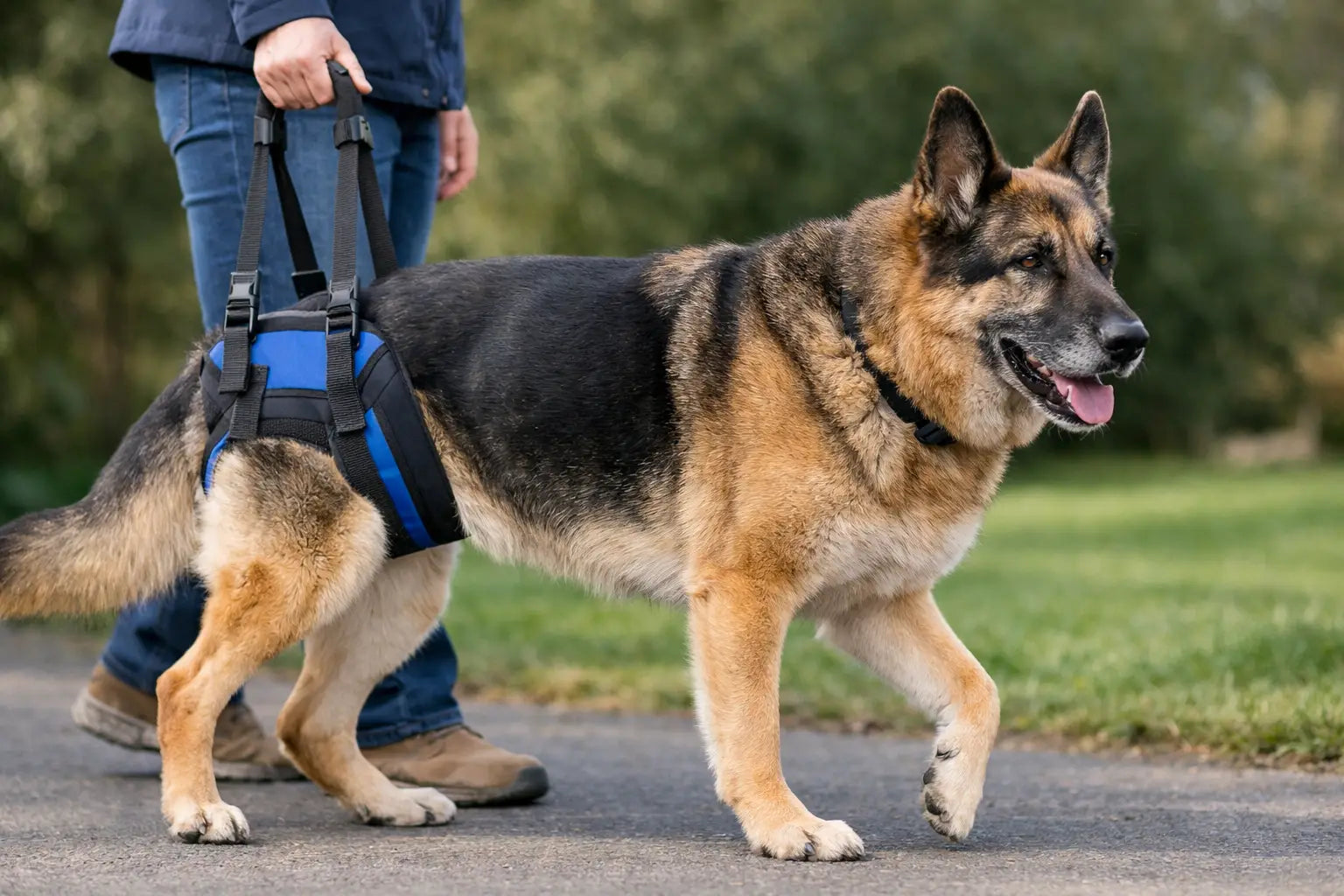
Rear support harnesses are designed to lift and steady the hindquarters while leaving the front legs free to move naturally. They are commonly used when a dog has weakness, pain or poor control in their back legs, but the reason behind that change matters when choosing the right design.
A dog may benefit from rear support during recovery from orthopaedic surgery, such as cruciate ligament repair, or while managing hip dysplasia, arthritis, spinal conditions including IVDD, degenerative myelopathy, nerve damage or age-related weakness. Some dogs only need occasional help on stairs or slippery floors. Others need consistent support for every outing.
A harness is not a diagnosis or a substitute for veterinary advice. Sudden hind-leg weakness, loss of balance, dragging paws, pain, or changes to toileting should always be discussed with a vet promptly. Once you understand your dog’s condition and movement limits, a support aid becomes much easier to select and use well.
What Good Rear Support Actually Looks Like
The best support feels steady to the person holding it and respectful to the dog wearing it. A well-designed harness spreads lifting pressure across a padded area around the pelvis and upper thighs, rather than concentrating force on the abdomen or a narrow strap between the legs.
Look for a handle that is positioned high enough for you to help without constantly bending over. This is more than a convenience. If you are leaning awkwardly at every kerb or step, it becomes difficult to give calm, controlled support. Adjustable straps are equally valuable, especially for dogs whose shape changes during recovery or who have a deep chest, slim waist or thick coat.
A good fit should allow your dog to wee and poo without removing the harness. Some designs are intended for short, supervised lifting only, while others can be worn for a more comfortable walk. Always follow the manufacturer’s guidance on wear time. A harness left on unnecessarily can trap moisture, rub the skin or become uncomfortable when your dog lies down.
Choosing the Right Level of Support
Not every dog with weak back legs needs the same kind of help. Choosing too little support can leave you struggling to steady them. Choosing too much can interfere with their natural gait, reduce their independence and make a willing dog feel restricted.
For occasional balance and stair support
A simple rear-lift sling or harness may suit a dog who can still walk independently on level ground but needs help rising from bed, negotiating a few steps or crossing a polished kitchen floor. In this situation, the handle and padding matter most. You are offering a little confidence, not carrying their weight for the whole walk.
For post-operative recovery
After surgery, your vet may recommend controlled lead walks and strict activity limits. A rear support harness can help you keep those outings calm by preventing sudden lunges, slips or overloading of the recovering limb. Ask your veterinary team whether the harness placement is suitable around the surgical site, particularly if there are stitches, swelling or a brace.
For ongoing weakness or neurological conditions
Dogs with progressive hind-leg weakness often need support that is more structured, adjustable and secure over longer periods. A full-body support system may be a better choice if the front legs are also losing strength, or if your dog twists, collapses or cannot place their rear feet reliably. Where mobility is changing, reassess regularly rather than assuming the first solution will remain right forever.
For dogs who can no longer take enough weight through their hind legs, a wheelchair may offer greater independence outdoors than a harness alone. The harness then remains useful for transfers, short toilet breaks and helping your dog settle safely at home.
Measuring Matters More Than Breed Labels
A label such as “suitable for Labradors” is only a starting point. Two Labradors can have very different chest shapes, waist measurements and body condition. Use the product’s measurement guide and measure your dog while they are standing squarely, if possible.
You will usually need a waist or girth measurement around the narrowest part of the abdomen, plus a weight check. Some harnesses also require thigh circumference or the distance between the hind legs. If your dog cannot stand comfortably for long, take the measurements in stages and keep the tape loose enough to sit flat against the coat without compressing it.
When the harness arrives, try it indoors first. You should be able to slide two fingers beneath the straps, while the body of the harness stays centred and does not rotate when gentle upward pressure is applied. Watch for bunching at the groin, rubbing behind the legs, straps pressing into soft tissue, or a handle position that pulls your dog off balance.
How to Use a Rear Support Harness Kindly
The first few uses should feel unhurried. Let your dog sniff the harness, reward them for standing calmly and fasten it without rushing. For dogs that associate handling with pain, this gradual approach can make a real difference.
When lifting, take up the slack slowly rather than suddenly hoisting their back end. Your dog should still place their feet and do as much of the movement as they safely can. Think of your hand as a stabilising support, not a crane. On a short walk, maintain a light upward assist and match their pace, allowing time to stop, sniff and toilet with dignity.
Use extra care on wet pavements, loose gravel and smooth indoor floors. A harness can help prevent a fall, but it cannot create grip. Non-slip runners at home, nail maintenance, supportive footwear where appropriate, and shorter routes can all reduce the strain on a dog with compromised mobility.
Check the skin and coat after each use during the first week, then routinely thereafter. Redness, hair loss, soreness or reluctance to wear the harness are signs to pause and reassess the fit. A wet harness should be dried fully before the next outing, particularly in the folds around the legs.
Small Changes That Make Outings Easier
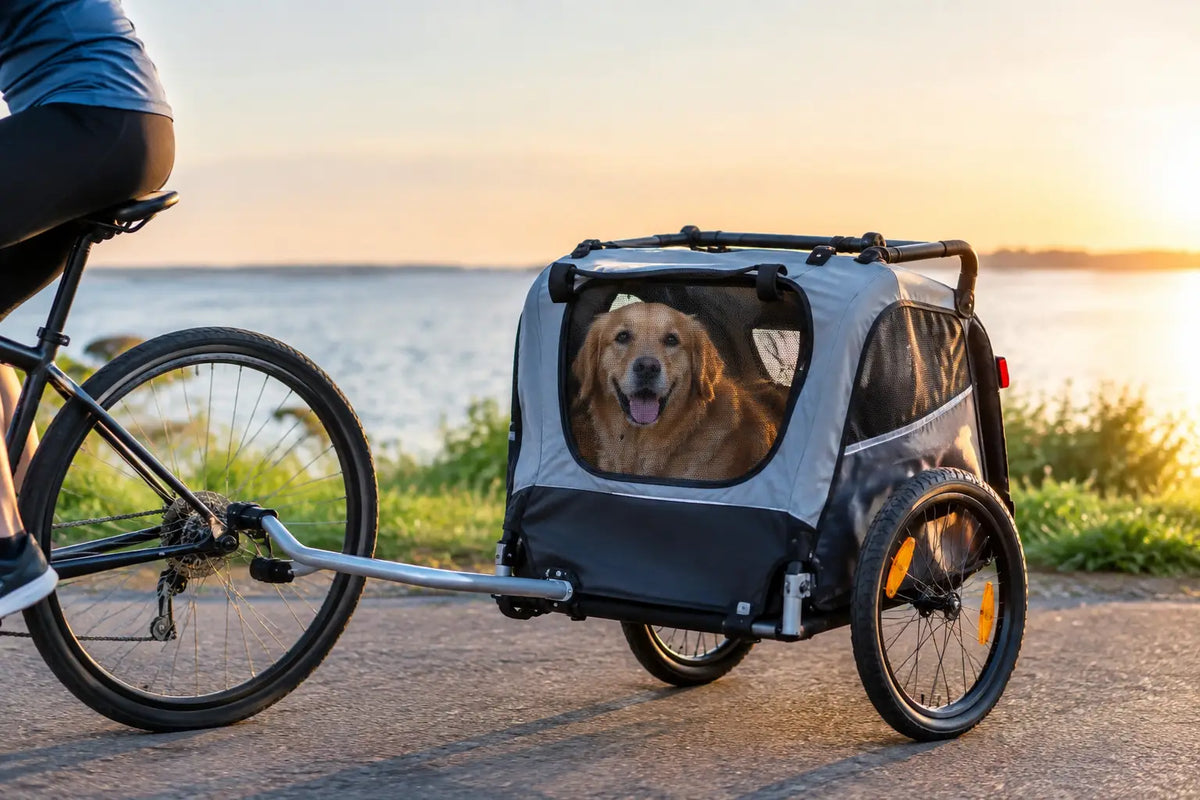
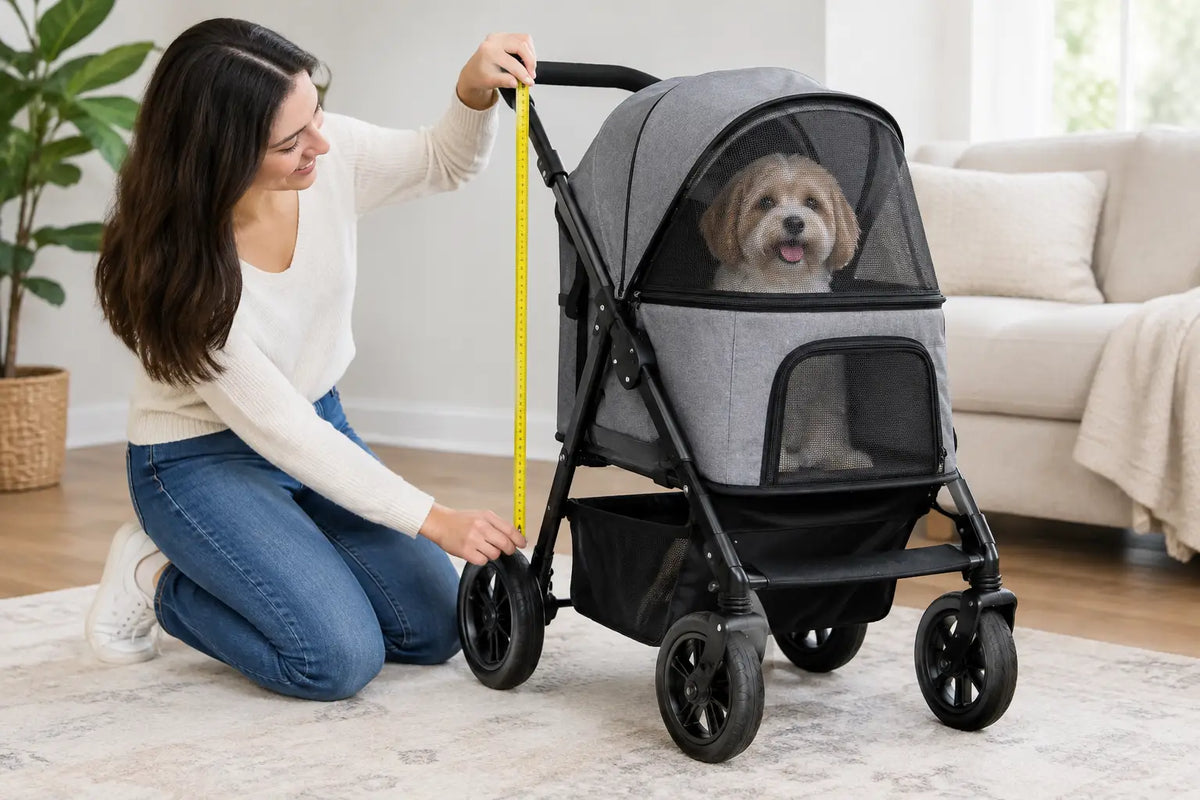
A rear support harness works best as part of a wider mobility plan. Keep walks shorter and more frequent if your dog tires quickly. Choose flatter routes with fewer kerbs, and use a ramp where possible instead of lifting them into the car. If longer family outings are now beyond their walking tolerance, a dog stroller can keep them part of the day without pushing their body too far.
It is also worth considering your own comfort. Supporting a large dog can place strain on your back, shoulders and wrists. A harness with a well-positioned handle, a manageable route and sensible lifting technique will protect both ends of the lead.
A Better Walk Is the One Your Dog Can Enjoy
There may be days when your dog walks brightly and days when they need more help. That is normal with many conditions, and it is not a failure to adjust the plan. A dog rear support harness gives you a practical way to meet your dog where they are, whether that means a steady trip into the garden or a gentle wander with the whole family.
Mobility support should preserve confidence, comfort and connection. Go at their pace, celebrate the small wins, and let every safe step keep your dog in the moments that matter.