Best Car Crates for Puppies for Safer Trips
A new puppy can make even a ten-minute drive feel like a major expedition. Choosing the best car crates for puppies is less about finding the prettiest carrier and more about giving a growing dog a protected, calm place to travel from their very first journeys.
A proper car crate helps prevent your puppy roaming around the vehicle, reduces distractions for the driver and gives them a familiar resting spot when the outside world feels noisy or unfamiliar. But not every crate is designed to protect a dog in a collision. That distinction matters, particularly when a small puppy will soon become a stronger, heavier adolescent.
What makes a car crate right for a puppy?
The right crate is one that fits your puppy now, allows sensible adjustment as they grow and suits both your car and the journeys you actually make. For many families, that means a crate used for nursery runs, weekend woodland walks and holidays, not just the occasional trip to the vet.
Start with safety credentials. A crate described as crash-tested has been tested under a stated protocol, but the detail behind that claim is worth checking. Look for clear information about the testing method, the size or weight of dog tested, how the crate was secured and whether the result applies to the exact model and configuration you are considering. A heavy-looking metal crate is not automatically a crash-tested crate.
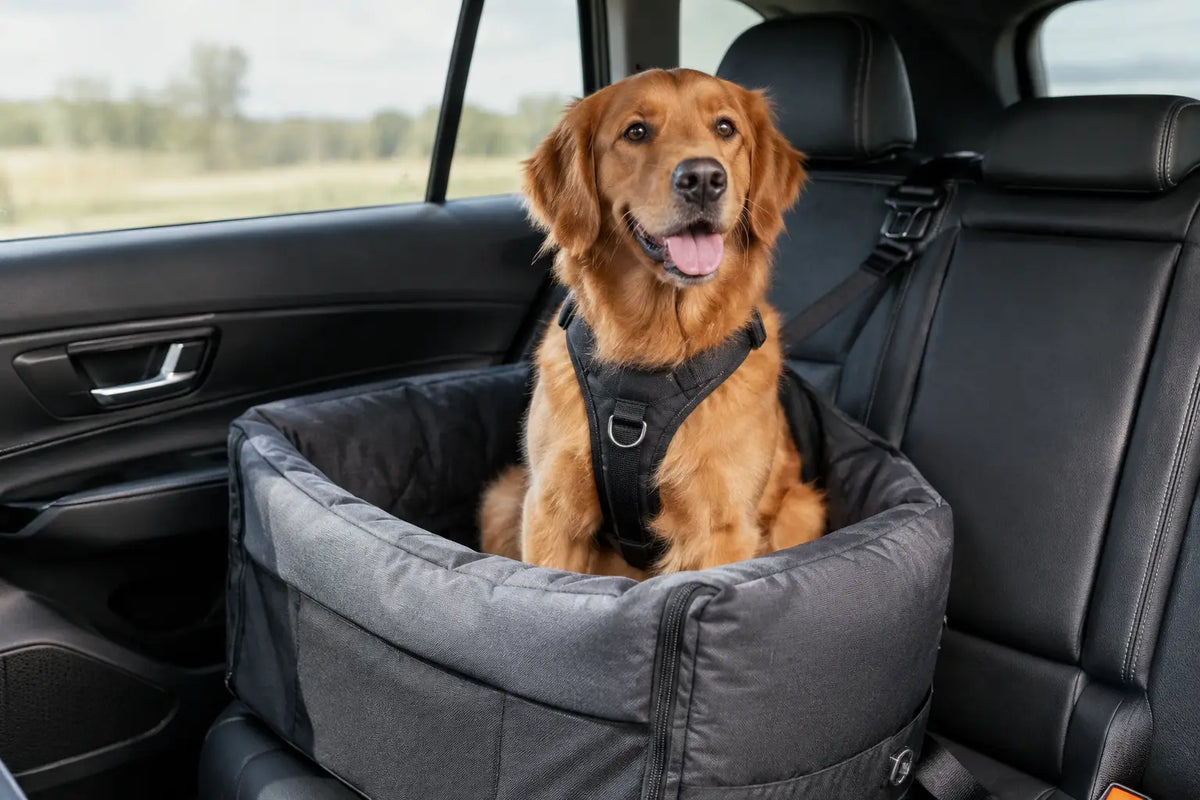
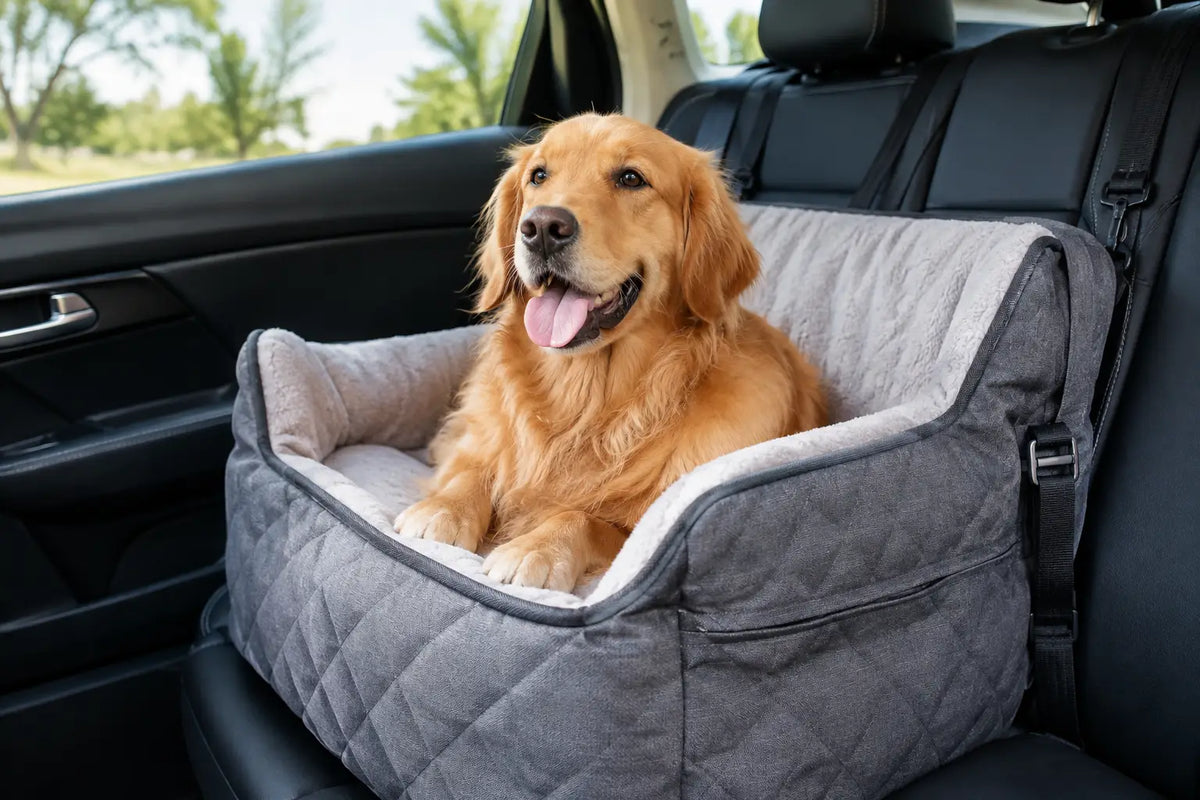
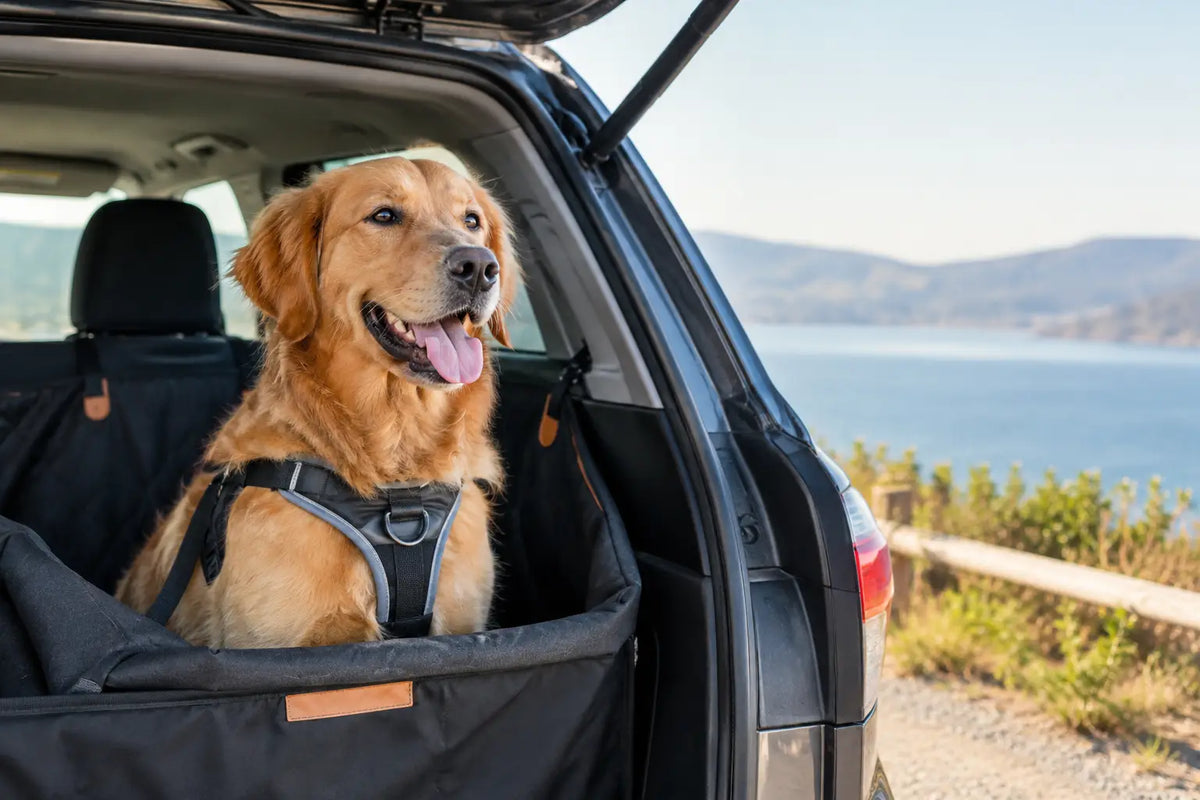
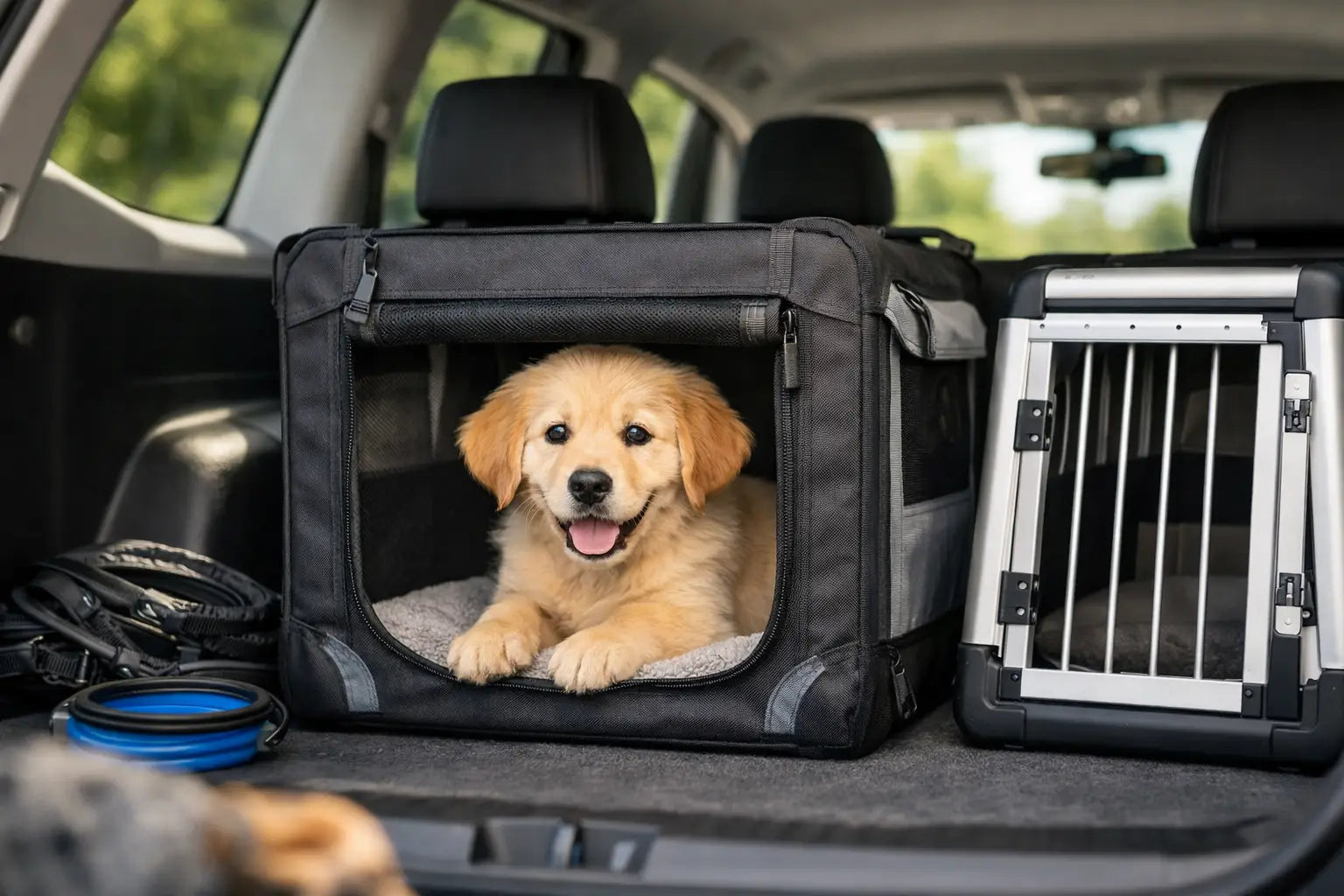
Then consider where it will travel. Most crates are installed in the boot or load space, positioned against the rear seats and secured according to the manufacturer’s instructions. Some compact crates are intended for rear-seat use, but they must be compatible with the vehicle and properly restrained. Avoid placing a puppy crate on a front passenger seat where an airbag could present a serious risk.
Comfort is part of safety, too. Puppies can overheat quickly and may be unsettled by motion, so good ventilation, a stable base and enough room to lie down naturally are essential. Your dog deserves a seat on the adventure too, but it needs to be a place where they can genuinely relax.
Best car crates for puppies: safety features to prioritise
Premium car crates tend to cost more because they are engineered around impact protection, secure installation and durable materials. That investment can make sense when a crate will be used through puppyhood and beyond.
Look closely at these four essentials:
- Verified crash-test information: Seek specific, transparent testing claims rather than vague references to being “safe” or “strong”.
- Vehicle-compatible securing points: The crate should be anchored exactly as instructed, using its intended straps, brackets or fittings. A crate that can slide is not safely installed.
- A sturdy, well-designed door: Doors need reliable locks, secure hinges and no sharp edges. For nervous puppies, a quiet opening mechanism is a welcome bonus.
- Ventilation without large escape gaps: Airflow should be generous, while bars, mesh and openings remain safe for small paws, noses and inquisitive teeth.
Hard-sided crates versus fabric carriers
For routine car travel, a hard-sided, vehicle-specific crate is usually the stronger option. It is more resistant to chewing, easier to secure and generally better suited to the forces involved in sudden braking or a collision. It can also create a reassuring den-like space once your puppy learns that the crate predicts good things.
Fabric carriers have a role, especially for very young or tiny puppies, short transfers and situations where portability matters. However, they are not a substitute for a crash-tested car crate unless the manufacturer explicitly confirms their safety performance for vehicle use. A soft carrier can be comfortable, but comfort alone is not collision protection.
Wire crates are common at home, yet many are not designed to be carried unsecured in a car. Their folding construction and projecting edges can make them a poor choice for travel unless they are specifically engineered and secured for that purpose.
Get the size right without buying too big
A puppy needs enough space to stand, turn around and lie on their side comfortably. They do not need a huge area in which to be thrown about when the car changes direction. The goal is secure comfort, not a miniature lounge.
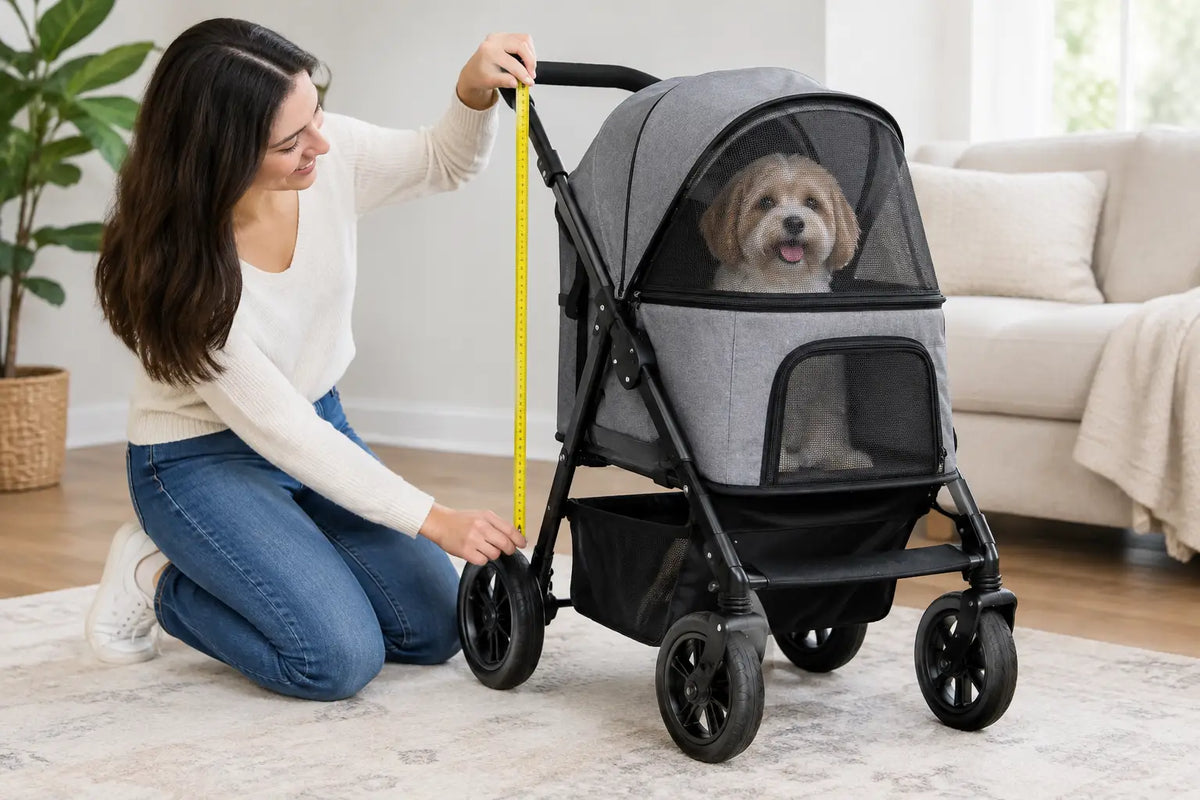
Measure your puppy from nose to base of tail while standing, then measure from the floor to the top of their head or ears. Compare these dimensions with the manufacturer’s internal measurements, not only the exterior crate size. If your puppy is between sizes, their expected adult size, breed build and the crate’s adjustment options all matter.
Growth creates a genuine trade-off. Buying an adult-sized crate straight away can be economical, but it may leave a small puppy with too much unstructured space. Some crates can be safely adapted with an approved divider, while others are best replaced as the dog grows. Never improvise a divider from loose boards, cushions or luggage that could shift in an impact.
Also measure the car before ordering. Check the boot opening as well as the load floor, the height under a parcel shelf or sloping rear window, and whether the rear seats can remain upright. In an estate car or SUV, a single crate may fit easily; in a hatchback, the tailgate angle can be the deciding factor. Keep the crate clear of anything that could block the door or compromise its ventilation.
Make the crate a happy place before the first long journey
The safest crate in the world will not feel safe to a puppy who has only ever been placed inside it when something unpleasant is about to happen. Introduce it at home first, with the door open, a familiar blanket and a few treats scattered inside. Let your puppy choose to investigate.
Once they are comfortable resting in the crate, practise closing the door for very short periods while you remain nearby. Build gradually, always releasing them before they become distressed. The first car sessions can be just a few minutes parked on the drive, followed by a short, smooth trip and something enjoyable at the other end, such as a quiet sniffing walk.
Keep bedding simple and secure. A thin, washable crate mat or a fitted non-slip liner can offer comfort without creating a pile that your puppy might chew, burrow under or become tangled in. For puppies who are still toilet training, bring a spare liner and cleaning supplies rather than relying on bulky bedding.
Avoid feeding a full meal immediately before travelling, particularly if your puppy is prone to car sickness. If drooling, lip licking, repeated yawning, whining or vomiting continue beyond the first few practice journeys, speak to your vet. Travel sickness and travel anxiety can look similar, and both deserve kind, practical support.
Crate placement and everyday travel checks
Before every journey, make sure the crate is fully secured, its door is locked and nothing heavy can fall onto it. Luggage, pushchairs and shopping should never be stacked against the crate door or ventilation panels. If your vehicle has a removable parcel shelf, check that it cannot drop onto the crate during braking.
Do not leave your puppy alone in a parked car. Even mild weather can become dangerously warm inside a vehicle surprisingly quickly. On longer drives, stop regularly for water, a calm toilet break and a little time to stretch, keeping your puppy on a lead before any car door or crate door is opened.
For owners of puppies likely to develop mobility needs, a low-entry crate can be especially useful in later life. A crate that is easy to access, has a non-slip floor and allows a dog to step in rather than jump can support comfort through recovery from injury, senior years or changing mobility. Choosing thoughtfully now can help keep your dog included in family days out for much longer.
The best choice is the crate that is properly tested, correctly fitted to your vehicle and introduced with patience. Start small, make every trip feel safe, and your puppy will learn that the sound of the car keys means they are coming along with the family.